
Executive Overview
The contemporary Christian music (CCM) community is in mourning following the passing of Steve Camp, a foundational pioneer whose fiery vocals, uncompromising theological lyrics, and prophetic voice helped shape the genre over five decades. Camp entered his eternal reward on Wednesday, November 11, 2026, at the age of 71, following a courageous battle with heart failure.
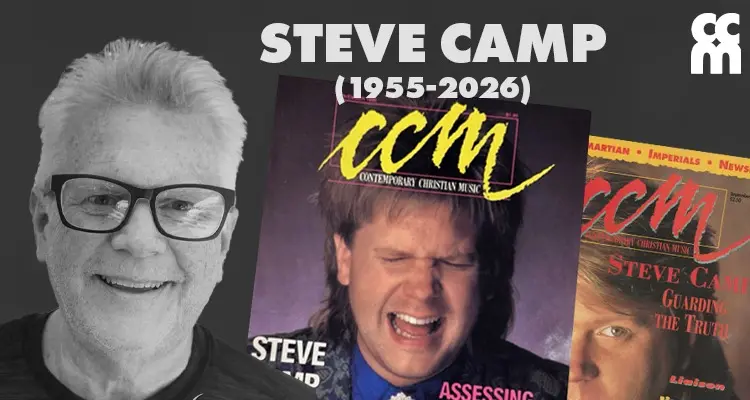
Announced via a heartfelt family statement, Camp’s transition from this life marked the end of an era for Christian music. As a two-time CCM Magazine cover artist—most notably featured in November 1986—Camp was far more than an entertainer. He was a theologian-musician, an outspoken reformer, and a dedicated shepherd who consistently challenged both the institutional Church and the commercial Christian music industry to maintain an unwavering focus on the Gospel of Jesus Christ.
Spanning more than fifty years of ministry, his life’s work bridged the gap between artistic excellence and deep biblical literacy. Whether through anthems that dominated Christian radio charts in the 1980s and 1990s, his passionate pulpit preaching, or his relentless pursuit of life-on-life discipleship, Camp lived out the tenets of Acts 20:24 and 2 Corinthians 4:5 to his final breath. This retrospective examines his monumental career, his enduring theological legacy, the profound impact he left on the wider faith community, and how his life continues to cast a long shadow over the future of Christian art and ministry.
Detailed Chronology: The Life and Ministry of Steve Camp
To understand the scope of Steve Camp’s impact, one must trace a timeline defined by radical devotion, artistic evolution, and an unyielding commitment to orthodox Christian doctrine.
Early Years and Artistic Awakening (1955–1970s)
Born in 1955, Steve Camp grew up during a turbulent yet culturally transformative era in American history. As the Jesus Movement swept across the United States in the late 1960s and 1970s—giving birth to contemporary Christian music out of coffeehouses, beaches, and tents—Camp found himself drawn deeply to both music and the scriptures.
Unlike many of his peers who viewed Christian music primarily as a commercial enterprise or a cross-cultural crossover medium, Camp approached his craft as a pastoral calling. He honed his skills as a singer-songwriter and pianist, possessing a rich, emotive voice that could effortlessly transition from tender worship to prophetic declaration. By the late 1970s, he was establishing himself as a formidable young writer within the burgeoning Christian acoustic and soft-rock scenes.
The Breakthrough and Golden Era of CCM (1980s–1990s)
The 1980s marked the commercial and artistic zenith of Camp’s recording career. He signed major distribution deals and released a string of critically acclaimed, chart-topping albums that cemented his status as a premiere CCM artist. Projects such as Fire and Ice (1983), Execute the Task (1985), and Say the Name (1988) introduced a generation of believers to a muscular, unapologetic brand of faith-based music.
During this period, Camp was ubiquitous in Christian media. His prominence was solidified by major milestones, including his twin appearances as a CCM Magazine cover artist. The November 1986 cover, in particular, captured a moment when Camp was at the vanguard of the industry—an artist whose theological depth matched his vocal prowess.
However, Camp’s relationship with the industry was famously complex. While deeply appreciative of the platform radio and touring provided, he frequently utilized his position to prophetically critique the commercialization of Christian music. In 1989, he penned the famous "10 Point Thesis" (often compared historically to Martin Luther’s grievances, though on a micro-industry scale), urging Christian artists, labels, and executives to repent of worldly pragmatism and return to the centrality of the cross and local church accountability.
Pastoral Transition and Theological Rigor (2000s–2026)
As the musical landscape shifted into the 21st century, Camp’s ministry naturally expanded beyond recording studios and large festival stages. Driven by a lifelong passion for expository preaching and sound doctrine, he transitioned heavily into pastoral ministry.
He served in various pastoral capacities, teaching theology, mentoring younger believers, and leading congregations with the same fiery conviction that characterized his music. For Camp, there was never a dichotomy between the stage and the pulpit; whether he was singing a ballad, writing an article, or preaching a Sunday sermon, the goal remained identical: to make much of Jesus Christ.
In his later years, though his health began to decline—culminating in his battle with heart failure—his zeal never waned. He remained active in mentoring, studying, and fellowship until the Lord called him home on November 11, 2026.
Supporting Context & Metrics: Measuring Camp’s Enduring Impact
Steve Camp’s footprint on Christian culture can be quantified not merely by album sales or chart positions, but by the qualitative shift he engineered in how Christian artists viewed their vocation.
Key Metrics and Milestones
- Career Span: Over 5 decades of continuous ministry across music, writing, and pastoral leadership (1975–2026).
- Album Discography: More than a dozen major studio projects, spawning multiple radio hits and enduring worship anthems.
- Media Recognition: Two-time CCM Magazine cover feature artist, including the defining November 1986 issue.
- Core Scriptures: Guided unequivocally by Acts 20:24 and 2 Corinthians 4:5.
The Theological Architecture of His Music
What set Camp apart from many of his contemporaries was his refusal to water down Christian lyrics for the sake of mainstream radio airplay. While secular crossover success was the holy grail for many 1980s and 1990s CCM acts, Camp actively resisted lyrics that could be interpreted neutrally or secularly.
His songs were deeply saturated in orthodox theology—touching on themes of substitutionary atonement, repentance, holiness, the sovereignty of God, and the urgency of evangelism. Tracks like "Run to the Battle," "Stranger to Holiness," and "He’s Alive" served as sonic theological textbooks for youth groups, college students, and church choirs nationwide. By treating his audience as thinkers rather than mere consumers, Camp elevated the intellectual and spiritual caliber of the entire genre.
Official Statements and Tributes
The announcement of Camp’s passing triggered an outpouring of grief, gratitude, and reverence from across the global Christian community. Fellow musicians, industry veterans, pastors, and listeners took to media platforms to share how his life and music transformed their spiritual journeys.
The Camp Family’s Full Statement
The official statement released by the Camp family encapsulated the spirit of the man they loved, balancing raw human grief with transcendent Christian hope:
"It is with heavy hearts, yet great hope in Christ, that we share the passing of our beloved husband, father, and grandfather, Steve Camp.
On Wednesday, November 11, 2026, after a battle with heart failure, the Lord called Steve Home.
For over 50 years, Steve dedicated his life to proclaiming the Gospel through music, preaching, and life on life ministry. His greatest desire was to make much of the Lord Jesus Christ!
Two passages that shaped his life and ministry were Acts 20:24 and 2 Corinthians 4:5.
Acts 20:24
‘But I do not account my life of any value nor as precious to myself, if only I may finish my course and the ministry that I received from the Lord Jesus, to testify to the gospel of the grace of God.’2 Corinthians 4:5
‘For what we proclaim is not ourselves, but Jesus Christ as Lord, with ourselves as your servants for Jesus’ sake.’Though our hearts are broken, we rejoice in knowing that Steve has finished his race. The One he spent his life proclaiming is the One he now worships face to face, in His unfiltered presence, for all eternity.
We are grateful for your prayers, and support for our family during this time.
To God alone be the glory.
— The Camp Family"
Industry and Peer Reactions
Industry historians and veteran artists remembered Camp as a fearless champion of truth. Many noted that while his directness could occasionally ruffle feathers in a corporate boardroom, his underlying motivation was always a profound, pastoral love for the Bride of Christ.
"Steve was a warrior," noted one long-time Christian radio executive. "He cared deeply about the soul of Christian music. He wanted us to remember that we weren’t just running a business; we were handling holy things. His legacy is etched into the very DNA of what true Christian artistry aspires to be."
Future Outlook: The Resonant Echo of a Finished Race
As the contemporary Christian music community processes the loss of Steve Camp, the natural question arises: What is his legacy for the generations to come?
In an era where the lines between sacred art and secular commercialism often blur, Camp’s life stands as a monumental reminder of the power of uncompromising devotion. He proved that an artist does not need to compromise theological depth to resonate with audiences, nor do they need to remain silent when the culture of an industry drifts from its foundational moorings.
For CCM Magazine and the broader fellowship of believers, remembering Steve Camp is not merely an exercise in nostalgia. It is a clarion call. His passing challenges today’s emerging Christian artists, worship leaders, and pastors to pick up the mantle of biblical fidelity, artistic excellence, and courageous witness.
Steve Camp has finished his race. He has crossed the finish line he spoke of so often in his ministry, stepping out of the shadows of this world and into the unfiltered presence of the Savior he spent fifty years singing about. Though his physical voice is stilled, the theological weight of his lyrics, the passion of his preaching, and the integrity of his race will continue to reverberate across the global Church for generations to come.
Steve Camp (1955–2026)
"To God alone be the glory."