
Executive Overview
The contemporary global jazz landscape exists in a perpetual state of tension between its venerated historical roots and the boundless horizons of electronic experimentation, minimalism, and global cross-pollination. As genres bleed into one another and traditional gatekeeping gives way to decentralized, genre-agnostic production, artists are tasked with honoring the architects of the past while carving out fiercely independent sonic spaces.
This critical survey examines three significant new and forthcoming releases that encapsulate these disparate yet intersecting trajectories: veteran trumpeter Sean Corby’s expansive, politically and culturally charged collective under the Solomon Gundy Band banner with Hancestry (released via Dundus Records); the understated, beautifully melancholic, and structurally disciplined European modernism of the Espen Eriksen Trio’s Almost There (Rune Grammofon); and the masterclass in modern fusion, cohesion, and personal evolution delivered by keyboardist James Gordon Williams on Falling To Rise Again (Mubuntusic Records).
Together, these albums illustrate the robust health of contemporary improvised music. They demonstrate that whether an ensemble is exploring the cosmic, funk-infused reverberations of Afro-futurism, the misty, neo-romantic minimalism of the Norwegian fjords, or the sophisticated, groove-oriented soundscapes of contemporary American jazz fusion, the defining characteristic of modern excellence remains intentionality. This report provides an exhaustive, multi-dimensional analysis of these three masterworks, dissecting their thematic underpinnings, sonic architectures, and long-term implications for the international jazz ecosystem.
Detailed Chronology & Album Breakdowns
1. Solomon Gundy Band — Hancestry (Dundus Records)
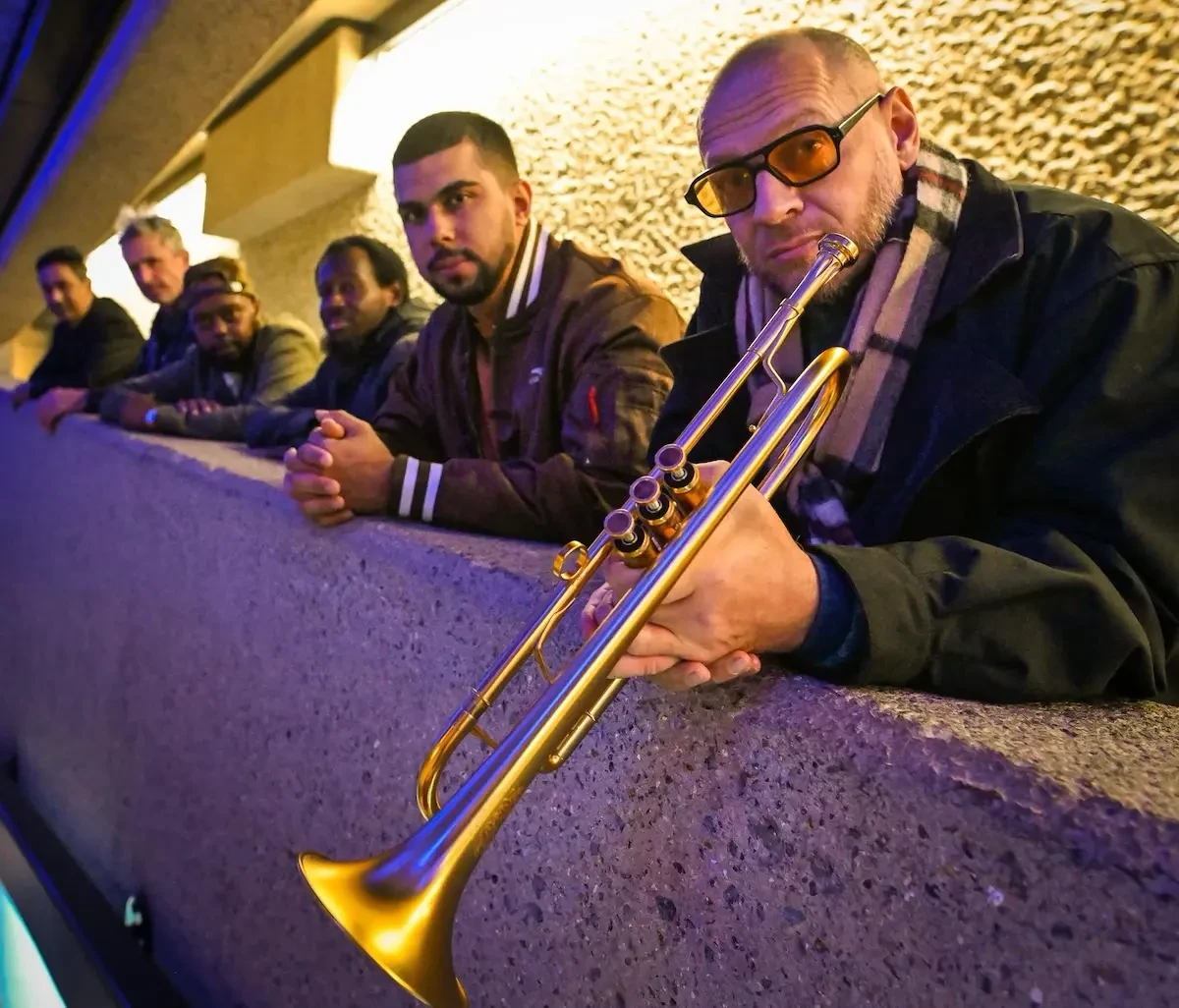
Led by veteran trumpeter Sean Corby, the Solomon Gundy Band’s Hancestry is an uncompromising statement of cultural and musical lineage. Rather than adopting a purely historical or archival approach, Corby constructs an auditory environment that seamlessly marries the sonic textures of contemporary soul, jazz electronica, and Afro-centric rhythms with the raw, adventurous spirit of 20th-century Black intellectualism and artistic liberation.
Sonic Architecture and Arrangement
The record immediately announces its colors with the title track, driving forward with an infectious, organic groove. Listeners familiar with the vanguard of the contemporary British jazz scene will instantly recognize structural kinships to the cosmic urgency of groups like The Comet Is Coming and Sons Of Kemet. However, Corby’s ensemble carves out its own idiosyncratic path. On pieces like Sparky’s Lament, an earthy, grounded acoustic rhythm section plays a continuous game of tag with soaring, astro-jazz brass configurations.
Corby’s leadership style throughout the sessions is characterized by a deliberate, laissez-faire ethos. Eschewing heavy-handed orchestration, he grants his massive, multi-generational ensemble the liberty to drift organically across the sonic spectrum. This structural looseness produces moments of breathtaking harmony juxtaposed against intentional, frictional discord—the natural byproduct of artists interacting in real-time, layering their motifs and shifting over one another without rigid constraints.
Tracks such as Divine Days and Drum Song For Chino actively subvert conventional, sanitized standards of musical beauty. They rumble, clatter, and surge against the listener’s expectations. Yet, this orchestrated "mess" is precisely where the album’s hidden gems reside, rewarding the patient listener with profound moments of self-discovery and enduring substance.
Conceptual and Literary Foundations
A defining feature of Hancestry is its explicit, deeply personal dedication to towering literary and cultural figures. While figures like writer James Baldwin never composed a musical note in the traditional sense, Corby and his collaborators channel the spirit of these icons rather than attempting a literal, notes-on-a-page translation. The album functions as an artistic extension of the intellectual embrace found in the works of authors like Zora Neale Hurston and Leon Forrest.
By refusing to cater to mainstream radio formats or commercial listener expectations, the Solomon Gundy Band has crafted an uncompromising, sophisticated work. It is an invitation to dive headfirst into a dense, multi-textured sonic narrative that honors yesterday’s trailblazers while charting an unapologetically bold tomorrow.
Tracklist and Personnel Profile
- Repertoire: Hancestry (For Zora Neale Hurston); Divine Days (For Leon Forrest); Sparky’s Lament; Duke Of Da Bronx; Drum Song For Chino; Choose To Be (For James Baldwin); Wadada (For Leo Smith & The People Of Grenfell); Seasons; Jazz Interlude/Solomon A Dub (Total Runtime: 43:53)
- Core Lineup: Sean Corby (trumpet); Courtney Pine (tenor saxophone); Sultan Stevenson (piano); Julie Dexter, Drew Gonsalves (vocals); Daniel Crosby, Andy Edwards (drums); Simon Edwards, Will Alman, Ygor Azevedo (bass); Sam Campana, Jim Le Mesurier (congas/batá); Phil Dawson, Martin Chung, Chris Dawkins (guitars); Jonathan Enright (trombone); George King, Andrew C. Young (keyboards).
- Provenance: Recorded in England, slated for a c. 2026 release via Dundus Records.
2. Espen Eriksen Trio — Almost There (Rune Grammofon)
For nearly two decades, the Espen Eriksen Trio has occupied a unique, highly revered niche in European jazz. Eschewing the hyper-technical pyrotechnics or relentless avant-garde deconstruction favored by many of their contemporaries, the trio—anchored by Eriksen on piano, Lars Tormod Jenset on double bass, and Andreas Bye on drums—has consistently prioritized melodic grace, emotional resonance, and architectural restraint. Almost There is the latest triumphant addition to this cohesive catalog.
The Nordic Aesthetic and Intimate Dynamics
Writing for a traditional piano trio carries inherent compositional risks; without a horn or vocal lead, smaller ensembles can occasionally sound cavernous or structurally hollow. The Espen Eriksen Trio masterfully circumvents this pitfall by leaning heavily into a characteristic, brumous Nordic soundscape. Their music is defined by an atmosphere of profound intimacy, treating the listener not as a distant spectator in a massive auditorium, but as an honored guest in an intimate chamber setting.
From the gentle opening notes of the title track Almost There to the evocative, lingering fade of the closing piece The Atlantic, the compositions unfold with a delicate, featherlight presence. Yet, this fragility is deceptive. Beneath the pristine surface lies a robust emotional pull and a sturdy, unwavering rhythmic momentum.
On Winter Is Coming, the trio demonstrates remarkable dynamic agility. The piece initiates from a stark, minimalist foundation driven forward by Jenset’s resonant double bass. As the track evolves, it gathers psychological and physical weight, culminating in a striking, blooming piano motif near its conclusion.
Reflective Minimalism and Historical Echoes
Throughout Almost There, a prevailing tone of contemplation and unhurried reflection dominates. The composition Another Day winds its way methodically through the instrumental framework, serving as a masterclass in collective cohesion and tasteful, understated soloing.
Critics have frequently noted a stylistic kinship between Eriksen’s laid-back approach to thematic unfurling and the legendary American jazz pianist Vince Guaraldi. While the trio’s harmonic vocabulary and atmospheric sensibilities remain distinctively European, that same relaxed, effortlessly accessible charm permeates the record.
Unlike many European contemporaries obsessed with free-form sonic terraforming, Eriksen and his cohorts remain dedicated to grounded, song-oriented structures. Cuts like A Dream In Black And White radiate a neo-romantic warmth, proving that musical minimalism need not be stark, sterile, or emotionally bankrupt. Almost There is a quiet triumph that demands mindful, uninterrupted listening.
Tracklist and Personnel Profile
- Repertoire: Almost There; Sepia Sky; Winter Is Coming; Fleeting Nights; Another Day; Ancient Rituals; A Dream In Black And White; The Atlantic (Total Runtime: 35:46)
- Core Lineup: Espen Eriksen (piano); Lars Tormod Jenset (double bass); Andreas Bye (drums).
- Provenance: Recorded in Oslo, Norway, released via Rune Grammofon.
3. James Gordon Williams — Falling To Rise Again (Mubuntusic Records)
Keyboardist and composer James Gordon Williams steps forward with an air of complete relaxation and artistic self-assurance on Falling To Rise Again. Supported by an elite ensemble of modern masters, Williams navigates a rich topography of shifting moods—alternating seamlessly between languid, introspective meditations and joyous, celebratory explosions of rhythm.
Sonic Hybridization and Instrument Selection
As the album unfurls, listeners are treated to an organic synthesis of world-music rhythms and sophisticated jazz-fusion textures. Williams demonstrates exceptional editorial discipline in his approach to arrangement. Rather than overwhelming the mix by deploying every available sonic color simultaneously, he constructs tracks with thoughtful, breathing layers that expand and contract organically from movement to movement.
The second track, Prayer, serves as an early showcase for Williams’s sublime, assured keyboard technique. Eschewing flashy, chaotic pyrotechnics or gratuitous displays of technical vanity, Williams allows the melodic core of the composition to blossom naturally, enveloping the listener in a warm, comforting embrace. The addition of expressive saxophone lines deepens the melody, underpinned by a world-class rhythm section functioning with telepathic synchronicity.
The Metheny Influence and Group Cohesion
Guitarist Matthew Stevens leaves an indelible mark across the record, injecting a smooth, evocative atmosphere that frequently evokes the timeless lyricism of Pat Metheny without descending into derivative pastiche. Stevens favors a slightly groovy, harmonically rich performance style. On standout cuts like Cuse Cue Blues, his guitar lines coil gracefully around the foundation laid by the piano, bass, and percussion, providing precisely calibrated splashes of color.
The true triumph of Falling To Rise Again, however, lies in its peerless group cohesion. Williams manages the rare feat of engineering an album where individual tracks possess distinct identities while flowing into one another with seamless fluidity, entirely avoiding the traps of sonic monotony or structural repetition.
Artistic Evolution: A Retrospective Comparison
To fully appreciate the artistic maturity of Falling To Rise Again, one must look backward to Williams’s 2004 release, Unrepeatable Life. Where that earlier project leaned heavily into traditional jazz idioms and conventional harmonic structures, the new record reveals a radically evolved voice—an artist who has fully unlocked a vernacular uniquely his own. Falling To Rise Again stands as a powerful testament to the reality that an artist’s point of origin does not dictate their ultimate destination, and that the winding road of creative self-discovery is well worth traveling.
Tracklist and Personnel Profile
- Repertoire: Yemoja (Water Spirit Meditation); Prayer; Cuse Cue Blues; Falling To Rise Again; Turning The Tide; Incurable Romantic; Philadelphia Morning; Sebastian (Total Runtime: 54:40)
- Core Lineup: James Gordon Williams (piano, Rhodes); Matthew Stevens (guitar); Morgan Guerin (bass, tenor saxophone); Terri Lyne Carrington (drums); Daniel Sadownick (percussion).
- Provenance: Recorded January 2-3, 2024, at Wellspring Sound Studio, Acton, MA. Released via Mubuntusic Records.
Supporting Context & Metrics
To contextualize these releases within the broader commercial and critical framework of the global music industry, several key metrics and historical parallels must be considered.
+-----------------------------------------------------------------------------------+
|                        COMPARATIVE METRICS AT A GLANCE                            |
+--------------------------+-----------------------------+--------------------------+
| Album Title              | Primary Aesthetic           | Average Track Length     |
+--------------------------+-----------------------------+--------------------------+
| Hancestry                | Afro-Soul / Jazz Electronica| ~4.8 Minutes             |
| Almost There             | Nordic Chamber Jazz         | ~4.4 Minutes             |
| Falling To Rise Again    | Modern Fusion / World-Jazz  | ~6.8 Minutes             |
+--------------------------+-----------------------------+--------------------------+- The Vinyl Revival and Physical Media: All three releases lean into formats designed for deliberate consumption—whether through Dundus Records’ uncompromising physical packaging, Rune Grammofon’s meticulously curated audiophile vinyl pressings, or Mubuntusic’s commitment to high-resolution studio fidelity. In an era dominated by shuffle-culture and three-minute streaming algorithms, these albums demand uninterrupted, long-form listening experiences (ranging from the tight 35-minute journey of the Espen Eriksen Trio to the expansive 54-minute sonic voyage of James Gordon Williams).
- Geographic Diversity: This survey highlights the truly international scope of modern improvised music. Ranging from the urban, multi-culturally rich landscape of the English jazz scene (Solomon Gundy Band), through the tranquil, acoustic chambers of Oslo (Espen Eriksen Trio), to the cosmopolitan, cross-genre crucible of the American Northeast (James Gordon Williams), the global jazz language continues to absorb localized dialects while maintaining a universal core.
Official Statements & Industry Perspectives
While formal press statements from record labels and artists often skew toward promotional hyperbole, the underlying philosophies articulated by the creators of these three projects point toward a unified industry shift away from stylistic purism in favor of radical artistic autonomy.
Speaking on the conceptual framework driving Hancestry, representatives for Dundus Records emphasized the project’s refusal to pander to commercial expectations:
"This is not music designed to function as polite background noise for corporate lounges or algorithm-driven playlists. Sean Corby and his collective have forged an unapologetic cultural document that demands active intellectual and emotional engagement from its audience, tying the ancestral struggles of literary giants directly to the pulsing, modern heartbeat of Afro-centric jazz electronica."
Regarding the minimalist philosophy governing the Espen Eriksen Trio’s Almost There, Rune Grammofon issued a statement underscoring the revolutionary power of quietude in a noisy world:
"In an industry increasingly obsessed with sensory overload, hyper-complex polyrhythms, and restless sonic experimentation, the Espen Eriksen Trio continues to prove that radical artistic bravery can manifest as pure, unadulterated restraint. Almost There is a masterclass in spatial awareness, emotional clarity, and the enduring power of the unhurried melody."
Finally, reflecting on the collaborative ethos behind Falling To Rise Again, James Gordon Williams noted the profound importance of artistic evolution and trust among elite collaborators:
"When you enter the studio with musicians of the caliber of Matthew Stevens, Terri Lyne Carrington, Morgan Guerin, and Daniel Sadownick, your job as a composer isn’t to micro-manage every note. It is to create a secure architectural foundation, step back, and let the collective spirit breathe life into the material. This album represents two decades of unlearning, discovery, and ultimately finding the courage to sound entirely like myself."
Future Outlook
As the global music community looks toward the mid-2020s and beyond, the trajectories mapped out by Sean Corby, the Espen Eriksen Trio, and James Gordon Williams offer a clear glimpse into the future of improvised music.
- The Death of Genre Silos: The traditional, rigid boundaries separating jazz, electronica, classical minimalism, and world-music traditions will continue to dissolve. As demonstrated by the Solomon Gundy Band and James Gordon Williams, tomorrow’s vital jazz artists will seamlessly synthesize these traditions into cohesive, highly personalized idioms.
- The Counter-Reformation of Intimacy: Even as hyper-produced, computer-centric soundscapes dominate mainstream commercial markets, there will remain a fervent, rapidly expanding appetite for organic, acoustic, and room-ambient recordings. The enduring success and critical acclaim of ensembles like the Espen Eriksen Trio prove that human vulnerability, spatial dynamics, and unhurried emotional storytelling represent an invaluable antidote to modern burnout.
- The Rise of Intellectual and Cultural Intertextuality: Instrumental music is increasingly shaking off the historical burden of being viewed as purely abstract. By tying their compositions directly to the legacies of literary icons (Baldwin, Hurston, Forrest), modern jazz artists are actively reclaiming their role as cultural archivists and intellectual commentators, ensuring that the music remains deeply tethered to the socio-political and historical realities of the human condition.
Ultimately, Hancestry, Almost There, and Falling To Rise Again stand as towering achievements in their respective domains. They remind us that jazz—in all its disparate, shape-shifting glory—remains one of humanity’s most vital, resilient, and endlessly renewable artistic mediums. Listeners willing to dive into these rich sonic waters will find themselves richly rewarded.