
Executive Overview
The contemporary jazz landscape exists in a perpetual state of tension between reverence for historical idioms and the relentless pursuit of individualistic expression. In an era where commercial algorithms frequently favor the regurgitation of derivative, highly polished fusion tropes, genuine artistic innovation requires a delicate navigation of technique, emotional resonance, and conceptual depth. This critical overview examines three distinct contributions to the modern jazz lexicon: the Ben Crosland Quintet’s melodic post-bop exploration North York Skies, Jason Robinson’s sprawling, conceptually ambitious tribute Blue Salience: For Yusef Lateef, and Francesca Han’s subdued, ECM-reminiscent piano trio recording Sisyphus.
Together, these releases encapsulate the multifaceted nature of current jazz production. While Crosland offers an understated masterclass in straight-ahead interplay and acoustic-electric balance, Robinson pushes the structural boundaries of large-ensemble dedication albums through exploratory improvisation and rich orchestration. Conversely, Francesca Han’s work prompts a critical examination of genre saturation, raising vital questions regarding stylistic derivativeness within contemporary piano trio formats. Through rigorous analysis of personnel choices, compositional frameworks, and stylistic execution, this report provides a comprehensive assessment of where contemporary jazz stands—and where its aesthetic fault lines lie.
Detailed Chronology & Production Contexts
The genesis of these three recordings spans a significant timeline, reflecting vastly different approaches to studio environments, ensemble scaling, and compositional preparation. Understanding the chronological backdrop of each project illuminates the stylistic choices made by the respective artists.
Ben Crosland Quintet: North York Skies (Recorded April 2023)
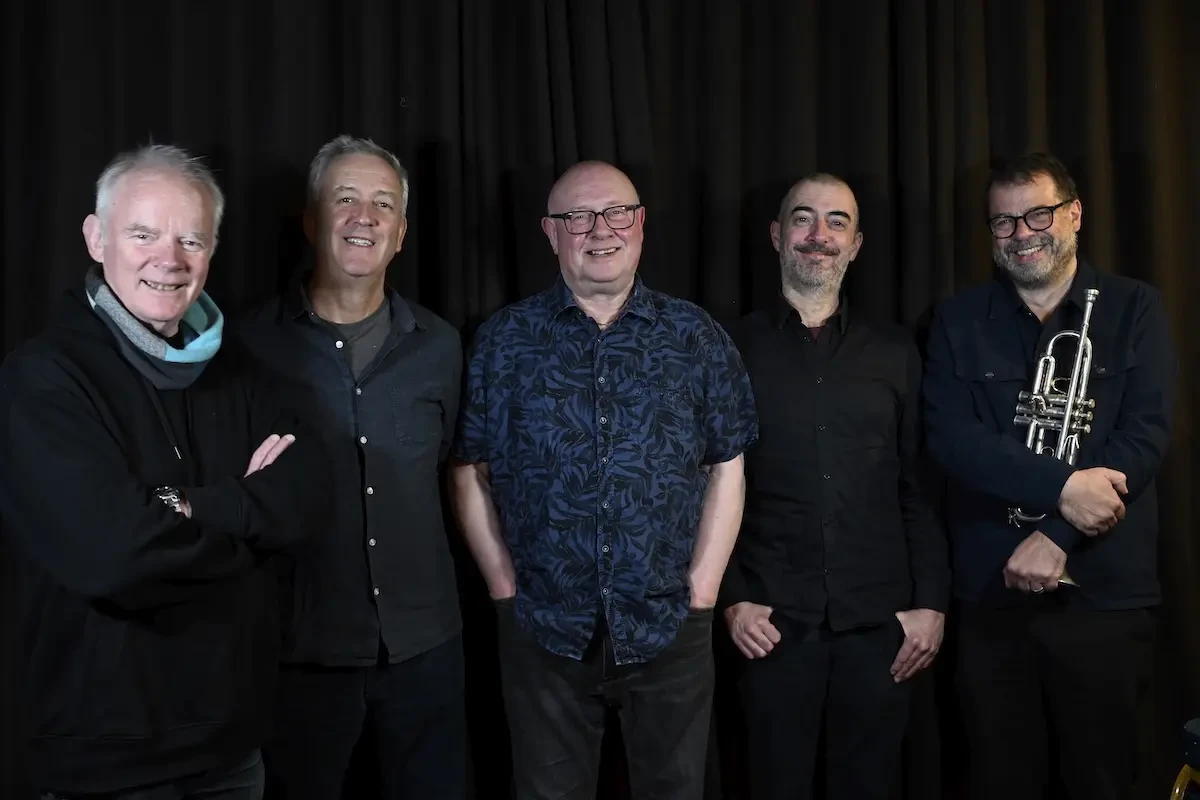
The realization of North York Skies took place over a concentrated three-day window from April 2 to April 4, 2023, at the Temple Music Studio in Sutton. Bandleader and bassist Ben Crosland assembled a tight, highly communicative quintet featuring Steve Waterman on trumpet and flugelhorn, Steve Lodder on piano, electric piano, and organ, Chris Allard on guitar, and Nic France on drums.
Rather than relying on excessive studio manipulation or over-rehearsal, the sessions were designed to capture the spontaneous chemistry of a seasoned working unit. The resulting 67-minute album, released on the Jazz Cat label (JCCD 121), stands as a testament to the benefits of under-stated preparation. The studio environment allowed Crosland’s warm, woody bass guitar tones to anchor the arrangements effectively, proving that the instrument can maintain a commanding presence in a traditional straight-ahead jazz setting without reverting to fusion-era excesses.
Francesca Han Trio: Sisyphus (Recorded March 2017)
Recorded earlier in the timeline on March 21, 2017, at Studio Dede, Francesca Han’s Sisyphus captures a minimalist piano trio featuring Han on piano, Takashi Sugawa on bass, and Shun Ishiwaka on drums. Released on the Hanji imprint (HJCD004), the 42-minute, seven-track album represents a conscious alignment with the restrained, atmospheric aesthetics popularized by European labels such as ECM.
The studio setting was utilized to emphasize spatial awareness, delicate touch, and acoustic purity. However, the prolonged gap between the 2017 recording sessions and its subsequent critical reception highlights the enduring challenges faced by artists operating within heavily codified, ultra-polite modern jazz sub-genres where standing out from established historical precedents remains an uphill battle.
Jason Robinson: Blue Salience: For Yusef Lateef (Recorded May 2025)
Representing the most expansive and recent production endeavor among the three, Jason Robinson’s Blue Salience: For Yusef Lateef was captured over a three-day intensive from May 12 to May 14, 2025, at the Fraser Performance Studio, WGBH, in Boston. Issued via Circumvention Music (059), this massive two-disc set (spanning 71.37 and 63.43 minutes respectively) required a monumental logistical effort.
Robinson—acting as composer, arranger, and multi-instrumentalist—orchestrated a sprawling ensemble that included four trumpeters, three trombonists, multiple woodwind specialists, rhythm section mainstays, and notable guest soloists such as trombonist Michael Dessen and violinist Terry Jenoure. The sessions were engineered to bridge the gap between tightly scored, Ellingtonian brass textures and wide-open, spontaneous modal explorations, honoring the restless, borderless legacy of Yusef Lateef through rigorous collective execution.
Supporting Context & Metrics
To fully appreciate the artistic weight and market positioning of these releases, it is necessary to examine their structural metrics, instrumentation scopes, and ideological stances within the broader music industry.
Album Metrics and Tracklists
| Album Title | Artist | Label & Catalog | Release / Session Year | Total Duration | Track Count |
|---|---|---|---|---|---|
| North York Skies | Ben Crosland Quintet | Jazz Cat (JCCD 121) | April 2023 | 67:04 | 12 tracks |
| Blue Salience: For Yusef Lateef | Jason Robinson | Circumvention Music (059) | May 2025 | 134:80 (2 CDs) | 13 tracks total |
| Sisyphus | Francesca Han Trio | Hanji (HJCD004) | March 2017 | 42:39 | 7 tracks |
Stylistic Dichotomies: Understatement vs. Saturation
A recurring theme across these critiques is the tension between understatement as a virtue and stylistic saturation as a risk.
- The Crosland Approach: Crosland’s North York Skies and The View From Room 12 reject commercial hype and high-budget marketing pipelines. Instead, they rely on musical substance that eschews technical grandstanding. Steve Waterman’s flugelhorn phrasing is deliberately economical—evoking the lyrical economy of the late Art Farmer—proving that restraint can project deeper emotional resonance than relentless pyrotechnics.
- The Robinson Approach: Robinson’s tribute to Yusef Lateef confronts the genre’s tendency toward safe, polite homages by embracing true artistic exploration. Rather than replicating Lateef’s exact stylistic trajectory, Robinson adopts Lateef’s philosophical appetite for adventure. The music shifts dynamically around the 4.30 mark in its centerpiece tracks, moving from structured orchestration into fearless improvisation that demands active, sustained engagement from the listener.
- The Han Approach: Conversely, Francesca Han’s Sisyphus illustrates the pitfalls of extreme stylistic containment. Operating within a heavily trodden piano trio paradigm reminiscent of Paul Bley, Steve Swallow, and Barry Altschul, the trio prioritizes politeness and immaculate craftsmanship to a fault. The resulting sonic landscape risks ear fatigue and disengagement, demonstrating that when a sub-genre reaches saturation, adherence to "good taste" can inadvertently suppress distinct artistic identity.
Official Critical Perspectives and Commentary
The reception of these albums underscores the critical community’s ongoing negotiation between valuing technical craftsmanship and demanding genuine artistic evolution. Below are synthesized excerpts and analytical breakdowns reflecting the core discourse surrounding each release.
On Ben Crosland’s Melodic Post-Bop
Critics have lauded Crosland’s ability to craft music that feels both refreshing and necessary in an era dominated by recycled fusion formulas.
"Given that the music inspired by [North York Skies] is, unusually for this era, melodically rich, unpretentious post-bop jazz… [it] discloses the sound of five accomplished musicians thoroughly enjoying themselves… Steve Waterman states the theme with a grace far too uncommon in this era of technique-for-its-own-jazz."
Furthermore, industry observers note that Crosland’s deliberate avoidance of aggressive marketing machinery allows the music to speak for itself. While major labels continue to fund younger artists reinterpreting late-20th-century smooth jazz icons (such as Grover Washington Jr. and Lonnie Liston Smith), Crosland’s work thrives on organic discovery and unforced elegance.
On Jason Robinson’s Conceptual Dedication
Robinson’s massive undertaking has been celebrated as a masterclass in avoiding the pitfalls of conventional tribute albums.
"Jazz has very much been in the business of dedications… for a good while now, which makes this dense, rewarding set something of an anomaly in the sense that the music and the musician it’s for are by no means notable for continuity. Instead Robinson seems to have taken… the exploratory spirit of Lateef’s art… and brought forth music infused with his own sense of adventure."
Reviewers emphasize that the sheer breadth of instrumentation—utilizing everything from tubular bells and cuicas to a train whistle and samba whistles—creates a self-contained musical ecosystem. The transition from predetermined arrangement to spontaneous interplay elevates the material, proving that large-ensemble jazz can maintain intellectual rigor without alienating its audience.
On Francesca Han’s Minimalist Aesthetic
Han’s work has provoked polarized responses regarding the boundaries of contemporary piano trio tropes.
"This album is a must for anyone who prefers their contemporary jazz exquisitely crafted, polite and in terms of volume and (lack of) variation of mood so unassuming that the ear… might well become disengaged long before the album’s run its course."
While tracks like Chrysanthemum (For Kikuchi) nod respectfully to historical free-bop precursors through funereal tempos, critics argue that the trio struggles to inject a distinct personal signature into the well-worn ECM-style template. Only when dynamic volume increases—such as on the title track—does the ensemble fully capture the listener’s attention.
Future Outlook
As the global jazz ecosystem continues to evolve past the mid-2020s, the trajectories highlighted by these three releases point toward several critical trends for composers, performers, and labels alike.
- The Economic Realities of Niche Publishing: Ben Crosland’s model demonstrates that independent, unhyped post-bop can carve out a sustainable niche away from major-label commercial pressures. However, it also underscores the persistent industry bias where substantial marketing budgets disproportionately favor retrospective, easily digestible fusion revivals over mature, straight-ahead innovation.
- Expanding the Boundaries of Tribute Work: Jason Robinson’s Blue Salience establishes a new benchmark for how artists can honor historical figures. By prioritizing methodology and exploratory philosophy over direct stylistic imitation, modern composers can avoid the traps of pastiche and deliver genuinely substantial, large-scale contemporary works.
- Overcoming Genre Saturation: Francesca Han’s Sisyphus serves as a cautionary tale for modern piano trios operating within hyper-refined sonic palettes. As audiences and critics grow increasingly weary of polite, derivative ECM-style minimalism, future artists will need to inject greater emotional volatility, structural unpredictability, and personal distinctiveness to prevent listener disengagement.
Ultimately, contemporary jazz remains a vibrant, albeit contested, battleground. Whether through Crosland’s warm acoustic-electric swing, Robinson’s kaleidoscopic orchestral adventures, or Han’s restrained acoustic poise, artists continue to test the limits of expression—reminding us that the genre’s true health lies in its willingness to question convention, embrace restraint, and honor the restless spirit of improvisation.