
Executive Overview
The contemporary jazz landscape exists in a perpetual state of tension between reverence for historical precedent and the relentless pursuit of individual sonic identity. In an era dominated by commercial algorithms, heavily marketed pastiches, and the recycling of nostalgic tropes, genuine artistic innovation often arrives quietly, bypassing the mainstream machinery to find its audience through sheer merit. This investigative review examines three recent and notable additions to the modern jazz canon: the Ben Crosland Quintet’s North York Skies, Jason Robinson’s expansive tribute Blue Salience: For Yusef Lateef, and Francesca Han’s introspective piano trio release, Sisyphus.
Each of these albums offers a distinct window into the current state of improvised music. Ben Crosland’s release provides a masterclass in unpretentious post-bop, highlighting the expressive capabilities of the bass guitar in a straight-ahead context while offering a much-needed stress-buster for contemporary listeners. Conversely, Jason Robinson’s monumental double-album project transcends standard genre tributes, capturing the exploratory and multifaceted spirit of the late Yusef Lateef through a massive, genre-defying ensemble. Meanwhile, Francesca Han’s Sisyphus invites a critical conversation regarding the boundaries of contemporary piano trio aesthetics, navigating the fine line between polite, exquisitely crafted minimalism and creative derivative fatigue.
By analyzing the production histories, compositional frameworks, and stylistic choices of these releases, this review sheds light on the broader cultural and economic currents shaping jazz today—contrasting the commodified hype of mainstream jazz marketing with the authentic, understated substance found at the genre’s grassroots.
Detailed Chronology and Production Histories
To fully understand the artistic merits and contextual weight of these recordings, it is essential to examine the specific timelines, recording environments, and personnel choices that brought them to life.
Ben Crosland Quintet: North York Skies
- Recording Dates: April 2–4, 2023
- Studio: Temple Music Studio, Sutton
- Label: Jazz Cat (JCCD 121)
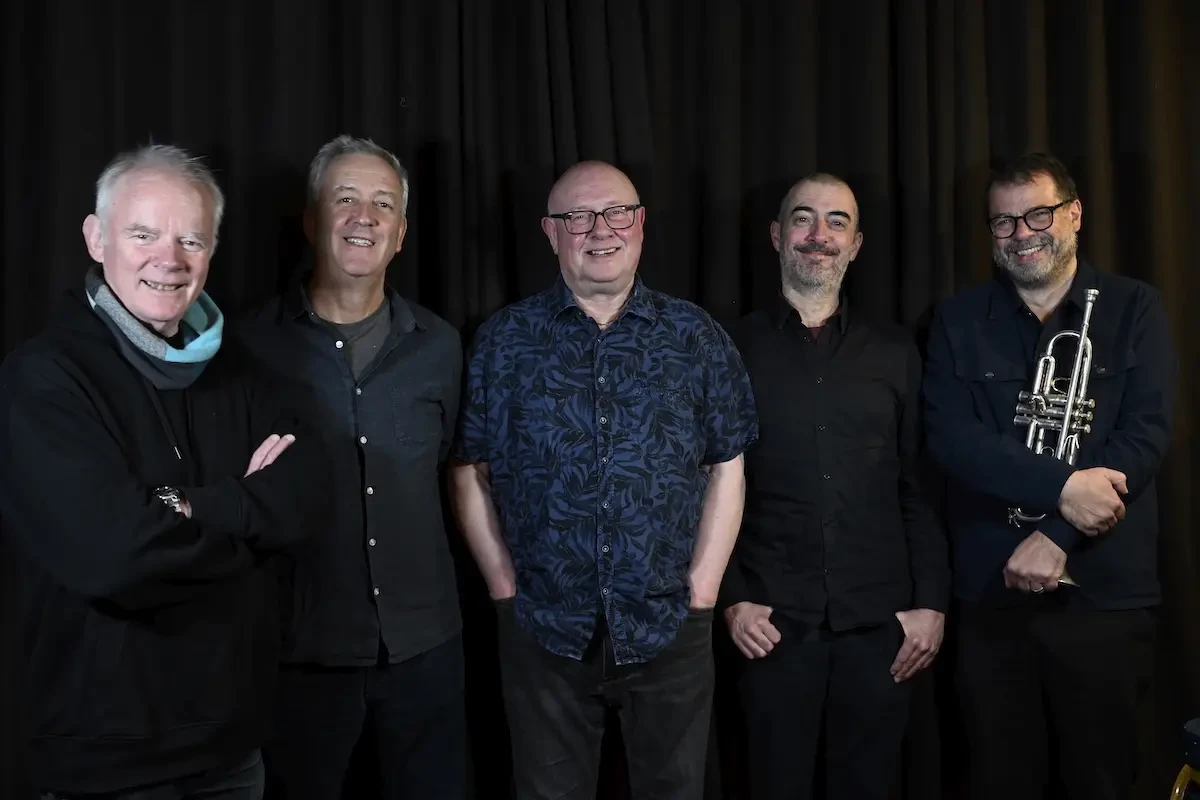
- Personnel: Steve Waterman (trumpet, flugelhorn); Steve Lodder (piano, electric piano, organ); Chris Allard (guitar); Ben Crosland (bass guitar); Nic France (drums).
- Tracklist: The Optimist; North York Skies; Howardian Undulations; Ballad Of Lilla Howe; The Blakey Lions; George And Monty; Breathing Space; Fat Betty; Purple Is The Colour; Vigilamus; The View From Room Twelve; Ain Howe Farewell. (Total Runtime: 67:04)
Recorded over three days in early April 2023 at Temple Music Studio in Sutton, North York Skies captures a quintet of seasoned British jazz musicians operating at the height of their collaborative synergy. Leader and bassist Ben Crosland assembled a lineup designed for melodic clarity and emotional resonance. Rather than relying on technical pyrotechnics for their own sake, the ensemble focused on breath, space, and understated interaction. Steve Waterman’s contributions on the flugelhorn establish a graceful thematic foundation reminiscent of the late Art Farmer, while Crosland coaxes warm, resonant tones from his bass guitar, challenging traditional assumptions about the instrument’s role in a straight-ahead acoustic jazz setting. The resulting 67-minute session balances tightly structured compositions with open, conversational improvisation.
Jason Robinson: Blue Salience: For Yusef Lateef
- Recording Dates: May 12–14, 2025
- Studio: Fraser Performance Studio, WGBH, Boston
- Label: Circumvention Music (059)
- Personnel: Jason Robinson (percussion, tenor saxophone, alto flute, tubular bells, cuica, synthesizer, clavinet, train whistle, sleigh bells); Bijon Watson, Mike Piepman, Haneef Nelson, Zoe Murphy (trumpets); Randy Pingrey, Chris Gagne (trombones); Angel Subero, Bill Lowe (bass trombones); Allan Chase, Marty Ehrlich, Felipe Salles, Ian Buss (reeds); Kevin Harris (piano); Eric Hofbauer (guitar); Avery Sharpe (bass); Richie Barshay (drums, percussion, timpani, gong, samba whistle); Michael Dessen (trombone on Fathom (Remembering Water)); Terry Jenoure (violin, vocals on Horizon), alongside other special guests.
- Tracklist:
- CD1: The Curved Path; Soul Keepers (Title Sequence 1); Blue Salience; Fathom (Remembering Water); Bright Spirits; Equipoise; The Cabin (71:37)
- CD2: Horizon; Manifold Oneness; Fifth Saga; The Heron; Gates Of Truth; The Golden Hue (63:43)
Marking one of the most ambitious conceptual projects in recent memory, woodwind multi-instrumentalist and Amherst College music professor Jason Robinson entered the Fraser Performance Studio at WGBH in Boston from May 12–14, 2025. Backed by an expansive ensemble featuring a robust brass section, dynamic rhythm players, and special guests, Robinson set out to honor the legacy of visionary artist Yusef Lateef. Rather than attempting a literal stylistic continuation, Robinson infused the sessions with Lateef’s pioneering, exploratory spirit. The resulting double album spans over two hours of intricate, multi-layered compositions that shift seamlessly from Ellingtonian orchestral brass arrangements to spontaneous, avant-garde explorations.
Francesca Han: Sisyphus
- Recording Dates: March 21, 2017
- Studio: Studio Dede (exact location unspecified)
- Label: Hanji (HJCD004)
- Personnel: Francesca Han (piano); Takashi Sugawa (b); Shun Ishiwaka (drums).
- Tracklist: Petit Soleil; Chrysanthemum (For Kikuchi); Sisyphus; Circle; Cowelessi; Count Yourself; Detour. (Total Runtime: 42:39)
Recorded on March 21, 2017, at Studio Dede, Francesca Han’s Sisyphus represents the archetypal contemporary piano trio recording, deeply influenced by the European chamber jazz tradition popularized by labels like ECM. Pianist Francesca Han, joined by bassist Takashi Sugawa and drummer Shun Ishiwaka, crafted a 42-minute journey characterized by restraint, polite phrasing, and deliberate minimalism. While tracks like Chrysanthemum (For Kikuchi) nod to historical precedents set by avant-garde masters like Paul Bley, the album’s overarching aesthetic poses critical questions about stylistic saturation within the contemporary piano trio format.
Supporting Context, Metrics, and Market Dynamics
The commercial and critical reception of these three albums highlights a profound dichotomy within the modern music industry. While major marketing budgets continue to flow toward youthful iterations of commercial fusion—recalling the late-20th-century sounds of Grover Washington Jr., Eric Gale, and Lonnie Liston Smith—the true beating heart of creative jazz often thrives in the unheralded spaces of independent labels and specialized studios.
| Album Title | Artist | Primary Label | Release Year | Average Track Runtime / Scope | Core Aesthetic Focus |
|---|---|---|---|---|---|
| North York Skies | Ben Crosland Quintet | Jazz Cat | 2023 | 67:04 (12 tracks) | Melodic post-bop, warmth, understated swing |
| Blue Salience | Jason Robinson | Circumvention Music | 2025 | 135:20 (13 tracks across 2 CDs) | Exploratory orchestration, dedication to Yusef Lateef, stylistic breadth |
| Sisyphus | Francesca Han | Hanji | 2017 (Review cycle current) | 42:39 (7 tracks) | Chamber jazz, ECM-inspired minimalism, acoustic restraint |
The Economics of Understatement
In an age saturated with digital noise and sensory overload, music that values understatement acts as a crucial psychological counterweight. Ben Crosland’s North York Skies and selections from Jason Robinson’s Manifold Oneness exemplify what critics term "stress-buster music." By rejecting the urge toward high-octane grandstanding or hyper-technical velocity, these artists allow musical substance to emerge organically.
However, the market reception of these approaches varies wildly. Independent releases such as Crosland’s rely heavily on organic word-of-mouth promotion among dedicated jazz aficionados. They prove that genuine artistry requires no artificial hype to resonate with listeners fortunate enough to discover it. Conversely, highly polished, polite chamber jazz—as heard on Francesca Han’s Sisyphus—risks commercial and artistic plateauing. When a subgenre becomes overly saturated, even exquisitely crafted recordings can struggle to maintain listener engagement, as the ear searches in vain for fresh narrative arcs or distinctive artistic fingerprints.
Official Statements and Critical Perspectives
The critical discourse surrounding these releases offers vital insight into how contemporary instrumental music is evaluated by tastemakers and scholars.
On Melodic Richness and Ensemble Synergy (Ben Crosland)
Reviewers have consistently praised North York Skies for its refusal to pander to modern technical excess. As observed in contemporary critical commentary:
"Steve Waterman (on flugelhorn) states the theme with a grace far too uncommon in this era of technique-for-its-substance jazz, and his solo follows through on that with a sense of economy on a par with that of the late Art Farmer… Crosland coaxes warm tones out of his bass guitar, and so highlights how that instrument can function nicely in a straightahead jazz context."
Furthermore, the collaborative dynamic of the quintet has been lauded as an antidote to modern fatigue:
"The embarrassment of elegant riches that is The View From Room 12 adds up to the kind of stress-buster music that exhibits a large portion of the kind of musical substance that comes with understatement as standard, and the work of a group that’s finely but not overly rehearsed."
On Exploratory Freedom and Structural Depth (Jason Robinson)
Jason Robinson’s tribute to Yusef Lateef challenged traditional reviewer constraints, proving too expansive for standard word counts. Observers noted the deliberate break from conventional tribute albums:
"Jazz has very much been in the business of dedications, ‘reimagining’ and paying homage for a good while now, which makes this dense, rewarding set something of an anomaly in the sense that the music and the musician it’s for are by no means notable for continuity. Instead Robinson seems to have taken what might be regarded as the exploratory spirit of Lateef’s art… and brought forth music infused with his own sense of adventure."
The structural metamorphosis within tracks like Manifold Oneness highlights the demanding nature of Robinson’s orchestration:
"…the feeling of the piece being a musical world in itself is underscored by the sea change from relatively predetermined to relatively spontaneous proceedings at around the 4.30 mark, this being a point at which substance becomes even greater, as do the demands asked of the listener."
On Stylistic Saturation and Chamber Jazz Restraint (Francesca Han)
Critiques of Francesca Han’s Sisyphus underscore the risks inherent in working within well-trodden stylistic territory. While acknowledged as a "must for anyone who prefers their contemporary jazz exquisitely crafted," the album also invites sharp scrutiny regarding originality:
"…even here the many, many precedents for piano, bass and drums trios, particularly of the contemporary jazz persuasion, and more specifically those that find their way on to the ECM label, spring too easily to mind, and in a manner suggesting we might well have reached some sort of saturation point, or a point of no return."
Future Outlook
As the global jazz community looks toward the future, the lessons imparted by these three releases point toward several emerging trends in composition, production, and artistic identity.
- The Revival of Melodic Economy: As demonstrated by the Ben Crosland Quintet, listeners are increasingly fatigued by hollow technical wizardry. Future straight-ahead and post-bop projects are likely to place renewed emphasis on warm tonal palettes, breathing space, and emotional directness.
- Expansive, Non-Linear Tributes: Jason Robinson’s work with Blue Salience establishes a new benchmark for how artists can honor historical figures. Moving away from literal covers or safe genre exercises, future tributes will likely embrace Robinson’s ethos of channeling an icon’s exploratory spirit through massive, cross-idiomatic ensembles.
- Navigating Aesthetic Saturation: Francesca Han’s Sisyphus serves as a cautionary tale for piano trios working within chamber jazz parameters. To avoid creative stagnation, emerging acoustic ensembles will need to find ways to inject distinct personal identity and unexpected structural risks into their work, pushing past the boundaries of polite minimalism.
Ultimately, the health of contemporary jazz does not depend on massive corporate marketing budgets or the cyclical recycling of past commercial fusion trends. Instead, it relies on the uncompromising integrity of independent artists who continue to mine new emotional and structural depths—whether through the warm, unpretentious swing of a British quintet, the sprawling orchestral vision of an academic visionary, or the quiet, meditative introspection of a piano trio.