
BONN, GERMANY — In the high-stakes arena of international classical music competitions, winning First Prize is traditionally viewed as the finish line of a grueling marathon. For decades, the narrative has been painfully predictable: a young virtuoso conquers a prestigious jury, lifts a glittering trophy, and is unceremoniously thrust into the unforgiving machinery of the global concert circuit. Left to navigate dizzying travel schedules, intense performance pressures, and complex industry dynamics independently, many of history’s brightest rising stars have burned out before their artistic identities could fully crystallize.
Today, however, a profound paradigm shift is underway in the cultural capital of Bonn.
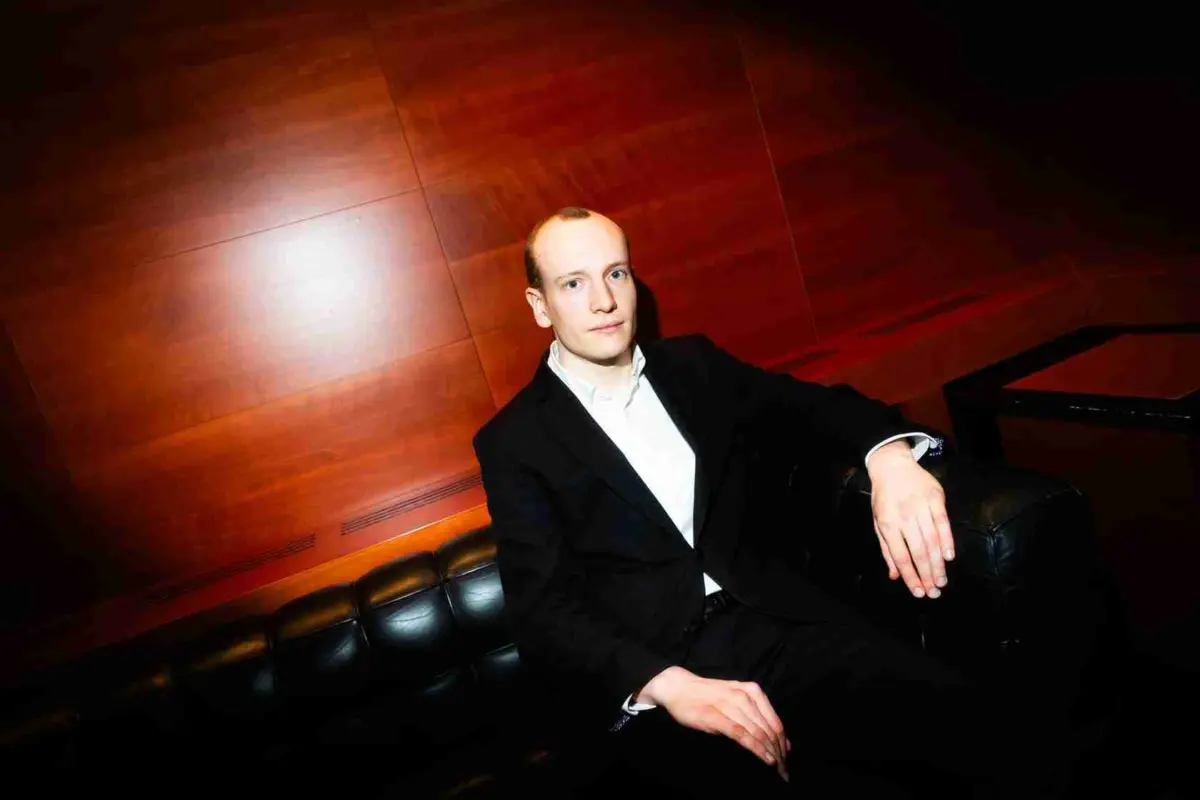
Momentum continues to build unabated for American pianist Seth Schultheis, the triumphant First Prize winner of the 2025 Telekom Beethoven Competition. Yet, the most compelling headline surrounding his meteoric rise is not merely a recital itinerary or a glittering debut; it is a pioneering partnership designed to safeguard his long-term artistic and personal sustainability.
In a landmark collaboration announced this spring, the Telekom Beethoven Competition has joined forces with Zenezen—a visionary platform dedicated to the holistic development and wellbeing of musicians. Over the next twelve months, Schultheis will serve as the vanguard for a new initiative, receiving tailored mentorship, access to a deeply interconnected global network of industry leaders, and strategic resources engineered to fortify both his public profile and his internal resilience.
This in-depth report explores the anatomy of Schultheis’s post-competition ascent, examines the structural vulnerabilities facing contemporary classical musicians, and evaluates how this innovative alliance between Bonn and Zenezen could redefine how the industry nurtures its most precious assets.
Executive Overview: A Blueprint for the Modern Virtuoso
The classical music industry of the 21st century demands an unprecedented level of versatility from its young artists. A modern laureate cannot simply be a master of the keyboard; they must function as an entrepreneur, a cultural ambassador, a media personality, and an unyielding physical endurance athlete.
When Seth Schultheis captured the imaginations of the jury and audiences alike at the 2025 Telekom Beethoven Competition, he did so with a rare combination of structural intellectual rigor, technical wizardry, and profound interpretive depth. Recognizing that a competition victory is merely the catalyst—rather than the culmination—of a career, the leadership of the Telekom Beethoven Competition looked beyond the traditional spoils of victory (cash prizes and standard booking arrangements) to address the hidden hazards of early-career acceleration.
Enter Zenezen. Co-founded by acclaimed British pianist and Artistic Director Ashley Wass, Zenezen was conceived to bridge the dangerous chasm that exists between winning a major international accolade and maintaining a vibrant, healthy, lifelong career.
By pairing Schultheis with Zenezen’s multidisciplinary framework, the Telekom Beethoven Competition is championing a holistic philosophy. This initiative asserts that artistic excellence cannot be divorced from mental health, physical longevity, and sustainable workload management. As the classical world watches closely, this twelve-month pilot collaboration establishes a bold new benchmark for how institutions can—and arguably must—support the artists they launch into the world.
Detailed Chronology: From Bonn Triumph to International Stages
To understand the urgency and significance of Schultheis’s new support structure, one must examine the whirlwind trajectory that followed his victory in late 2025.
The Post-Competition Catalyst (Late 2025)
The immediate aftermath of a premier competition win is a dizzying blur of interviews, recording propositions, and sudden calendar congestion. For Schultheis, the transition from contestant to ambassador was instantaneous. Rooted deeply in the core repertoire championed by the competition bearing Ludwig van Beethoven’s name, Schultheis immediately stepped into a dense, high-profile run of European engagements designed to test his mettle and showcase his artistry to discerning international audiences.
Spring to Autumn 2026: A Continental Imprint
The opening months of 2026 have mapped an aggressive, prestigious expansion of Schultheis’s performance footprint:
- New Year’s Resonance: Schultheis made a triumphant feature appearance at the Beethoven Orchester Bonn’s prestigious New Year’s Concert, held within the legendary acoustics of the historic Beethovenhalle. Playing in the city where Beethoven shaped his musical voice served as a symbolic homecoming for the American pianist.
- The Polish Milestone: In spring, Schultheis crossed international borders to appear at the landmark 30th Beethoven Easter Festival in Poland. Performing Beethoven’s monumental Piano Concerto No. 3 in C minor, Op. 37, he delivered an interpretation praised for its dramatic tension, architectural clarity, and lyrical introspection.
- The German Orchestral Odyssey: Following his Polish triumph, Schultheis embarked on an extensive, multi-city concert tour across Germany alongside the renowned Klassische Philharmonie Bonn. This grueling schedule of orchestral collaborations tested his adaptability across diverse acoustic environments and regional audience demographics.
- Chamber and Contemporary Spaces: Diversifying his artistic profile, Schultheis brought his artistry to Munich’s avant-garde cultural hub, the Bergson Kunstkraftwerk, demonstrating an ability to captivate contemporary, genre-agnostic audiences outside traditional concert halls.
- Upcoming Autumn Showcase: The momentum shows no signs of slowing, with an eagerly anticipated recital and concerto appearance slated for Hatfield, just outside London, this coming autumn. Furthermore, future concerto collaborations with the prestigious Czech Philharmonic are already locked into the calendar for 2027.
These engagements are not accidental; they are the direct fruit of the Telekom Beethoven Competition’s deliberate, long-range career-launching apparatus. Regular invitations to perform at the world-renowned Beethovenfest are already woven into Schultheis’s upcoming seasons, cementing his status as a core artist within the global Beethoven community.
Supporting Context & Metrics: The Anatomy of Career Sustainability
While Schultheis’s calendar reads like a young pianist’s ultimate wishlist, industry insiders know that this pace carries significant psychological and physical tolls. To contextualize the necessity of the Zenezen partnership, one must examine the broader socioeconomic and psychological realities of modern classical music careers.
The Hidden Toll of the Concert Circuit
Recent psychological studies within the performing arts sector reveal alarming statistics regarding the wellbeing of young classical musicians:
- Burnout Rates: Over 60% of professional musicians report experiencing symptoms of severe burnout before the age of thirty.
- Isolation: The itinerant lifestyle of a touring soloist—characterized by lonely hotel rooms, relentless international travel, and disrupted circadian rhythms—fosters chronic isolation, compounding performance anxiety.
- The "Cliff Effect": The sudden transition from the highly structured, supportive environment of a music conservatory or competition to the hyper-capitalistic freelance market often leaves young artists feeling adrift, exploited, or commercially overexposed.
Zenezen’s Intervention Model
Zenezen was engineered specifically to counter these systemic failures. Rather than focusing solely on public relations or booking acquisition—areas typically managed by standard artist management agencies—Zenezen targets the internal infrastructure of the artist.
Over the next year, Schultheis will receive:
- Tailored Strategic Mentorship: One-on-one guidance from seasoned industry veterans who understand the nuances of long-term career pacing, repertoire selection, and artistic boundary-setting.
- Cross-Disciplinary Network Access: Direct integration into a global community of thinkers, health professionals, and artistic peers, breaking down the professional silos that often plague solo instrumentalists.
- Resilience Training: Tools and frameworks designed to manage performance anxiety, process critical reception constructively, and maintain physical wellness amidst a demanding international touring schedule.
By embedding this support system directly into the critical window following a major competition victory, the partnership aims to ensure that Schultheis’s talent is not merely exploited for immediate commercial gain, but carefully cultivated for a decades-long artistic journey.
Official Statements: Voices of Vision and Leadership
The philosophical alignment between the Telekom Beethoven Competition and Zenezen is articulated powerfully by the key architects of this landmark initiative.
Pavel Gililov, Artistic Director of the Telekom Beethoven Competition, emphasized the deeper institutional responsibility toward laureates:
"We are delighted to collaborate with Zenezen and to provide this additional development opportunity for Seth Schultheis, the first prize winner of our 2025 Telekom Beethoven Competition. We care deeply about the sustainable development of our participants’ artistic careers, and we believe that this must go hand in hand with a strong awareness of musicians’ health and wellbeing, making Zenezen an ideal partner in this shared commitment."
Gililov’s perspective marks a progressive evolution in competition directorship. Historically, competitions evaluated contestants, handed out prizes, and washed their hands of the participants’ future welfare. By actively investing in Schultheis’s holistic development, the Telekom Beethoven Competition is establishing a gold standard for institutional stewardship.
Echoing this sentiment, Ashley Wass, Co-founder and Artistic Director of Zenezen, shed light on the perilous nature of post-competition trajectories:
"The period following a major competition success is tremendously exciting, but it is also riddled with potential pitfalls. Our mission is to provide Seth with the support that so many young musicians lack at this critical junction, such that he can build a career that is healthy and sustainable from the opportunities that come his way."
Wass’s firsthand experience as an internationally celebrated concert pianist lends immense credibility to Zenezen’s mission. He understands intimately the dissonance between the public adulation of the stage and the private vulnerability of the dressing room.
Future Outlook: A New Standard for Classical Music
As Seth Schultheis steps onto the stage in Hatfield this autumn, and as he looks ahead to his landmark collaborations with the Czech Philharmonic in 2027, he does so not just as a gifted prize-winner, but as the beneficiary of a smarter, more compassionate industry model.
The joint initiative between the Telekom Beethoven Competition and Zenezen sends an unmistakable signal to the wider classical music ecosystem: the future of the art form depends as much upon the health, mental fortitude, and balanced development of the artist as it does upon technical brilliance.
In an industry historically prone to chewing up and spitting out its young prodigies, this partnership offers a beacon of hope and a practical blueprint for longevity. For Seth Schultheis, the road ahead is undoubtedly demanding, but armed with world-class artistry, relentless drive, and unprecedented holistic support, his musical voice is poised to resonate profoundly across the international stage for decades to come.