
Executive Overview
In the fast-paced, high-stakes ecosystem of New York theatre, longevity is a rare and coveted commodity. While countless productions flutter onto the Great White Way and Off-Broadway stages only to vanish within weeks, a select few manage to capture the elusive lightning-in-a-bottle zeitgeist that translates to years—and sometimes decades—of commercial and critical success. Among these modern marvels is the international smash-hit farce The Play That Goes Wrong.
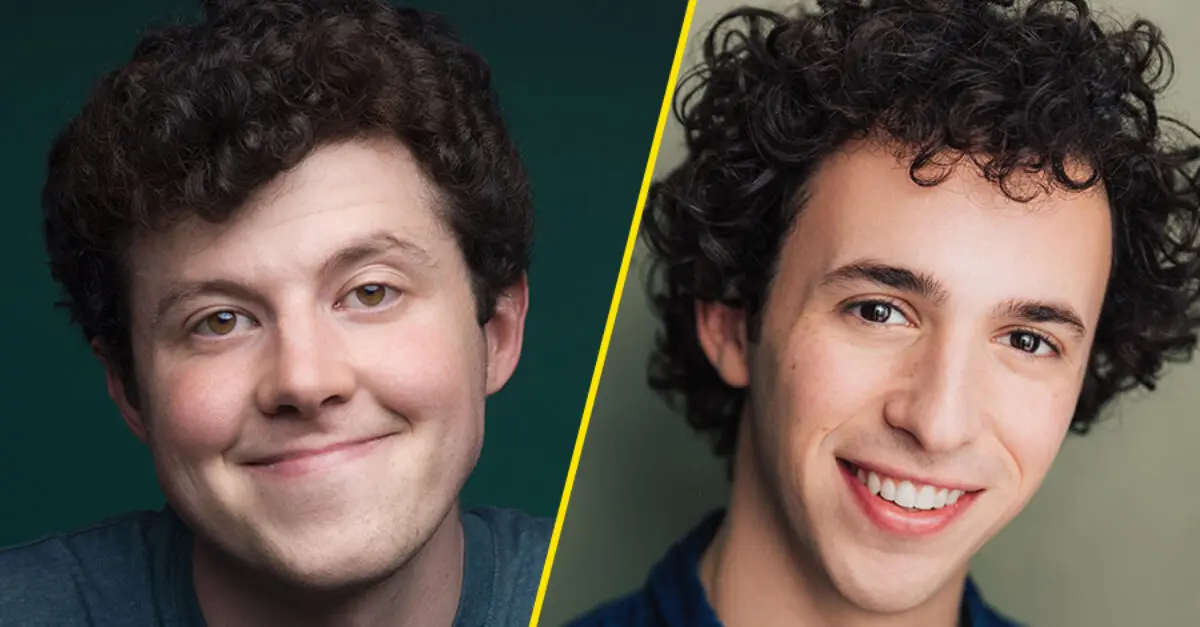
As the production continues its triumphant residency at New World Stages—now proudly celebrating its milestone ninth year in New York City—the theatrical community prepares for a significant transition within its ranks. Trevor Braun, a stalwart of physical comedy who has anchored the chaotic production through an astonishing 1,500 performances as the hapless Dennis, is set to take his final bow on September 3. Braun’s departure marks the end of a remarkable era for the long-running slapstick comedy, signaling both the closing of a golden chapter and the dawn of a fresh comedic journey for the institution.
Stepping into the formidable, obstacle-laden shoes of Dennis is acclaimed stage actor Adam Langdon, whose arrival is slated for September 14. Langdon, best known to audiences for his Helen Hayes Award-nominated turn as Christopher in the North American tour of The Curious Incident of the Dog in the Night-Time, brings a rich pedigree of classical and contemporary theatrical experience to the role. To bridge the gap during the interim period between Braun’s exit and Langdon’s arrival, seasoned understudies Blair Baker and Brandon Haagenson will step up to alternate as Dennis, ensuring that the relentless engine of theatrical mishaps continues to run without missing a beat.
This leadership handoff provides an opportune moment to examine the broader machinery of The Play That Goes Wrong. Co-created by Mischief company members Henry Lewis, Jonathan Sayer, and Henry Shields, the production has evolved from a humble London fringe show into a global phenomenon. Directed initially by Mark Bell and currently helmed by Matt DiCarlo, the play invites audiences into the catastrophic world of the fictional Cornley University Drama Society as they desperately attempt—and hilariously fail—to stage a 1920s murder mystery.
This comprehensive report delves into the intricate chronology of the New York production, evaluates the metrics and creative forces driving its decade-long success, explores the backgrounds of the incoming and outgoing talent, and offers an authoritative forecast for the future of one of the funniest exports in contemporary theatre.
Detailed Chronology: From London Fringe to New York Institutional Staple
To fully appreciate the significance of Trevor Braun’s departure and Adam Langdon’s upcoming arrival, one must trace the winding, calamity-filled historical trajectory of The Play That Goes Wrong. The production’s journey from a modest 2012 staging in London to a permanent fixture of the New York theatrical landscape is a masterclass in comedic perseverance.
The Genesis and West End Ascension
Conceived by Henry Lewis, Jonathan Sayer, and Henry Shields of the Mischief Theatre company, the production originated as a one-act show performed above a London pub for an audience of roughly sixty people. The core concept was brilliantly simple yet ferociously demanding to execute: a fictional, deeply incompetent collegiate theatre troupe attempts to mount a serious, Agatha Christie-style murder mystery entitled The Murder at Haversham Manor. From the opening moment, every conceivable theatrical disaster—collapsing sets, forgotten lines, malfunctioning props, injured actors, and catastrophic crew blunders—besets the production.
The brilliance of the piece lies not merely in its chaotic exterior, but in the razor-sharp, mathematically precise choreography required to make total chaos look spontaneous, dangerous, and utterly hilarious. Following its initial fringe run, the production caught the attention of producers who recognized its commercial potential. It transferred to London’s West End, where it claimed the prestigious Laurence Olivier Award for Best New Comedy. This accolade served as a springboard for international licensing, setting the stage for a transatlantic invasion.
The Broadway Leap and Off-Broadway Pivot
In March 2017, The Play That Goes Wrong made its triumphant Broadway debut at the Lyceum Theatre. Helmed by original director Mark Bell, the Broadway iteration delighted audiences and critics alike, running for over 700 performances before closing in August 2019.
However, rather than fading into the theatrical ether, the production executed a seamless pivot that proved prophetic for the post-pandemic economic landscape of commercial theatre. In October 2019, the show reopened Off-Broadway at New World Stages (Stage 4). This move democratized the theatrical experience, offering a more intimate venue that arguably enhanced the immersive, claustrophobic panic of the Cornley University Drama Society’s doomed performance.
Despite the unprecedented disruption of the COVID-19 pandemic—which shuttered performing arts venues globally throughout 2020—The Play That Goes Wrong proved remarkably resilient. It was among the first Off-Broadway productions to successfully mount a safe, triumphant return, welcoming masked and eager audiences back to the theatre with open, collapsing arms. Now comfortably in its ninth year of New York operation, the show has transitioned from a hit import to a bonafide New York institution.
The September 2023–2024 Transition Window
The current theatrical cycle brings this history to the present moment. Trevor Braun’s impending departure on September 3 closes a chapter defined by superhuman consistency. Playing the role of Dennis—the actor tasked with portraying Perkins the butler, who notoriously struggles with basic pronunciation and cognitive retention—requires a very specific brand of physical agility and deadpan innocence. Braun delivered this across an astonishing 1,500 performances.
Following Braun’s final curtain call, the production enters a brief, highly anticipated interim period from September 4 to September 13. During these ten days, seasoned understudies Blair Baker and Brandon Haagenson will alternate the role of Dennis. This transitional strategy showcases the immense depth of the production’s resident talent pool, ensuring that the demanding physical comedy remains razor-sharp. On September 14, Adam Langdon formally steps into the role, marking a new chapter for the Off-Broadway run as it barrels toward its next major milestone.
Supporting Context & Metrics: The Anatomy of a Modern Comedy Hit
The commercial and artistic success of The Play That Goes Wrong is not an accident of fate; it is the result of rigorous design, exceptional casting, and a unique structural model that sets it apart from traditional dramatic or musical theatre.
The Creative Engine and Design Mechanics
The physical integrity of The Play That Goes Wrong relies heavily on its award-winning design team. The original and ongoing brilliance of the production depends on an intricate marriage of scenic engineering and split-second timing.
- Set Design: Crafted by Nigel Hook, the set of The Murder at Haversham Manor is essentially a character in its own right—a multi-layered, wooden-paneled English country house that progressively disintegrates, sheds doors, collapses staircases, and traps actors in increasingly humiliating geometry.
- Costume Design: Roberto Surace’s costumes must withstand extreme wear, tearing, staining, and rapid changes while maintaining the rigid aesthetic of 1920s upper-class British attire.
- Lighting and Sound: Jeremy Cunningham’s lighting design and Beth Lake’s sound design work in tandem with the performers to weaponize technical cues. A missed cue or a misfired sound effect is not a mistake, but an intentional comedic hammer blow delivered directly to the audience.
Current Cast and Creative Personnel
The Off-Broadway ensemble currently holding down the fort at New World Stages is a finely tuned comedic orchestra. Alongside the departing Trevor Braun, the current roster includes:
- Joanie Anderson as Annie (the stage manager thrust disastrously into the spotlight)
- Kolby Kindle as Trevor (the beleaguered lighting and sound operator)
- David McElwee as Chris (the pompous head of the drama society playing Inspector Carter)
- Samuel Douglas as Max (playing Cecil Haversham with an unearned, audience-soliciting charm)
- Greg Balla as Jonathan (playing the ill-fated Charles Haversham)
- Brent Bateman as Robert (playing Thomas Colleymore)
- Liana Hunt as Sandra (playing Florence Colleymore with escalating diva intensity)
- Understudies: Blair Baker, Laura D’Andre, Brandon Haagenson, and Jemma Jane.
Under the current direction of Matt DiCarlo—who maintains the rigorous standards established by original director Mark Bell—the production continues to find fresh life through new casting permutations.
The Economics of Off-Broadway Longevity
Running a commercial production in New York City for nearly a decade requires a delicate financial equilibrium. Unlike major Broadway musicals that rely on massive upfront capitalizations and steep ticket prices to break even, The Play That Goes Wrong benefits from a relatively modest running cost, a streamlined physical set footprint at New World Stages, and immense word-of-mouth marketing.
Furthermore, the show’s universally accessible humor—relying on pure physical slapstick, visual gags, and universally understood theatrical tropes—makes it uniquely immune to the shifting cultural nuances that can doom topical comedies. It appeals equally to hardened theatre critics, corporate tourist groups, families, and millennial date-night crowds, ensuring a steady, predictable box office yield year-round.
Official Statements and Talent Profiles: Assessing the Handover
The transition from Trevor Braun to Adam Langdon offers a fascinating study in actor training, artistic versatility, and the grueling demands of long-running comedic performance.
Trevor Braun’s Legacy of Laughter
Playing a rigorous physical comedy role for 1,500 performances is an athletic feat akin to running a theatrical marathon every single week. Trevor Braun’s tenure as Dennis has been defined by a rare combination of physical fearlessness and absolute sincerity. In the world of The Play That Goes Wrong, the comedy is entirely dependent on the actors playing characters who take their ridiculous circumstances with deadpan, life-or-death seriousness.
Braun mastered the art of the delayed reaction, the panicked stumble, and the artful pronunciation disaster. His departure after logging over a millennium and a half of performances leaves an indelible imprint on the New York run. Producers and creative team members have lauded Braun’s relentless professionalism, noting that maintaining freshness across thousands of repetitions is one of the most difficult challenges an actor can face in the commercial theatre sector.
Adam Langdon: Stepping into the Chaos
The incoming Dennis, Adam Langdon, arrives at New World Stages with a reputation for intense physical commitment and dramatic range. Langdon’s standout performance as Christopher Boone in the North American tour of The Curious Incident of the Dog in the Night-Time earned him widespread critical acclaim and a prestigious Helen Hayes Award nomination. That role demanded immense physical precision, spatial awareness, and deep emotional resonance—qualities that will serve him exceptionally well as he navigates the moving walls, collapsing mantels, and flying props of Cornley University.
Beyond his touring success, Langdon’s Off-Broadway resume reflects a deep-rooted commitment to classical and text-heavy theatre, including notable turns in Titus Andronicus, The New Englanders, and Timon of Athens. The pivot from Shakespearean tragedy and gritty contemporary drama to high-speed farce is a well-worn path for great comedic actors; classical training provides the exact structural discipline required to make farce work. Langdon’s ability to anchor absurdity in grounded truth makes him an inspired choice to inherit the mantle of Dennis.
The Interim Bridge: Blair Baker and Brandon Haagenson
Crucial to the operational success of this casting transition is the reliance on understudies Blair Baker and Brandon Haagenson. In commercial theatre, understudies are the unsung heroes who preserve the continuity of a run when principal actors fall ill, take vacations, or transition out of a show. By having Baker and Haagenson alternate the role of Dennis during the September 4–13 interim period, the production honors the rigorous demands placed on its ensemble while providing seasoned cover artists a well-deserved opportunity to shine in a principal track.
Future Outlook: What Lies Ahead for The Play That Goes Wrong
As The Play That Goes Wrong looks beyond its September casting transition and gazes toward the horizon of its second decade in New York, the outlook for the production remains exceptionally bright.
The Universal Appeal of Live Slapstick
In an era dominated by digital entertainment, streaming algorithms, and highly polished, pre-recorded media, the appetite for raw, unpredictable, live theatrical danger has never been stronger. Audiences flock to New World Stages precisely because anything can happen—and frequently does. The momentary suspension of disbelief, combined with the joyous schadenfreude of watching a meticulously planned theatrical disaster unfold in real time, provides a therapeutic release that few other art forms can replicate.
Expanding the Mischief Universe
The success of The Play That Goes Wrong has also paved the way for broader recognition of Mischief Theatre’s unique brand of comedy. While the original trio of Henry Lewis, Jonathan Sayer, and Henry Shields continue to create new works internationally, the New York flagship production remains the crown jewel of their American footprint. The show’s proven resilience suggests that it could easily join the ranks of legendary long-running Off-Broadway institutions like The Fantasticks or Blue Man Group, entertaining generations of theatregoers who arrive expecting a seamless night of drama and leave doubled over with laughter.
Conclusion
The upcoming departure of Trevor Braun on September 3, followed swiftly by the arrival of Adam Langdon on September 14, represents more than a routine cast change. It is a testament to the robust, self-sustaining ecosystem of a modern theatrical classic. As the set pieces continue to wobble, the doors continue to jam, and the Cornley University Drama Society continues its heroic march toward inevitable failure, The Play That Goes Wrong proves that intelligent stupidity, executed with absolute precision, never goes out of style.
For tickets, schedules, and further information regarding the upcoming casting changes, patrons are encouraged to visit the official production portal at BroadwayGoesWrong.com.