In the realm of language acquisition, the ultimate benchmark of fluency is the ability to comprehend and articulate thoughts instantaneously, bypassing the laborious intermediary step of mental translation. When a person acquires a phrase such as "buenos días," true competence is achieved not when they can successfully translate those words back into "good morning," but when the concept registers natively in the brain. While translation offers a comforting validation of accuracy, it fundamentally acts as a cognitive bottleneck, shackling the speaker to hesitation and breaking the cadence of authentic conversation.
According to veteran classical violinist, fiddler, and educator Ed Pearlman, the exact same principle governs the landscape of musical performance. Musicians—whether instrumentalists decoding complex orchestral charts or vocalists navigating intricate choral scores—strive for direct-sight execution. Traditional pedagogy, however, frequently sabotages this goal by encouraging a fragmented, mechanical process: identifying a note on the page, translating it into a formal pitch name, assigning a specific finger number, double-checking the intellectual correctness of the deduction, and finally executing the physical action. In fast-paced performance environments, this multi-tiered calculation is an insurmountable impediment. It breaks tempo, shatters phrasing, and induces performance anxiety.
To bridge the gap between static notation and fluid execution, Pearlman has formulated a progressive, five-tier methodological framework. Designed to systematically dismantle the mental translation barrier, this step-by-step approach moves from foundational rhythmic awareness to sophisticated interval recognition. By treating sheet music as a living, breathing language rather than a math puzzle, musicians can systematically rewire their cognitive processing. This report examines the psychological parallels between linguistics and music pedagogy, breaks down Pearlman’s five-stage developmental blueprint, and explores the broader implications of this technique for modern music education.
Detailed Chronology: The Evolution of Sight-Reading Pedagogy
Historically, the instruction of reading music has undergone significant paradigm shifts, mirroring the evolution of literacy instruction in general education.
The Era of Mechanical Decoding (Late 19th to Mid 20th Century)
For generations, music instruction relied heavily on "note-spelling" mnemonics and drill-based memorization. Students were taught to memorize lines and spaces ("Every Good Boy Does Fine") and ledger lines through exhaustive rote practice. The emphasis was placed squarely on accuracy over fluidity. Consequently, generations of students emerged from formal training programs capable of decoding any piece given sufficient time, yet entirely paralyzed when confronted with unpracticed material at tempo. The mechanical act of translation was prioritized over holistic comprehension.
The Shift Toward Gestalt and Pattern Recognition (Late 20th Century)
As cognitive psychology advanced in the latter half of the twentieth century, music educators began applying theories of visual perception and pattern recognition to performance. Pioneers in music education recognized that human visual processing cannot realistically scan every individual symbol of a complex visual array sequentially; instead, the brain captures clusters of information simultaneously. Applied to music, this meant that accomplished sight-readers were not reading individual notes at blinding speeds, but were instead processing musical shapes, contours, and recurring harmonic cells.
The Modern Framework: Ed Pearlman’s Graduated Integration
Building upon these cognitive insights, educator Ed Pearlman formalized a progressive developmental sequence designed to retrain the musician’s eye and brain. Rather than throwing students into the deep end of full-score interpretation, Pearlman’s methodology isolates specific cognitive tasks—rhythm, contour, tonality, intervals, and absolute pitch names—in a strict hierarchical order.
Phase 1: Rhythmic Isolation. Recognizing that rhythm provides the skeletal structural framework of music, this foundational phase strips away pitch entirely.
Phase 2: Contour Mapping (Note Profile). Students incorporate directional movement—recognizing whether a line ascends, descends, or remains static—while maintaining strict tempo.
Phase 3: Tonal Anchoring. By integrating key signatures and scales, students learn to combine spatial contour with specific harmonic landscapes, prioritizing temporal continuity over absolute note perfection.
Phase 4: Interval Geometry. The eye is trained to instantly differentiate the geometric visual footprint of steps, thirds, fifths, and wider leaps.
Phase 5: Symbolic Labeling. The final, optional layer introduces absolute note naming, validating cognitive processing without disrupting performance flow.
Supporting Context & Metrics: The Cognitive Mechanics of Music Reading
To understand why Pearlman’s progressive framework yields dramatic improvements in sight-reading ability, one must examine the neurological demands placed on a musician during live performance.
Eye-Hand Span and Saccadic Movement
Eye-tracking studies in music performance reveal a fascinating phenomenon known as the "eye-hand span"—the temporal and spatial distance between the note a musician is physically executing and the note their eyes are currently scanning. Expert sight-readers boast a significantly wider eye-hand span than novices. While a beginner’s eyes remain locked onto the immediate note being played (often leading to a reactive, stuttering execution), an advanced reader’s eyes are scanning multiple beats or even measures ahead.
This advanced capability is directly cultivated through Pearlman’s early levels. By forcing the brain to process rhythms (Level 1) and note profiles (Level 2) across entire measures rather than note-by-note, the student is forced to expand their visual field and engage in anticipatory processing.
The Myth of the "Perfect Note" vs. Temporal Integrity
One of the most profound psychological hurdles in sight-reading is the fear of making a mistake. When a student encounters an unfamiliar passage, the natural survival instinct is to pause, hesitate, or stop altogether to correct a perceived error. However, in ensemble playing or public performance, a localized pitch error is vastly preferable to a catastrophic breakdown of tempo.
Pearlman’s methodology aggressively attacks this psychological barrier. In Level 3 (Focusing the Picture), the explicit rule is that timing must never be sacrificed for note accuracy. If a student is uncertain of a specific pitch, they are instructed to make an educated guess based on the tonal center and note profile rather than breaking the rhythmic pulse. This trains the nervous system to prioritize momentum, aligning musical performance with spoken language, where momentary slips in vocabulary rarely halt the flow of communication.
To fully appreciate the practical execution of Pearlman’s system, each tier of his pedagogical framework warrants a detailed examination. (Note: For the purposes of this framework, vocalists are encouraged to seamlessly substitute "sing" wherever the instruction references "playing" an instrument).
Level 1: Rhythms Only
"Choose a tempo, and try simply tapping out the rhythm of the passage you’re sight reading. Your goal is to see the rhythms of each measure, rather than to think about one note at a time…"
In this initial stage, the complexity of pitch is entirely eliminated. The student selects a metronome setting or establishes a steady mental tempo, and uses a neutral percussion sound, tapping, or clapping to articulate the rhythmic values of the score.
Pedagogical Objective: To divorce temporal execution from pitch navigation.
The Humorous Reality: Pearlman illustrates the absurdity of note-by-note obsession with a classic musical anecdote: A violist boasts to a violinist that he has mastered playing 64th notes. The violinist asks to hear them, whereupon the violist plays a single 64th note. Rhythms possess zero independent meaning in isolation; they exist strictly in relationship to surrounding temporal values. Level 1 ensures that this rhythmic framework is deeply internalized before any notes are added.
Level 2: Note Profile (Contour Mapping)
"Keep the rhythm you did in Level 1, and now try playing or singing the passage purely thinking about which notes are the same, higher, or lower than the others."
Once the rhythmic foundation is secure, the student introduces physical movement—either on their instrument or vocally—while tracking the general directional shape of the melody.
Pedagogical Objective: To transition from a purely temporal focus to a spatial-temporal awareness without getting bogged down in exact micro-pitch identification.
Execution Strategy: If a passage ascends by step, the student plays upward; if it leaps down, the instrument follows downward. Exact note names remain irrelevant; the primary objective is maintaining unbroken time while respecting the general topographical contour of the music.
Level 3: Focusing the Picture (Tonal Anchoring)
"Before trying this level, take note of the key signature and play a scale in that key. Make sure you know where the half steps are… Good timing means you will not pause or slow down if you’re not sure of a note."
Level 3 represents the marriage of scale vocabulary with contextual contour. By reviewing the key signature and playing the corresponding scale beforehand, the musician primes their auditory cortex and motor memory for the specific chromatic terrain they are about to traverse.
Pedagogical Objective: To integrate key-specific tonality while maintaining absolute temporal integrity.
Execution Strategy: If a note is missed, the student pushes forward. If the passage proves too intellectually demanding to execute at full speed, the musician is advised to either reduce the overarching tempo or isolate the practice to single- or double-measure chunks, never compromising the core mandate of continuous rhythm.
Level 4: Seeing Intervals
"Now make an effort to see the intervals. Know what a scale looks like—consecutive notes moving from a line note to a space note or vice versa—versus a third—moving from a line note to the next line note up or down…"
At this advanced tier, the student shifts from general contour to precise geometric interval recognition.
Pedagogical Objective: To recognize the visual signature of musical distance instantly.
Execution Strategy: Students learn to visually categorize shapes on the staff: stepwise motion alternates systematically between lines and spaces; thirds skip across adjacent lines (line-to-line) or spaces (space-to-space); larger leaps (fourths, fifths, octaves) are absorbed through repetitive visual exposure until their physical execution becomes an involuntary reflex.
Level 5: Names of Notes
"Naming the notes in your mind as you play them. This is optional in sight reading, because it is not essential to the language of seeing and playing music. But it is a very useful skill…"
The final tier introduces absolute cognitive labeling. Because naming note-names is fundamentally unnecessary for direct reading (much as fluent readers do not spell out every letter of every word they scan), it is treated as an optional stress-test.
Pedagogical Objective: To verify total cognitive mastery by multitasking—simultaneously reading rhythm, contour, intervals, and absolute pitch nomenclature without suffering a breakdown in tempo.
Execution Strategy: For students struggling with this layer, auxiliary tools like specialized note-recognition software can be utilized to accelerate fluency.
Future Outlook: The Integration of Technology and Holistic Pedagogy
As music education continues to evolve in the twenty-first century, the integration of structured sight-reading frameworks like Ed Pearlman’s offers a powerful antidote to modern digital-era distraction and instant-gratification learning models.
The Shift Toward Adaptive Digital Learning
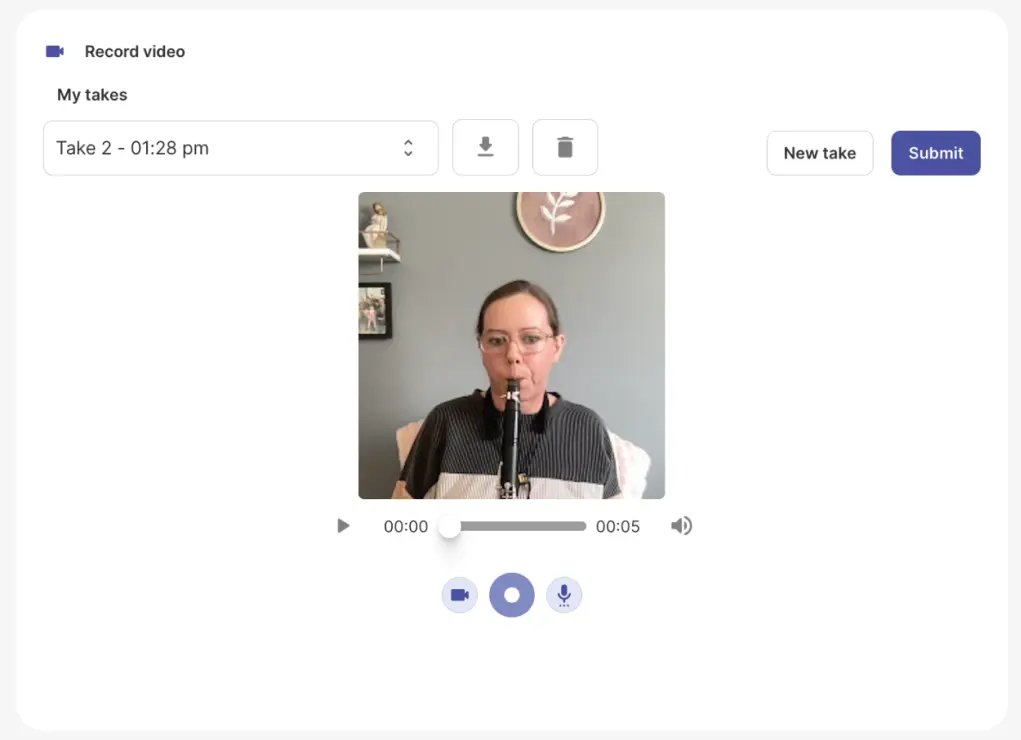
Platforms dedicated to sight-reading mastery are increasingly adopting graduated pedagogical frameworks. By leveraging algorithms that automatically generate unpracticed sight-reading examples tailored to specific grade levels, keys, and time signatures, students can now practice Pearlman’s five levels on demand. Future iterations of music education software will likely incorporate real-time pitch and rhythm tracking, providing immediate visual feedback when a student violates Level 3’s cardinal rule of maintaining tempo over note accuracy.
Redefining Musical Fluency
Ultimately, the broader adoption of a language-based sight-reading philosophy promises to transform musical training across all genres—from classical performance to traditional fiddle styles and contemporary jazz. By viewing notation not as a cipher to be laboriously decoded, but as a dynamic script to be spoken fluently at sight, musicians unlock a profound sense of artistic liberation.
As educators continue to refine these progressive blueprints, the traditional anxiety surrounding sight-reading will gradually be replaced by intuitive confidence. The goal remains clear: to bridge the gap between mind and instrument until the music flows as naturally as spoken conversation.