
Executive Overview
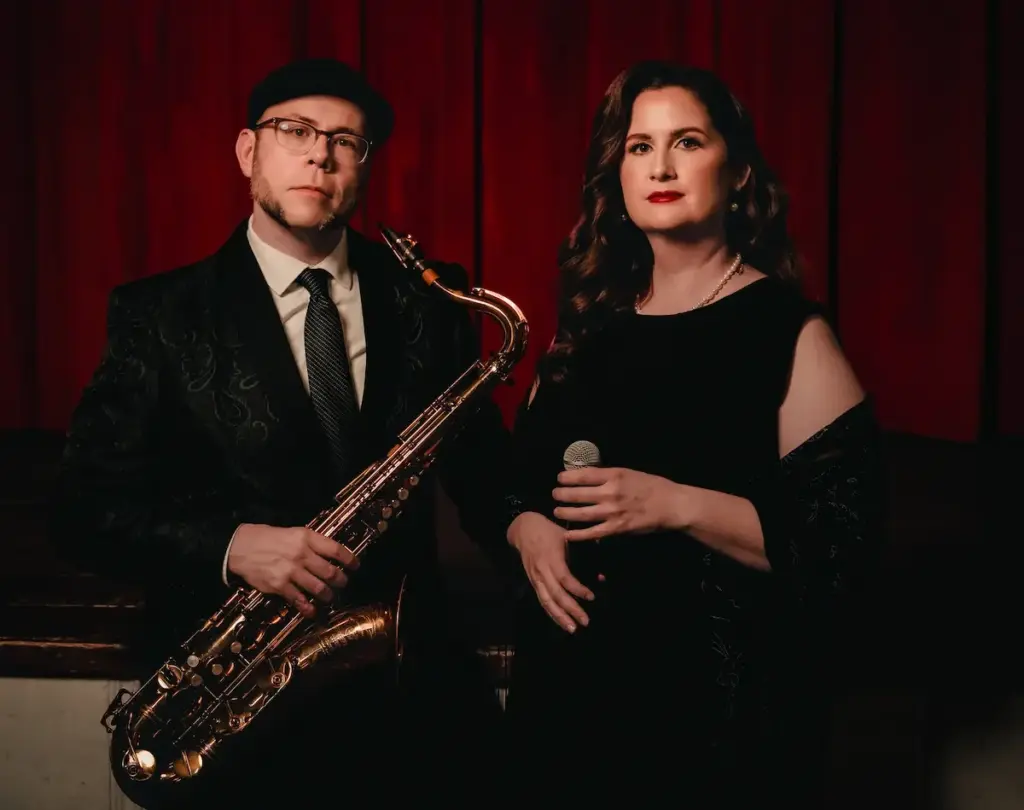
In a candid announcement delivered via social media on Tuesday, Amelia Meath—vocalist and co-founder of the critically acclaimed indie-pop duo Sylvan Esso—revealed that the band will reverse its year-long boycott of Spotify. Despite deep-seated ideological reservations and frustration with the streaming giant’s dominant market share, Meath explained that economic imperatives and the financial well-being of their extended crew have forced the group’s hand.
The decision marks a significant, if reluctant, capitulation to modern music industry infrastructure. For the past twelve months, Sylvan Esso—comprising Meath and her bandmate and husband, Nick Sanborn—withheld their catalog from a platform that accounts for roughly 82% of all music streaming consumption. While Meath described the initial withdrawal as a morally satisfying and creatively refreshing move, the long-term fiscal reality proved insurmountable. Maintaining a sustainable enterprise capable of paying their employees, crew members, and operational staff without access to the world’s largest audio streaming platform ultimately became an untenable proposition.
This development casts a sharp spotlight on the precarious economics of independent music in the digital age. It underscores a central paradox confronting contemporary artists: the tension between ethical stances against corporate tech monopolies and the absolute dependence on those very same platforms for financial survival. As Sylvan Esso prepares to return their catalog to Spotify, the move serves as a sobering case study in the structural limits of artist-led boycotts within an ecosystem dominated by consolidated streaming giants.
Detailed Chronology: The Anatomy of a Boycott and Retreat
To fully understand Sylvan Esso’s recent reversal, one must trace the timeline of their departure from Spotify, the ideological framework that sustained it, and the tipping point that led to Tuesday’s announcement.
The Exit: Venturing Off the Grid
When Sylvan Esso initially pulled their music from Spotify a year ago, the decision was met with widespread media attention and praise from segments of the independent music community. In an era where major artists rarely challenge the streaming status quo due to fears of lost revenue and diminished algorithmic visibility, Sylvan Esso’s departure was viewed as a bold statement. Operating on independent principles via their own label, Psychic Hotline, the duo chose to forego the lion’s share of digital audio traffic to protest what many independent creators view as an exploitative and culturally homogenizing distribution model.
During the year-long blackout, listeners searching for Sylvan Esso on Spotify were met with empty discographies or incomplete tracklists, redirecting them toward alternative purchasing and streaming avenues. For a brief period, the boycott served as a rallying point for fans and artists alike who envisioned a decentralized future for music consumption—one where alternative platforms could rival the convenience and scale of mainstream tech titans.
The Toll of the Exile
However, as the months pressed on, the financial realities of the music industry began to catch up with the Grammy-nominated outfit. While Sylvan Esso enjoys a devoted, highly engaged fanbase, the sheer mathematics of modern music distribution worked against them. With approximately 82% of the global streaming market concentrated within Spotify’s ecosystem, voluntarily forfeiting access to that audience meant cutting off the primary funnel for discovery, playlist placement, and passive royalty generation.
Behind every touring indie band is an ecosystem of lighting directors, sound engineers, tour managers, merch coordinators, administrative staff, and studio personnel. As Meath articulated in her to-camera Instagram address, the idealistic stance began to take a tangible toll on the people who rely on the band for their livelihoods. The cost of maintaining their ethical purity was ultimately being borne not just by the artists themselves, but by the workers who make their operations possible.
The Return: A Pragmatic Reversal
In her video statement, Meath did not attempt to sugarcoat the decision, nor did she pretend that her or Sanborn’s political views regarding the platform had softened. "It’s become more and more apparent that if we are going to continue to employ everyone that we employ it is unsustainable for us not to be on that platform, so we are going to put it [our music] back up on there," she stated plainly.
The announcement coincides with a critical juncture in the band’s release cycle. Sylvan Esso recently dropped their fifth studio album, Ow ⟸, via Psychic Hotline—their own label, founded to foster independence and creative control following their early years on Partisan Records, which they joined in 2014. Releasing a new record without access to Spotify’s massive user base proved to be the ultimate test of their boycott, revealing a threshold beyond which ideological resistance could no longer subsidize business realities.
Supporting Context & Metrics: The Asymmetry of Modern Music Streaming
Sylvan Esso’s retreat from their boycott highlights the broader structural imbalances defining the contemporary music economy. To contextualize their decision, one must examine the macroeconomic metrics governing music streaming, distribution, and artist compensation.
The Spotify Monopoly
Spotify’s dominance in the audio streaming market is well-documented, but the scale of its market share remains staggering. Industry analysts consistently place Spotify’s share of global music streaming traffic at roughly 82%, with Apple Music, Amazon Music, YouTube Music, and Tidal fighting for the remaining fractions. For independent artists, this creates a de facto monopoly: choosing to opt out of Spotify does not merely mean losing a revenue stream; it means rendering oneself effectively invisible to four out of every five potential listeners.
[Global Music Streaming Market Share Estimates]
--------------------------------------------------
Spotify:        ████████████████████ (approx. 82%)
Competitors:    ████ (Apple, Amazon, YouTube, Tidal, etc.)
This concentration of power places creators in an impossible bind. While platforms like Bandcamp, Qobuz, and independent record stores offer vastly superior economic terms and ethical frameworks, their aggregate user bases are a fraction of Spotify’s hundreds of millions of active subscribers.
The Economics of Independence
Sylvan Esso’s journey from Partisan Records in 2014 to launching their own imprint, Psychic Hotline, mirrors a broader industry trend toward artist-owned infrastructure. By retaining ownership of their masters and cutting out traditional middle-men, artists aim to capture a higher percentage of every dollar generated.
However, independent labels and self-released artists lack the financial safety nets and cross-promotional muscle of major label conglomerates (Universal, Sony, and Warner). A major label act can absorb the financial friction of a platform dispute far more easily than a mid-tier indie act that must self-fund tours, pay session musicians, and meet payroll week in and week out. When Sylvan Esso calculated the opportunity cost of missing out on Spotify streams for Ow ⟸, the math simply failed to support their payroll obligations.
Official Statements and Industry Reactions
The discourse surrounding Sylvan Esso’s announcement has been swift, illuminating the deep divisions within the artistic community regarding corporate technology platforms.
Amelia Meath’s Direct Address
In her Instagram video, Meath maintained an unapologetic yet pragmatic tone. Rather than celebrating the return to Spotify, she framed it as a defeat dictated by economic necessity.
"It’s become more and more apparent that if we are going to continue to employ everyone that we employ it is unsustainable for us not to be on that platform, so we are going to put it back up on there. I don’t fucking like it and I’m really frustrated by this reality."
By acknowledging her frustration openly, Meath sought to preempt accusations of selling out, emphasizing that the decision was driven by duty to their workforce rather than a change of heart. She concluded the video by expressing profound gratitude to the fans who supported their year-long absence, recognizing the extra effort it took for listeners to seek out their music on alternative platforms.
The Caption and Alternative Ecosystems
Recognizing the ideological weight of the decision, the accompanying caption on the band’s social media post doubled down on the importance of supporting decentralized, artist-friendly alternatives. The caption urged fans:
"You can still listen and support independent places like @bandcamp, @qobuz, @subvertworld, and of course your favorite local record stores."
This parting message underscores the nuanced stance Sylvan Esso wishes to maintain. While they must bow to the commercial necessity of streaming on Spotify, they continue to encourage their audience to diversify their listening habits and financially support platforms that offer equitable compensation structures to creators.
Future Outlook: What Sylvan Esso’s Retreat Means for the Indie Landscape
The capitulation of an established, fiercely independent act like Sylvan Esso raises uncomfortable questions about the future of artist autonomy in the digital age. As streaming platforms grow increasingly entrenched, the viability of individual boycotts appears severely constrained.
The Limits of Moral Consumerism
Sylvan Esso’s experiment demonstrates that moral consumerism and artist-led boycotts face insurmountable systemic barriers when the targeted platform holds a near-monopoly on distribution. Without systemic regulatory intervention, antitrust enforcement, or a fundamental restructuring of royalty payout models (such as user-centric payment systems), individual artists will continue to find themselves outgunned by platform economics.
The Resiliency of Niche Alternatives
Despite the dominance of Spotify, the year-long boycott also highlighted the resilience of alternative ecosystems. Platforms like Bandcamp and Qobuz, alongside independent record stores, experienced heightened engagement from Sylvan Esso’s core fanbase during the blackout. While these platforms cannot single-handedly sustain a mid-tier band’s entire operation at scale, they remain vital sanctuaries for music lovers committed to ethical consumption.
Looking Ahead for Sylvan Esso
With their fifth album, Ow ⟸, now returning to Spotify alongside their back catalog, Sylvan Esso enters a new chapter of their career wiser to the harsh operational realities of modern music commerce. While the sting of returning to a platform they despise remains fresh, the band’s ability to secure the livelihoods of their team ensures they can continue creating, touring, and pushing the boundaries of indie-pop for years to come—even if the path forward requires making peace with digital giants they would rather avoid.