
Executive Overview
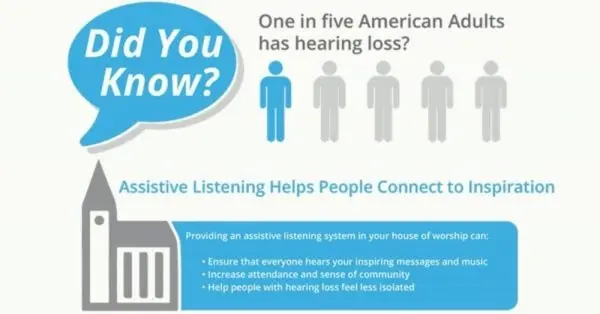
In the modern landscape of houses of worship, the primary mission has always centered on community, connection, and spiritual inclusion. Yet, a silent barrier often persists within the sanctuary walls, preventing a significant segment of the congregation from fully experiencing the service. Hearing loss is one of the most prevalent physical impairments affecting modern populations, particularly among older adults. When congregants struggle to comprehend the spoken word, scripture readings, or musical performances, they gradually drift away from active participation, eventually leading to isolation from the very community designed to support them.
Addressing this challenge requires more than merely turning up the main sanctuary sound system. High ambient noise, reverberation, and architectural acoustics often combine to make amplified sound muddy and unintelligible for individuals with hearing impairments—even those wearing standard hearing aids. To bridge this gap, forward-thinking religious organizations are increasingly turning to dedicated Assistive Listening Systems (ALS).
Implementing an ALS is not merely a technical upgrade or a compliance checkbox; it is a profound pastoral commitment to radical inclusion. However, introducing these systems successfully requires a deliberate, strategic approach. From accurately assessing the unique demographic needs of a congregation to budgeting, training staff, and driving community awareness, houses of worship must navigate a multi-phase implementation roadmap.
This comprehensive report examines the four foundational pillars of deploying an effective Assistive Listening System in a worship environment. Drawing on industry insights, expert consultations, and actionable frameworks, this guide provides faith leaders, technical directors, and facility managers with the authoritative blueprint needed to ensure that every message resonates clearly with every member of the congregation.
Detailed Chronology: The Four-Phase Implementation Roadmap
Successfully deploying an Assistive Listening System within a religious facility cannot be treated as an impromptu weekend project. It demands a carefully orchestrated, chronological strategy to ensure maximum adoption and return on investment. Below is the definitive four-phase implementation timeline designed to guide leadership teams from initial conception to full operational integration.
Phase 1: Understanding Congregation Needs and Baseline Assessment
The foundational misstep many organizations make is purchasing equipment based on guesswork rather than empirical data. Before engaging vendors or reviewing hardware catalogs, leadership must conduct a thorough audit of the congregation’s actual listening challenges.
- Deploying the Congregation Survey: The most effective initial step is the distribution of a targeted survey. This questionnaire should be deliberately designed to capture quantitative and qualitative data regarding members’ current experiences during worship services. Key inquiries must address whether respondents experience difficulty hearing the sermon, whether they currently utilize hearing aids, and crucially, whether those hearing aids are equipped with telecoils (t-coils).
- Analyzing Demographic Realities: Beyond direct surveys, facility planners should cross-reference church membership demographics with regional public health data regarding age-related hearing loss. Recognizing that a substantial percentage of regular attendees may be silently struggling lays the ethical and practical groundwork for investing in accessibility upgrades.
- Acoustic and Spatial Mapping: Alongside congregational feedback, technical teams must evaluate the physical space. Different architectural layouts—from sweeping gothic cathedrals with high reverberation times to modern multi-purpose auditoriums with deadened acoustics—require distinct assistive listening technologies, whether through radio frequency (RF), infrared (IR), or induction loop systems.
Phase 2: Exploring Options, Cost Estimation, and Financial Strategy
Once the specific needs of the congregation and the acoustic profile of the sanctuary are clearly defined, the procurement phase begins. Navigating the myriad of technological options requires balancing performance, user convenience, and fiscal responsibility.
- Financial Scoping and Budgeting: Estimating the total cost of ownership involves looking beyond the initial hardware purchase. Organizations must account for transmitters, individual receivers, charging stations, neck loops for t-coil users, and sanitary accessories. Specialized audio integration partners, such as CCI Solutions, provide invaluable assistance during this phase, frequently offering free consultations to help organizations align their technological aspirations with realistic budgetary parameters.
- Creative Funding and Capital Campaigns: For many congregations, capital allocation requires deliberate planning. Houses of worship should explore dedicated fundraising initiatives, memorial gifts, or grants specifically earmarked for accessibility improvements. Framing the ALS initiative as an inclusive ministry campaign often inspires generous donor participation, as members recognize the direct, life-changing impact the technology will have on their fellow worshippers.
- Procuring Scalable Infrastructure: Leaders must avoid the temptation to purchase the absolute bare minimum. Selecting scalable systems ensures that as the congregation grows or as hearing assistance demands increase, the infrastructure can expand without requiring a complete system replacement.
Phase 3: Operational Preparation and Staff Training
The acquisition of state-of-the-art hardware is meaningless if the staff and volunteers operating the distribution points are unprepared. The human element is the single most critical factor determining whether an ALS achieves high utilization rates or sits gathering dust in a supply closet.
- Designating "Assisted Listening Ambassadors": Ushers, welcome desk personnel, and audio-visual volunteers must be transformed into proactive champions of accessibility. These staff members should be thoroughly trained not only on how to store, charge, and maintain the devices, but also on how to identify congregants who might benefit from using them.
- Mastering the Hand-Off Experience: The interaction when a device is checked out sets the tone for the user’s experience. Ambassadors must take the time to patiently instruct first-time users on the device’s basic operations, volume adjustments, and ear-piece positioning. A welcoming, stigma-free hand-off encourages hesitant users to embrace the technology.
- Creating Reference Collateral: To streamline operations and eliminate friction during Sunday morning rushes, facilities should maintain laminated quick-reference guides at the distribution desk. These sheets should feature clear answers to frequently asked questions (FAQs), troubleshooting steps for common technical glitches, and clear instructions for pairing neck loops with hearing aid t-coils.
Phase 4: Cultivating Awareness and Community Outreach
Even the most advanced Assistive Listening System fails if the congregation and the surrounding local community are unaware of its existence. A robust internal and external marketing strategy is mandatory to drive adoption.
- Strategic Signage Placement: Clear, universally recognized signage must be prominently displayed throughout the facility, directing attendees to the exact location where Assisted Listening Devices (ALDs) are distributed. Signage should also indicate that the sanctuary is equipped with assistive listening technology, reducing the guesswork for visitors.
- Multi-Channel Communications: Reminders regarding the availability of ALDs should be systematically integrated into weekly printed bulletins, digital slide presentations prior to services, and the church’s website.
- Hosting Live Technology Demos: To eliminate intimidation, organizations can host a dedicated post-service training session or demonstration. Allowing congregants to test the equipment in a relaxed environment familiarizes them with the sound quality and operation before they rely on it during a live service.
- External Community Marketing: Outreach should extend beyond the active membership rolls. Advertising accessibility features to the surrounding local community sends a powerful welcoming signal. Many individuals who have stopped attending religious services altogether due to hearing loss will return—or visit for the first time—upon learning that a facility actively accommodates their needs.
Supporting Context & Metrics: The Imperative of Inclusion
To fully appreciate the urgency of deploying an Assistive Listening System, one must examine the broader socioeconomic and physiological context of hearing loss within modern society. According to global health metrics, untreated hearing impairment is among the leading causes of communicative disability worldwide.
The Staggering Prevalence of Hearing Loss
Data from public health organizations consistently demonstrates that hearing loss correlates strongly with age. In typical congregational demographics—which often skew toward older adults—the incidence of mild to profound hearing loss is disproportionately high.
- Approximately one in three individuals aged 65 and older experience disabling hearing loss.
- Among individuals aged 75 and older, that figure escalates significantly, affecting nearly half the population.
In a typical house of worship where generational demographics lean mature, a failure to provide assistive listening infrastructure effectively marginalizes a massive percentage of the faithful. Without technological aid, these individuals experience what audiologists term "cognitive fatigue"—straining intensely to decipher words in rooms with poor acoustics, which drains their mental energy and ultimately diminishes their spiritual engagement.
The Psychological Toll of Isolation
The consequences of unaddressed hearing loss extend far beyond missing a spoken phrase; they trigger profound psychological ripple effects. When worshipers can no longer comfortably follow a sermon, sing along with hymns, or converse easily during fellowship time after the service, they begin to withdraw.
Sociological studies link unmanaged hearing loss directly to:
- Social Isolation: Disconnection from peer groups and community networks.
- Anxiety and Depression: Heightened emotional stress caused by the frustration of constant miscommunication.
- Premature Attrition: Individuals quietly stop attending services, feeling that the institution no longer speaks to or cares for their physical reality.
By investing in an Assistive Listening System, a house of worship directly combats these negative outcomes. Providing clear audio is a tangible mechanism of pastoral care, ensuring that every soul remains anchored to the communal body.

Official Statements and Industry Insights
Industry leaders and accessibility advocates emphasize that structural inclusion requires intentional design, moving beyond minimum legal compliances (such as the Americans with Disabilities Act requirements) toward genuine hospitality.
"Reaching out to those who feel disconnected from your community due to hearing loss is central to sharing the message of inclusion. Genuinely compassionate service involves being aware of and caring for the needs of everyone, especially those dealing with impairments. Make sure they are able to hear the beauty and emotion of the spoken word in your church by providing them with the equipment they need to stay connected."
— Accessibility Advocacy and Audio Engineering Consortium
Technical consultants reinforce that equipment selection must be paired with operational culture change. According to integration specialists at CCI Solutions and manufacturing partners like Listen Technologies:
"Technology alone does not solve accessibility challenges. An assistive listening device left in a drawer or handed over without instruction is a wasted resource. Success is defined by the triangle of reliable hardware, properly trained ambassadors, and continuous, transparent communication with the congregation."
Furthermore, experts highlight the emergence of telecoil (t-coil) technology as a game-changer for modern hearing aid users. When a venue integrates an induction loop system or provides high-quality neck loops that interface with RF transmitters, sound is transmitted directly into the user’s hearing aid or cochlear implant. This bypasses the ambient noise of the room entirely, delivering crystal-clear, customized audio directly tailored to the individual’s audiogram.
Future Outlook: The Evolution of Sanctuary Accessibility
As audio-visual engineering continues to advance at a rapid pace, the future of assistive listening in houses of worship is poised for even greater integration, discretion, and personalization.
The Rise of Personal Streaming Integration
Looking ahead, the next generation of assistive listening technology is moving toward software-based streaming architectures. Rather than relying solely on traditional dedicated RF or IR receivers handed out at a welcome desk, upcoming systems increasingly leverage Wi-Fi protocols to stream pristine audio directly to personal smartphones and smart devices.
This evolution offers several distinct advantages:
- Reduction of Stigma: Many congregants—particularly younger individuals or those newly experiencing hearing decline—hesitate to request a specialized assistive listening device due to perceived social stigma. By utilizing their own smartphones paired with standard earbuds or hearing aids, users can access assistive audio discreetly.
- Cost Efficiency for Facilities: Eliminating the need to manage, clean, and recharge fleets of physical standalone receivers reduces long-term maintenance overhead for church technical staffs.
- Multilingual Capabilities: Advanced Wi-Fi streaming platforms can easily expand beyond hearing assistance to provide real-time language translation streams, serving multicultural communities within the same worship space.
The Permanent Shift Toward Universal Design
Ultimately, the future of worship facility design is anchored in the philosophy of universal design—the principle that environments and products should be usable by all people, to the greatest extent possible, without the need for adaptation.
Houses of worship that embrace Assistive Listening Systems today are positioning themselves at the vanguard of this movement. By proactively removing physical and sensory barriers, these institutions ensure their message remains vibrant, accessible, and transformative for generations to come.
Conclusion and Actionable Resources
Integrating an Assistive Listening System is a profound declaration of a faith community’s values. It proclaims that every individual—regardless of physical ability—is a valued, essential member of the body, worthy of full participation in worship, fellowship, and spiritual growth.
For organizations ready to take the next step, a wealth of professional guidance and standardized tools is readily available. To assist facility managers, audio technicians, and pastoral leadership in executing a seamless rollout, comprehensive planning kits have been developed by industry pioneers.
For detailed information on choosing the right Assistive Listening System and accessing professional tools to ensure operational success—including sample congregational surveys, standardized signage templates, and bulletin announcements—leaders are encouraged to download the comprehensive Listen Technologies Church Assistive Listening Toolkit.
Does your worship facility currently meet the auditory needs of every attendee? Reach out to our technical advisory team today to discover how an optimized assistive listening strategy can transform your ministry and ensure that no voice—and no listener—is left behind.