
Executive Overview
The modern music educator’s job description is an exercise in professional breadth. Today’s band directors, choir masters, and orchestra leaders are rarely confined to the traditional podium duties of cueing entrances and refining phrasing. Instead, they serve as counselors, mediators, mentors, coaches, cheerleaders, schedule-juggler, and, on some days, logistical miracle workers. They pour an immense amount of emotional, creative, and physical energy into their students, their programs, and their broader school communities day in and day out.
Yet, in an era marked by shifting educational standards, tightening budgets, and increasingly complex administrative demands, the last thing an educator needs is a digital tool that adds friction to their daily workflow. Teachers deserve a reliable, intuitive partner that helps them work smarter, not harder—guiding them seamlessly from the first nervous week of the fall semester all the way through spring concert season, festival evaluations, and beyond.
Enter MakeMusic, a comprehensive digital ecosystem engineered to alleviate administrative burdens and elevate instructional quality. Far beyond a simple repository of digital sheet music, MakeMusic has evolved into an indispensable ally for curriculum planning, formative assessment, and student engagement. By offering robust repertoire libraries, flexible pedagogical tools, and streamlined feedback mechanisms, the platform addresses the holistic needs of contemporary music programs. This report examines how MakeMusic supports educators through every phase of the academic year, transforming complex logistical hurdles into opportunities for musical growth and community building.
Detailed Chronology: Navigating the Academic Year with Intentionality
Successful music education is rarely the result of improvised weekly lesson plans; it requires a strategic, macro-level vision that anticipates milestones months in advance. Educators who master curriculum planning often practice "backwards design," a pedagogical methodology that begins with the ultimate goals of the program and works backward to structure daily rehearsals. MakeMusic is structured to support this strategic lifecycle across four distinct phases of the academic year.
Phase 1: Late Summer and Early Fall – Setting the Foundation and Defining the Vision
As the school year opens, classrooms buzz with energy, instrument distribution, and recruitment drives. This initial period is critical for establishing classroom culture and expectations. During late summer, directors must ask foundational questions: Are we chasing a specific rating at the regional contest this year? Do we have a dream piece in mind for our premier ensemble? Or are we in a rebuilding phase where the primary objective is to boost morale, spark joy, and build fundamental technique?
MakeMusic aids this foundational stage by offering immediate access to diagnostic tools, formative assessments, and customizable warm-up routines. Directors can quickly assess the baseline skill level of incoming cohorts—identifying sections that need rhythmic reinforcement or intonation practice—without spending precious weeks manually transcribing diagnostic materials. By clearly defining these priorities early, educators can map out a coherent pedagogical pathway that aligns daily warm-ups with long-term performance goals.
Phase 2: Late Fall and Winter – Deepening Repertoire and Maintaining Engagement
As the initial adrenaline of the new school year fades, educators often encounter the mid-winter slump—a challenging stretch characterized by fatigue, academic distractions, and grueling rehearsal schedules leading up to winter concerts or festival MPA (Music Performance Assessment) entries.
During this crucial window, the quality of the repertoire matters immensely. Music must be challenging enough to stimulate advanced players while remaining accessible enough to prevent frustration among developing students. MakeMusic provides a dynamic catalog that transcends traditional, dusty contest lists. It introduces exclusive, contemporary arrangements and diverse genres designed to re-ignite student interest. Furthermore, the platform’s practice tools allow students to isolate difficult passages, adjust tempos, and receive immediate, actionable feedback on pitch and rhythm, transforming solitary home practice into an engaging, gamified experience.
Phase 3: Early Spring – Contest Preparation and Festival Season
Spring is synonymous with festival season, sight-reading evaluations, and adjudicated performances. For many programs, this is the high-stakes climax of the academic year. Directors face the daunting task of preparing ensembles to perform prepared literature flawlessly while simultaneously training students for unprescribed sight-reading challenges.
MakeMusic’s interactive environment serves as a force multiplier during this high-pressure window. Through integrated sight-reading generators and instant assessment capabilities, teachers can simulate festival conditions in the safety of their own band rooms or rehearsal halls. Students learn to navigate unfamiliar key signatures, complex meters, and dynamic markings independently, building the cognitive flexibility required to excel under pressure. This targeted preparation relieves the director from the exhausting cycle of manual error-checking, allowing them to focus entirely on musicality, balance, and artistic expression.
Phase 4: Late Spring and Early Summer – Reflection, Recruitment, and Retention
As the final notes of the spring concert echo and instruments are packed away for inventory, the academic cycle prepares to renew itself. This concluding phase is arguably the most vital for the long-term health of a music program. It is a time for evaluation, celebration, and laying the groundwork for recruitment.
MakeMusic assists educators during this period by generating comprehensive progress reports and data analytics. Teachers can objectively review student growth, document program achievements for school administrators, and identify successful curricular strategies to carry into the next academic cycle. More importantly, by utilizing efficient instructional tools throughout the year, directors free up mental bandwidth to focus on what truly drives student retention: authentic human connections, positive reinforcement, and a vibrant classroom culture.
Supporting Context & Metrics: Repertoire, Supplemental Supports, and Retention
A music program’s vitality is inextricably linked to the quality of its instructional materials and the psychological safety of its learning environment. Modern educational research consistently demonstrates that student retention in elective arts courses depends heavily on perceived competence, social belonging, and intrinsic motivation.

Repertoire That Transcends Checklists
Historically, music educators were constrained by physical sheet music budgets, limiting their ability to explore diverse, engaging literature. MakeMusic disrupts this limitation by providing access to an expansive, highly searchable library of repertoire that does far more than check a standard curricular box.
- Genre Diversity: The platform bridges the gap between classical tradition and contemporary relevance, offering pop arrangements, jazz charts, world music, and historically significant wind band and choral literature.
- Scalable Difficulty: Pieces are indexed meticulously by grade level and technical demand, allowing directors to program effectively for mixed-ability ensembles.
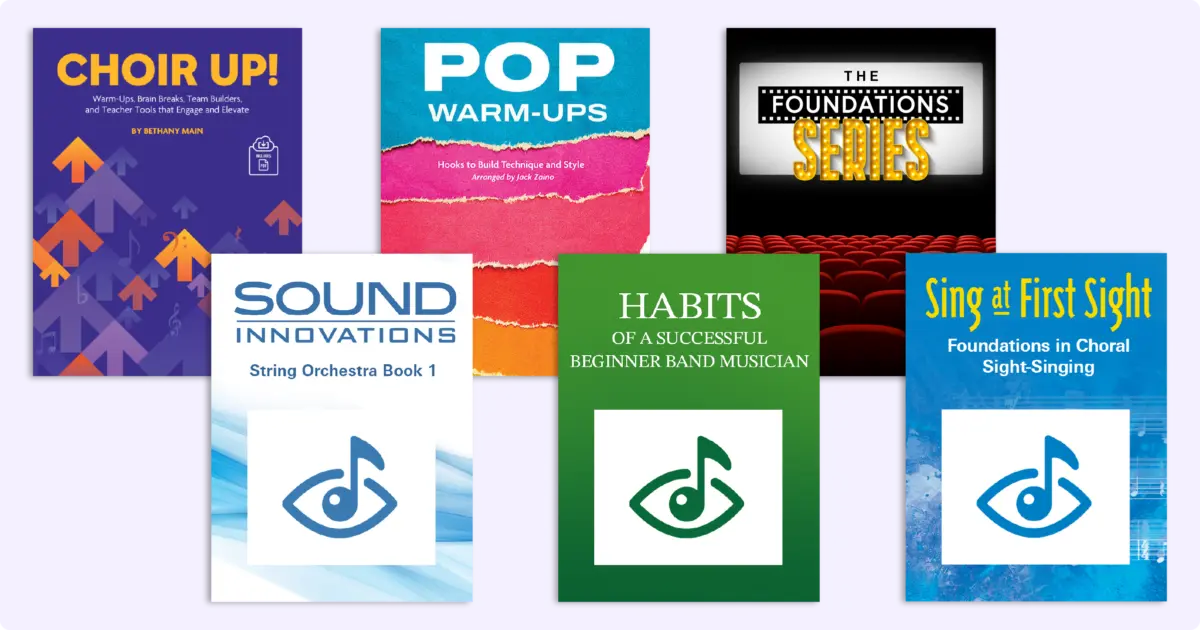
- Exclusive Pedagogical Series: Specialized collections—ranging from targeted sight-reading generators to progressive rhythm studies—ensure that students build foundational literacy alongside performance repertoire.
Supplemental Supports That Round Out the Classroom
Beyond interactive sheet music, a comprehensive MakeMusic subscription integrates seamlessly into various facets of ensemble management. These supplemental supports are engineered to cover every corner of the modern music classroom:
- Customizable Warm-Up Routines: Scalales, chorales, and flexibility exercises tailored to specific instrument families and voice parts.
- Theoretical Foundations: Integrated modules addressing music theory, history, and aural skills, supporting national and state educational standards without requiring dedicated textbook periods.
- Assignment Tracking and Assessment: Automated grading features that track practice time, pitch accuracy, and rhythmic precision, giving teachers objective data for grading and remediation.
The Psychology of Recruitment and Retention
Classroom climate is the silent engine of program growth. The way students feel in a music room directly dictates whether they return next fall—and whether they advocate for the program among their peers. Word of mouth among students and parents is the single most powerful recruitment tool a director has.
Students may eventually forget the exact concert pitch or the specific tempo marking of a festival piece, but they will never forget how they felt walking into the rehearsal space each day. Did they feel challenged yet supported? Did they experience genuine artistic growth? Did they feel a profound sense of pride belonging to something larger than themselves?
MakeMusic empowers educators to deliver differentiated instruction efficiently. By automating repetitive assessment tasks and providing real-time feedback loops, the platform ensures that every student—from the ambitious section leader striving for all-state recognition to the novice musician still finding their foundational footing—receives the personalized attention they require. This intentional, equity-driven support turns a standard elective class into an indispensable community anchor that students enthusiastically choose, year after year.
Official Statements and Industry Insights
Educational technology leaders and veteran pedagogues alike emphasize that digital tools must serve human artistry, rather than overshadowing it. Industry stakeholders note that the integration of platforms like MakeMusic represents a philosophical shift in how music education is conceptualized in the 21st century.
"We didn’t build MakeMusic to replace the podium or diminish the irreplaceable connection between a passionate teacher and their ensemble," notes a lead product strategist for the platform. "We built it to clear the administrative and logistical underbrush that exhausts educators. When a director spends less time grading paper practice logs, hunting down out-of-print octavos, or manually generating sight-reading examples, they gain back the precious energy needed to look their students in the eye, shape a musical phrase, and inspire a lifelong love of art."
Music supervisors and fine arts coordinators across school districts have similarly echoed the value of standardized, scalable digital frameworks. By establishing a centralized platform for repertoire exploration and formative assessment, districts can ensure curricular equity across multiple feeder schools, bridging the gap between under-resourced programs and affluent suburban campuses.
Future Outlook: The Evolution of Digital Pedagogy in Music Education
Looking ahead, the landscape of music education is poised for continued transformation driven by data-informed instruction and flexible learning models. As hybrid learning environments, personalized education plans, and heightened accountability measures become the industry norm, the role of digital infrastructure in the arts will only deepen.
Future iterations of curriculum planning tools are expected to incorporate advanced machine learning analytics, capable of predicting ensemble vulnerabilities before public performances, offering real-time tonal feedback across complex polyphonic textures, and providing hyper-localized repertoire recommendations tailored to specific demographic and cultural contexts.
However, the core mission will remain unchanged. Technology in the music classroom is ultimately a vessel for human expression. By streamlining the mechanics of curriculum planning, assessment, and repertoire selection, tools like MakeMusic are helping to secure the future of school music programs. They allow teachers to remain focused on their true calling: cultivating empathetic, creative, and resilient human beings through the universal language of music.
Take the Next Step
Are you ready to make this academic year your most organized, connected, and musically effective yet? Streamline your workflow, inspire your ensembles, and reclaim your passion for teaching. Start your free MakeMusic trial today and discover how effortless and rewarding curriculum planning feels when you have a dedicated partner in your corner.