
Executive Overview
As the initial weeks of the academic year give way to the rigorous demands of seasonal concert preparations, music educators face a familiar, high-stakes challenge: evaluating the true baseline capabilities of every student in their ensemble. Following the logistical hurdles of student name memorization, instrument rental distribution, and initial ensemble blend tuning, teachers must accurately gauge individual student progress before the close of the first grading period.
To bridge the gap between traditional performance testing and comprehensive music literacy, digital music learning platform MakeMusic has expanded its assessment architecture. Moving beyond standard catalog-based performance pieces, educators can now leverage two versatile assessment modalities: Audio/Video-only assignments and Multiple-Choice assessments. Designed specifically for middle and high school band, orchestra, and choir directors, these tools aim to streamline workflow, provide granular insight into home practice habits, and foster cognitive music understanding before students ever touch their instruments.
Detailed Chronology: Navigating the Early-Year Ensemble Transition
The journey from the first day of class to a cohesive ensemble sound is marked by distinct operational phases. Understanding this timeline is essential for integrating modern educational technology effectively.
Phase 1: The Administrative Startup (Weeks 1–2)
The academic year begins with logistical triage. Music educators manage instrument rentals, distribute sheet music, and establish behavioral and structural routines. During this period, the primary goal is community-building and establishing basic classroom management. Assessment is largely informal, relying on visual checks and basic group response.
Phase 2: The Ensemble Blend and Initial Performance (Weeks 3–4)
As instruments are secured and basic tones align, the ensemble begins to sound unified. However, teachers face an analytical vacuum: while the group may sound passable, individual technical proficiency remains unverified. Educators must quickly determine who is struggling with specific fingerings, rhythms, or posture habits before bad habits become ingrained.
Phase 3: The Pre-Grading Period Evaluation (Weeks 5–6)
With the first grading period looming and fall concert rehearsals accelerating, teachers must implement objective, scalable evaluations. Historically, this meant spending hours listening to individual students play in class—a method that sacrifices valuable ensemble rehearsal time—or relying exclusively on unverified home practice logs.
Phase 4: Modernizing the Routine with Flexible Assessment Tools
To alleviate this bottleneck, MakeMusic’s newly highlighted assessment options allow educators to establish hybrid evaluation routines early in the term. By deploying targeted Audio/Video assignments and Multiple-Choice checkpoints, teachers can capture both physical technique and theoretical comprehension without disrupting collective rehearsal momentum.
Supporting Context & Metrics: The Pedagogy Behind the Technology
Integrating diverse assessment types addresses several long-standing pain points in instrumental and vocal music education. Traditional music instruction has heavily prioritized the auditory output (how a piece sounds) while occasionally neglecting the visual mechanics of playing (posture, hand position) and the cognitive processing of notation (key signatures, theoretical markings).

Audio/Video-Only Assignments: Demystifying Home Practice
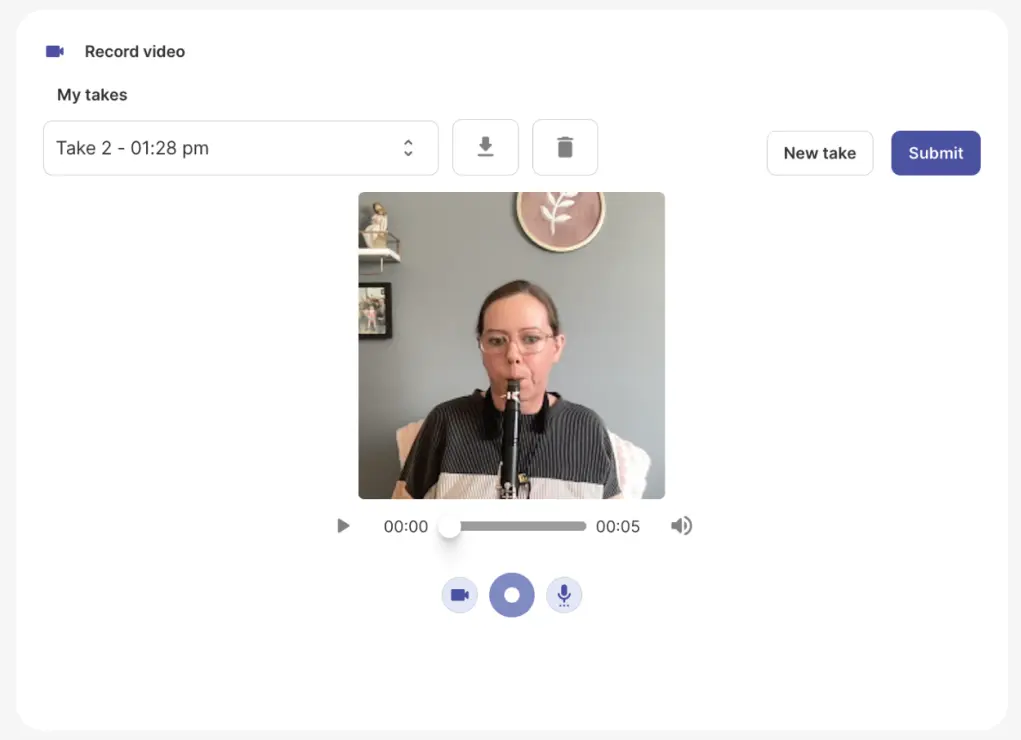
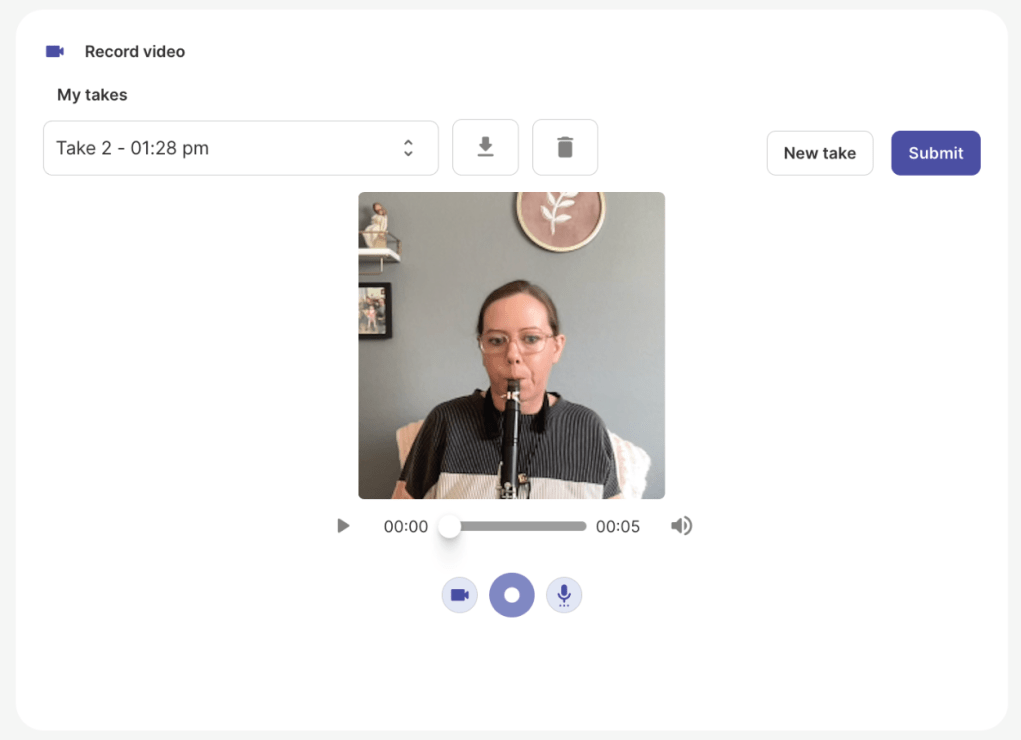
When students practice at home, teachers rarely witness the environment, physical tension, or ergonomic challenges that impede progress. Audio/video-only assignments serve as a window into the student’s independent practice space.
- The Metacognitive Benefit: When students record themselves and review the footage, they gain an objective view of their own technique—a perspective rarely experienced during live performance.
- Targeted Intervention: Instructors can diagnose physical impediments—such as collapsed wrists, incorrect bow holds, or improper embouchures—that might not be immediately obvious from audio alone.
Featured Lesson Plan: The 15-Minute Home Check
- Assignment: Record, Watch, Fix (Band or Orchestra)
- Objective: Students learn to independently identify and correct posture and hand-position habits during home practice sessions.
- Execution: Students record a short segment of their practice routine focusing on a technical passage, review the video for specific physical checkpoints, and submit a brief self-critique alongside the media file.
Multiple-Choice Assessments: Theory Before Practice
Cognitive preparation is often the missing link in ensemble performance. When students attempt to sight-read complex rhythms or unfamiliar key signatures without prior analysis, home practice devolves into tedious, repetitive trial-and-error.
- Written Assessment in Music: Multiple-choice assessments represent MakeMusic’s entry into formal written music theory testing within a digital workflow.
- Customization: Educators can construct questions incorporating text, custom musical excerpts, or visual graphics.
- Efficiency: Automated grading of theoretical concepts saves instructional hours while ensuring every student understands the foundational architecture of the music before execution.
Featured Lesson Plan: The 5-Minute Pre-Practice Check
- Assignment: The Pre-Practice Check (Any Ensemble)
- Objective: Students identify key signatures, complex rhythms, and expression markings in an upcoming concert piece prior to playing it.
- Execution: Before picking up their instruments at home, students complete a brief digital multiple-choice quiz verifying their visual literacy regarding the assigned rehearsal measures.
Official Statements and Administrative Integration
Educational technology integration succeeds only when it reduces administrative overhead rather than compounding it. MakeMusic’s latest updates emphasize seamless ecosystem integration to support busy educators.
According to product specialists and curriculum developers at MakeMusic, the platform is engineered to respect the time constraints of modern educators:
"You don’t need to overhaul your curriculum to see meaningful improvements in student engagement and preparedness. By strategically interspersing short, focused assessment types throughout the week, educators can comprehensively evaluate playing ability, theoretical understanding, and physical technique without sacrificing precious rehearsal minutes."
Furthermore, the platform features robust administrative capabilities, including Google Grade Passback. This functionality ensures that scores from both audio/video submissions and multiple-choice quizzes automatically sync directly to the Google Classroom gradebook, eliminating manual data entry and streamlining reporting for district compliance.
Crafting a Balanced Weekly Routine
To maximize student growth, pedagogy experts recommend rotating assessment formats across a standard instructional week:
- Day 1: Introduce new repertoire coupled with a Multiple-Choice theoretical pre-assessment.
- Day 3: Rehearsal check-in utilizing targeted audio/video practice logs to monitor physical technique.
- Day 5: Standard catalog-based performance assessment to measure auditory mastery.
This multi-faceted approach guarantees a holistic evaluation of musicianship—encompassing cognitive understanding, physical execution, and expressive output—while keeping lesson planning efficient and manageable.
Future Outlook: The Evolution of Digital Music Pedagogy
As K-12 education continues to embrace blended learning models, the landscape of music instruction is undergoing a permanent transformation. The integration of multi-modal assessments signals a shift away from purely subjective grading toward data-informed music education.
The Role of Data in Ensemble Direction
By leveraging granular analytics from digital platforms, directors can identify systemic weaknesses across an entire section (e.g., widespread misinterpretation of a specific syncopated rhythm in the second violins) before those errors manifest during full-ensemble rehearsals. This proactive approach optimizes rehearsal efficiency, allowing conductors to spend less time fixing avoidable note errors and more time refining musicality, phrasing, and artistic interpretation.
Accessibility and Adoption
For educators seeking to modernize their assessment strategies without disrupting ongoing concert cycles, industry experts recommend starting small. Adopting a single new assignment type—such as a five-minute multiple-choice pre-practice check or a targeted video posture review—provides immediate diagnostic data.
For programs not currently utilizing the platform, MakeMusic continues to offer comprehensive trial structures, allowing directors to evaluate the complete suite of assessment tools prior to institutional adoption. As school districts increasingly prioritize comprehensive arts education supported by verifiable metrics, tools that balance artistic expression with rigorous, data-driven assessment will undoubtedly define the future of scholastic music programs.