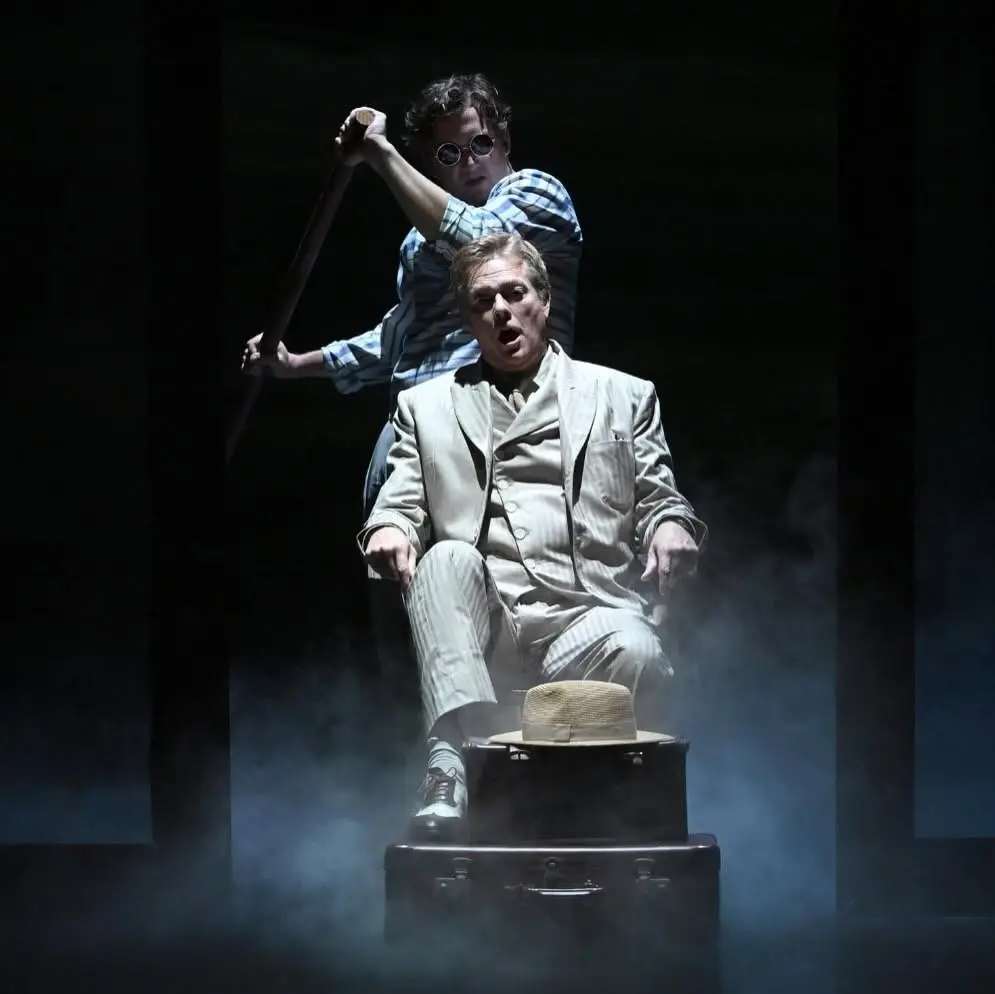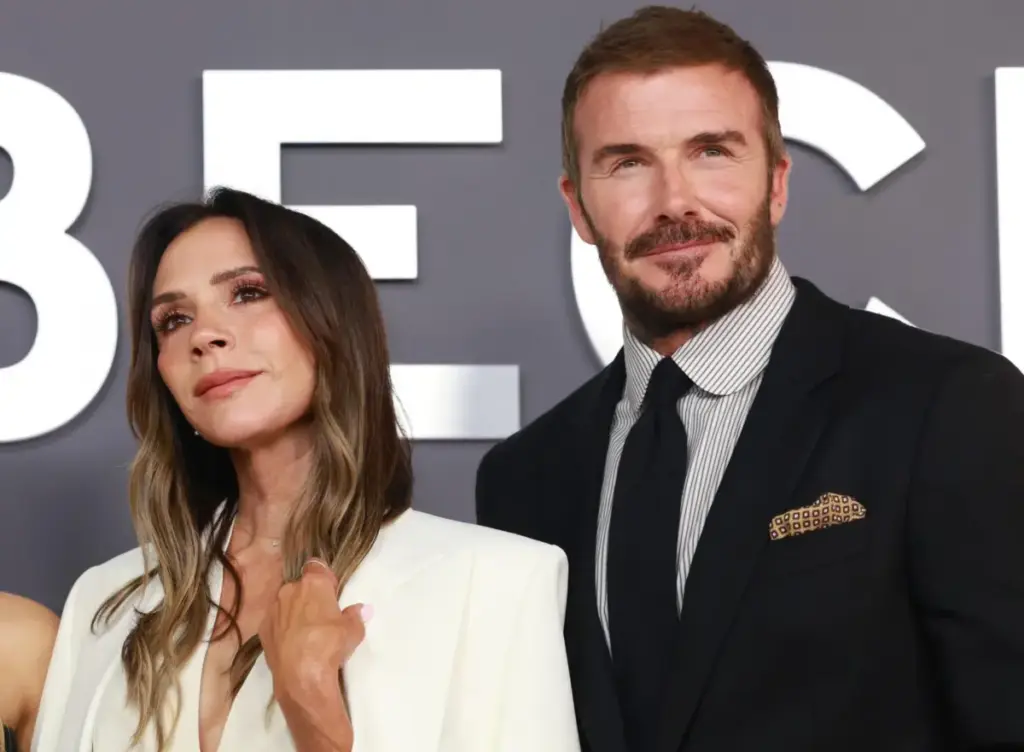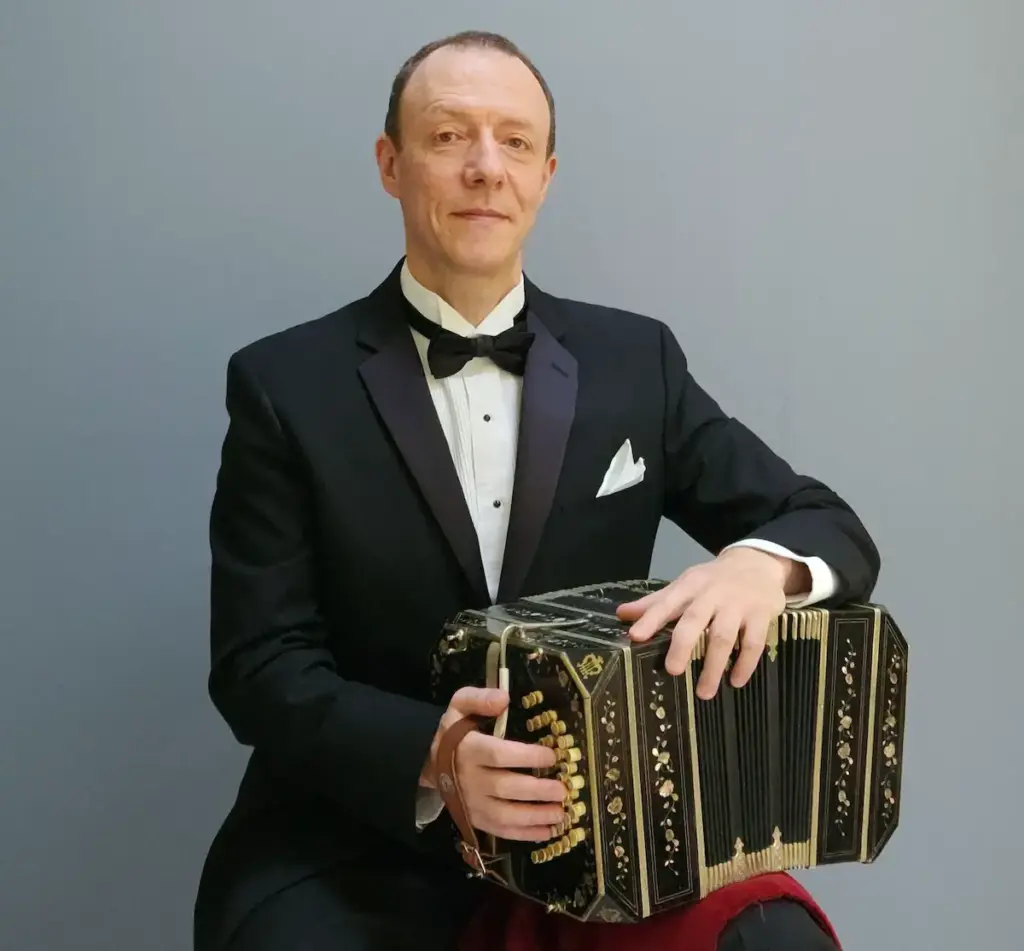
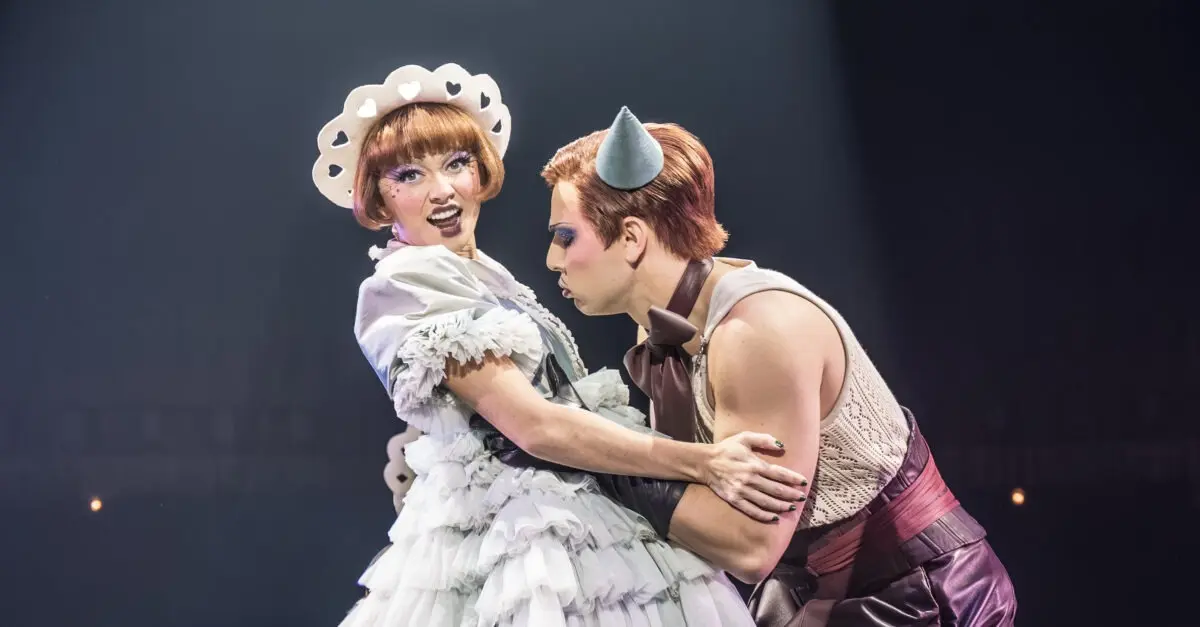

The West End staging of Cabaret at the Kit Kat Club has officially entered a new era of theatrical history. Welcoming a fresh wave of international talent to its hallowed and immersive London home earlier this month, the production continues to defy theatrical gravity. In a casting move that bridges the best of Broadway and the West End, acclaimed stage and screen stars Skylar Astin and Sarah Hyland made their highly anticipated West End debuts, stepping into the iconic roles of the Emcee and Sally Bowles, respectively.
Astin, widely recognized for his work in Pitch Perfect, So Help Me Todd, and Broadway’s Spring Awakening, and Hyland, beloved for her long-running television tenure in Modern Family alongside theatrical turns in The Great Gatsby and Little Shop of Horrors, lead a vibrant new chapter for a production that has already redefined immersive theatre. Their arrival coincides with a watershed moment for the monumental revival: the show has recently surpassed its 1,900th performance, cementing its status as the longest-running production of Cabaret in West End history.
As the production approaches the dual milestones of its fifth anniversary in London and the 60th anniversary of its original 1966 Broadway premiere, the Kit Kat Club remains a cultural touchstone. This comprehensive report explores the recent high-profile cast transitions, the operational and creative mechanics that sustain the record-breaking revival, the historical legacy of John Kander, Fred Ebb, and Joe Masteroff’s masterwork, and what the future holds as the production looks toward 2027.
Detailed Chronology
The transition of power inside the Kit Kat Club on September 21 marked one of the most substantial casting refreshes since the production’s critically lauded inception in December 2021. The meticulous orchestration of rehearsals, press previews, and gala performances reflects the high-stakes nature of running a West End titan.
TIMELINE OF RECENT & UPCOMING MILESTONES
│
├─ September 21: Skylar Astin & Sarah Hyland debut as Emcee and Sally Bowles
├─ September 21: Broader company turnover (Ronan Burns, Lindsay Atherton, et al.)
├─ November 20: 60th Anniversary of original Broadway opening & 5th Anniversary celebration
├─ December 12: Skylar Astin's final scheduled performance as the Emcee
└─ January 23, 2027: Sarah Hyland's final scheduled performance as Sally Bowles
The September 21 Turnover
On September 21, the doors of the Kit Kat Club swung open to reveal a distinctly re-energized principal line-up. Skylar Astin and Sarah Hyland stepped into the theatrical crucible previously inhabited by some of the industry’s most daring performers. Astin’s portrayal of the Emcee brings a sharp, charismatic, and unsettlingly magnetic energy to the proceedings, balancing the character’s traditional vaudevillian charm with a modern, razor-sharp edge. Hyland’s Sally Bowles offers a heartbreakingly desperate yet fiercely resilient interpretation of the doomed cabaret singer, anchoring the show’s tragic emotional core.
The production’s staging schedule has outlined distinct runs for these high-profile imports: Astin is slated to command the Kit Kat Club through December 12, while Hyland’s open-ended yet firmly bounded engagement extends considerably further, with her final performance scheduled for January 23, 2027. This extended run for Hyland ensures that international audiences and dedicated theatregoers will have ample opportunity to witness her interpretation well into the future.
Supporting Cast Additions and Continuations
Beyond the marquee names, September 21 brought a wave of vital talent into the ensemble and supporting ranks. Ronan Burns, known for his work in Matilda the Musical, stepped into the politically charged role of Ernst Ludwig. Lindsay Atherton (Top Hat, Newsies) took over the dual-faceted, gritty roles of Fraulein Kost and Fritzie.
They are joined by a formidable cohort of new company members, including Lily Frances, Peter Houston, Samuel How, Bailey Johnson, Ellie Mitchell, Kirsty Anne Shaw, Natasha Wilde, and Nicky Wong Rush.
At the same time, the production benefits from the vital anchor of continuing cast members who preserve the structural integrity of the immersive staging. Baker Mukasa continues to bring steadfast dignity and quiet devastation to the role of Clifford Bradshaw. West End royalty Ruthie Henshall maintains her masterful, nuanced command as Fraulein Schneider, alongside Robert Hands as the doomed, tender Herr Schultz. This continuity is further bolstered by returning ensemble talents Joe Atkinson, Xavion Campbell-Brown, Olivia-Rose Deer, Anya Ferdinand, Danny Fogarty, Adrian Grove, and Eva-Rose Tanaka.
Completing the sprawling company is the dedicated Prologue Company—comprising Isobel Bates, Rachel Benson, Ami Benton, Jonathan Charles, Shanelle Clemenson, Andrew Linnie, Zara Liu, Dak Mashava, Brian James O’Sullivan, Jack William Parry, and Shiho Yokoyama—who set the pre-show immersive atmosphere that greets audience members the moment they step off the London streets and into the decadent, pre-war Berlin world of the Kit Kat Club.
Supporting Context & Metrics
The ongoing success of Cabaret in London is not merely a matter of star casting; it is underpinned by staggering operational metrics, architectural transformation, and an ironclad creative vision.
Box Office Dominance and Historic Longevity
Having recently crossed the threshold of its 1,900th performance, the Ambassador Theatre Group Productions and Underbelly mounting has officially claimed the crown as the longest-running revival and production of Cabaret in West End history. This milestone is particularly impressive given the specialized, environmentally immersive nature of the production, which required a complete structural overhaul of the historic Playhouse Theatre into the Kit Kat Club. Every square foot of the venue was redesigned to transport patrons to 1931 Berlin, complete with pre-show dining, cabaret tables, and a labyrinthine atmospheric entry experience that dissolves the boundary between audience and performer.
The Transatlantic Footprint
The production’s cultural footprint expanded significantly when it successfully transferred its immersive blueprint to Broadway’s August Wilson Theatre. Winning a record-breaking seven Olivier Awards during its initial West End run, the aesthetic and directorial framework established in London proved that audiences globally were hungry for a visceral, unvarnished encounter with Kander and Ebb’s masterpiece. While the Broadway engagement concluded its acclaimed run on September 21, 2025, the West End flagship remains the definitive, uninterrupted home for this specific staging.
Historical Milestones Ahead
The theatrical calendar for late 2025 holds profound significance for the property. This year marks the diamond jubilee—the 60th anniversary—of the musical’s original Broadway opening, which premiered on November 20, 1966. Simultaneously, it marks the fifth anniversary of the current London revival’s birth.
To commemorate these historic benchmarks, the Kit Kat Club will host a gala celebration on November 20. In a nod to the historical dates and the accessibility of theatre, producers have announced a strictly limited allocation of tickets priced at £19.66, £60, and £196.60—a clever thematic pricing structure that honors both 1966 and the 60-year span of the musical’s cultural dominance.
Official Statements & Creative Vision
The conceptual genius behind this incarnation of Cabaret rests firmly on the shoulders of director Rebecca Frecknall and her world-class creative team. Their approach strips away the decades of glossy, stylized reinventions that occasionally sanitized the source material, returning the musical to its dark, provocative, and deeply political roots.
The Creative Blueprint
Based on the original play by John Van Druten and the Berlin stories of Christopher Isherwood, Cabaret features a timeless score by John Kander, razor-sharp lyrics by Fred Ebb, and a structurally sound book by Joe Masteroff. However, it is Frecknall’s directorial framing that elevates the material into a modern classic.
The production is defined by a complete sensory design suite:
- Set and Costume Design: Tom Scutt has transformed the auditorium into a claustrophobic, decadent playground where the luxury of the cabaret bleeds seamlessly into the squalor of a changing political landscape.
- Choreography: Julia Cheng’s choreography avoids traditional musical theatre tropes, favoring angular, aggressive, and sexually charged movement that reflects the desperation and hedonism of Weimar-era Germany.
- Musical Supervision & Direction: Jennifer Whyte (Musical Supervision) and Ben Ferguson (Musical Direction) ensure that the iconic score cuts through with raw, unpolished urgency, treating the numbers not merely as showstoppers, but as diegetic performances within the club itself.
- Technical Design: Isabella Byrd’s lighting design and Nick Lidster’s sound design work in tandem to disorient the viewer, shifting fluidly between the blinding, superficial euphoria of the stage lights and the cold, unforgiving reality of the encroaching Nazi regime.
Stuart Burt serves as the casting director responsible for continuously refreshing the company without disrupting its delicate ecosystem, while Jordan Fein operates as the associate director maintaining the rigorous physical and emotional demands of Frecknall’s staging. Produced by Ambassador Theatre Group Productions and Underbelly, the enterprise remains a masterclass in commercial theatrical production meeting uncompromising artistic vision.
Future Outlook
As the Kit Kat Club looks ahead toward the close of 2025 and well into the latter half of the decade, the trajectory of Cabaret shows no signs of slowing down. The integration of high-profile American talent like Skylar Astin and Sarah Hyland demonstrates the production’s continued international drawing power, proving that the West End remains a premier destination for top-tier global performers looking to test their mettle in rigorous, dramatic theatrical environments.
With Hyland locked into the role of Sally Bowles through January 23, 2027, the production has secured artistic stability for well over a year. This long-range planning allows the creative team to focus on upcoming celebrations, including the major dual-anniversary gala on November 20, while maintaining the blistering nightly energy that has defined the run thus far.
For the theatre industry at large, the London staging of Cabaret serves as a case study in how to revitalize archival material for a contemporary audience. By turning a night at the theatre into an all-encompassing, immersive ritual, the production has rewritten the rules of commercial West End longevity. As the world outside the Kit Kat Club—both within the narrative and in contemporary socio-political spheres—continues to grapple with the themes of complacency, rising extremism, and personal responsibility, Kander, Ebb, and Masteroff’s warning remains as vital today as it was in 1966, or 1931. Under the stewardship of its current company, the cabaret will go on, defiantly and brilliantly, into the foreseeable future.