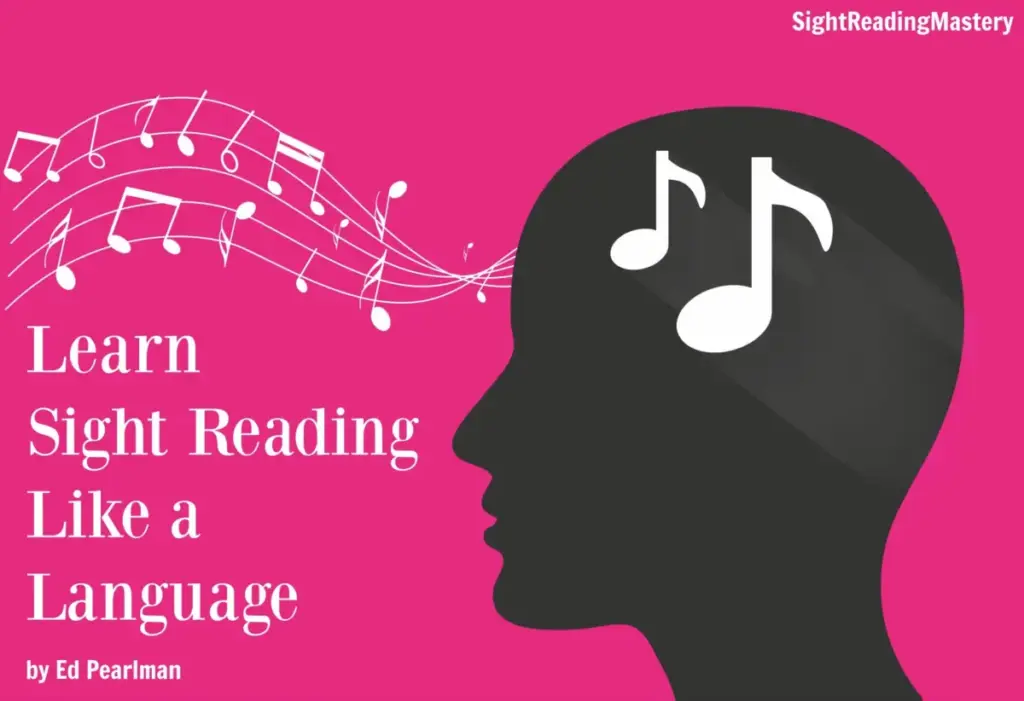

In the realm of musical pedagogy, few skills are as universally acknowledged as crucial yet as chronically neglected as sight-reading. Traditional methods often treat musical notation as a dense cryptographic puzzle to be decoded note-by-note, symbol-by-symbol. However, seasoned educator, violinist, and fiddle authority Ed Pearlman posits a revolutionary paradigm shift: sight-reading must be approached not as an analytical translation exercise, but as a fluent, native language.
Just as a fluent speaker of Spanish understands the phrase "buenos días" instantly—without mentally parsing and translating each individual word back into English—a proficient musician must learn to internalize and execute musical notation directly from the page. When a performer attempts to process a score by consciously identifying note names, calculating finger numbers, and double-checking pitches sequentially, cognitive overload occurs. The inevitable result is a catastrophic loss of tempo, rhythmic instability, and performance anxiety.
To bridge the gap between mechanical decoding and true musical fluency, Pearlman has formulated a progressive, five-tier pedagogical framework. Designed to systematically retrain the brain, these methodologies transition the student from macro-rhythmic awareness to precise interval recognition. This special report explores the cognitive science behind musical fluency, details Pearlman’s step-by-step framework for mastering sight-reading, and examines the broader implications of treating notation as an intuitive, living language.
Detailed Chronology: The Evolution of Sight-Reading Pedagogy
To fully appreciate Pearlman’s progressive framework, it is vital to trace how instructional philosophies surrounding music reading have evolved from rigid, academic decoding into modern, fluency-based methodologies.
The Historical Bottleneck: The Decoders of the Past
For centuries, classical conservatory training relied heavily on solfège, rigorous theory drills, and meticulous interval-by-interval analysis. While these methods successfully produced technically proficient musicians, they frequently created a severe psychological barrier between the written score and the instrument.
Musicians trained exclusively under this traditional paradigm often suffered from "paralysis by analysis." Placed in chamber ensembles or sight-reading juries, they would halt entirely at the sight of an unfamiliar accidental or complex syncopation. The traditional pipeline—See Note $rightarrow$ Identify Letter $rightarrow$ Assign Finger $rightarrow$ Execute—proved far too slow for real-time musical engagement, effectively turning performance into a laborious translation exercise rather than an expressive act of communication.
The Modern Fluency Shift (Late 20th Century to Present)
As music education began to draw heavily from cognitive psychology and linguistics in the latter half of the 20th century, educators recognized profound parallels between spoken language acquisition and music literacy. Children do not learn to speak by memorizing an internal dictionary; they absorb syntax, rhythm, and intonation through immersive, holistic exposure.
Platforms like SightReadingMastery operationalized this philosophy by providing vast libraries of graded musical examples. Rather than drilling isolated theory concepts, students were encouraged to read large quantities of fresh material daily. It was within this modern ecosystem that Ed Pearlman crystallized his insights, developing a phased curriculum designed to fast-track the brain’s ability to process visual musical cues natively.
Supporting Context & Metrics: The Cognitive Mechanics of Sight-Reading
Understanding why Pearlman’s method works requires looking at how the human brain processes visual information under strict temporal constraints.
Cognitive Load Theory and Working Memory
Human working memory is notoriously limited. According to cognitive load theory, trying to consciously track multiple variables simultaneously—pitch, rhythm, articulation, dynamics, and fingering—quickly overwhelms working memory capacity.
- The Note-by-Note Trap: When a reader focuses exclusively on individual notes, working memory is entirely consumed by decoding mechanics. There is zero cognitive bandwidth left over for phrasing, tone production, or maintaining a steady beat.
- The Gestalt Approach: Pearlman’s framework forces the brain to shift from serial processing (one note at a time) to parallel, gestalt processing (recognizing overall shapes, contours, and rhythmic cells). By chunking information into larger visual units—such as entire rhythmic measures or contour profiles—the cognitive load drops exponentially, leaving the mind free to execute the music fluidly.
The Rhythmic Foundation
Rhythm is the structural skeleton of music. As Pearlman humorously illustrates via the classic musician joke about the violist boasting of playing 64th notes ("Fine, let’s hear you—and the violist played one!"), absolute technical precision is meaningless if divorced from temporal context.
Metrics from pedagogical studies indicate that students who isolate rhythmic execution before introducing pitch achieve tempo stability up to 40% faster than those who attempt to sight-read both elements simultaneously. Rhythms gain meaning only through their relationship to the pulse and to surrounding durations; thus, separating them initially is a vital neurological shortcut.

The Five-Level Pedagogical Framework
Ed Pearlman’s graded approach is built on a cumulative structure: once a student masters a level, it is maintained while the next layer of complexity is added. Crucially, these instructional levels operate independently of the official grade-level difficulty ratings found within standard sight-reading libraries.
[Level 1: Rhythms Only]
       ↓ (Maintain & Add)
[Level 2: Note Profile]
       ↓ (Maintain & Add)
[Level 3: Focusing the Picture]
       ↓ (Maintain & Add)
[Level 4: Seeing Intervals]
       ↓ (Maintain & Add)
[Level 5: Names of Notes]
Level 1: Rhythms Only
- The Objective: Isolate and internalize the temporal framework without the distraction of pitch.
- The Execution: Select a manageable tempo and simply tap, clap, or speak (using neutral syllables) the rhythm of the passage.
- Pedagogical Value: The student learns to view the rhythms of an entire measure as a cohesive unit rather than scrutinizing individual note values. Because rhythms derive their meaning entirely from connection and context, this foundational step ensures that temporal stability remains the non-negotiable anchor of the performance.
Level 2: Note Profile
- The Objective: Introduce directional movement while strictly preserving the rhythmic foundation established in Level 1.
- The Execution: Play or sing the passage while thinking exclusively about whether subsequent notes move higher, stay the same, or drop lower. Absolute pitch accuracy is irrelevant here.
- Pedagogical Value: This trains the eyes to track the contour—or "profile"—of the musical line across an entire measure. By letting go of the anxiety surrounding exact note names, the student sustains forward momentum and internalizes physical spatial navigation on their instrument.
Level 3: Focusing the Picture
- The Objective: Introduce specific tonal gravity while maintaining uncompromising rhythmic integrity.
- The Execution: Prior to playing, identify the key signature and execute a scale in that key to lock in the placement of half-steps. Begin sight-reading, maintaining the exact tempo and note profile of Level 2. If a specific pitch is uncertain, guess the pitch rather than break the rhythm or pause.
- Pedagogical Value: This level simulates real-world performance conditions. In a live ensemble, stopping because of a missed note is fatal to the performance. By prioritizing temporal continuity over pitch perfection, the student learns to recover gracefully and trust their intuitive musical instincts. If necessary, practitioners can scale back by slowing the tempo or working one to two measures at a time.
Level 4: Seeing Intervals
- The Objective: Shift from general directional profiles to recognizing specific harmonic and melodic distances at a glance.
- The Execution: Train the eyes to instantly differentiate standard visual shapes on the staff. For instance, a scale appears as consecutive notes alternating between a line and a space. A third moves consecutively from line-to-line or space-to-space.
- Pedagogical Value: Larger intervals (such as fourths, fifths, and octaves) require time to absorb, but regular exposure builds an instant visual dictionary. Recognizing intervals visually bypasses the need to count individual staff lines, drastically accelerating reading speed.
Level 5: Names of Notes
- The Objective: Superimpose explicit cognitive labeling over an already fluent physical execution.
- The Execution: Verbally state or mentally recall the letter names of the notes while playing through the passage.
- Pedagogical Value: Pearlman notes that this final step is technically optional for pure sight-reading, as linguistic naming is not strictly required to translate visual notation into sound. However, it serves as a supreme test of focus, ensuring that the student can consciously access theoretical knowledge without disrupting the automated, native language processing built in Levels 1 through 4. For those struggling with note identification, targeted digital tools like specialized note-recognition drills can bridge the gap.
Future Outlook: The Digital Frontier of Musical Fluency
As music education continues to intersect with digital innovation, the philosophy championed by Ed Pearlman is finding new, scalable expressions. The traditional isolation of the private studio is increasingly being augmented by interactive, cloud-based sight-reading platforms, live virtual workshops, and adaptive learning algorithms.
The future of sight-reading pedagogy points toward individualized, gamified fluency training where algorithms dynamically adjust rhythmic and interval complexity based on real-time execution data. Yet, the foundational truth remains unchanged: technology is merely a delivery mechanism for timeless cognitive principles.
By treating sheet music as a living language rather than a mechanical code, modern musicians can permanently dismantle performance anxiety and unlock unprecedented levels of artistic freedom. Through disciplined adherence to progressive frameworks like Pearlman’s five-level approach, the intimidating expanse of a blank score transforms into an open horizon of musical expression.