Executive Overview
For more than half a century, the Off-Broadway landscape has served as the experimental crucible for American musical theatre. It is where raw, untamed ideas can flourish away from the colossal financial pressures of Broadway’s mega-houses. Yet, even within this ecosystem of grit and artistic freedom, few productions achieve the mythical status of Howard Ashman and Alan Menken’s Little Shop of Horrors.
Last week, the current Off-Broadway revival of this carnivorous cult classic officially cemented its place in theatrical history. Having begun previews on September 17, 2019, and officially opening on October 17 at the Westside Theatre, the production surpassed the milestone of its historic predecessor. The original 1982 premiere run at the Orpheum Theatre—which famously launched the careers of Ellen Greene and Lee Wilkof—played a total of 2,210 performances. With its 2,226th performance, the Michael Mayer-directed revival shattered that record, becoming the longest-running production of the musical in history.
This achievement is more than a mere numerical triumph; it is a testament to the enduring allure of Skid Row, the brilliant architecture of Ashman and Menken’s score, and a masterclass in modern theatrical resuscitation. Bolstered by an ever-rotating roster of Hollywood and Broadway royalty stepping into the roles of Seymour Krelborn and Audrey, the Westside Theatre production has weathered a global pandemic, shifts in cultural paradigms, and the immense weight of theatrical legacy. As the production celebrates this watershed moment with a slate of commemorative programming, collectors’ items, and panel discussions, the theatrical community looks back on how a killer plant from outer space managed to conquer New York City all over again.
Detailed Chronology: From Skid Row to Record Breaker
The journey of the current Little Shop of Horrors revival is a narrative defined by resilience, strategic casting, and precise creative vision. To understand the magnitude of this record-breaking run, one must trace its path from its inception to its status as an Off-Broadway institution.
The Genesis and the Return (2019–2021)
When producers Tom Kirdahy, Robert Ahrens, and Hunter Arnold first announced that Little Shop of Horrors would return to Off-Broadway under the direction of Tony winner Michael Mayer, theatrical purists held high expectations. The original 1982 production at the Orpheum Theatre was legendary, establishing a high-water mark for horror-comedy musicals.
The revival began previews on September 17, 2019, officially opening on October 17 to widespread critical acclaim. Jonathan Groff originated the role of the hapless florist Seymour, starring alongside Tammy Blanchard as the bruised and tender Audrey, and Christian Borle as the sadistic dentist, Dr. Orin Scrivello. The production immediately captured the zeitgeist, blending intimate environmental staging with grand, terrifying puppetry.
However, just as the production was finding its footing and breaking box office records, the COVID-19 pandemic brought the global performing arts industry to a grinding halt. On March 12, 2020, the Westside Theatre went dark, alongside every other venue on and off Broadway.
The subsequent reopening on September 21, 2021, was not merely a return to business; it was a triumphant re-emergence. While many theatrical ventures struggled to regain audiences in the post-lockdown landscape, Little Shop of Horrors leveraged a brilliant producing strategy to keep ticket sales surging: the revolving door of star-studded casting.
The Star-Studded Revolving Door
What truly propelled the Westside Theatre production into record-breaking territory was its genius casting model. By regularly cycling high-profile actors through the central roles of Seymour and Audrey, producers created an ongoing cultural event. Theatergoers were incentivized to return multiple times to see how different artists interpreted Ashman and Menken’s iconic characters.
Over the past seven years, the roster of actors stepping onto Skid Row has read like a who’s who of contemporary entertainment. Following Groff and Blanchard, the roles were inhabited by a dazzling array of talent:
- Pop Culture & Broadway crossovers: Jordan Fisher, Jeremy Jordan, Darren Criss, Skylar Astin, Matt Doyle, Andrew Barth Feldman, and Corbin Bleu.
- Indie and Dramatic Powerhouses: Gideon Glick, Rob McClure, Conrad Ricamora, Maude Apatow, Sarah Hyland, Constance Wu, Sherie Rene Scott, and Oscar nominee Evan Rachel Wood.
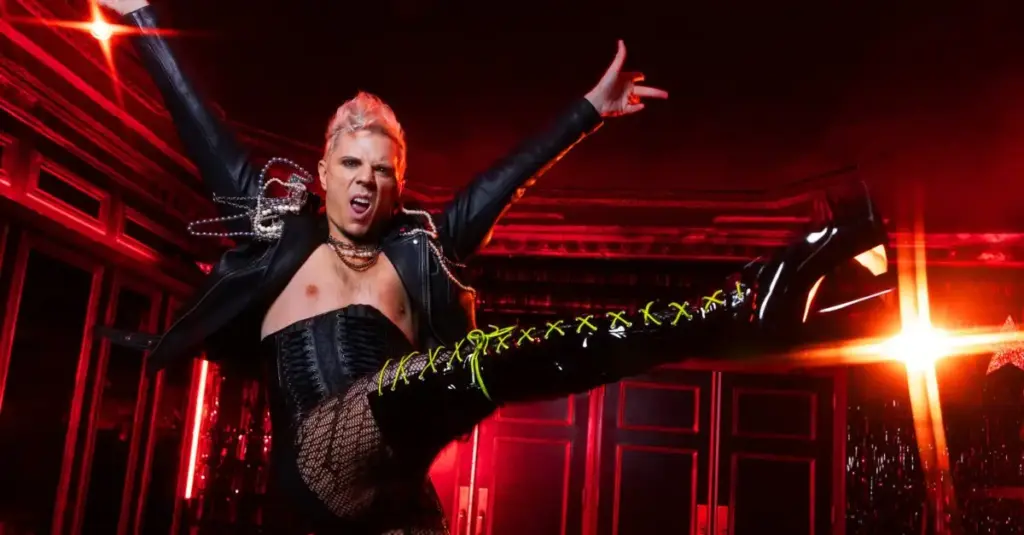
- History-Making Talent: Jinkx Monsoon made theatrical history during her run by becoming the first drag queen to play the role of Audrey in a major professional production of the musical, drawing universal praise and selling out performances weeks in advance.
This casting philosophy ensured that the production never stagnated. Each new pairing brought a unique chemistry, subtext, and vocal texture to the material, keeping the staging fresh for both first-time attendees and die-hard fans.
Supporting Context & Metrics: Breaking Down the Numbers
To fully grasp the scale of the Westside Theatre revival’s triumph, it is necessary to examine the hard metrics that define its historic run.
| Metric | Original 1982 Production (Orpheum Theatre) | Current Revival (Westside Theatre) |
|---|---|---|
| Total Performances | 2,210 | 2,226+ (and counting) |
| Opening Date | July 27, 1982 | October 17, 2019 |
| Original Stars | Ellen Greene & Lee Wilkof | Jonathan Groff & Tammy Blanchard |
| Current Star Cast | N/A | Ethan Slater, Betsy Wolfe, Claybourne Elder, Reg Rogers |
| Interruption Events | Standard run | COVID-19 Pandemic (2020–2021 closure) |
Surpassing the 1982 production’s count of 2,210 performances is no small feat. The original run, while immensely influential, operated in a vastly different economic and cultural era for Off-Broadway theatre. For the modern revival to achieve this longevity—especially in the wake of an industry-halting pandemic—speaks volumes about the financial health of the production, the agility of its management team under Live Wire Theatrical and Chris Aniello, and the unwavering dedication of its audience base.
Official Statements: Creators and Producers Reflect on the Milestone
The theatrical community has responded to the milestone with profound gratitude and reflections on the legacy of Howard Ashman, whose artistic voice continues to shape the production through the preservation of his original vision.
In a joint statement, lead producers Tom Kirdahy, Robert Ahrens, and Hunter Arnold expressed their astonishment at the milestone:
"We are absolutely thrilled to celebrate this extraordinary milestone and to watch Little Shop of Horrors continue to flourish. This production, beautifully directed by Michael Mayer in homage to Howard Ashman and Alan Menken’s original vision and heart of the piece, has been a true collaboration—built alongside a brilliant creative team, unparalleled performers, and phenomenal crew who have shaped it into what it is today. To now see it matching the original Orpheum production’s remarkable run is beyond anything we could have imagined. We are so grateful to everyone who brought their artistry to Skid Row over the past seven years, in our perfect home here at the Westside Theatre. And most of all, we want to thank the incredible audiences who have visited the shop night after night, to feed the plants in defiant dedication!"
Tony and Oscar-winning composer Alan Menken, whose musical genius forms the bedrock of the show, shared his deep appreciation for the creative machinery that kept the production thriving for nearly a decade:
“I’m, honestly, over the moon about this production of Little Shop of Horrors, at the Westside Theatre, actually exceeding the length of our original Off-Broadway run at the Orpheum Theatre. I am forever indebted to the foresight and commitment of my dear friends, the Howard Ashman estate, represented by Sarah Gillespie and Bill Lauch, to the peerless producing of Tom Kirdahy, Robert Ahrens, and Hunter Arnold, and brilliant direction by Michael Mayer. We have had seven amazing years of constant innovation, excitement, and revitalization, with countless wonderful casting decisions. I’m so grateful to everyone involved; musicians, actors, puppeteers, crew, creatives, designers, and production team.”
Future Outlook: Celebration Programming and the Current Company
Rather than letting the milestone pass quietly, the production is treating the entire month as a festival of celebration, engaging directly with the community that built its success.
Anniversary Programming
- The Ultimate Singalong: Following the September 15 performance, audiences were treated to a rare post-show singalong event featuring members of the current company, uniting fans and cast members in collective vocal celebration.
- Week-Long Post-Show Talkbacks: Running from September 22 through September 26, the production is hosting a series of deeply analytical and celebratory talkbacks. These panels explore the multifaceted legacy of Little Shop, covering topics ranging from the evolution of its iconic Seymours, Audreys, and Dentists, to its significant place within Black theatre history. Each night features special guests, current cast members, and surprise cameos.
- Collector’s Edition Playbill: In a nod to the original 1982 run, the theatre is distributing a special collectors-edition Playbill cover throughout September, mirroring the design of the historic Orpheum Showbill.
The Current Resident Artists
At the helm of this record-breaking machine is a phenomenal current cast. Tony nominee and Drama Desk Award winner Ethan Slater (renowned for his work in Wicked and SpongeBob SquarePants) brings a frantic, endearing vulnerability to Seymour. Opposite him, Tony nominee Betsy Wolfe (Death Becomes Her, & Juliet) infuses Audrey with soaring vocals and a heartbreakingly grounded humanity.
The supporting ensemble is equally formidable, featuring Drama Desk nominee Claybourne Elder as Dr. Orin Scrivello D.D.S., Tony nominee Reg Rogers as Mr. Mushnik, Christian McQueen as the booming Voice of Audrey II, and a powerhouse Urchins trio comprising Christine Wanda (Ronnette), Savannah Lee Birdsong (Crystal), and Morgan Ashley Bryant (Chiffon). The intricate puppetry, which brings Audrey II to life night after night, is masterfully operated and voiced by a rotating team of physical artists including Teddy Yudain, Weston Chandler Long, Mecca Hicks, Jeff Sears, Aveena Sawyer, Christopher Swan, Alloria Frayser, Chani Maisonet, Johnny Newcomb, Jon Hoche, Jonothon Lyons, and Noel MacNeal.
Conclusion: The Indestructible Vine
As the Westside Theatre revival enters this unprecedented new chapter of its lifespan, it stands as a monument to what happens when pristine source material is met with fearless reinvention and bulletproof craftsmanship. Little Shop of Horrors has proven that it is not merely a nostalgic artifact of the early 1980s, but a living, breathing theatrical organism. Feed the plant, indeed—because at this rate, Skid Row is going to need a bigger stage.