

Executive Overview
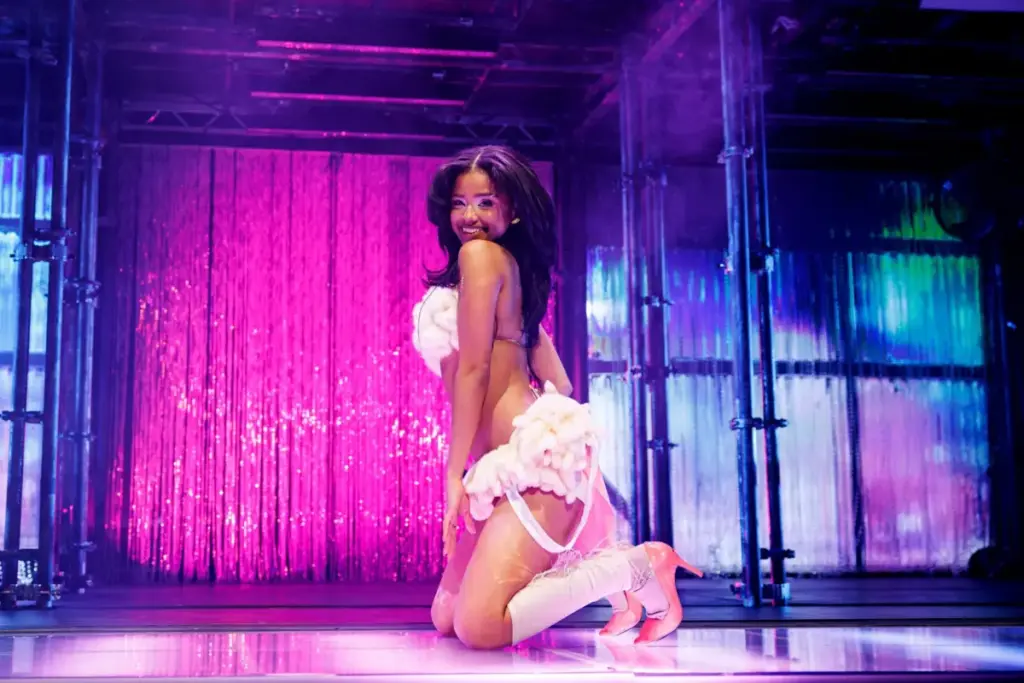
The landmark, Tony-winning revival of Chicago at Broadway’s Ambassador Theatre welcomed a wave of fresh energy and celebrated returning talent on September 7, 2026. Heading this latest casting milestone is professional dancer and former Dallas Cowboys Cheerleader Reece Weaver, widely recognized by audiences for her breakout appearance in the hit Netflix docuseries America’s Sweethearts: Dallas Cowboys Cheerleaders. Weaver is stepping into the iconic, razor-sharp role of Roxie Hart for a strictly limited six-week engagement running through October 18, 2026.
Weaver’s transition from the demanding world of professional NFL cheerleading and elite collegiate dance to the grueling choreography of Bob Fosse marks a fascinating crossover in modern pop culture and musical theatre. But she is not the only high-profile addition to the Ambassador Theatre stage this autumn. September 7 also heralded the triumphant return of two cherished Chicago veterans: Grammy winner and Tony nominee NaTasha Yvette Williams, who has reassumed the commanding role of Matron "Mama" Morton, and Red Concepción, who once again steps into the put-upon, sympathetic shoes of Amos Hart.
As the production marches toward its third decade on Broadway, these strategic casting choices underscore the timeless appeal and relentless reinvention of Broadway’s longest-running American musical. By blending viral streaming celebrity with seasoned Broadway powerhouses, the producers continue to keep the cultural pulse of the show beating vibrantly for multi-generational audiences.
Detailed Chronology and Casting Dynamics
Reece Weaver’s Journey to Roxie Hart
The path from competitive dance and high-profile sideline performances to the Broadway stage is fraught with physical and technical challenges, yet Reece Weaver appears uniquely equipped to navigate them. A graduate of the University of Alabama, where she was a standout member of the elite University of Alabama Dance Team and earned her degree in dance, Weaver spent years honing a rigorous, versatile technique. Her professional trajectory shifted into the national spotlight when she secured a coveted spot on the Dallas Cowboys Cheerleaders—an organization notorious for its grueling physical standards and intense media scrutiny.
Her journey behind-the-scenes was broadcast globally via Netflix’s critically acclaimed docuseries America’s Sweethearts: Dallas Cowboys Cheerleaders, introducing her charm, discipline, and emotional resilience to millions of viewers. Now, trading the white-and-blue uniform for the slinky black mesh of Roxie Hart, Weaver faces the ultimate test of her theatrical training.
Stepping into Chicago requires more than just technical execution; it demands razor-sharp comedic timing, charismatic vocal delivery, and the unmistakable, internalized swagger codified by legendary director and choreographer Bob Fosse. For a six-week window ending October 18, Weaver carries the narrative weight of a show that has broken stars and tested legends for decades. Industry watchers have noted that her casting exemplifies a growing trend in commercial theatre: leveraging non-traditional pathways and streaming-era visibility to attract new, younger demographics to historic Broadway houses.
The Return of Williams and Concepción
While Weaver commands attention as the new face of Roxie, the September 7 reopening of the company’s ensemble dynamics was deeply anchored by the return of two formidable stage actors.
NaTasha Yvette Williams returns to Matron "Mama" Morton, a role she infuses with unshakeable authority, soaring vocal prowess, and a delicious sense of wry cynicism. Williams is a celebrated fixture of the contemporary musical theatre landscape, with a deeply impressive Broadway résumé that includes standout turns in Some Like It Hot, Wicked, Waitress, and The Color Purple. Her return ensures that "When You’re Good to Mama" remains one of the undeniable emotional and vocal high points of the evening.

Simultaneously, Red Concepción reprises his deeply moving and comically tragic portrayal of Amos Hart ("Mr. Cellophane"). Concepción, whose international and domestic credits span acclaimed productions like Sumo and the Les Misérables Arena Spectacular World Tour, brings a delicate vulnerability to the role that anchors the musical’s cynical satire in genuine human emotion. His chemistry with the evolving ensemble keeps the tragicomic engine of the show humming smoothly.
The Current Company At-Large
Weaver, Williams, and Concepción join a powerhouse principal company currently keeping the Ambassador Theatre alight. The production is anchored by Lissa deGuzman as the calculating and glamorous Velma Kelly, Max von Essen as the silver-tongued, high-flying lawyer Billy Flynn, and J. Workman as the sensationalist journalist Mary Sunshine.
The sprawling, hard-working ensemble rounding out the production features Tia Altinay, Ronnie S. Bowman Jr., Austin Dunn, John Michael Fiumara, Danielle Marie Gonzalez, Chelsea James, Christopher Kelley, James T. Lane, Jenny Laroche, Marty Lawson, Joseph London, Kristen Faith Oei, Denny Paschall, Angel Reda, Mariah Reives, Sean Samuels, Jeff Sullivan, and Elizabeth Yanick. Together, this collective executes Ann Reinking’s legendary Fosse-derived choreography with a precision and bite that maintains the production’s razor-sharp edge.
Supporting Context & Metrics: The Historic Legacy of Chicago
To understand the magnitude of Reece Weaver’s debut and the enduring presence of Chicago, one must look at the monumental history of the revival itself.
The current staging of Chicago originated as part of the three annual Encores! concert presentations produced by New York City Center. Given its triumphant, critically lauded reception in concert form, the production made the swift leap to Broadway, officially opening at the Richard Rodgers Theatre on November 14, 1996. After a successful run there through February 1997, the show transferred to the Shubert Theatre, where it played for nearly six years until January 26, 2003. On January 29, 2003, the production found its permanent home at the Ambassador Theatre, where it has remained a staple of the New York theater district ever since.
Global Footprint and Box Office Statistics
- International Reach: Since its 1996 debut, the revival of Chicago has been translated, mounted, and performed in 36 countries across the globe.
- Total Audience: Over 33 million theatergoers worldwide have witnessed the cautionary tale of murder, greed, and all that jazz.
- Broadway Longevity: Chicago proudly stands as the second-longest-running show in Broadway history, sitting comfortably behind only The Phantom of the Opera (which closed its historic run in 2023).
Creative Blueprint
The enduring success of Chicago is rooted in its peerless creative DNA. With a brilliant book by the late Fred Ebb and Bob Fosse, iconic music by John Kander, and lyrics by Ebb, the show functions as both a scathing satire of the American legal system and a celebration of vaudevillian showmanship.
The revival was directed by Walter Bobbie, featuring original choreography recreated by the late Ann Reinking in the style of Bob Fosse. The original production featured direction and choreography by Fosse himself. The visual and aural landscape is masterminded by a legendary design team, including John Lee Beatty (set design), William Ivey Long (costume design), Ken Billington (lighting design), and Scott Lehrer (sound design), with casting executed by ARC.
Awards and Accolades
Produced by Barry and Fran Weissler, the revival swept the 1997 Tony Awards, taking home the coveted prize for Best Revival of a Musical. Additional Tony wins from that historic night included acting awards for Bebe Neuwirth (Velma Kelly) and James Naughton (Billy Flynn), as well as honors for director Walter Bobbie, lighting designer Ken Billington, and choreographer Ann Reinking. More recently, the production was celebrated during the 2026 Tony Awards with a sensational performance that included pop icon Pink tackling the show’s legendary opening number, "All That Jazz."

Official Statements and Industry Reception
While formal press statements from the production emphasize the excitement surrounding the infusion of new blood into the long-running enterprise, industry insiders have been vocal about what Weaver’s casting signifies for the broader commercial theatre landscape.
The marriage of traditional Broadway gatekeeping with digital-age star power—culled from popular unscripted television formats like Netflix’s America’s Sweethearts—represents a calculated, highly effective evolution in audience development. Producers Barry and Fran Weissler have historically excelled at dropping unexpected, high-profile names into Chicago—ranging from pop stars and supermodels to soap opera actors and reality television breakout stars—proving that the show’s modular format can comfortably absorb and elevate diverse performance backgrounds.
In rehearsal room reports shared by creative team representatives, Weaver’s background as a collegiate and professional dancer has been cited as a massive asset. While many celebrity guest stars require extensive, specialized coaching to master the intricate isolations and stylized posture of Fosse choreography, Weaver entered the process with a pre-conditioned, elite physical vocabulary. Her transition has been praised by dance captains and directors alike for its rigorous discipline and genuine respect for the material’s historical choreography.
Similarly, the return of NaTasha Yvette Williams and Red Concepción has been hailed as a masterclass in institutional stability. Having actors who can seamlessly slide into the production’s complex machinery without extensive preview periods allows the creative team to maintain the razor-sharp comedic timing and musical precision that repeat visitors and first-time tourists alike expect from an evening at the Ambassador Theatre.
Future Outlook
As Chicago looks toward the horizon, its structural integrity and commercial viability appear entirely unshakeable. The production has successfully weathered economic downturns, cultural shifts, and the unprecedented disruptions of the post-pandemic theatrical landscape by relying on a genius business model: an endlessly flexible casting machine married to bulletproof source material.
Reece Weaver’s six-week run through October 18, 2026, will undoubtedly be watched closely by casting directors and producers across Broadway, who are increasingly looking toward streaming platforms, social media ecosystems, and athletic performance backgrounds as incubators for raw, stage-ready talent. If Weaver’s opening week reception is any indication, the experiment is a resounding success, drawing a fresh demographic of theatergoers down 49th Street to experience the timeless allure of cell block camaraderie.
Following Weaver’s departure in mid-October, the production will undoubtedly announce its next wave of star casting, continuing a nearly thirty-year tradition of reinvention. For now, with Williams and Concepción anchoring the supporting player dynamics and Weaver commanding the spotlight as Roxie Hart, Chicago proves once again that in the glittering, cynical world of vaudeville, greed, and murder, the beat goes on—and it sounds better than ever.