
Executive Overview
The contemporary global jazz landscape continues to thrive on a dynamic synthesis of historical reverence and avant-garde exploration. In this edition of our critical review series, we examine three distinct releases that illuminate the multifaceted nature of the genre today. From master trombonist Ryan Keberle’s profound homage to Brazilian bossa nova architect João Donato in São Paulo, to the cross-genre textural experiments of the Holland Court Jazz Trio in Brooklyn, and finally to a re-examination of Chet Baker’s historically charged 1959 Italian sessions, these recordings offer a masterclass in jazz evolution.
Jazz is an art form defined by cross-pollination, where the ghosts of bebop, West Coast cool, and Latin rhythms continually converse with contemporary virtuosity. This review explores the technical achievements, cultural significance, and historical contexts of these notable releases, providing a comprehensive analysis for jazz aficionados, musicologists, and industry professionals alike.
Detailed Chronology
1. Ryan Keberle’s Collectiv Do Brasil: Here Is Donato! (Recorded: São Paulo, Brazil, April 17–19, 2024)
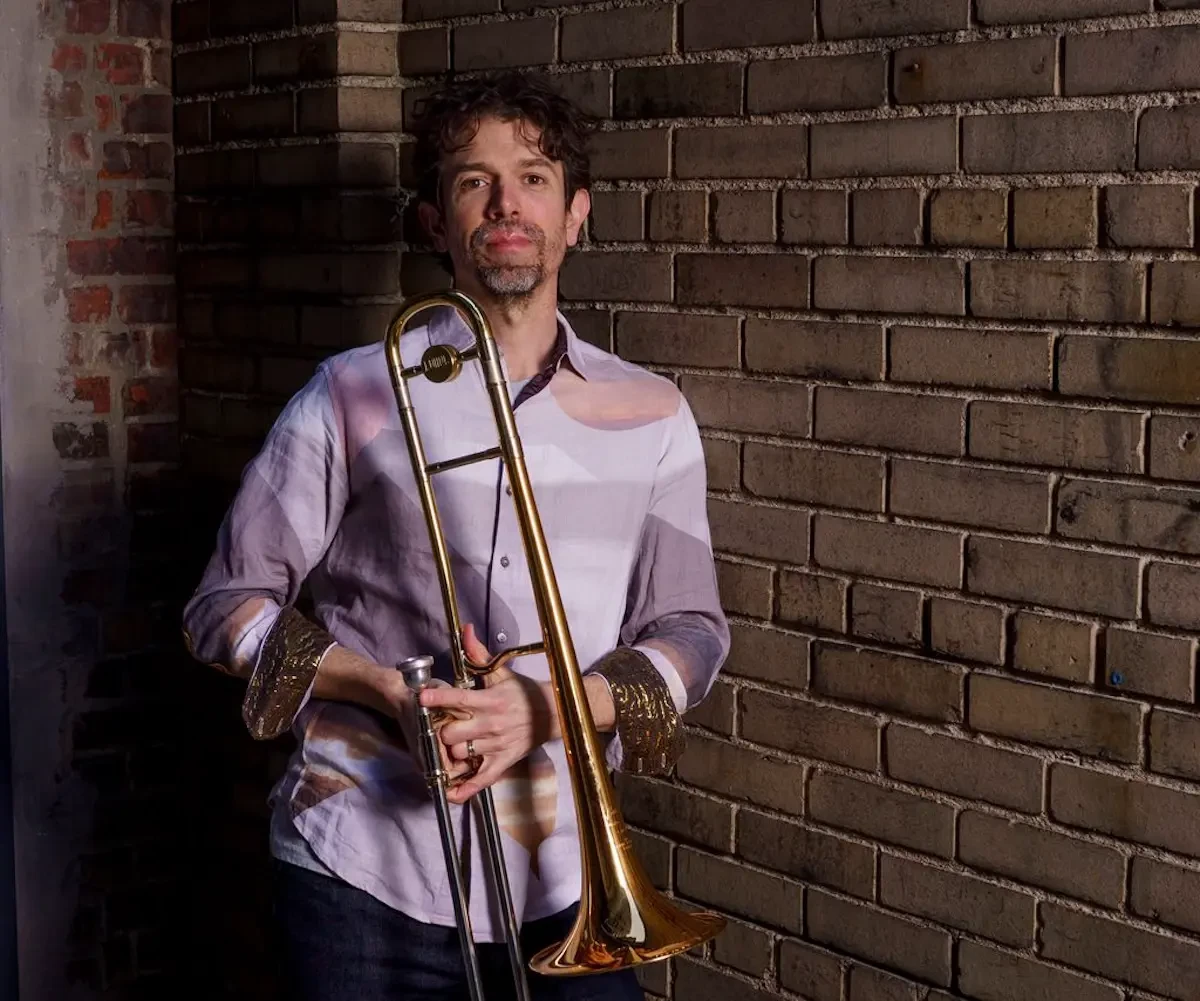
Master trombonist Ryan Keberle—an alumnus of the Manhattan School of Music under Steve Turre and Juilliard under Wycliffe Gordon—has long commanded respect as one of the most in-demand trombonists on the international scene. His reputation was officially underscored by the 2024 DownBeat Critics Poll, where he tied for the top spot in the trombone category alongside Michael Dease. Beyond his rigorous performance schedule, which includes collaborations with luminaries such as Maria Schneider, Wynton Marsalis, and David Bowie, Keberle maintains an esteemed academic presence at the Berklee College of Music, New York University, and London’s Royal Academy of Music.
For his 14th album as a leader, Here Is Donato! (Alternate Side Records, ASR 022), Keberle directs his formidable talents toward the repertoire of João Donato, a foundational figure in the evolution of bossa nova and Brazilian popular music. Coincidentally, Donato himself was a trombonist, having performed alongside Latin jazz pioneers Eddie Palmieri and Tito Puente.
Recorded over three days in São Paulo, the album captures Keberle playing with an open, uninhibited tone, eschewing mutes in favor of a warm, legato timbre reminiscent of greats like Andy Martin and Urbie Green. The tracklist is a masterclass in rhythm and arrangement:
- "Tema Teimoso" features an extended montuno, highlighting inventive, conversational interplay between Keberle and pianist Felipe Silveira.
- "E Menina" and "Celestial Showers" showcase bustling, intricate Afro-Cuban rhythms that draw career-best, inspired soloing from the leader.
- "Nao Tem Nada Nao" stands out for Silveira’s clever, probing bitonality.
- Ballads such as "Mentiras" and "Ate Quem Sabe" emphasize Donato’s sublime melodic lyricism.
Full Tracklist: Tema Teimoso; Nana Das Aguas; Nowhere To Go, Nothing To See; E Minina; Mentiras; Nao Tem Nada Nao; Celestial Showers; Ate Quem Sabe; Cade Jodel; Lugar Comum (Total runtime: 40:35).
Personnel: Ryan Keberle (tb, v); Felipe Silveira (p, elp); Felipe Brisola (b, elb); Paulinho Vicente (d); Guegue Medeiros (pc).
2. Holland Court Jazz Trio: Inverted Tango (Recorded: Brooklyn, New York, June 18–19, 2025)
Led by veteran bassist Frank Wagner—who studied under Steve Swallow and Ron McClure at Berklee and worked alongside jazz royalty including Buddy Rich, Glenn Miller, and Milt Jackson—the Holland Court Jazz Trio brings a wealth of historical pedigree to their debut recording on Composers Concordance Records. Wagner, who earned acclaim in 1988 with the award-winning album Past, Present and Future, is joined here by drummer Dave Meade and pianist Dave Marck.
Inverted Tango is a bold, genre-bending statement:
- The title track opens with Wagner’s resonant bass ostinato, blooming into a minor-key theme that echoes the early 20th-century minimalism of Erik Satie before pivoting into a direct homage to Argentine tango master Astor Piazzolla.
- "Hi-Ya" injects Caribbean rhythms into a clever contrafact of Thelonious Monk’s "Bye-Ya," cleverly emphasizing the 32-bar AABA form with two accented quarter-notes spaced a fifth apart across the A sections.
- "Phrygian Natural Fix" serves as an extended vamp built atop Dave Meade’s funk-infused Latin grooves, showcasing percussive textures worthy of Shelly Manne.
- Pianist Dave Marck delivers a stunning, sensitive reading of Billy Strayhorn’s 1946 masterpiece "A Flower Is a Lovesome Thing" (originally penned for Johnny Hodges in the Duke Ellington Orchestra).
- The trio, augmented by violinist Ben Sutin, reinterprets Jimi Hendrix’s "Manic Depression", transmuting rock fury into high-voltage acoustic chamber jazz.
Full Tracklist: Inverted Tango; Hi-Ya; Phrygian Natural Fix; A Flower Is A Lovesome Thing; Invisible Enemy; Domenica Canta; Quiet Room; Manic Depression (Total runtime: 56:57).
Personnel: Dave Marck (p); Frank Wagner (b); Dave Meade (d); Ben Sutin (vn).
3. Chet Baker Sextet & Quartet: Chet Baker In Milan Sessions (Recorded: Milan, Italy, Sept. 25 & Oct. 6, 1959; Reissued via WaxTime 771678)
Few stories in jazz are as romanticized or as tragic as Chet Baker’s relationship with Italy. Captured here on a classic 1959 session (reissued by WaxTime), Baker is supported by the vanguard of the Italian jazz renaissance: multi-instrumentalists Glauco Masetti (limiting himself to alto saxophone with a fluid, Herb Geller-esque tone) and Gianni Basso (wielding a swinging, Lester Young-inspired tenor). Their strong affinity for the West Coast Jazz school infuses the session with a sunny, sophisticated warmth.
Baker’s history with Italy was intensely complicated. His initial 1955 European tour met with massive acclaim, but was marred by personal tragedy when his pianist, Dick Twardzik, died of a drug overdose in Paris. Just a month after the Milan sessions documented on this album, Baker was arrested in Lucca, Tuscany, and served an 18-month prison sentence. Despite these trials, Baker fell deeply in love with the country, eventually mastering the language and considering Italy his true second home.
The album blends Baker’s signature cool-school style with ambitious hard-bop vehicles:
- Includes Sonny Rollins’ complex original composition "Pent-Up House" (a piece Baker would revisit at least five times throughout his career) and Eddie Vinson’s "Tune Up" (popularized by Miles Davis).
- Baker shines particularly bright on "Lady Bird," "Look For The Silver Lining," and Charlie Parker’s sinuous blues "Cheryl."
- The horns drop out entirely for two of Baker’s most heartbreakingly lyrical ballad performances: "My Old Flame" and "Indian Summer."
Full Tracklist: Lady Bird; Cheryl; Tune Up; Line For Lyons; Pent-Up House; Look For The Silver Lining; Indian Summer; My Old Flame; My Funny Valentine (Total runtime: 48:01).
Personnel: Chet Baker (t, v); Glauco Masetti (as); Gianni Basso (ts); Renato Sellani (p); Franco Cerri (b); Gene Victory (d).
Supporting Context & Metrics
To fully appreciate the artistic weight of these releases, it is vital to examine the metrics of their creation and reception within the global jazz infrastructure:
- Geographical Span: This trio of releases bridges three distinct epicenters of jazz innovation: São Paulo (representing the enduring heartbeat of Brazilian rhythmic complexity), Brooklyn (a current incubator for genre-fluid contemporary jazz), and Milan (a historical European sanctuary for American West Coast expatriates).
- Critical Accolades & Pedigree: Ryan Keberle’s recent co-topping of the DownBeat 2024 Critics Poll cements his standing as an elite instrumentalist. Meanwhile, veterans like Frank Wagner bring over four decades of bandstand experience, having shared stages with mid-century jazz legends (Buddy Rich, Milt Jackson) and bridging the gap to modern collaborators.
- Format Diversity: The releases range from contemporary studio digital/CD distribution (Alternate Side Records, Composers Concordance) to high-grade vinyl archival reissues (WaxTime), proving that the market demands both forward-looking original compositions and impeccably preserved historical artifacts.
Official Statements & Industry Perspectives
On Ryan Keberle’s Dedication to João Donato:
"Donato was a massively influential figure in the history and development of bossa nova and Brazilian music… Bringing this music to life required a band that understood not just the notes, but the cultural pulse of São Paulo. Ryan’s open-toned trombone brings a vocal quality to these charts that honors Donato’s own legacy as a fellow trombonist."
— Production Notes, Alternate Side RecordsOn the Holland Court Jazz Trio’s Cross-Genre Approach:
"Inverted Tango is an intriguing release because it refuses to stay inside traditional boundaries. By merging Astor Piazzolla, Erik Satie, Thelonious Monk, and Jimi Hendrix into a unified acoustic trio format, Frank Wagner and his colleagues have crafted something genuinely distinct for the contemporary listener."
— Acoustic Music Review DigestOn Chet Baker’s European Period:
"Chet Baker had a long and complicated relationship with Italy… These 1959 sessions capture him at a stylistic crossroads, surrounded by European masters who understood his lyrical sensitivity better than almost anyone else on the international scene."
— Original Sleeve-Note Analysis
Future Outlook
The trajectory of jazz in the mid-2020s points toward an increasingly borderless discipline. As demonstrated by these three releases, contemporary leaders are looking simultaneously backward and outward.
In the wake of Keberle’s triumphant Brazilian excursion, we anticipate a surge in cross-continental collaborations where American modernists deeply immerse themselves in regional South American traditions rather than treating them as superficial stylistic add-ons. Similarly, the boundary-dissolving approach of the Holland Court Jazz Trio—treating Jimi Hendrix and Astor Piazzolla with the same harmonic reverence as standard American songbook repertoire—signals a healthy, post-genre future for small-ensemble jazz.
Finally, the continued rediscovery and pristine reissuing of historical documents like Baker’s Milan recordings ensure that younger generations of musicians and listeners remain anchored to the foundational tone production, phrasing, and emotional vulnerability that define the jazz canon. The state of the art is robust, restless, and globally interconnected.