
Executive Overview
The landscape of recorded jazz continually oscillates between the excavation of historical foundations and the rigorous interrogation of contemporary idioms. In this critical review, we examine three distinct recent releases that encapsulate this dynamic tension across a century of creative output.
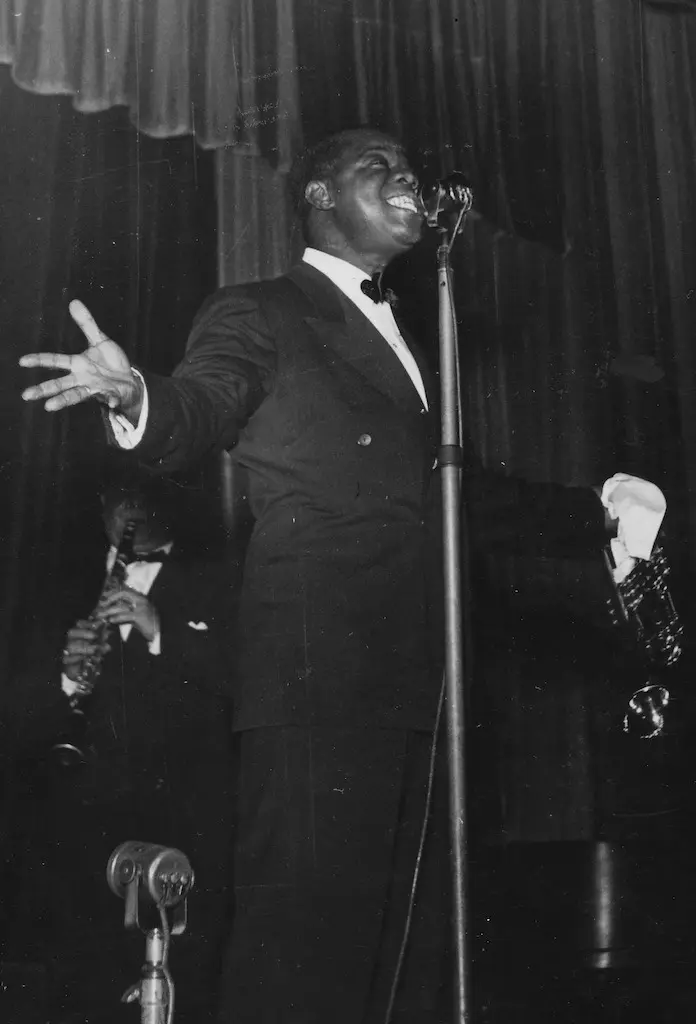
At the foundational end of the continuum, Mosaic Records has issued The Complete Louis Armstrong in New York (1924-1925), a monumental six-CD box set utilizing painstaking audio restoration techniques on rare original 78 RPM discs. This collection captures the pivotal transitional period when Armstrong left Chicago for the epicenter of American commerce, permanently shifting the trajectory of modern music.
Advancing into the contemporary avant-garde, the Jason Kao Hwang Human Rites Trio returns with Second Life (True Sound Recordings). Featuring violinist Hwang, bassist Ken Filiano, and percussionist Andrew Drury, the album extends the leader’s lifelong mission to forge an uncompromising Asian-American jazz vocabulary, blending chamber-music austerity with volatile, swinging geometries.
Finally, vocalist and polymath Judi Silvano bridges classical structuralism and free improvisation on First Flight (JSL Records) alongside flutist Haruna Fukazawa and bassoonist Claire de Brunner. Together, these releases offer listeners an expansive panoramic view of jazz history—from its nascent, horn-driven origins in the roaring twenties to the liberated, timbre-obsessed chamber configurations of the twenty-first century.
Detailed Chronology
The New York Crucible: Louis Armstrong (1924–1925)
In October 1924, Louis Armstrong arrived in New York City at the personal behest of Fletcher Henderson, the leader of the era’s most culturally significant Black dance orchestra. At the time, Henderson’s band operated within a framework that relied heavily on written arrangements, sophisticated orchestration, and sweet, melodically constrained dance forms.
When Armstrong joined the ranks, his musical sensibility was fundamentally organic. He did not merely apply jazz elements as surface ornamentation; rather, his entire phrasing, rhythmic propulsion, and harmonic conception were born from an intuitive jazz grammar. Contemporary listeners, however, often find the earliest Henderson sides collected here remarkably stiff. Reviewers and sleeve-note annotators have frequently pointed out that, during 1924, the Henderson orchestra’s arrangements still bore the heavy structural traces of novelty music. Clarinet choirs—a popular orchestral affectation of the period—frequently cluttered the sonic space, rendering pieces like Manda overly rigid. Even a 19-year-old Coleman Hawkins, then holding down the tenor saxophone chair, exhibited a jaunty yet inflexible approach, though his proximity to Armstrong would soon catalyze an evolutionary leap in his own playing.
The sonic turning point of this residency is captured indelibly on Sugar Foot Stomp, a reimagining of King Oliver’s Dippermouth Blues that stands as a crown jewel of the Mosaic set. Here, the band finally relaxes its posture. Following an early, breathtaking solo by Armstrong, arranger Don Redman expertly dynamics the orchestra down, paving the way for an explosive rhythmic release anchored by Ralph Escudero driving four-four time on the tuba.
Concurrently, Armstrong engaged in landmark studio sessions outside the Henderson orbit. His collaborations with Clarence Williams’s various configurations—including the Blue Five and the Red Onion Jazz Babies—reveal an astonishing depth of musicianship that directly foreshadowed his revolutionary 1925 Hot Five recordings. On tracks such as Cake Walking Babies (backing Alberta Hunter alongside Sidney Bechet and Charlie Irvis), Armstrong and Bechet establish a ferocious counterpoint, their horns harmonizing on the opening three notes of the melody with florid intensity.
On Of All The Wrongs You’ve Done To Me, musicologist Lewis Porter notes that Armstrong executed a remarkably modern-sounding solo, built entirely of two- and three-note fragments placed in startling, disruptive relationships against an incessant stop-time backing.
The chronology of this period also encompasses Armstrong’s definitive studio pairings with classic blues queens. Working alongside pianist and harmonium player Fred Longshaw, Armstrong supported Bessie Smith across iconic sides like St. Louis Blues. Because of the deliberate, funereal pacing dictated by the material, these performances often feature Armstrong engaged in intimate, conversational duets with Smith rather than unleashing extended, high-register solo flights, cementing an artistic dialogue between two titans of American vernacular music.
CHRONOLOGICAL MILESTONES (1924-1925)
│
├── October 1924: Louis Armstrong joins the Fletcher Henderson Orchestra in NYC.
├── Late 1924 – Early 1925: Studio recordings with Clarence Williams, Blue Five, & Red Onion Jazz Babies.
├── Mid-1925: Breakthrough Henderson recordings (*Sugar Foot Stomp*); landmark blues sessions with Bessie Smith.
└── Late 1925: Transition to electric recording mediums and the inception of the Hot Five.
The Transnational Avant-Garde: Jason Kao Hwang Human Rites Trio (2020–Present)
Shifting across the decades, the timeline of the Jason Kao Hwang Human Rites Trio represents the maturation of a distinct hyphenated American aesthetic. Violinist Jason Kao Hwang, born in Lake Forest, Illinois, in 1957 to parents who emigrated from Hunan after World War II, absorbed classical Western violin training before immersing himself in the avant-garde fires of New York’s loft jazz scene in the late 1970s. Collaborating with radical visionaries like Anthony Braxton, Fred Ho, and Bill Dixon, Hwang gradually steered his creative focus toward articulating an explicit Asian-American jazz identity.
Following the release of his acclaimed 2005 chamber opera The Floating Box: A Story in Chinatown and large-scale ensemble works like Burning Bridge, Hwang consolidated his small-group vocabulary with the formation of the Human Rites Trio alongside bassist Ken Filiano and percussionist Andrew Drury. Following their 2020 self-titled debut, the trio convened in Paramus, New Jersey, in March 2024 to record their sophomore release, Second Life.
The album’s four extended compositions demonstrate a seamless navigation of contrasting musical spaces. Opener Galaxies Twist Under Before It immediately establishes a buoyant, swinging groove propelled by Hwang’s fiery, impassioned violin improvisations. Conversely, What To Keep, What To Let Go tracks a volatile structural journey, shifting rapidly from a moody, rubato dirge into kinetic tempo explorations. The title track, Second Life, traces a meditative arc from a tentative, ambient opening to a soaring, plangent thematic statement, illustrating the group’s mastery of dynamic pacing and textural contrast.
Chamber Improvisation: Judi Silvano’s Garden Winds (2024)
Operating in a parallel, contemporary sphere, vocalist and polymath Judi Silvano represents a lineage of cross-disciplinary artists whose work defies easy generic categorization. Trained in music and dance at Temple University—where she sang under Eugene Ormandy and the Philadelphia Orchestra—Silvano relocated to New York in 1976. Over the decades, she has maintained a dual-track career as a painter, choreographer, dancer, jazz vocalist, and composer, while sharing a creative and domestic life with saxophonist Joe Lovano.
In July 2024, Silvano convened in New York with two exceptional instrumentalists: Japanese-born classical flutist Haruna Fukazawa (whose migration to New York was championed by Frank Wess) and bassoonist Claire de Brunner (a founding member of the post-punk ensemble 101 Crustaceans and a disciple of Lee Konitz and Connie Crothers). The resulting album, First Flight, captures a rare three-way chamber conversation where conventional jazz hierarchies dissolve.
Utilizing her signature vocalese approach—wherein improvised syllables function as an independent, fourth instrumental voice rather than a vehicle for traditional lyrical storytelling—Silvano treats her voice and auxiliary percussion as textural glue. Tracks like Gathering and Flower Talk position the ensemble closer to contemporary composition, free improvisation, and free jazz than standard vocal-jazz songbooks, offering a stark counterpoint to the swing-era foundations preserved in the Armstrong archive.
Supporting Context & Metrics
To fully appreciate the scope of these releases, one must examine the acoustic engineering, demographic shifts, and musicological frameworks underpinning them.
Audio Restoration Metrics: Mosaic’s 78 RPM Transfers
The technical challenge of preserving recordings made between 1924 and 1925 cannot be overstated. The vast majority of these sides were captured via acoustic recording horns—a pre-electric mechanical process that captured a narrow frequency spectrum, lacked low-end bass response, and was prone to surface noise and distortion.
Mosaic Records’ six-CD box set represents a watershed moment in historical jazz restoration. By sourcing pristine original 78 RPM pressings from international collectors and applying state-of-the-art digital restoration algorithms without stripping away the historical grain of the performances, the producers have achieved unprecedented clarity.
- Acoustic vs. Electric Threshold: The collection specifically captures the technological pivot point of 1925, where studios began phasing out mechanical recording horns in favor of Western Electric condenser microphones. This transition exposed the sheer velocity of Armstrong’s trumpet tone, rendering high-register attacks with a fidelity previously thought impossible for recordings of that vintage.
- Discographical Density: The set spans dozens of recording dates, encompassing Fletcher Henderson’s large ensembles, Clarence Williams’s various studio units, and the immortal accompaniment sides for blues icons Ma Rainey, Bessie Smith, Sippie Wallace, and Alberta Hunter.
Instrumentation & Timbral Metrics: Second Life & First Flight
In contemporary experimental jazz, the palette of percussion and strings has expanded exponentially to compensate for the absence of standard harmonic keyboard instruments.
TIMBRAL COMPOSITION ANALYSIS
┌────────────────────────┬──────────────────────────────────────────┬─────────────────────────────────────┐
│ Release                │ Lead Voice / Melody Instrument           │ Extended Percussion / Timbral Gear  │
├────────────────────────┼──────────────────────────────────────────┼─────────────────────────────────────┤
│ Human Rites Trio       │ Jason Kao Hwang (Acoustic Violin)        │ Gongs, Tibetan Prayer Bowls, Sinks  │
│ Garden Winds           │ Judi Silvano (Vocalese & Percussion)     │ Auxiliary Hand Percussion           │
└────────────────────────┴──────────────────────────────────────────┴─────────────────────────────────────┘- Andrew Drury’s Percussion Setup: On Second Life, Drury avoids standard drum-kit clichés by incorporating an array of found objects and world percussion, including gongs, aluminum pots, stainless steel bowls, a Tibetan prayer bowl, bells, shells, and even a sink faucet escutcheon. This creates an arid, highly idiosyncratic string-and-metal soundscape that defines the album’s unique acoustic signature.
- The Rare Winds Configuration: Judi Silvano’s First Flight explores the unusual timbral marriage of voice, flute, and bassoon over a concise 33-minute runtime. The absence of drums or chordal instruments places absolute demands on the linear counterpoint between Fukazawa’s agile flute and de Brunner’s woody, resonant bassoon.
Official Statements and Archival Commentary
The cultural and musicological significance of these releases is underscored by extensive liner notes and scholarly commentary provided by leading archivists and historians.
David Sager and Ricky Riccardi on Armstrong’s New York Years
The packaging for Mosaic’s The Complete Louis Armstrong in New York (1924-1925) features authoritative session notes penned by David Sager and Ricky Riccardi. Riccardi, Director of Research Collections for the Louis Armstrong House Museum and the author of a definitive three-volume biographical study of Armstrong, emphasizes the transformative nature of this epoch:
"When Armstrong stepped off the train in Manhattan, he was entering an environment that operated at a completely different professional velocity than Chicago or New Orleans. The friction between his unshakeable, organic swing and the rigid, conservatory-trained arrangements of the Fletcher Henderson orchestra created a crucible. Out of that tension, modern jazz rhythm was forged."
Sager’s session notes further elucidate the intricate web of studio pick-up bands that Armstrong populated during his downtime from Henderson’s orchestra, noting that the Clarence Williams and Red Onion Jazz Babies sessions reveal an improvisational daring that Henderson’s dance charts simply could not accommodate.
Lewis Porter on Armstrong’s Micro-Motif Architecture
Musicologist Lewis Porter, writing about Armstrong’s solo work on the Clarence Williams side Of All The Wrongs You’ve Done To Me, provides a structural analysis that links Armstrong’s early 1920s playing directly to the DNA of modern bebop:
"The solo is a masterclass in economy and structural surprise. It is entirely composed of two- or three-note fragments which he places in constantly surprising relationships to the incessant stop-time backing, proving that long before the swing era, Armstrong was already thinking in terms of advanced motif-development."
Future Outlook
As the recorded jazz ecosystem moves further into the twenty-first century, the bifurcation between historical preservation and radical stylistic synthesis will likely intensify.
The success of Mosaic’s Louis Armstrong archival box set establishes a new benchmark for historical audio restoration. It proves that there remains a thriving, economically viable global market for meticulously curated, high-resolution physical media dedicated to the foundational roots of the music. As machine-learning audio separation tools improve, we may anticipate further archival deep-dives into 1920s and 1930s masters, rescuing undocumented or poorly preserved alternate takes from oblivion.
Concurrently, artists like Jason Kao Hwang and Judi Silvano point toward a future where genre boundaries are porous to the point of extinction. Hwang’s ongoing exploration of Asian-American identity through chamber-jazz hybrids highlights a vital cultural imperative: jazz as an ever-expanding, inclusive global language that continually absorbs non-Western traditions, classical structuralism, and avant-garde timbral experiments.
Whether examining the mechanical horn recordings of 1924 or the dry, resonant metal percussion of a 2024 New Jersey studio session, the artistic trajectory remains unbroken. It is a continuous continuum defined by virtuosity, cross-cultural pollination, and an uncompromising search for individual voice.
Comprehensive Release Index
- Louis Armstrong – The Complete Louis Armstrong In New York (1924-1925)
- Label: Mosaic Records (Mosaic #286)
- Format: 6-CD Box Set
- Key Personnel: Louis Armstrong (cornet), Sidney Bechet, Don Redman, Buster Bailey (clarinets), Charlie Green (trombone), James P. Johnson, Fred Longshaw (piano, harmonium), Ma Rainey, Bessie Smith, Sippie Wallace, Alberta Hunter (vocals).
- Jason Kao Hwang Human Rites Trio – Second Life
- Label: True Sound Recordings (TS07)
- Format: Digital / CD
- Key Personnel: Jason Kao Hwang (violin), Ken Filiano (bass), Andrew Drury (drums, percussion). Recorded in Paramus, NJ, March 18–19, 2024.
- Judi Silvano’s Garden Winds – First Flight
- Label: JSL Records (JSL #011)
- Format: Digital / CD
- Key Personnel: Judi Silvano (vocals, percussion), Haruna Fukazawa (flute), Claire de Brunner (bassoon). Recorded in New York, July 1, 2024.