
Executive Overview
The contemporary jazz landscape is a study in contrasts. On one hand, record labels continue to unearth vital, combustible historical artifacts from the genre’s golden age, dusting off master tapes that challenge and expand our understanding of mid-century transatlantic collaboration. On the other hand, contemporary artists continually attempt to bridge the gap between popular songcraft and improvisational complexity, often running aground on the shoals of overfamiliarity and undercooked execution.
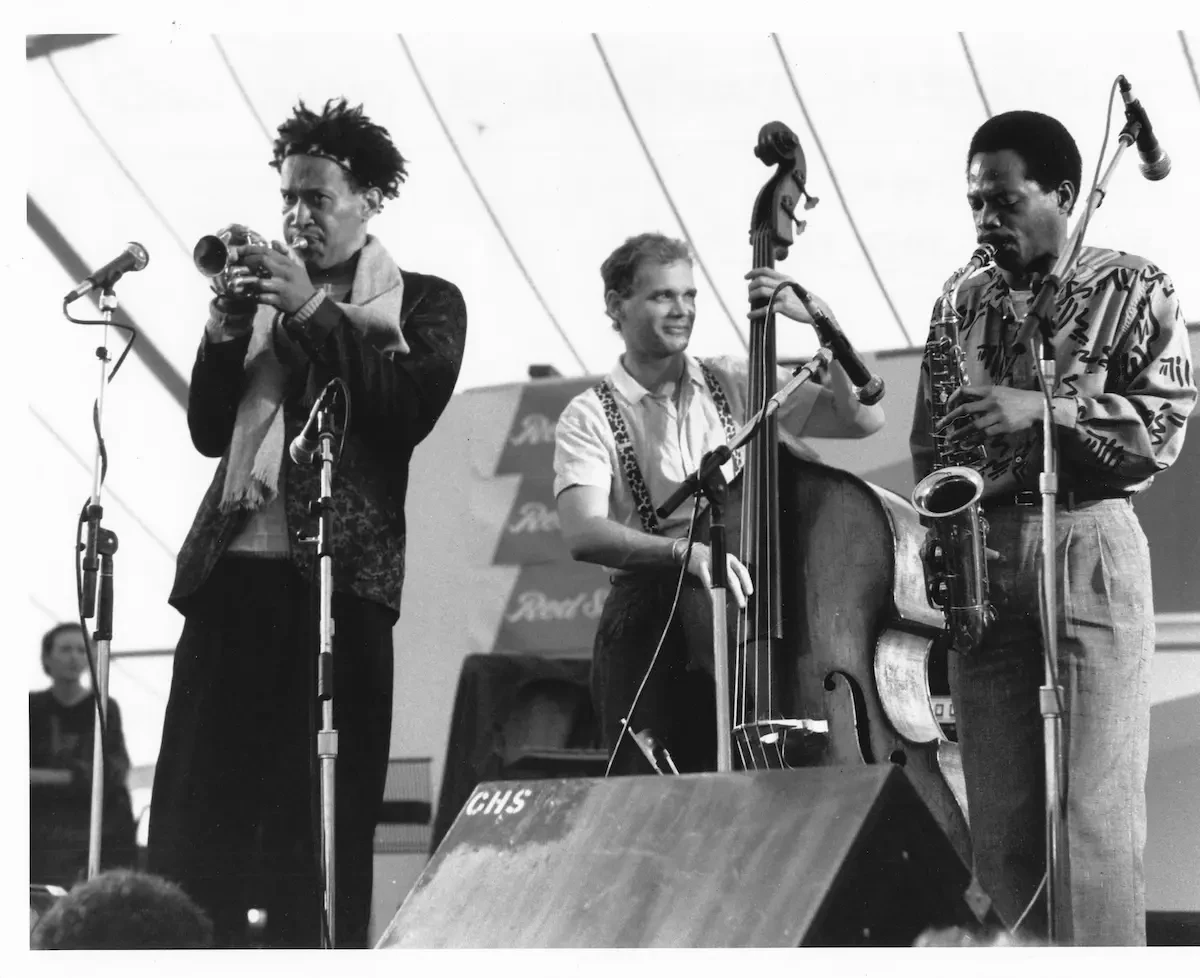
This dual reality is vividly illustrated in two recent releases dominating critical discourse. First, the international reissue of The Third World-Underground—a landmark 1972 live recording capturing the mercurial synergy of pianist Dollar Brand (later known as Abdullah Ibrahim), trumpeter Don Cherry, and alto saxophonist Carlos Ward—offers a masterclass in free-flowing, politically charged, and culturally syncretic jazz. Originally locked away on a Japanese specialty label in 1974, this historic Copenhagen performance finally receives the global distribution it has long deserved, serving as an essential reminder of the avant-garde’s transnational power.
Conversely, the contemporary release Walrws by guitarist James Chadwick attempts a different sort of bridge-building: reimagining 1960s pop and rock classics through a modern jazz lens. Featuring a quintet tackling heavy-hitters like Lennon-McCartney, Bacharach, and Simon & Garfunkel, the album highlights the eternal allure—and the persistent peril—of jazzifying popular song formats. While Chadwick’s ambitions are clear, the resulting LP stumbles under the weight of routine arrangements and a lack of harmonic daring, offering a cautionary tale about the fine line between accessible homage and bland pastiche.
Together, these releases provide a panoramic view of jazz appreciation today: a reverence for the fiery, uncompromising breakthroughs of the past, contrasted with the arduous, frequently fraught labor of making standard pop repertoires sound fresh in the modern era.
Detailed Chronology
The Genesis of The Third World-Underground (1972–1974)
To understand the profound weight of The Third World-Underground, one must trace the convergence of its three primary architects across the geopolitical and musical fault lines of the early 1970s.
- November 14, 1972: Dollar Brand, Don Cherry, and Carlos Ward take the stage at the legendary Jazzhus Montmartre in Copenhagen, Denmark. At this juncture, each musician occupies a distinct, highly influential orbit within the global avant-garde. Brand, who had converted to Islam four years prior in 1968, was still performing under his birth name for this engagement. Heavily influenced by the stately harmonies of Duke Ellington and the angular, rhythmic architectures of Thelonious Monk, Brand was concurrently forging a profound synthesis between American bebop and the traditional folk rhythms of his native South Africa.
- Don Cherry’s Avant-Garde Omnivorousness: By 1972, Cherry was already a titan of free jazz, having cemented his legendary status through his groundbreaking 1960s collaborations with Ornette Coleman. Cherry’s approach to the trumpet—characterized by extended, breathy tones, sudden flutters, and an encyclopedic knowledge of global folk traditions—made him the ultimate catalyst for any ensemble.
- Carlos Ward’s Steadfast Partnership: Alto saxophonist and percussionist Carlos Ward had spent years locked in a deep, intuitive creative partnership with Brand. Ward’s tone—agile, searing, and deeply responsive—served as the vital connective tissue between Brand’s piano work and Cherry’s brass pyrotechnics.
- 1974 (Trio Records Pressing): The Copenhagen concert tapes are acquired and initially pressed by Trio Records, a boutique Japanese label renowned among audiophiles and collectors for releasing remarkably adventurous recordings throughout the 1970s and 1980s. However, due to licensing agreements and the insular nature of international distribution channels at the time, the album remains largely confined to the Japanese domestic market, acquiring a mythical status among hardcore collectors outside of Asia.
- Modern Day (Wewantsounds International Release): More than half a century after the notes were first struck at the Montmartre, Wewantsounds officially brings The Third World-Underground to the global marketplace (Catalog: Wewantsounds WWSCD125), making this historic 40-minute set available internationally for the very first time.
The Trajectory of Pop-Jazz Crossover and Walrws (2025)
The practice of transforming popular song forms into jazz vehicles is as old as recording technology itself. From Louis Armstrong tackling Tin Pan Alley showtunes to John Coltrane reshaping My Favorite Things, the pop canon has always served as raw material for improvisational alchemy.
- September 3–4, 2025: Guitarist and arranger James Chadwick leads a newly formed quintet—featuring Mark Sambell on piano, Aidan Thorne on bass, Liz Exell on drums, and Josh Heaton on tenor saxophone—into a studio in Abergavenny to record a suite of 13 tracks centered on 1960s pop classics.
- The Concept: Billed as "60s Pop Classics with a Jazz Twist," the project leans heavily on the songcraft of Lennon and McCartney (accounting for seven of the 13 selections), alongside timeless compositions by Bacharach, Simon & Garfunkel, and Brian Wilson. The stated aim is to deconstruct, reharmonize, and reinject these universally recognizable melodies with contemporary jazz sensibilities.
- Late 2025/Early 2026 (33 Records Release): 33 Records issues the album under the catalog number 33JAZZ321, complete with an eclectic tracklist that notably features a humorous typo on the cover art (I Am The Walrys), which critics and reviewers quickly seized upon to characterize the project’s overall lack of editorial precision.
Supporting Context & Metrics
Analytical Breakdown: The Third World-Underground
Clocking in at a concise yet intensely packed 40 minutes and 3 seconds, The Third World-Underground rejects the self-indulgent sprawl that often bogged down early-70s free jazz, opting instead for a breathless, high-velocity sequence of sonic explorations.
- Opening Volleys: The album plunges the listener straight into the fire. There is no gentle soundcheck or ambient tuning; the listener arrives mid-stream as Dollar Brand hammers out the bold, uncompromising theme of Don’s Song. Written by Cherry, the piece showcases the trumpeter in peak form, delivering two distinct solo passages. The second solo is a masterclass in tension and release, featuring long, sustained notes punctuated by Cherry’s signature vocalized flutters and microtonal trills.
- Abrupt Transitions: One of the album’s most striking aesthetic features is its severe, unyielding sequencing. Don’s Song is slashed away mid-breath to make way for Brand’s Cherry, a medium-tempo vehicle. Here, the composer lays down a hypnotic, repetitive vamp that anchors the horns. Both Cherry and Ward lean into a melodic, conversational phrasing style before engaging in brisk call-and-response figures with Brand’s keyboard.
- Textural Variations: On Bra Joe From Kilimanjaro, the spotlight shifts directly to Brand’s left hand. Operating as a percussive rock foundation, Brand infuses the solo with deep blues inflections, thunderous percussive strikes, and expansive harmonic flights. This gives way to the jagged, dissonant opening of Jabulani-Easter Joy, where Cherry and Ward engage in rapid-fire sonic sparring.
- Vocal and Traditional Elements: The inclusion of short vocal pieces—namely Waya-Wa-Egoli, Swazi, and the Victor Ndilzwana-composed Wayeah-Wayeah-O—rounds out the cultural geography of the record. Wayeah-Wayeah-O features a semi-stately theme that bears all the hallmarks of Brand’s compositional style while honoring the broader South African jazz diaspora.
Track Metrics & Metadata
- Album The Third World-Underground
- Artists: Dollar Brand (piano, vocals); Don Cherry (trumpet, vocals, percussion); Carlos Ward (alto saxophone, vocals, percussion)
- Recording Location: Jazzhus Montmartre, Copenhagen, Denmark
- Recording Date: November 14, 1972
- Original Label: Trio Records (1974)
- Reissue Label: Wewantsounds (WWSCD125)
- Total Runtime: 40 minutes, 3 seconds
- Tracklist:
- Don’s Song
- Cherry
- Bra Joe From Kilimanjaro
- Jabulani-Easter Joy
- Waya-Wa-Egoli
- Swazi
- Wayeah-Wayeah-O
Analytical Breakdown: Walrws by James Chadwick
Where the Montmartre session burns with organic urgency, James Chadwick’s Walrws struggles to find a compelling justification for its existence within a crowded field of pop-jazz tribute albums.
- Repertoire and Approach: The quintet tackles an undeniably impressive cross-section of 20th-century pop history. The Lennon-McCartney catalog looms large, featuring standards such as I Am The Walrus (misspelled on the physical release as I Am The Walrys), Eleanor Rigby, Blackbird, Penny Lane, Fool On The Hill, and I Feel Fine. They are joined by touchstones from other writers: Ben E. King’s Stand By Me, The Monkees’ Daydream Believer, Simon & Garfunkel’s The Sound Of Silence, Bob Dylan’s Mr. Tambourine Man, The Beach Boys’ God Only Knows, and Burt Bacharach’s Walk On By.
- Critical Shortcomings: Despite competent musicianship from pianist Mark Sambell, bassist Aidan Thorne, drummer Liz Exell, and tenor saxophonist Josh Heaton, the project ultimately falters under the weight of its own ambitions. Reviewers have noted several systemic flaws:
- Lack of Ensemble Drive: The rhythm section frequently settles into polite, predictable swings and grooves, robbing the source material of the rhythmic friction necessary to make reinvention interesting.
- Routine Soloing: Individual improvisations tend to coast on autopilot, rarely challenging the underlying chord changes or offering unexpected harmonic deviations.
- Timid Melodic Delivery: When the iconic melodies are stated, they are delivered with an almost apologetic reverence, lacking the bold, transformative vision that defines truly great jazz interpretations of pop songs.
- Packaging and Presentation: Adding insult to injury, the physical CD case suffers from sloppy editorial oversight, presenting the tracklist in a chaotic and untidy fashion that mirrors the unfocused nature of the music within.
Track Metrics & Metadata
- Album Walrws
- Artist/Leader: James Chadwick (guitar, arranger)
- Personnel: Mark Sambell (piano); Aidan Thorne (bass); Liz Exell (drums); Josh Heaton (tenor saxophone)
- Recording Dates: September 3 and 4, 2025
- Recording Location: Abergavenny, Wales
- Label: 33 Records (33JAZZ321)
- Total Runtime: 69 minutes, 44 seconds
- Tracklist:
- I Am The Walrys
- Stand By Me
- Eleanor Rigby
- Daydream Believer
- Sound Of Silence
- Mr. Tambourine Man
- Blackbird
- Penny Lane
- God Only Knows
- Fool On The Hill
- I Feel Fine
- Strawberry Fields Forever
- Walk On By
Official Statements & Critical Reception
The stark divergence in quality between these two releases has prompted robust commentary from music critics, historians, and industry observers.
On The Third World-Underground
Archival specialists and jazz historians have universally praised Wewantsounds for breaking the decades-long geographical monopoly of the 1974 Trio Records pressing. In promotional notes accompanying the reissue, critics emphasize the unique political and cultural weight of Dollar Brand’s pre-Abdullah Ibrahim era:
"To hear Brand, Cherry, and Ward interact in the intimate confines of the Jazzhus Montmartre in 1972 is to witness a masterclass in transnational dialogism. Brand’s foundational command of township jive and Ellingtonian elegance, paired with Cherry’s nomadic avant-garde intuition and Ward’s sharp-edged alto, creates an unstoppable current. This is not merely a historical document; it is a vital, living blueprint for how jazz absorbs and transforms global cultural consciousness."
Jazz critics have also highlighted the uncompromising nature of the set, noting that the musicians refused to pander to European club audiences, instead delivering a dense, spiritually charged performance that honors the roots of the free-jazz movement while remaining deeply tethered to African rhythmic traditions.
On Walrws
Critical consensus on James Chadwick’s Walrws has been significantly more sobering, serving as a cautionary tale for contemporary bandleaders attempting crossover projects. Reviewers writing for prominent jazz publications have pulled few punches regarding the album’s artistic shortcomings:
"While the impulse to mine the pop canon for jazz improvisation is an honored tradition, it requires a fearless willingness to tear the source material apart and rebuild it from the ground up. Unfortunately, Chadwick’s quintet approaches these 1960s anthems with an overly cautious reverence. The ensemble sections drift without forward momentum, the solos rely on well-worn vocabulary, and the overall execution feels more like a dutiful lounge-act exercise than an adventurous jazz record. When paired with sloppy CD packaging that misspells the opening track, the entire enterprise feels half-baked."
Future Outlook
As the music industry continues to navigate the complex economics of physical reissues and streaming-era curation, the lessons imparted by these contrasting releases offer a clear roadmap for the future of jazz recording and archival preservation.
1. The Imperative of Deep Archival Preservation
The triumphant international rescue of The Third World-Underground demonstrates that vast reservoirs of brilliant, historically significant music remain locked away in international vaults, obscured by decades-old licensing agreements and regional market limitations. Independent labels specializing in archival reissues—such as Wewantsounds, Resonance Records, and Elemental Music—will continue to play a critical role in reshaping public music history. By bringing rare Japanese pressings, European radio broadcasts, and private tapes into global circulation, these entities ensure that masterworks by artists like Dollar Brand, Don Cherry, and Carlos Ward do not get lost to institutional neglect or collector gatekeeping.
2. The High Stakes of Pop Crossover Projects
Conversely, Walrws serves as a sobering reminder that technical proficiency and a recognizable tracklist are no substitutes for genuine artistic daring. For contemporary jazz musicians looking to engage with popular music, the future belongs to those willing to take radical risks—stripping melodies to their core, subverting expected harmonic frameworks, and injecting genuine rhythmic friction into familiar tunes. Without these elements, pop-jazz crossover albums risk sliding into the background noise of elevator music and polite dinner-party soundtracks.
Ultimately, whether looking backward at the blazing, uncompromised free jazz of 1972 Copenhagen or evaluating modern attempts to reinvent Lennon and McCartney, listeners demand authenticity, urgency, and vision. The masters of The Third World-Underground delivered those qualities in abundance half a century ago; contemporary artists would do well to study their methods closely before stepping back into the studio.