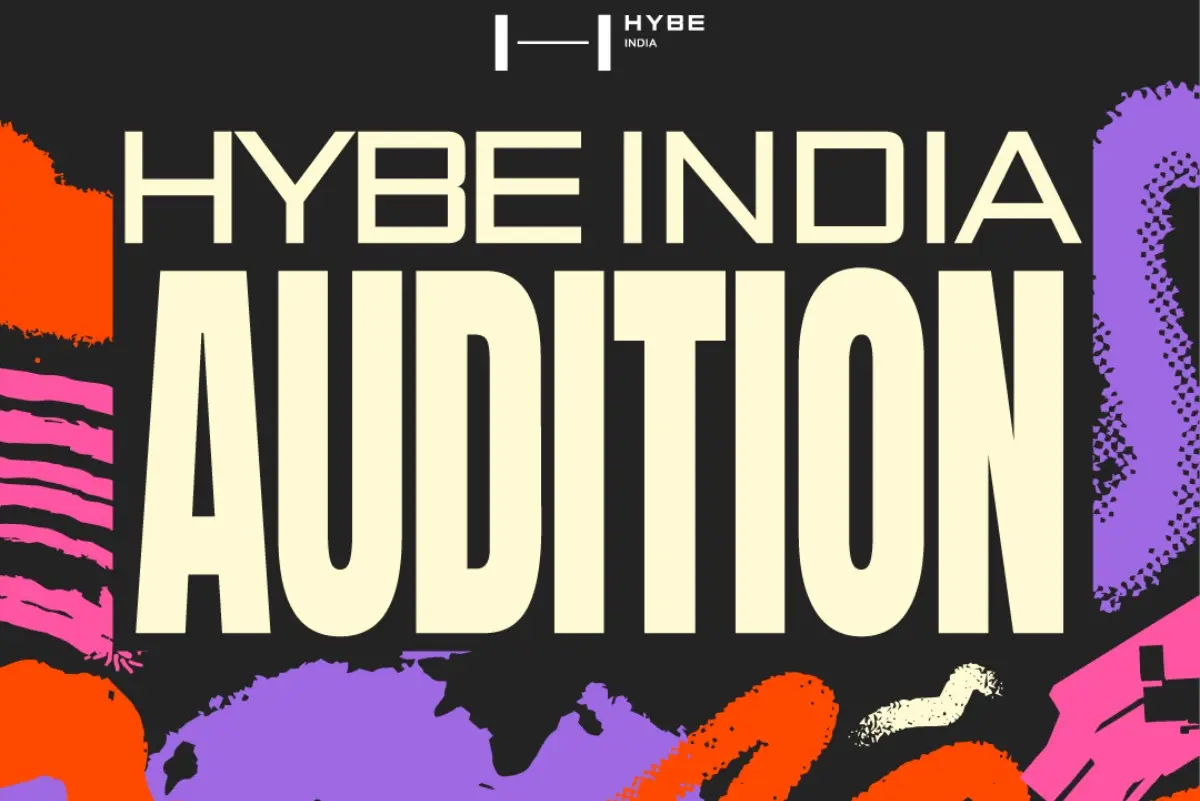

NEW DELHI — In a move that signals a seismic shift in the global pop music landscape, entertainment conglomerate HYBE—the powerhouse behind global phenomenon BTS—is doubling down on its quest to discover the members of India’s first-ever dedicated K-pop-trained girl group.
Building upon an unprecedented wave of interest that has already spanned continents, HYBE has officially announced the launch of the “Hybe India Audition: Final Call.” This expansive next phase significantly widens the company’s geographic net, adding eight new cities to the itinerary and reopening online applications worldwide.
The initiative underscores the entertainment titan’s growing confidence in the South Asian market, blending the rigorous, world-renowned K-pop idol training system with the immense, untapped reservoir of artistic talent found across the Indian subcontinent.
Executive Overview: The Rise of Desi Pop-Kulture
The globalization of K-pop has long transcended linguistic and geographical borders, but HYBE’s latest venture represents a structural evolution: the localization of the K-pop formula. Rather than merely exporting Korean acts to foreign markets, entertainment giants are increasingly investing in localized talent pipelines, creating regional groups trained in the exacting standards of Seoul yet deeply rooted in domestic cultural sensibilities.
Following an initial recruitment phase that swept through 10 major Indian urban centers—Ahmedabad, Bengaluru, Chandigarh, Chennai, Delhi, Guwahati, Hyderabad, Kolkata, Mumbai, and Pune—alongside five global diaspora hubs (London, New York, Singapore, Sydney, and Toronto), HYBE encountered a groundswell of participation that far exceeded its initial projections.
To ensure no aspiring star is left behind, the newly announced "Final Call" campaign extends the physical audition footprint to six additional Indian cities—Goa, Indore, Jaipur, Kochi, Lucknow—and places profound emphasis on the vibrant musical hubs of Northeast India, specifically adding Dimapur, Kohima, and Shillong. Simultaneously, digital gateways have swung back open, allowing hopefuls from every corner of the globe to throw their hats into the ring.
Detailed Chronology of the Audition Expansion
Phase 1: The Global and National Footprint
The journey toward India’s first major K-pop girl group began with an ambitious international and domestic rollout. HYBE’s scouting teams established physical beachheads in 10 diverse Indian cities, capturing the attention of youth culture enthusiasts in metropolitan powerhouses and emerging cultural capitals alike. Recognizing the vast Indian diaspora, the company also staged international audition rounds in London, New York, Singapore, Sydney, and Toronto—cities with massive multicultural populations deeply engaged with both South Asian and East Asian pop culture.
Phase 2: The Deluge of Entries
The response caught even industry veterans by surprise. Submissions poured in from all 28 states and six union territories of India. More astonishingly, HYBE’s digital telemetry recorded applications originating from a staggering 1,650 cities across 116 countries, proving that the desire to break into the K-pop industry resonates globally among the Indian diaspora and international fans alike.
Phase 3: The "Final Call" and Regional Inclusions
Faced with a logistical and creative imperative to capture this lightning in a bottle, HYBE executives sanctioned the "Final Call" extension. This phase deliberately targets regions known for their rich musical traditions, contemporary indie scenes, and deep-seated affinity for Western and East Asian pop culture—most notably the Northeast Indian states of Nagaland (Dimapur, Kohima) and Meghalaya (Shillong), alongside culturally rich centers such as Goa, Indore, Jaipur, Kochi, and Lucknow.
While on-ground dates for these newly added domestic stops remain tightly under wraps pending schedule finalization, the digital floodgates are officially open. Online applications commenced today, September 2, and will run through October 31.
Supporting Context & Metrics: By the Numbers
To fully appreciate the scale of the HYBE India Audition, one must examine the metrics driving this unprecedented cross-cultural experiment:

- 10 + 5: The original itinerary comprising 10 Indian metropolitan areas and five international diaspora hubs.
- 8: The newly added cities under the "Final Call" banner (Goa, Indore, Jaipur, Kochi, Lucknow, Dimapur, Kohima, and Shillong).
- 28 & 6: Comprehensive reach covering every single one of India’s 28 states and six union territories during the initial rollout.
- 1,650: The total number of unique cities from which applications were successfully processed.
- 116: The count of countries represented in the global digital applicant pool.
- 2005 to 2011: The specific birth year eligibility bracket for female aspirants.
- 5: Performance categories open for evaluation—Vocals, Rap, Dance, Acting, and Modelling.
The Frictionless Digital Gateway: WhatsApp Integration
Recognizing that accessibility is paramount in a country as vast and digitally diverse as India, HYBE has streamlined the application process through ubiquitous technology. Rather than forcing candidates through complex, cumbersome web portals, applicants can initiate their audition journey directly via WhatsApp.
By simply messaging the keyword "HI" to the official HYBE India contact, prospective stars are guided through an automated, user-friendly questionnaire. Candidates are prompted to complete a concise background form, submit high-resolution photographs, and upload digital copies of their performance audition material. This frictionless onboarding has been cited by industry analysts as a primary catalyst for the astronomical volume of entries.
Official Statements and Industry Insights
The sheer magnitude of the enterprise has prompted reflection from HYBE’s upper management regarding the cultural convergence of South Asian artistry and the Korean training methodology.
Damien Woochang Lee, CEO of HYBE India, offered a glowing assessment of the campaign thus far:
"The response to the Hybe India Audition has demonstrated the depth of talent and ambition across India," Lee stated. "We have received applications from a remarkable range of regions and backgrounds, reinforcing our belief that there is still significant talent to be discovered. Our mission has always been to connect music and fans, and the incredible passion we’ve witnessed proves that India is ready to play a defining role on the global entertainment stage."
Industry observers note that HYBE’s venture is not happening in a vacuum. Over the past decade, Hallyu (the Korean Wave) has achieved critical mass in India. Platforms like YouTube and Spotify report exponential year-over-year growth in K-pop consumption, particularly among Gen-Z demographics in metropolitan and tier-2 cities alike.
By scouting locally, HYBE is bridging a vital gap: providing young Indian performers—who previously watched K-pop stars from afar—with a tangible, institutional pathway to professional stardom. The company’s multi-discipline approach (allowing entries in vocals, rap, dance, acting, and modelling) ensures that they are not just looking for traditional singers, but well-rounded performers capable of dominating multi-media entertainment ecosystems.
Future Outlook: What Lies Ahead for the Selected Trainees
As the October 31 deadline for digital submissions approaches and the dates for the "Final Call" on-ground auditions are finalized, the pressure on aspiring candidates intensifies.
For those fortunate enough to pass the grueling screening phases, the journey has only just begun. Selected candidates will enter HYBE’s elite, highly disciplined training ecosystem. Modeled after the systems that birthed global icons such as BTS, SEVENTEEN, LE SSERAFIM, and NewJeans, the training regimen is notoriously rigorous, encompassing vocal coaching, synchronized choreography, media training, and language acquisition.
The ultimate objective—creating India’s premier K-pop-trained girl group—holds massive commercial potential. As the world’s most populous nation, India represents a coveted frontier for the music industry. A homegrown group possessing the polish and production value of K-pop combined with the linguistic and cultural nuances of India could easily transcend domestic borders, capturing audiences across South Asia, the Middle East, and Western diaspora markets.
As the "Final Call" echoes across the hills of Shillong, the royal palaces of Jaipur, and the digital screens of millions of smartphones nationwide, one reality remains indisputable: the blueprint of global pop music is expanding, and its next superstars may well be training in Seoul by way of New Delhi, Mumbai, and beyond.