
Executive Overview
In an ambitious effort to democratize the performing arts and expand cultural access across Southern California, the LA Opera has officially announced a sweeping, dual-location live public simulcast of Georges Bizet’s timeless masterpiece, Carmen. Scheduled for Saturday, October 17, 2026, at 6:00 p.m., the production will be broadcast in real time from the prestigious stage of the Dorothy Chandler Pavilion directly to massive, high-definition LED screens set up at two distinct outdoor venues: the iconic Santa Monica Pier and, for the first time in the company’s history, William Steinmetz Park in Hacienda Heights.
This landmark event represents a significant milestone in the cultural life of Los Angeles County. By pairing world-class operatic performance with open-air community spaces, the initiative seeks to bridge the gap between elite institutional art and the broader public. Funded in part through the generous support of Los Angeles County, the upcoming presentation highlights a concerted push by regional leaders and arts administrators to make cultural programming barrier-free.
For the Santa Monica Pier, this evening marks the return of the beloved "Opera at the Beach" series, celebrating its 13th iteration. Simultaneously, the introduction of "Opera in the Park" at William Steinmetz Park marks a historic geographical expansion, bringing the grandeur of grand opera directly to the diverse communities of the San Gabriel Valley. Complete with multi-camera high-definition capture, pristine live audio transmission, and dual English and Spanish subtitling, the simulcast promises an immersive, inclusive, and unforgettable evening of music under the California stars.
Detailed Chronology and Production Anatomy
The technical and artistic execution of a live opera simulcast is a masterclass in modern media production and theatrical coordination. On the evening of October 17, 2026, thousands of spectators gathered along the Pacific coastline and within the suburban expanse of Hacienda Heights will experience Carmen with a level of intimacy that often eludes even those seated in the orchestra section of a traditional hall.
The Technological Pipeline
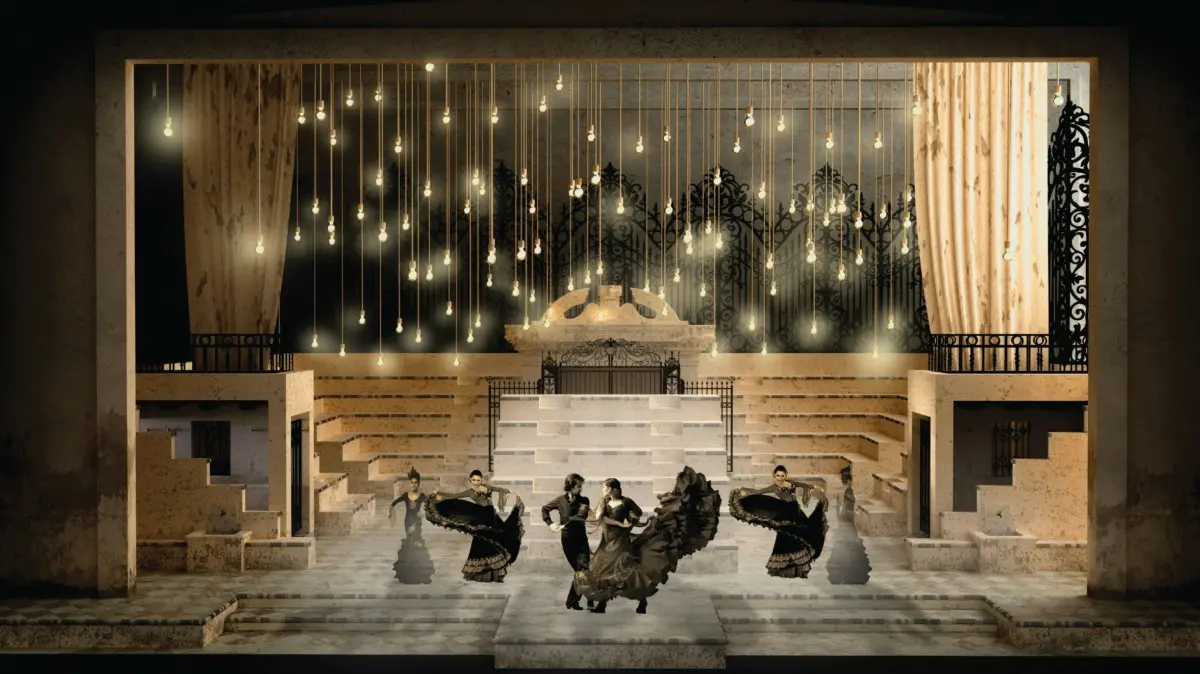
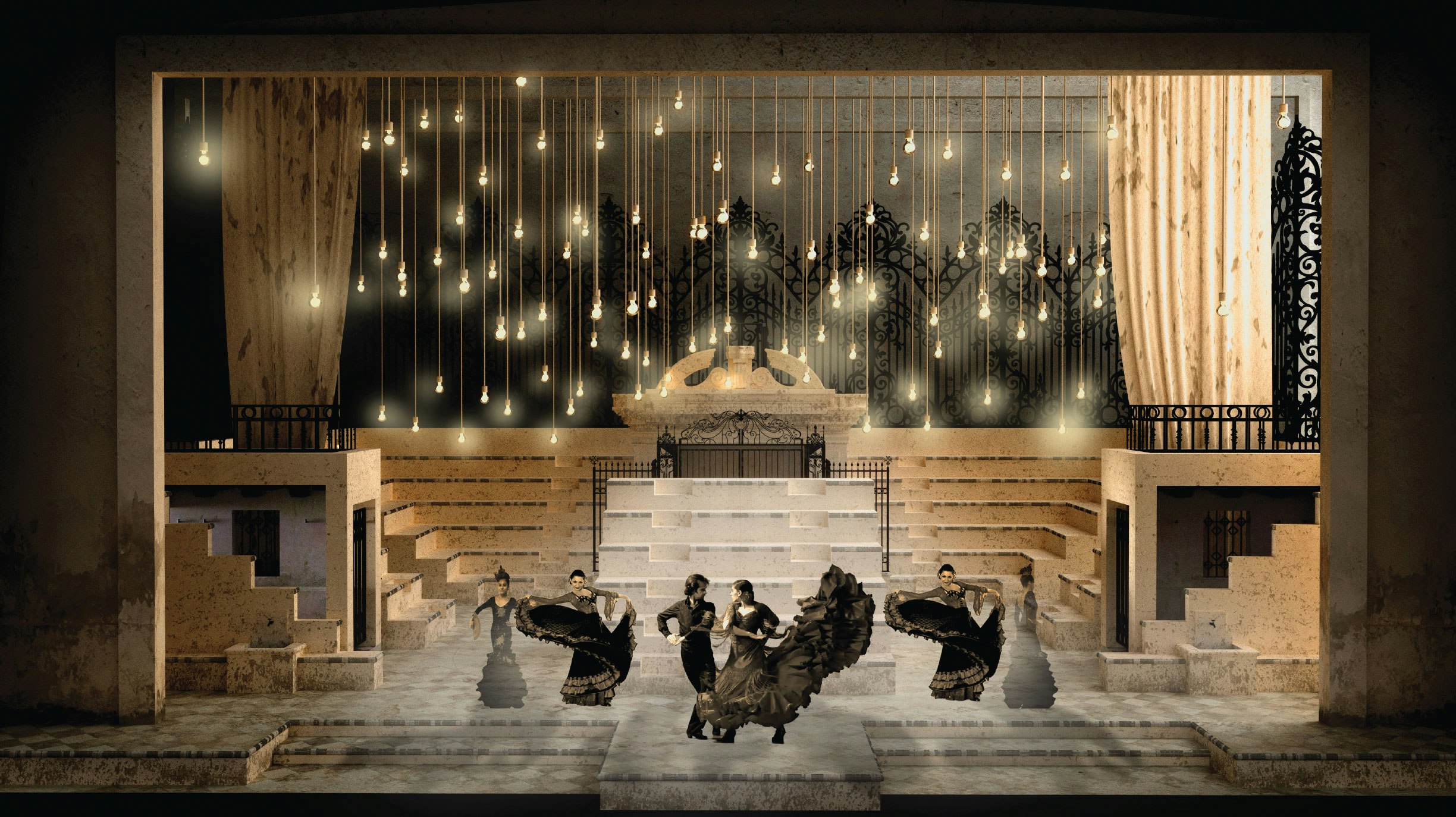
The production workflow begins inside the Dorothy Chandler Pavilion at the Los Angeles Music Center. A specialized crew of directors, camera operators, and audio engineers will utilize a configuration of seven high-definition cameras strategically positioned around the auditorium. These lenses will capture every nuance of Thaddeus Strassberger’s visionary new production—from the sweeping choreography and intricate set designs to the minute, emotionally charged facial expressions of the principal cast.
The video feeds will be mixed live and transmitted via secure, high-bandwidth fiber-optic networks to the remote outdoor sites. At both the Santa Monica Pier and William Steinmetz Park, the footage will be projected onto towering, weather-resistant LED screens capable of handling the fading twilight and evening illumination. Complementing the visual feast will be a state-of-the-art concert-grade audio system, ensuring that every soaring soprano note, thunderous orchestral crescendo, and delicate woodwind passage is rendered with acoustic clarity. To ensure maximum accessibility, the simulcasts will feature real-time subtitles projected in both English and Spanish, allowing audiences from diverse linguistic backgrounds to fully engage with Henri Meilhac and Ludovic Halévy’s compelling libretto.
Artistic Leadership and Cast
The musical integrity of the evening rests in the capable hands of LA Opera Music Director Domingo Hindoyan. Known for his dynamic interpretations and precise baton technique, Hindoyan will lead the LA Opera Orchestra and Chorus through Bizet’s intricate, melody-rich score.
The production itself is helmed by director and designer Thaddeus Strassberger, whose theatrical visions are celebrated internationally for their historical depth, striking visual aesthetics, and innovative spatial dynamics. Strassberger’s new staging of Carmen promises to breathe fresh life into the 19th-century French opera, balancing the gritty realism of the cigarette factory and smuggler’s camps with the vibrant, sun-drenched pageantry of Seville.
The vocal heavyweights anchoring the production feature an extraordinary roster of international talent:
- Rihab Chaieb assumes the iconic and demanding title role of Carmen. Celebrated for her rich, velvety mezzo-soprano and commanding stage presence, Chaieb is uniquely positioned to capture the magnetic allure, fierce independence, and tragic complexity of literature’s most famous femme fatale.
- Joshua Guerrero steps into the tragic role of Don José, the naive corporal whose obsession with Carmen leads him down a path of desertion, jealousy, and ruin. Guerrero, an acclaimed tenor renowned for his passionate delivery and soaring upper register, brings profound emotional vulnerability to the character.
- Kathleen O’Mara portrays Micaëla, the steadfast, pure-hearted village maiden who serves as a poignant foil to Carmen’s untamed spirit.
- Liam James Karai rounds out the principal quartet as the swaggering, charismatic bullfighter Escamillo, whose entrance aria, "Toreador, En Garde," remains one of the most recognizable and thrilling melodies in the entire operatic canon.
Supporting Context and Metrics: The Evolution of Public Opera
To understand the cultural significance of the 2026 Carmen simulcast, one must examine the trajectory of public arts programming within Los Angeles County over the past decade. The performing arts sector has long faced challenges related to physical access, ticket pricing, and cultural intimidation—barriers that often discourage working-class families and younger demographics from experiencing live opera.
Breaking Down Barriers: The "Opera at the Beach" Legacy
The LA Opera’s "Opera at the Beach" initiative was conceived as a direct antidote to these exclusionary dynamics. Over its 13-year history at the Santa Monica Pier, the program has steadily evolved from a bold experimental broadcast into a staple of the region’s cultural calendar. Historical attendance metrics for the pier simulcasts reveal a diverse demographic makeup, drawing tens of thousands of cumulative attendees over the years, ranging from seasoned opera aficionados to first-time curious onlookers enjoying a stroll by the ocean.
By removing the financial barrier of ticket purchases and replacing formal dress codes with beach blankets, lawn chairs, and casual picnics, the initiative successfully reframes opera not as an exclusive luxury good, but as a shared communal experience. The psychological shift from an enclosed, hushed auditorium to an open-air public plaza fundamentally alters the audience’s relationship with the art form, fostering a relaxed, inclusive atmosphere.
Geographic Expansion: Entering Hacienda Heights
The addition of William Steinmetz Park in Hacienda Heights marks a critical evolution in this outreach strategy. While coastal venues like the Santa Monica Pier effectively serve the Westside and central basin, residents in the eastern regions of Los Angeles County—such as the San Gabriel Valley—have historically faced significant transit hurdles to attend downtown performances or coastal events.
By establishing "Opera in the Park" in Hacienda Heights, LA Opera acknowledges the sprawling, polycentric nature of Los Angeles County. This expansion is supported by meticulous logistical planning, ensuring that suburban communities enjoy the exact same high-definition fidelity and sensory richness as their urban counterparts. Sociological assessments of past regional arts outreach programs suggest that localized simulcasts significantly boost long-term community engagement, often serving as a gateway for families to explore subsequent mainstage performances, educational workshops, and youth programs.
Official Statements and Leadership Perspectives
The announcement of the dual-location simulcast has drawn enthusiastic praise from regional civic leaders and cultural administrators, all of whom emphasize the vital role that public art plays in civic cohesion and social well-being.
Los Angeles County Supervisor Lindsey P. Horvath, whose office and constituency span areas directly impacted by the initiative, issued a passionate endorsement of the project:
"I’m thrilled to welcome LA Opera back to the Santa Monica Pier for a free simulcast of Carmen, bringing world-class opera directly to our communities. Free events like this make the arts more accessible and create opportunities for Angelenos to come together and enjoy something special. Gather your friends and family, bring a blanket, and join us for an unforgettable night of music by the Pacific."
Supervisor Horvath’s remarks underscore a broader administrative philosophy within county governance: that public investments in culture yield profound dividends in social capital. By activating public parks and municipal piers for high-art programming, local government helps reclaim shared spaces for cultural enrichment, transforming concrete plazas and coastal boardwalks into vibrant community living rooms.
Arts administrators and LA Opera executives have similarly emphasized that these large-scale public events are essential for the survival and growth of the art form in the 21st century. By utilizing cutting-edge broadcast technologies, opera companies are no longer constrained by the physical seating capacities of traditional performance halls. Instead, they can project their artistic output across thousands of square miles, reinforcing the core mission of the institution: to serve the entire populace of Los Angeles County without exception.
Future Outlook: The Horizon of Accessible Performing Arts
As the October 17, 2026 date approaches, the implications of this dual-site simulcast extend far beyond a single evening of entertainment. The initiative serves as a living blueprint for the future of performing arts organizations navigating a post-pandemic, digitally integrated landscape.
The Hybrid Future of Classical Music
The integration of high-definition cinematic capture with live theatrical performance represents a permanent shift in how cultural institutions build audiences. Rather than viewing digital transmission as a threat to live attendance, organizations like the LA Opera are proving that simulcasts act as powerful marketing and educational tools. Individuals who experience the raw power of Carmen under the glow of an LED screen in Hacienda Heights or beside the crashing waves of Santa Monica are statistically far more likely to purchase tickets for future mainstage seasons at the Dorothy Chandler Pavilion.
Furthermore, the dual-language subtitling model points toward a more inclusive future for American opera houses. As Los Angeles continues to grow as a multilingual, multicultural metropolis, arts institutions must reflect this linguistic diversity to remain relevant. Providing Spanish subtitles alongside English not only honors the demographic realities of Southern California but also invites new audiences to experience the emotional depth of the drama in a language that resonates natively.
A Blueprint for Regional Collaboration
Looking ahead, the success of the Hacienda Heights expansion may very well pave the way for a multi-node regional network of simulcast sites in future seasons. Envisioned expansions could potentially bring live broadcasts to parks, cultural centers, and public squares in the Antelope Valley, the South Bay, and the Inland Empire, creating a synchronized, county-wide festival of opera on opening nights.
Ultimately, the LA Opera’s free public screening of Carmen on October 17, 2026, is much more than a technical achievement or a seasonal attraction. It is a bold affirmation of the belief that transcendent beauty, dramatic storytelling, and emotional catharsis belong to everyone. Whether seated on a sand dune wrapped in a fleece blanket while the ocean breeze carries the sounds of Bizet across the pier, or sitting on a lawn chair under the sycamores of William Steinmetz Park, thousands of Angelenos will share in a singular, unifying moment of cultural communion—proving once and for all that great art knows no geographic, economic, or social boundaries.