

LONDON — The London Symphony Orchestra (LSO), widely recognized as one of the world’s preeminent musical institutions, has announced a striking and diverse trio of autumn collaborative projects. Bridging traditional classical structures with contemporary multidisciplinary art forms, the upcoming series will transform both LSO St Luke’s and the Barbican into laboratories for cultural synthesis.
Spanning from late August through November 2026, these productions deliberately break down the barriers separating choral music, East Asian poetry, contemporary dance, jazz improvisation, and symphonic scale. Featuring the collective Tangram, vocal ensemble SANSARA, LSO Associate Artist Ayanna Witter-Johnson, and visionary saxophonist and composer Soweto Kinch, the autumn slate signals a deliberate expansion of what a modern symphony orchestra can curate, champion, and embody.
Executive Overview: Redefining the 21st-Century Orchestral Season
The modern symphony orchestra faces a critical imperative: to remain culturally vital in an era defined by hyper-fragmented media consumption, shifting demographic landscapes, and a demand for deep artistic authenticity. The LSO’s autumn 2026 programming directly addresses this challenge. Rather than treating classical music as a static museum piece, the institution is positioning its historic spaces as dynamic forums for cross-cultural dialogue and genre-defying experimentation.
This upcoming cultural sequence is built upon three foundational pillars:
- Interdisciplinary Storytelling: Fusing poetry, movement, text, and visual design with high-level musicianship.
- Deep Personal and Historical Exploration: Utilizing ancestral heritage, communal healing, and cross-millennial artistic lineage as creative sparks.
- Symphonic Scale and Radical Genre Fusion: Bridging the gap between the European classical canon, jazz improvisation, hip-hop rhythmics, and social commentary.
By partnering with forward-thinking collectives like Tangram and multidisciplinary artists such as Ayanna Witter-Johnson and Soweto Kinch, the LSO is not merely hosting guest acts; it is actively co-authoring a new lexicon for 21st-century performance art.
Detailed Chronology: A Season in Three Movements
1. Tangram and SANSARA: Chronicle (30–31 August 2026, LSO St Luke’s)
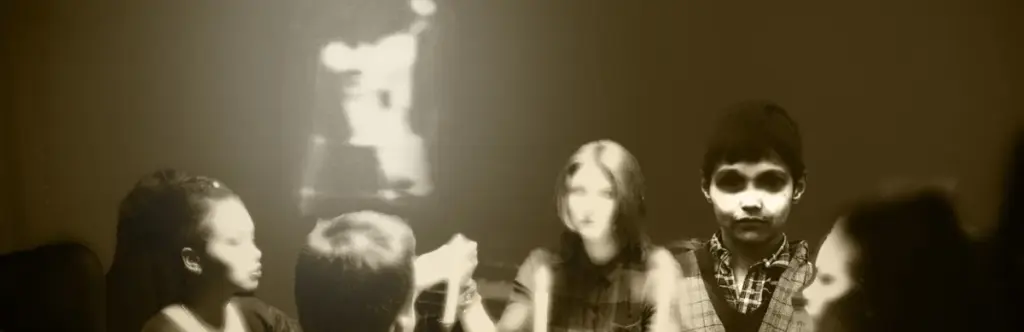
The autumn season opens at LSO St Luke’s on 30 and 31 August with Chronicle, a deeply evocative work of choral theatre. Developed following its critically acclaimed premiere at the Aldeburgh Festival, the project is a collaborative triumph between Tangram—a collective dedicated to the championing of Chinese diasporic and contemporary music—and the celebrated vocal ensemble SANSARA.
Chronicle is constructed around a delicate yet powerful structural framework: poetry written by six Chinese women spanning more than a millennium. These literary voices, echoing from different dynasties and eras, are given new sonic and spatial life through a seamless integration of new music, movement, spoken text, and sophisticated visual design.
The Artistic Vision Behind Chronicle
In an era where transnational dialogue is frequently strained by geopolitical friction, Chronicle offers an intimate antidote. By tracing the inner lives, struggles, and artistic expressions of Chinese women across centuries, the performance constructs a trans-historical sisterhood of creators.
The musical composition weaves contemporary Western choral writing with sonic textures inspired by traditional Chinese aesthetics, though carefully avoiding pastiche. The inclusion of movement and visual design transforms LSO St Luke’s—a former Hawksmoor church renowned for its resonant acoustic and striking architectural proportions—into an immersive installation space. Audience members are not merely passive listeners; they are enveloped in an atmosphere where architecture, light, voice, and poetry converge into a singular, cohesive narrative.
2. Ayanna Witter-Johnson: New Roots: First Light (16 September 2026, LSO St Luke’s)
On 16 September, the artistic spotlight shifts to cellist, singer, and composer Ayanna Witter-Johnson, who inaugurates her tenure as an LSO Associate Artist with a deeply anticipated project titled New Roots: First Light.
Witter-Johnson, an artist celebrated for her virtuosic command of the cello coupled with a soulful, expressive vocal delivery, uses this performance to preview material from her forthcoming studio album. Far more than a standard album preview, New Roots: First Light is conceived as an intimate live exploration of ancestry, generational trauma, personal healing, and spiritual renewal.
A Multidisciplinary Collaboration
To bring this deeply personal sonic landscape to life, Witter-Johnson is joined by an extraordinary roster of contemporary artists:
- Inua Ellams: The celebrated poet, playwright, and performer, whose lyrical acuity and narrative depth will frame and punctuate the musical movements.
- Remi Ferdinand: A dynamic contemporary dancer whose physical interpretation of Witter-Johnson’s compositions adds a visceral, kinetic layer to the evening.
- Ashley Joseph: Serving as presenter, guiding the audience through the conceptual architecture of the evening with warmth, intellectual rigor, and contextual insight.
The performance at LSO St Luke’s represents a vital milestone in Witter-Johnson’s artistic trajectory. As an Associate Artist, she occupies a unique bridge between classical institutions and contemporary urban songwriting traditions. New Roots: First Light promises to be a transformative evening, demonstrating how the cello can serve simultaneously as a classical solo instrument, a rhythmic bassline, and an emotional vessel for storytelling.
3. Soweto Kinch and the LSO: Trilogy (19 November 2026, The Barbican)
The autumn sequence reaches its grand symphonic climax on 19 November at the Barbican, where multi-award-winning saxophonist, composer, and BBC Radio 3 presenter Soweto Kinch reunites with the London Symphony Orchestra under the baton of conductor André de Ridder.
The centerpiece of the evening is Trilogy—a massive, ambitious programmatic suite that brings together three of Kinch’s most significant large-scale works: The Black Peril, White Juju, and Soundtrack to the Apocalypse.
Dissecting Trilogy: History, Race, and Rhythm
Trilogy is not merely a concert; it is an unyielding sonic excavation of modern history, systemic racism, social unrest, and global anxiety.
- The Black Peril: Explores the social panics and racial tensions following the First World War, utilizing jazz, orchestral instrumentation, and spoken word to draw chilling parallels between historical prejudice and contemporary societal fractures.
- White Juju: Conceived during the initial global lockdowns of 2020 and the subsequent resurgence of the Black Lives Matter movement, this movement tackles historical monuments, structural privilege, and the ghosts of empire with searing orchestral arrangements and driving hip-hop polyrhythms.
- Soundtrack to the Apocalypse: Acts as a dystopian, prophetic capstone, interrogating the existential crises of the modern age—from climate collapse to algorithmic alienation—through an apocalyptic fusion of avant-garde jazz improvisation and massive symphonic weight.
Conductor André de Ridder, renowned for his fearless navigation of contemporary and genre-crossing scores, will guide the LSO through Kinch’s demanding polyrhythms and intricate harmonic shifts. The union of a world-class symphony orchestra with jazz improvisation and hip-hop cadences creates an acoustic environment where high art and street-level urgency meet on equal footing.
Supporting Context & Metrics: The Evolution of Orchestral Programming
To fully understand the significance of the LSO’s autumn 2026 season, one must examine the broader socio-cultural and economic metrics governing major orchestral institutions in the United Kingdom and internationally.
Over the past decade, box office data and audience research from arts consultancies indicate a marked shift in consumer behavior. Traditional subscriptions—once the financial lifeblood of major orchestras—have seen a steady decline among younger demographics (ages 21–45). Conversely, demand for curated, thematic, and multidisciplinary "one-off" events has surged by an estimated 35% across major metropolitan cultural hubs like London.
Audience Development and Accessibility
The LSO’s strategic deployment of its two primary venues—LSO St Luke’s in Old Street and the Barbican Centre in the City of London—exemplifies a dual-track approach to audience development:
- LSO St Luke’s: Functions as a cultural incubator. Its intimate capacity and architectural warmth make it the ideal crucible for experimental, community-engaged, and spiritually resonant works like Tangram’s Chronicle and Ayanna Witter-Johnson’s New Roots: First Light. It allows audiences to experience world-class artists in close proximity, fostering a sense of community and shared discovery.
- The Barbican Centre: Serves as the monumental stage. With its 1,943-seat concert hall, it provides the acoustic scale and theatrical infrastructure required for massive multi-genre undertakings like Soweto Kinch’s Trilogy. Here, the LSO flexes its full symphonic muscle, projecting complex, politically charged contemporary scores to a large, diverse public.
Financial and Institutional Investment
Mounting multi-disciplinary productions involving extended artist rosters (poets, dancers, jazz ensembles, choirs, and international guest curators) requires robust financial planning, philanthropic backing, and corporate sponsorship. The LSO has increasingly relied on a diversified funding model, combining Arts Council England public investment with private donations, trusts, and earned income from digital broadcasting and international touring.
Official Statements and Perspectives
Speaking on the announcement of the autumn season, representatives from both the London Symphony Orchestra and collaborating organizations emphasized the collaborative and forward-looking spirit of the projects.
"The modern orchestra cannot exist in a vacuum. Our role in the 21st century is to act as a catalyst for the most compelling creative voices of our time—whether they emerge from the classical tradition, the jazz club, the global diaspora, or multidisciplinary theatre. In Tangram, Ayanna Witter-Johnson, and Soweto Kinch, we have artists who challenge us, expand our technical boundaries, and speak directly to the urgent human questions of our era."
— LSO Artistic Programming Directorate
Ayanna Witter-Johnson expressed her enthusiasm for stepping into her role as an LSO Associate Artist with New Roots: First Light:
"To open my residency with a project so deeply personal is both a privilege and a profound responsibility. New Roots: First Light is an exploration of where we come from and how we heal. Having the incredible artistry of Inua Ellams, Remi Ferdinand, and Ashley Joseph alongside me—within the acoustic embrace of LSO St Luke’s—allows this music to exist in a space of total truth and vulnerability."
Soweto Kinch highlighted the significance of bringing Trilogy to the Barbican with the LSO and conductor André de Ridder:
"Trilogy is an uncompromising body of work. It looks at the darkest corners of our history and our present moment—from post-WWI racial panics to contemporary systemic injustices and ecological anxiety. Symphonic music possesses an unmatched emotional weight. When you combine that weight with the rebellious spirit of jazz and the direct truth of hip-hop and spoken word, you create a space where audiences are forced not just to listen, but to reckon with reality."
Future Outlook: Setting the Benchmark for International Orchestras
As the classical music industry continues to navigate post-pandemic cultural shifts, economic pressures, and demands for greater inclusivity, the London Symphony Orchestra’s autumn 2026 season offers a compelling blueprint for institutional survival and artistic relevance.
By championing works that cross boundaries—geographic, historical, and stylistic—the LSO is proving that symphonic music does not need to dilute its artistic rigor to remain relevant. Instead, by partnering with creators who engage directly with identity, history, and social consciousness, the orchestra reaffirms its place at the very center of contemporary cultural discourse.
As tickets go on sale across these three distinct autumn projects, the cultural community will be watching closely. From the delicate, centuries-spanning poetry of Chronicle at LSO St Luke’s to the cathartic, jazz-infused symphonic fury of Trilogy at the Barbican, the LSO’s autumn 2026 slate promises not merely a season of concerts, but a transformative journey through the living landscape of modern art.