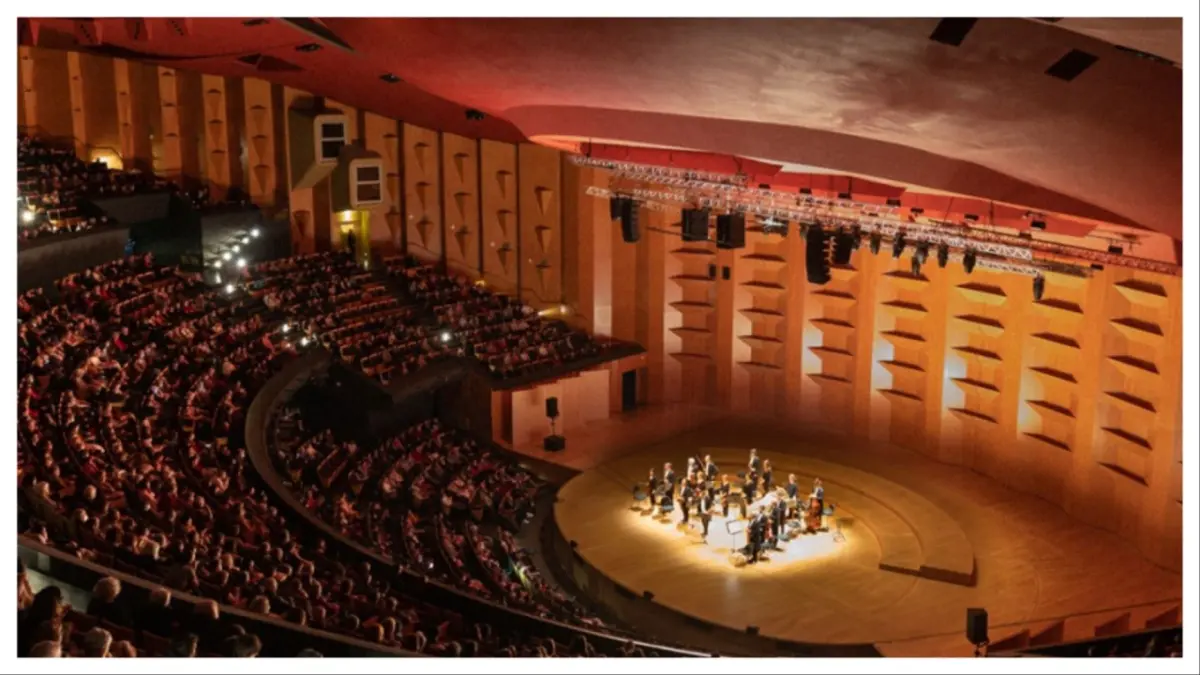

LYON, FRANCE — The Auditorium of the Lyon National Orchestra (Auditorium de Lyon) has officially unveiled its highly anticipated 2026–27 concert season, an ambitious programming slate deeply rooted in the rich harmonic landscapes of Czech classical music while offering a vibrant tapestry of international masterworks. True to its reputation as one of Europe’s leading cultural epicenters, the upcoming season places a pronounced emphasis on the human voice, curating a specialized series of concerts that spotlights world-renowned classical vocalists, celebrated period-instrument ensembles, and formidable regional choirs.
While the broader institutional season explores the vast expanses of Czech symphonic and operatic heritage—celebrating the nationalism, lyrical depth, and rhythmic vitality of composers such as Dvořák, Smetana, and Janáček—this preview focuses specifically on the vocal highlights of the 2026–27 calendar. From Edward Elgar’s evocative sea-faring meditations and George Frideric Handel’s high- Baroque fire to the introspective philosophy of Gustav Mahler, the Lyon season promises an unforgettable journey for lovers of classical vocal art.
Executive Overview: The Voice at the Heart of Lyon’s Musical Vision
The 2026–27 season marks a defining chapter under the musical leadership of Danish-Israeli violinist and conductor Nikolaj Szeps-Znaider, who continues to elevate the profile of the Lyon National Orchestra (Orchestre National de Lyon) on the global stage. By anchoring the season’s thematic core in Czech repertoire, the institution not only pays homage to a vital pillar of European musical history but also creates a fascinating stylistic dialogue when paired with the German Romanticism of Mahler, the British introspective lyricism of Elgar, and the dynamic counterpoint of the early 18th century.
What distinguishes the upcoming programming is the integration of high-caliber vocal soloists into the orchestra’s symphonic framework. Rather than relegating vocal music to the margins, the Auditorium is elevating the voice as the ultimate instrument of expression. The season weaves together celebrated international opera stars, specialist Baroque interpreters, and massive regional choral forces—including the renowned Collegium Vocale 1704, the Spirito Choir, and the Young Choir of Lyon (Jeune Chœur de Lyon).
As audiences prepare for a season defined by sweeping emotional arcs and meticulous historical performance practices, the calendar offers a chronological masterclass in vocal orchestration. Below is an exhaustive, performance-by-performance breakdown of the vocal highlights slated for the Auditorium of the Lyon National Orchestra during the 2026–27 season.
Detailed Chronology of Vocal Performances (2026–27)
Autumn 2026: Opening Waves and Baroque Splendor
1. Catriona Morison Sings Elgar’s Sea Pictures
- Performers: Catriona Morison (mezzo-soprano), Lyon National Orchestra, Nikolaj Szeps-Znaider (conductor)
- Performance Dates: September 25 & 26, 2026
The orchestral and vocal season opens in late September with a poignant pairing of British impressionism and orchestral grandeur. Award-winning Scottish mezzo-soprano Catriona Morison—hailed internationally for her luminous tone, intelligence of phrasing, and dramatic commitment—takes the stage to perform Edward Elgar’s Sea Pictures, Op. 37.
Composed in 1899, Sea Pictures remains the only complete song cycle that Elgar wrote for voice and orchestra. Set to poetry by five different writers (including Roden Noel, Elizabeth Barrett Browning, and the composer’s wife, Alice Elgar), the cycle explores the duality of the sea: its terrifying power, its hypnotic beauty, and its metaphorical reflection of the human soul. Morison’s rich, velvety lower register and expressive dynamic range are ideally suited to navigate the undulating orchestration of movements like "Sea Slumber Song" and "Where Corals Lie."
Music Director Nikolaj Szeps-Znaider leads the Lyon National Orchestra in these opening concerts, ensuring that the orchestral textures—which frequently evoke the crashing of waves and the deep, silent hum of the ocean floor—provide a lush, supportive bed of sound for Morison’s vocal artistry.
2. Václav Luks Leads Collegium 1704 in Handel and Zelenka
- Performers: Tereza Zimková (soprano), Pavla Radostová (soprano), Jonathan Mayenschein (countertenor), Ondřej Holub (tenor), Tomáš Šelc (bass-baritone), Collegium Vocale 1704, Collegium 1704, Václav Luks (conductor)
- Performance Date: October 3, 2026
In a direct nod to the season’s overarching Czech thematic focus, early October brings an elite contingent of historical performance specialists to the Lyon stage. Conductor and harpsichordist Václav Luks leads his renowned ensembles, Collegium 1704 and Collegium Vocale 1704, in a program that bridges the high-Baroque masters of Italy and Bohemia.
The centerpiece of the evening is George Frideric Handel’s blistering psalm setting, Dixit Dominus (Psalm 109, HWV 232). Composed in Rome in 1707 when Handel was just 22 years old, Dixit Dominus is a virtuosic display of Italian Baroque choral writing, characterized by lightning-fast fugues, soaring soprano lines, and relentless rhythmic energy.
Complementing the Handel masterpiece is the "Votive Mass" (ZWV 18) by the Bohemian-born Baroque master Jan Dismas Zelenka. Often celebrated as the "Czech Bach," Zelenka worked for much of his life at the Dresden court, where his idiosyncratic, harmonically daring sacred music won the quiet admiration of Johann Sebastian Bach himself. Zelenka’s music is famously demanding, featuring jagged vocal leaps, dense counterpoint, and profound emotional gravity.
To bring this complex Baroque architecture to life, an exceptional quintet of vocal soloists has been assembled:
- Tereza Zimková and Pavla Radostová bring their pristine, agile soprano tones to the intricate duet and solo passages.
- Countertenor Jonathan Mayenschein contributes a warm, focused vocal line that anchors the alto/countertenor textures.
- Tenor Ondřej Holub offers stylistic clarity and rhetorical precision.
- Bass-baritone Tomáš Šelc provides a resonant, commanding foundation to the ensemble, ensuring the lower registers are delivered with authority.
Winter 2026: Mahlerian Irony and Existential Questions
3. Wiebke Lehmkuhl and Konstantin Krimmel in Mahler’s Des Knaben Wunderhorn
- Performers: Wiebke Lehmkuhl (contralto), Konstantin Krimmel (baritone), Lyon National Orchestra, Nikolaj Szeps-Znaider (conductor)
- Performance Dates: December 11 & 12, 2026
As the winter chill sets in over Lyon, the concert hall turns its attention to the psychological and theatrical world of Gustav Mahler. On December 11 and 12, Nikolaj Szeps-Znaider leads the Lyon National Orchestra in a performance of songs from Mahler’s Des Knaben Wunderhorn (The Boy’s Magic Horn), setting the stage for an evening of profound theatricality, irony, and deep emotional resonance.
Drawn from a collection of German folk poems compiled by Achim von Arnim and Clemens Brentano, Mahler’s Wunderhorn settings capture the full spectrum of human experience: youthful optimism, military bravura, profound grief, and biting satire. The vocal demands require interpreters who can pivot effortlessly from playful storytelling to devastating emotional sincerity.
The Auditorium has secured two stellar soloists for these dates:
- Contralto Wiebke Lehmkuhl, celebrated internationally for her deep, resonant timbre and masterly command of the German art-song (Lied) tradition, will bring gravitas and luminous warmth to movements like "Urlicht" and the darkly humorous narratives of soldiers and ghosts.
- Baritone Konstantin Krimmel, one of the most exciting young lyric baritones of his generation, brings his characteristic text-driven clarity and dynamic flexibility. Known for his peerless work in Schubert and Schumann, Krimmel’s interpretation of Mahler promises to be both textually revealing and vocally arresting.
Under Szeps-Znaider’s baton, the orchestra will serve as an active theatrical participant, highlighting Mahler’s radical orchestration—where piccolo, muted horns, and percussion instruments become characters in their own right.
Spring 2027: The Monumental Finale
4. Mahler’s Symphony No. 2 ("Resurrection")
- Performers: Lyon National Orchestra, Spirito Choir, Young Choir of Lyon (Jeune Chœur de Lyon), Nikolaj Szeps-Znaider (conductor)
- Performance Dates: April 29 & 30, 2027
The vocal highlight of the entire 2026–27 season arrives in the spring, as the Lyon National Orchestra closes out its major choral offerings with one of the most monumental works in the classical canon: Gustav Mahler’s Symphony No. 2 in C minor, "Resurrection."
Scheduled for April 29 and 30, 2027, these performances will marshal immense artistic forces on the stage of the Auditorium de Lyon. In addition to the full complement of the Lyon National Orchestra, the production brings together two of the region’s finest choral institutions: the Spirito Choir and the Young Choir of Lyon.
Mahler’s "Resurrection" Symphony is an existential journey from the depths of despair and the questioning of mortality to ultimate redemption and spiritual rebirth. While the first four movements establish a vast instrumental drama—ranging from a ferocious funeral march to the gentle, nostalgic charm of the Ländler and the terrifying scherzo of St. Anthony preaching to the fishes—it is the colossal fifth movement that transforms the symphony into a choral cathedral.
The entrance of the chorus, singing Friedrich Klopstock’s immortal ode "Aufersteh’n, ja aufersteh’n wirst du" ("Rise again, yes, thou shalt rise again"), is widely considered one of the most spine-tingling moments in all of Western music. Under the guidance of Nikolaj Szeps-Znaider, the combination of the Spirito Choir and the Young Choir of Lyon is expected to deliver a performance of staggering volume, textural clarity, and emotional transcendence. Soloists for the symphony will be announced closer to the performance dates, completing a lineup designed to leave an indelible mark on the Lyon cultural season.
Supporting Context & Metrics: The Orchestral Ecosystem of Lyon
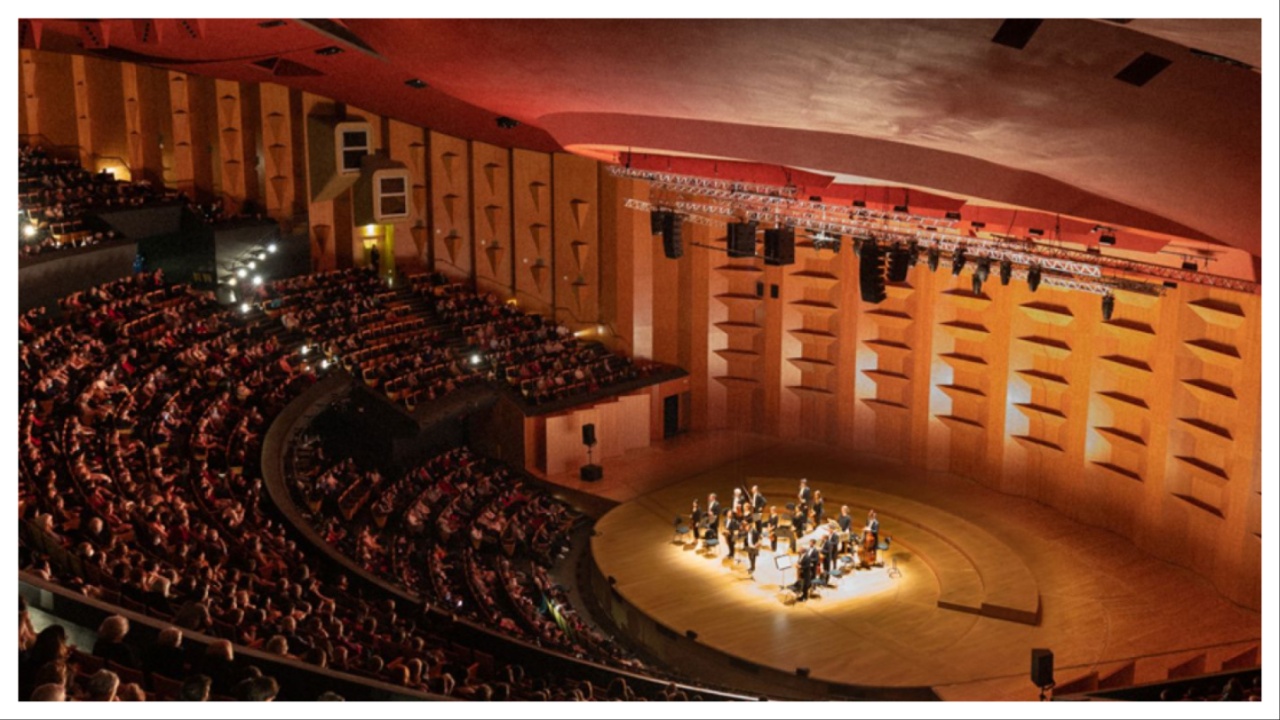
To fully appreciate the scope of the 2026–27 vocal season, it is essential to examine the institutional infrastructure that supports these ambitious productions. The Lyon National Orchestra (Orchestre National de Lyon – ONL) stands as a crown jewel of France’s decentralized cultural landscape. Founded in 1969, the orchestra performs over 100 concerts annually and serves as the resident ensemble of the Auditorium de Lyon, a striking, brutalist architectural masterpiece designed by architects Étienne Giscard and Pierre Bourdeix, boasting an auditorium capacity of more than 2,000 seats.
Economic and Cultural Footprint
- Audience Reach: The Auditorium of the Lyon National Orchestra attracts upwards of 180,000 patrons annually across its diverse symphonic, chamber, and educational series.
- Choral Collaborations: The integration of regional powerhouses like the Spirito Choir (directed by Nicole Corti) and the Young Choir of Lyon underscores the institution’s commitment to nurturing local talent while executing international-scale repertoire. These choirs undergo rigorous training, ensuring that when they merge with the ONL for works like Mahler’s Second Symphony, the blend is seamless.
- The Czech Focus: The 2026–27 season’s dedication to Czech masters reflects a broader musicological trend in Europe: moving beyond the traditional Austro-German and French canons to explore the rich, modal, and rhythmically distinct vernaculars of Central and Eastern European composers. This focus not only enriches the local audience’s palette but also positions Lyon as a key European hub for musicological discovery.
Official Statements and Artistic Vision
While full institutional press conferences for the 2026–27 season will roll out comprehensive commentary across cultural ministries, early excerpts from the artistic direction highlight a clear philosophy: music as a universal language of resilience and community.
In internal curatorial notes regarding the programming of the upcoming season, Music Director Nikolaj Szeps-Znaider emphasized the importance of pairing symphonic grandeur with intimate vocal storytelling:
"When we design a season for the Lyon National Orchestra, our goal is to challenge both our musicians and our audience. The voice is the most direct conduit to the human heart. By pairing the introspective lyricism of Elgar’s sea songs with the existential weight of Mahler, and balancing this with the historical rigor of Collegium 1704, we are creating a narrative arc that speaks to every facet of the human condition. The Czech spirit that anchors our season provides a vibrant, beating heart to these explorations."
Furthermore, representatives from the Spirito Choir have expressed profound enthusiasm for their upcoming collaboration on Mahler’s "Resurrection" Symphony:
"Collaborating with Nikolaj Szeps-Znaider and the Lyon National Orchestra on a work as spiritually vast as Mahler’s Second is the pinnacle of choral performance. The combination of our adult singers and the fresh, soaring voices of the Young Choir of Lyon will create a sonic spectrum that fills every corner of the Auditorium. We are preparing our singers for a monumental journey of faith, grief, and ultimate joy."
Future Outlook: Looking Beyond 2027
As the Auditorium of the Lyon National Orchestra looks toward the realization of the 2026–27 season, the institution continues to cement its long-term strategic goals. Cultural analysts and classical music critics have noted that Lyon’s deliberate pivot toward thematic seasons—curated around specific geographic regions, historical epochs, or philosophical concepts—has paid massive dividends in audience retention and critical acclaim.
Looking ahead, the success of this vocal-centric programming will likely set a benchmark for future seasons under Szeps-Znaider’s tenure. By fostering ongoing partnerships with early music specialists like Václav Luks and Collegium 1704, while simultaneously maintaining deep ties to contemporary choral bodies, the Lyon National Orchestra proves that a modern symphony orchestra can be simultaneously rooted in local tradition and globally minded.
For classical music enthusiasts, patrons, and vocal arts aficionados, the 2026–27 season at the Auditorium de Lyon is not merely a calendar of concerts; it is an invitation to partake in a collective emotional and spiritual dialogue. From the windswept English coastline conjured by Catriona Morison to the blazing Italian counterpoint led by Collegium 1704, and finally to the celestial triumph of Mahler’s chorus in April 2027, Lyon is poised to offer one of the most compelling vocal seasons in Europe.
Summary of Key Performance Dates at a Glance
- Sept. 25 & 26, 2026: Catriona Morison (mezzo-soprano) | Elgar’s Sea Pictures | Cond. Nikolaj Szeps-Znaider
- Oct. 3, 2026: Zimková, Radostová, Mayenschein, Holub, Šelc | Collegium Vocale 1704 & Collegium 1704 | Cond. Václav Luks | Handel & Zelenka
- Dec. 11 & 12, 2026: Wiebke Lehmkuhl (contralto) & Konstantin Krimmel (baritone) | Mahler’s Des Knaben Wunderhorn | Cond. Nikolaj Szeps-Znaider
- April 29 & 30, 2027: Mahler’s Symphony No. 2 ("Resurrection") | Spirito Choir & Young Choir of Lyon | Cond. Nikolaj Szeps-Znaider