
Executive Overview
In the mid-1990s, the landscape of contemporary jazz was dominated by a restless tension between commercial accessibility and avant-garde purity. Amidst this cultural tug-of-war stood Michael Brecker, a titan of the tenor saxophone whose virtuosic capabilities had made him the most sought-after session player in the music industry. Yet, despite an illustrious career that saw his horn grace thousands of recordings ranging from pop and rock to straight-ahead jazz, Brecker faced persistent, cynical critiques from purists who labeled him a mere "studio automaton"—a technician devoid of genuine emotional depth.
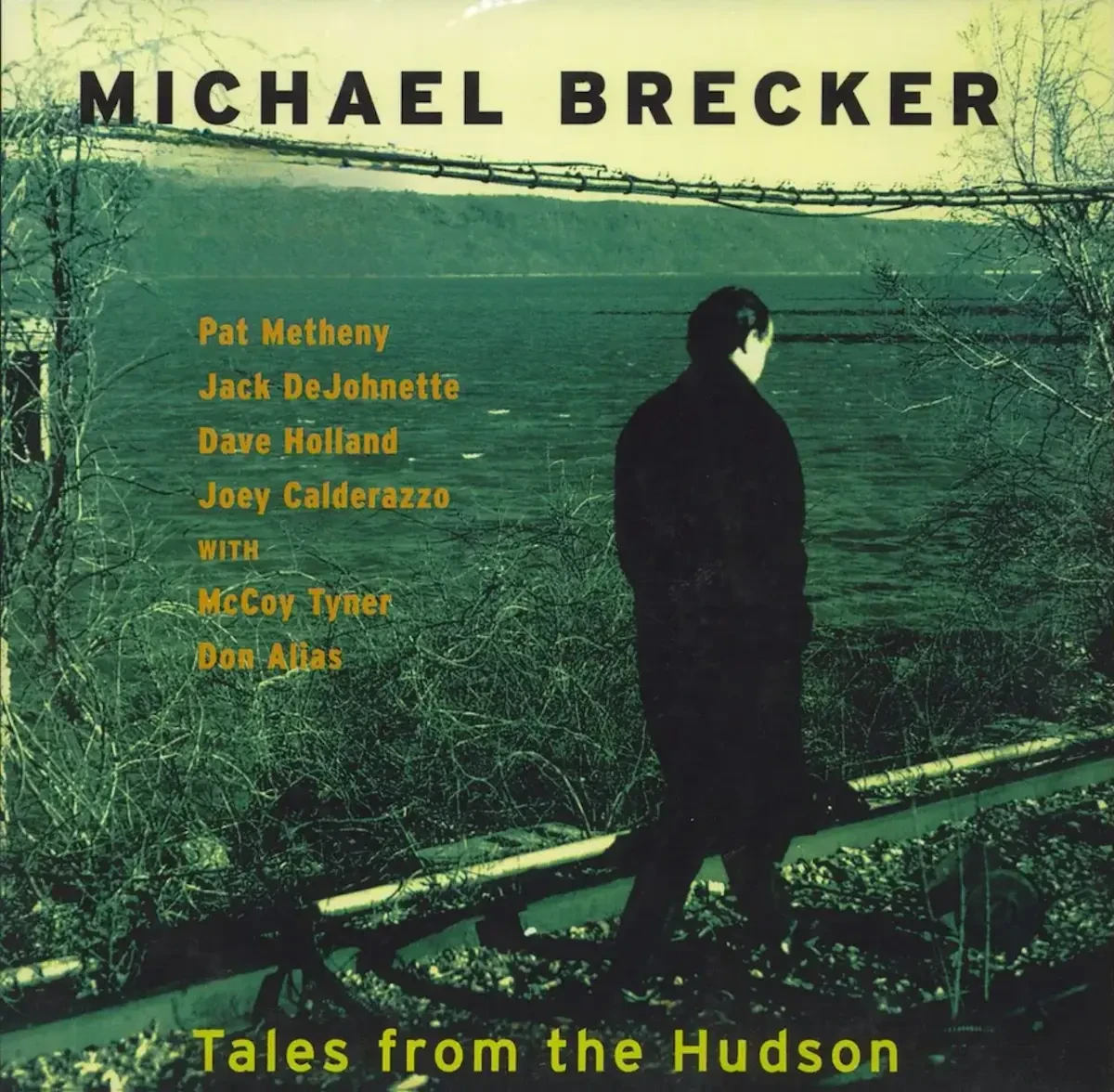
With the release of his third album as a leader for Impulse! Records, Tales From The Hudson, Brecker decisively shattered that reductive narrative. Recorded in New York City circa 1996 and carrying the catalog number Impulse IMP 11912, this landmark release represents a triumphant artistic turning point. Eschewing the occasionally misguided electronic experiments and diluted stylistic diversions that slightly hampered his two preceding solo outings, Tales From The Hudson presents a sharply focused, remarkably cohesive straight-ahead acoustic framework.
Spanning roughly sixty minutes and twenty-six seconds of breathtaking musicianship, the album marries compositional sophistication with peerless improvisational execution. Backed by an all-star ensemble—featuring guitar virtuoso Pat Metheny, pianists Joey Calderazzo and McCoy Tyner, bassist Dave Holland, drummer Jack DeJohnette, and percussionist Don Alias—Brecker channels the rich tonal traditions of 1960s saxophone masters while expanding his own expressive palette. This critical retrospective explores the anatomy of an album that not only cemented Brecker’s status as a formidable bandleader and composer, but also served as a definitive masterclass in modern jazz synergy.
Detailed Chronology: The Making of a Masterpiece
To fully appreciate the triumph of Tales From The Hudson, one must understand the trajectory that led Michael Brecker to the recording studio in New York City during the mid-1990s. For decades, Brecker was ubiquitous. Alongside his brother, trumpeter Randy Brecker, he had pioneered fusion through Dreams and the legendary Brecker Brothers band, while simultaneously defining the sound of pop-rock horns through epochal contributions to records by Paul Simon, James Taylor, Steely Dan, and a litany of others. However, stepping out front as a solo artist proved to be a complex psychological and artistic hurdle.
Moving Beyond the Early Solo Outings
When Brecker finally released his self-titled debut as a leader in 1987, followed by Now You See It… in 1990, critics were generally complimentary of his technical mastery, yet many pointed out a lingering identity crisis. Those earlier projects occasionally leaned too heavily into contemporary electronic production elements, synthetic textures, and MIDI-driven experimentations. While reflective of a musician eager to engage with modern sonic landscapes, these elements occasionally diluted the raw, emotive urgency that fans witnessed whenever Brecker unspooled a solo live on stage.
By the time preparations began for his third Impulse! outing, a distinct artistic recalibration had taken place. Brecker chose to strip away the distracting studio artifice, placing his trust squarely in the timeless resonance of the acoustic jazz quartet and quintet formats.
Inside the 1996 New York Sessions
Assembled in the quintessential crucible of modern jazz—New York City—the recording sessions for Tales From The Hudson brought together a peerless collective of improvisational heavyweights. The resulting tracklist—featuring Slings And Arrows, Midnight Voyage, Song For Bilbao, Beau Rivage, African Skies, Introduction To Naked Soul, Naked Soul, Willie T, and Cabin Fever—highlighted Brecker’s growing confidence as a composer.
While Brecker contributed robust, highly serviceable vehicles for improvisation like Slings And Arrows, African Skies, and Cabin Fever, it was his collaborative synergy with his sidemen that defined the sessions. The interplay between Brecker and pianist Joey Calderazzo, rhythm section stalwarts Dave Holland and Jack DeJohnette, and guest luminaries like McCoy Tyner and Pat Metheny transformed the studio into a dynamic laboratory of spontaneous creation. Every track became a vehicle for deep exploration, balancing intricate compositional architecture with fearless, high-wire improvisational daring.
Supporting Context & Metrics: The Musical Anatomy of the Album
Tales From The Hudson runs for a focused 60 minutes and 26 seconds, a duration that allows the ensemble to develop complex harmonic and rhythmic ideas without overstaying its welcome. The album’s structural integrity relies heavily on the interplay between the leader’s compositional vision and the staggering pedigree of his supporting cast.
The Collective Personnel and Instrumentation
The album’s lineup reads like a pantheon of modern jazz royalty:
- Michael Brecker: Tenor Saxophone
- Pat Metheny: Guitar, Guitar Synthesizer
- Joey Calderazzo: Piano (featured extensively across multiple tracks)
- McCoy Tyner: Piano (lending his monumental modal authority)
- Dave Holland: Acoustic Bass (providing rock-solid, inventive harmonic foundations)
- Jack DeJohnette: Drums (masterminding polyrhythmic propulsion and dynamic elasticity)
- Don Alias: Percussion (adding textural warmth and rhythmic subtext)
Compositional Highlights and Improvisational Breakthroughs
Brecker’s primary instrument has always been his expressive palette, and on this album, that palette expands exponentially. While John Coltrane remains a foundational inspiration—a debt acknowledged by Brecker throughout his career—Tales From The Hudson captures a mature artist stepping outside of direct stylistic lineages to forge a unique voice.
A prime illustration of this artistic evolution occurs on Joey Calderazzo’s ambling minor lament, Midnight Voyage. Rather than engaging in the blistering, high-velocity scalar gymnastics that detractors often generalized as his default mode, Brecker approaches the piece with a remarkably relaxed, rolling delivery. Musicologists and critics have noted that his phrasing on this track evokes a fascinating synthesis of two modal and tonal masters: the laconic, impeccably timed swing of Dexter Gordon combined with the elliptical, searching harmonic curiosity of Wayne Shorter.
Conversely, tracks like Slings And Arrows, African Skies, and Cabin Fever showcase Brecker’s capacity to write demanding, structurally intricate themes that test the mettle of any ensemble. These tunes serve as aerodynamic launchpads for improvisers who possess both the technical prowess to navigate complex changes and the emotional depth to make those changes sing.
Even on the album’s rare moments of narrative friction—such as the somewhat muted ballad Naked Soul, which introduces an evocative atmospheric preamble (Introduction To Naked Soul)—the sheer quality of the ensemble accompaniment maintains the listener’s engagement. The sidemen shadow Brecker’s every micro-shift in dynamic and intonation with uncanny sensitivity and imagination.
The Metheny Factor and Guitar Synthesizer Dynamics
No discussion of Tales From The Hudson is complete without examining the contribution of Pat Metheny. Beyond his peerless guitar work, Metheny unpacks his idiosyncratic viola-cum-trumpet guitar synthesizer on his own composition, Song For Bilbao. While guitar synthesizers of the era frequently drew mixed reviews for their occasionally sterile, synthetic timbres, Metheny navigates the instrument with characteristic musicality, integrating its unconventional textures seamlessly into the organic fabric of the acoustic rhythm section.
Official Statements and Critical Reception
The release of Tales From The Hudson triggered an immediate and profound reassessment of Michael Brecker’s standing within the jazz hierarchy. For years, jazz journalism had struggled to reconcile Brecker’s commercial ubiquity with his artistic ambitions. Reviewers often fell back on the lazy caricature of the session player: technically flawless, emotionally vacant.
Tales From The Hudson permanently upended that critical consensus.
Silencing the Skeptics
Jazz critics across international publications lauded the album as a definitive riposte to the naysayers. Industry retrospectives and contemporary reviews frequently noted that the record served as:
"Another fine dose of embarrassment for those who have persistently dismissed Brecker as a studio automaton."
Jazz historians point out that the album validated Brecker’s artistic trajectory, proving that his deep immersion in studio technology had not eroded his ability to connect with the primal, acoustic roots of the jazz tradition. Instead, his technical mastery became the servant of a deeply communicative, expressive artistic vision. Peers and critics alike praised the album’s focus, unity, and emotional resonance, cementing Brecker’s reputation not merely as an accompanist of choice, but as a visionary bandleader capable of steering an all-star ensemble to historic heights.
Future Outlook: The Enduring Legacy of Tales From The Hudson
Looking back from the vantage point of modern music history, Tales From The Hudson stands as a watershed moment in late-20th-century jazz. It captured a moment of synthesis where the hyper-articulate, high-octane vernacular of modern fusion met the timeless, introspective rigor of acoustic post-bop.
Influence on Subsequent Generations
The blueprint established on this 1996 Impulse! release reverberates profoundly through today’s jazz landscape. Modern saxophonists navigating the delicate balance between commercial session work and personal creative expression frequently look to Brecker’s career arc as a masterclass in artistic endurance. Tales From The Hudson proved that an artist could embrace contemporary production aesthetics without sacrificing the core integrity of straight-ahead jazz improvisation.
Furthermore, the collaborative alchemy displayed by Brecker, Metheny, Calderazzo, Tyner, Holland, and DeJohnette established a gold standard for modern jazz supergroups. It demonstrated that bringing together virtuosic egos does not inevitably lead to musical dilution; rather, under the right leadership and compositional framework, it can ignite a collective creative explosion.
As jazz continues to evolve in the 21st century, absorbing myriad global and electronic influences, Tales From The Hudson remains a vital touchstone. It stands as an enduring monument to Michael Brecker’s restless intellect, his unyielding commitment to personal growth, and his ultimate triumph over the narrow definitions assigned to him by a skeptical critical establishment. It is an album that demands not only to be heard, but to be studied—a timeless testament to the power of focus, unity, and unadulterated musical genius.