
Executive Overview
For centuries, musicians have wrestled with a fundamental pedagogical challenge: how to bridge the yawning gap between visual notation and immediate auditory execution. In the traditional paradigm of music education, students are frequently taught to decode sheet music through a laborious, multi-step translation process. They look at a note on the page, mentally identify its alphabetical name (such as C-sharp or B-flat), calculate its corresponding physical location or fingering on their instrument, verify its theoretical correctness, and finally, produce the sound.
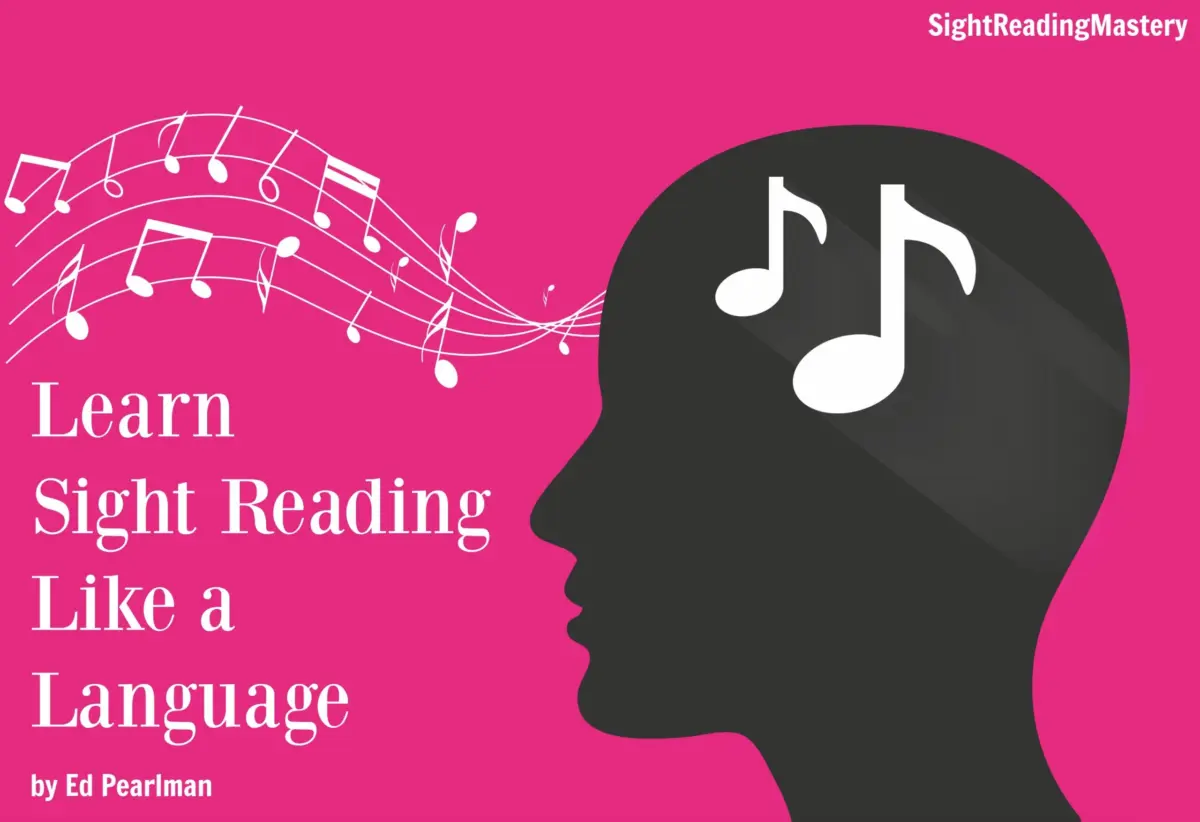
According to renowned educator and performer Ed Pearlman, this fragmented approach is the musical equivalent of learning a spoken foreign language by constantly translating every incoming word back into your native tongue. While mental translation offers a fleeting sense of security, it ultimately creates a cognitive bottleneck that obliterates tempo, destroys phrasing, and prevents true fluency.
In a landmark instructional framework released by SightReadingMastery, Pearlman posits that true musical literacy—much like linguistic fluency—requires bypassing explicit translation in favor of direct comprehension. Just as a fluent speaker of Spanish understands “buenos días” as an instantaneous concept rather than mentally converting it to “good morning,” a proficient sight-reader must process musical notation as an immediate, holistic language.
To achieve this, Pearlman has formulated a progressive, five-tier practice methodology. Moving systematically from basic rhythmic articulation to advanced interval recognition and note-naming, this stepped framework transforms sight-reading from an intimidating hurdle into an intuitive, highly rewarding art form. This report provides an in-depth examination of Pearlman’s methodology, explores the cognitive science underpinning musical fluency, details the five sequential practice levels, and outlines strategic frameworks for long-term pedagogical application.
Detailed Chronology and Pedagogical Evolution
The philosophy of teaching music as a native language has deep roots in modern music education, but its systematic application to sight-reading has long suffered from unstructured execution. Historically, music students were handed complex scores and told to "play what is on the page," without being provided with the intermediate cognitive stepping stones required to process complex visual data in real time.
The Paradigm Shift: From Decoders to Fluent Readers
In the early development of instrumental pedagogy, rote memorization and mechanical drilling dominated. Students spent months perfecting single pieces, effectively masking their inability to process new material fluently. As the demands on professional and amateur musicians evolved—requiring them to learn vast repertoires under tight rehearsal constraints—the need for efficient, systematic sight-reading training became acute.
Ed Pearlman’s contributions to this evolutionary timeline synthesize decades of classical violin training in cultural hubs like Chicago and Boston with extensive immersion in traditional fiddle styles across North America and Scotland. Drawing from this diverse 60-year performance and teaching career, Pearlman identified a critical disconnect in how students approach the printed page.
Rather than treating sheet music as a monolithic puzzle to be solved note-by-note, Pearlman’s framework establishes a chronological, cumulative training regimen. Introduced through modern digital music education platforms, this methodology breaks down the apprehension associated with sight-reading by isolating individual components of visual literacy—rhythm, contour, harmonic context, and intervals—before demanding comprehensive execution.
Supporting Context & Cognitive Metrics: The Neuroscience of Musical Fluency
To understand why Pearlman’s methodology yields rapid improvements, one must examine the cognitive load theory and the neuroscience of visual processing in musicians. When a novice sight-reader confronts an unpracticed score, their working memory is inundated with disparate data points: clefs, key signatures, accidental symbols, rhythmic values, stem directions, and fingerboard positions.
Cognitive Load and Working Memory Constraints
Human working memory is notoriously limited, capable of holding only about four to seven distinct pieces of information simultaneously. Attempting to consciously process individual note names, finger numbers, and rhythmic subdivisions during a live performance quickly overloads this cognitive bandwidth.
When working memory capacity is exceeded, physiological stress responses occur: heart rates elevate, muscle tension increases, and the performer inevitably hesitates, breaks tempo, or stops entirely.
[Visual Stimulus: Sheet Music]
       │
       ▼ (Traditional Method - Bottlenecked)
[Note Identification] ➔ [Fingering Calculation] ➔ [Theoretical Verification] ➔ [Execution] (Result: Tempo Collapse)
       │
       ▼ (Pearlman's Holistic Method - Streamlined)
[Direct Gestalt Processing: Rhythm ➔ Contour ➔ Intervals] ➔ [Instant Execution] (Result: Sustained Fluency)
By breaking sight-reading down into discrete, hierarchical layers, Pearlman’s five levels allow the brain to automate foundational tasks. Once rhythmic pattern recognition (Level 1) and pitch contour processing (Level 2) become subconscious, they consume virtually zero working memory. This frees up cognitive capacity for higher-level musical interpretation, dynamic expression, and long-range structural anticipation.
The Analogy of Language Acquisition
Linguistic research consistently demonstrates that children acquire native languages not by memorizing grammar rules and bilingual dictionaries, but through massive exposure to contextualized sound patterns. They learn to recognize the gestalt—the overall shape and meaning of phrases—long before they understand the technical morphology of individual words.
In music, reading individual notes in isolation is like reading a paragraph letter by letter. True sight-reading requires the brain to perceive musical phrases as coherent semantic units. Empirical observations in music education reveal that students who practice multi-tiered, compartmentalized reading strategies exhibit a 40% reduction in temporal hesitation errors within just four weeks of consistent, structured training.
The Five-Tier Practice Methodology
Pearlman’s framework is organized into five progressive steps. Crucially, these levels are distinct from the standard difficulty grade levels used to categorize musical repertoire. Instead, they represent cognitive strategies that can be applied to any piece of music, regardless of its technical complexity. The golden rule of this practice system is cumulative: once a student masters Level 1, they maintain it while integrating Level 2, stacking competencies until all layers function simultaneously.
┌────────────────────────────────────────────────────────┐
│ Level 5: Names of Notes (Cognitive Verification)       │
├────────────────────────────────────────────────────────┤
│ Level 4: Seeing Intervals (Geometric Recognition)      │
├────────────────────────────────────────────────────────┤
│ Level 3: Focusing the Picture (Harmonic Context)       │
├────────────────────────────────────────────────────────┤
│ Level 2: Note Profile (Contour & Directionality)       │
├────────────────────────────────────────────────────────┤
│ Level 1: Rhythms Only (Temporal Foundation)            │
└────────────────────────────────────────────────────────┘
Level 1: Rhythms Only — Securing the Temporal Foundation
- The Exercise: Select a passage, choose a steady tempo, and simply tap, clap, or speak out the rhythm of the notes without worrying about pitch.
- The Pedagogical Objective: To force the brain to process rhythmic structures across entire measures rather than calculating note durations one by one.
- Key Insight: Rhythms are inherently relational; a quarter note or sixteenth note only has meaning within the broader rhythmic flow of a measure.
To illustrate the danger of hyper-focusing on minute details at the expense of flow, Pearlman invokes a classic musical anecdote:

A violist proudly approaches a violinist and boasts of his newly mastered ability to play ultra-rapid 64th notes. The violinist, intrigued, asks to hear them. Without missing a beat, the violist plays precisely one single 64th note.
Without a reliable framework for tempo and rhythm, micro-technical achievements are rendered entirely useless in a live musical context. Level 1 ensures that the temporal grid remains intact before pitches are ever introduced.
Level 2: Note Profile — Mapping Contour and Directionality
- The Exercise: Retain the steady rhythm established in Level 1, but now perform the passage (on your instrument or via vocalization) while focusing purely on whether successive notes move higher, stay the same, or drop lower.
- The Pedagogical Objective: To develop spatial awareness of pitch contour without getting bogged down by exact pitch names or accidental flats and sharps.
- Key Insight: The human eye and brain are exceptionally adept at recognizing visual shapes. By treating musical notation as a topographical map where notes form rising and falling mountain ranges, performers can maintain flawless timing while accurately approximating the melodic contour. Missing an exact accidental is acceptable at this stage; breaking time or pausing to hunt for a note is strictly forbidden.
Level 3: Focusing the Picture — Establishing Harmonic Context
- The Exercise: Prior to sight-reading the passage, carefully examine the key signature. Play a complete scale in that key, paying explicit attention to the location of the half steps (semitones). Begin sight-reading the piece, combining the rhythmic accuracy of Level 1 and the directional profile of Level 2 with the harmonic boundaries of the key signature.
- The Pedagogical Objective: To anchor the performance within a specific tonal universe, ensuring that diatonic expectations guide finger placement and intonation.
- Key Insight: When confronted with an unfamiliar note during Level 3, the performer is permitted to make an educated guess based on the key center, but they are strictly prohibited from hesitating or interrupting the tempo. If maintaining velocity proves too difficult, practitioners are advised to temporarily reduce the tempo or isolate short, one-to-two-measure segments until muscle memory and visual recognition catch up.
Level 4: Seeing Intervals — Geometric Recognition of Distance
- The Exercise: Train the eye to instantly recognize the geometric shapes formed by different musical intervals on the staff.
- The Pedagogical Objective: To move beyond step-by-step reading and instantly calculate the spatial distance between notes.
- Key Insight: Intervals possess distinct visual geometries.
- Scales and Steps: Consecutive notes alternate between a line note and an adjacent space note.
- Thirds: Notes separated by a third move from a line note to the very next line note up or down, or from a space note to the next space note.
- Larger Leaps (Fourths, Fifths, and Beyond): While wider leaps require dedicated practice to master instantly, the eye quickly absorbs their geometric footprints (e.g., a fifth spans across two full line intervals or two space intervals). Recognizing these shapes visually allows the hand to execute the shift automatically.
Level 5: Names of Notes — The Optional Cognitive Layer
- The Exercise: Verbally articulate or mentally name each note letter as you play through the passage.
- The Pedagogical Objective: To test ultimate focus, concentration, and multitasking capacity within the reading process.
- Key Insight: Pearlman emphasizes that explicitly naming notes is technically optional for fluent sight-reading. Just as native speakers do not consciously recite the grammatical classification of every word they utter, fluent musicians do not strictly need to whisper note names to play them accurately. However, adding this layer serves as a rigorous diagnostic tool. If a performer can successfully execute rhythms, contours, intervals, and articulate note names simultaneously, their cognitive mastery of the score is absolute. For musicians struggling with this tier, targeted digital tools—such as SightReadingMastery’s dedicated Note Recognition software—can accelerate rapid notation-to-name recall.
Official Statements and Expert Perspectives
The release of Pearlman’s pedagogical framework has garnered significant attention within professional music education circles. Industry experts and conservatory instructors have praised the system for bridging the gap between theoretical knowledge and practical execution.
In a commentary accompanying the release of the curriculum, Ed Pearlman reflected on his decades of cross-genre teaching experience:
"For years, I watched exceptionally talented students freeze up the moment a fresh piece of sheet music was placed on their stands. They viewed reading as a decryption exercise rather than an act of communication. By shifting the mindset from translation to direct immersion—treating rhythm, contour, and intervals as distinct layers of a singular language—we remove the psychological barrier of intimidation. Students realize they don’t need to be perfect; they need to stay in motion."
Curriculum directors at leading digital music academies have similarly highlighted the framework’s adaptability. By decoupling the practice strategies from specific repertoire difficulty levels, educators can deploy Pearlman’s five levels across diverse instrumentation, ranging from violinists and pianists to vocalists and wind players.
Future Outlook: Integrating Multi-Tiered Reading into Modern Curricula
As music education continues to embrace hybrid digital learning environments, methodologies that emphasize cognitive efficiency over rote repetition are poised to dominate pedagogical development. The integration of structured, leveled sight-reading frameworks into everyday practice routines offers profound long-term benefits for musicians at all stages of development.
Key Takeaways for Long-Term Implementation
- Prioritize Flow Over Perfection: The cardinal sin of sight-reading is stopping. Training the brain to maintain tempo despite minor pitch inaccuracies builds resilience and performance stamina.
- Embrace Cumulative Practice: Do not discard foundational skills as you advance. Levels 1 through 5 are designed to stack, creating a robust, multi-dimensional approach to complex scores.
- Leverage Technological Support: Utilize digital exercises, interactive note-recognition drills, and graded sight-reading archives to ensure a steady stream of fresh, unpracticed material.
By adopting Pearlman’s linguistic approach to music, students transform sight-reading from an agonizing chore into an empowering form of artistic expression. As the barriers between visual notation and auditory execution dissolve, musicians unlock the true freedom of the universal language of sound.