
Executive Overview
In the realm of musical pedagogy, few skills are as universally revered—and as widely neglected—as sight-reading. Much like learning a spoken language, the ultimate goal of reading music is to internalize notation so deeply that the brain bypasses the tedious process of mental translation. When a person learns a foreign tongue, fluency is achieved not when they can translate every foreign word back into their native language, but when they can comprehend and respond to the meaning instantly.
Consider the phrase “buenos días.” A fluent Spanish speaker grasps the concept of morning greetings directly, without mentally stopping to translate the words into "good morning." While translation offers a reassuring anchor that confirms grammatical accuracy, it fundamentally slows down cognition, acting as an invisible glass ceiling on conversational fluency.
Music functions identically. Musicians who attempt to process a piece of sheet music by identifying individual note names, calculating finger numbers, double-checking their work, and finally executing the sound will inevitably fail to maintain tempo. The cognitive bandwidth required for note-by-note translation destroys musical momentum.
To bridge this gap, seasoned educator and performer Ed Pearlman has introduced a progressive, five-tier framework designed to retrain how musicians approach notation. By decoupling the mechanical hurdles of note-naming from the fluid comprehension of rhythm, contours, and intervals, musicians can unlock a transformative fluency. This report examines the psychological parallels between linguistic acquisition and musical sight-reading, details Pearlman’s step-by-step developmental hierarchy, and evaluates the broader implications of fluency-based music education for modern instrumentalists and vocalists.
Detailed Chronology: The Evolution of Sight-Reading Pedagogy
Historically, music education has leaned heavily on rote memorization, repetitive mechanical drills, and slow, laborious decoding. For centuries, music pedagogy treated scores as cryptographic puzzles to be solved rather than living languages to be read aloud.
The Traditional Bottleneck
In the early eras of formal classical training, students were taught to read music by associating visual symbols with absolute pitches on a staff, followed by physical mappings on an instrument. While this method ensured accuracy over time, it created a generation of "sight-stutterers"—performers who could successfully decode complex passages only after hours of slow, deliberate practice.
As the demands on modern musicians escalated—requiring session players, orchestral substitutes, and contemporary chamber artists to master vast repertoires on short notice—the traditional pedagogy revealed a critical flaw. Musicians lacked the intuitive reflexes required to process new scores in real-time.
The Linguistic Shift
In recent decades, music theorists and cognitive scientists began drawing direct parallels between linguistics and music literacy. Pioneers in cognitive musicology argued that musical notation shares the same syntactic and semantic structures as spoken language. Just as children learn to recognize whole words and grammatical flows before analyzing phonetic roots, developing musicians needed a systemic way to read musical phrases, phrases, and contours as unified gestures.
Ed Pearlman’s methodology—developed over decades of classical violin performance, traditional fiddle teaching, and pedagogical research—represents a crystallization of this movement. By breaking the sight-reading process down into distinct cognitive layers, Pearlman’s framework provides a structured pathway from mechanical decoding to intuitive musical literacy.
Supporting Context & Metrics: The Cognitive Mechanics of Sight-Reading
To understand why traditional sight-reading methods fail, one must examine how the human brain processes visual and auditory stimuli under time constraints.
The Cognitive Load Theory in Music
When a musician sights a new score, their working memory faces an intense cognitive load. They must simultaneously process:
- Tempo and meter
- Rhythmic subdivisions
- Pitch locations (clefs, key signatures, accidentals)
- Intervallic distances
- Articulation, dynamics, and phrasing
- Physical instrument mechanics (bowing, fingering, breath control)
When a player attempts to decode all of these elements note-by-note, working memory quickly overflows. This phenomenon mirrors the "translation lag" observed in bilingual individuals who are not yet fluent.
According to cognitive studies in music reading, expert sight-readers do not look at individual notes; instead, they utilize "chunking"—grouping notes into meaningful melodic and rhythmic patterns, much like reading words rather than individual letters.
The Five-Tier Developmental Hierarchy
Pearlman’s progressive framework is specifically engineered to manage cognitive load by isolating individual components of musical literacy before synthesizing them into full performance fluency.
Note: The progression levels outlined below represent developmental skill tiers within sight-reading practice and should not be confused with the standardized difficulty "grade levels" used in comprehensive pedagogical repositories like SightReadingMastery.
Level 1: Rhythms Only
- The Exercise: Choose a baseline tempo and simply tap, clap, or speak the rhythm of the passage without worrying about pitches.
- The Objective: To condition the brain to perceive the rhythms of an entire measure as a unified gesture, rather than calculating individual note durations sequentially. Rhythms possess zero musical meaning in isolation; they exist entirely in relationship to one another.
- Pedagogical Insight: As Pearlman highlights through the classic orchestral joke about the violist bragging about playing 64th notes (only to play a single one when challenged), technical precision in rhythm requires a holistic grasp of temporal flow rather than isolated mathematical calculations.
Level 2: Note Profile
- The Exercise: Maintain the rhythmic foundation established in Level 1, but introduce your instrument or voice. Now, focus entirely on the contour or profile of the notes—whether they ascend, descend, or remain at the same pitch relative to the preceding note.
- The Objective: To prioritize temporal momentum over pitch perfection. If you hit a wrong note, it is acceptable, provided you maintain correct timing and accurately follow the upward or downward trajectory of the musical line.
- Pedagogical Insight: Sight-reading collapses the moment a player stops to correct a wrong note. By treating pitch as a directional contour rather than an absolute address, the musician keeps the music moving forward.
Level 3: Focusing the Picture
- The Exercise: Before playing, inspect the key signature and execute a scale in that specific key. Identify where the half-steps lie within the operational range of the sight-reading passage. Then, begin playing with strict adherence to timing and note profiles, while actively attempting to execute the correct pitches.
- The Objective: To marry directional contours with tonal geography. If uncertainty arises regarding a specific pitch, the musician must guess based on the key signature and interval profile rather than pausing or compromising the tempo.
- Pedagogical Insight: Timing is non-negotiable. If execution proves difficult at the target tempo, musicians should either reduce the tempo or isolate one to two measures at a time, ensuring that temporal integrity is never sacrificed for pitch accuracy.
Level 4: Seeing Intervals
- The Exercise: Train the eye to instantly recognize specific intervallic distances on the staff.
- The Objective: Move beyond stepwise motion to instantly identify structural intervals. For example, a stepwise motion (a scale) typically transitions from a line note to a space note, whereas a third moves from a line to the adjacent line (or space to space). Larger jumps—such as fifths (spanning two lines or spaces)—require dedicated visual recognition practice.
- Pedagogical Insight: Just as fluent readers recognize familiar letter combinations and root words instantly, advanced sight-readers recognize the physical architecture of intervals on the staff without counting lines and spaces.
Level 5: Names of Notes
- The Exercise: Verbally speak or mentally conceptualize the absolute letter names of the notes while executing the passage in real-time.
- The Objective: To test ultimate cognitive focus. While naming notes is technically optional during live performance (since the ultimate language of music is sound, not letter names), it serves as a powerful diagnostic tool to verify whether the musician can maintain rhythm and contour comprehension while processing analytical labels.
- Pedagogical Insight: For those struggling with note identification, supplementary tools such as targeted note-recognition software can accelerate visual processing speeds outside of active performance.
Official Perspectives & Pedagogical Authority
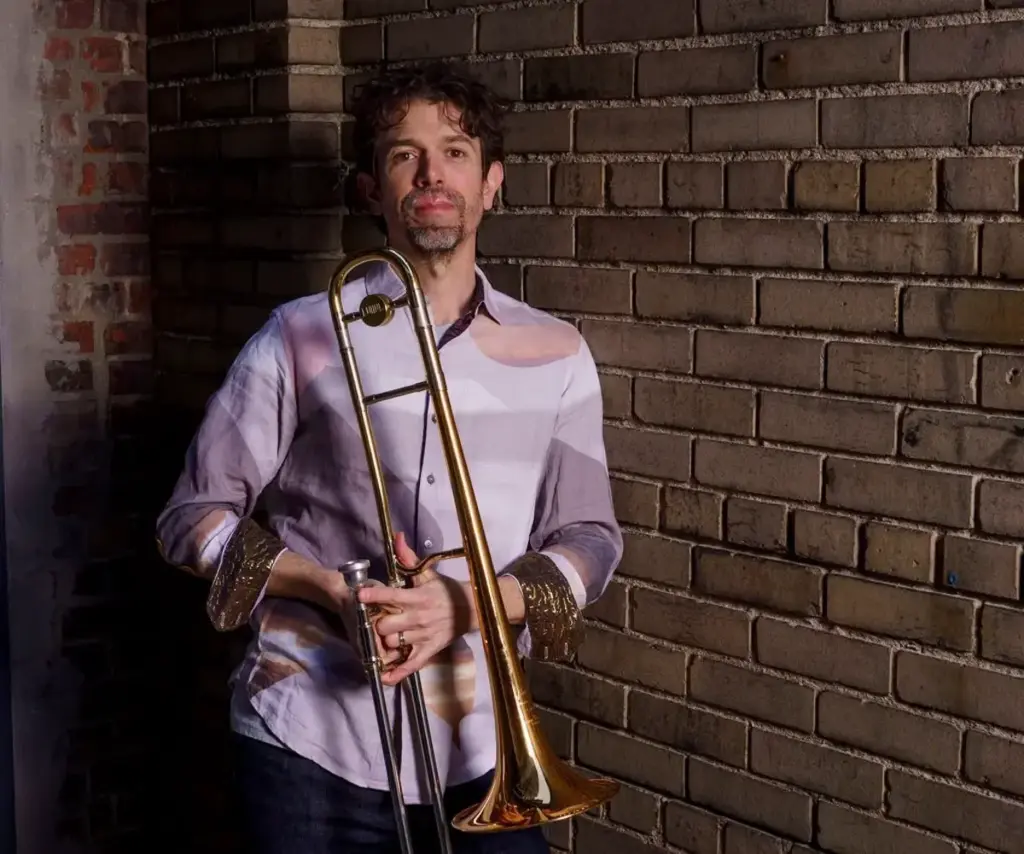
The philosophy underpinning Pearlman’s approach is supported by decades of field experience. Having studied and performed classical violin in major cultural hubs like Chicago and Boston for 25 years, followed by 35 dedicated years exploring traditional fiddle styles across North America and Scotland, Pearlman brings a uniquely hybrid perspective to music education.

In his professional engagements—spanning private instruction, intensive workshops, and his digital education platform, Fiddle-Online—Pearlman has consistently emphasized that traditional instructional methods often handicap students by prioritizing sterile accuracy over expressive fluency.
"When you’re learning a language, the goal is to be able to understand and speak without having to mentally translate the words into your native language," Pearlman explains. "It’s the same in music. You want to play directly from sight… You won’t have time to do all this [translate, check, and play] and stay in tempo."
Music educators globally have increasingly echoed this sentiment, advocating for a shift away from "drill-and-kill" accuracy training toward dynamic, context-rich sight-reading routines that build resilience, adaptability, and intuitive musicality.
Future Outlook: The Digital Transformation of Music Literacy
As music education continues to evolve in the digital age, the tools available for cultivating sight-reading fluency are undergoing a profound transformation. Traditional paper anthologies are increasingly being supplemented by interactive software, automated assessment platforms, and dynamic generation tools like SightReadingMastery.
Technological Integration in Sight-Reading
The future of musical literacy lies in adaptive learning systems that can instantly generate infinite, leveled sight-reading examples tailored to a student’s specific instrument, clef preferences, and technical deficiencies. By gamifying the five-tier framework—allowing students to isolate rhythms, contours, and intervals within digital interfaces—modern software is helping bridge the gap between academic theory and practical execution.
The Lifelong Pursuit of Musical Fluency
Ultimately, mastering sight-reading is not about achieving perfection on the first read-through; it is about developing a fearless, conversational relationship with musical notation. By implementing structured, incremental approaches—moving systematically from rhythm to contour, key signatures to intervals, and finally to analytical naming—musicians can dismantle the mental barriers that impede performance.
As players embrace sight-reading as a living language rather than a mechanical chore, they open the door to limitless artistic exploration, unlocking the true freedom of musical expression.