
Executive Overview
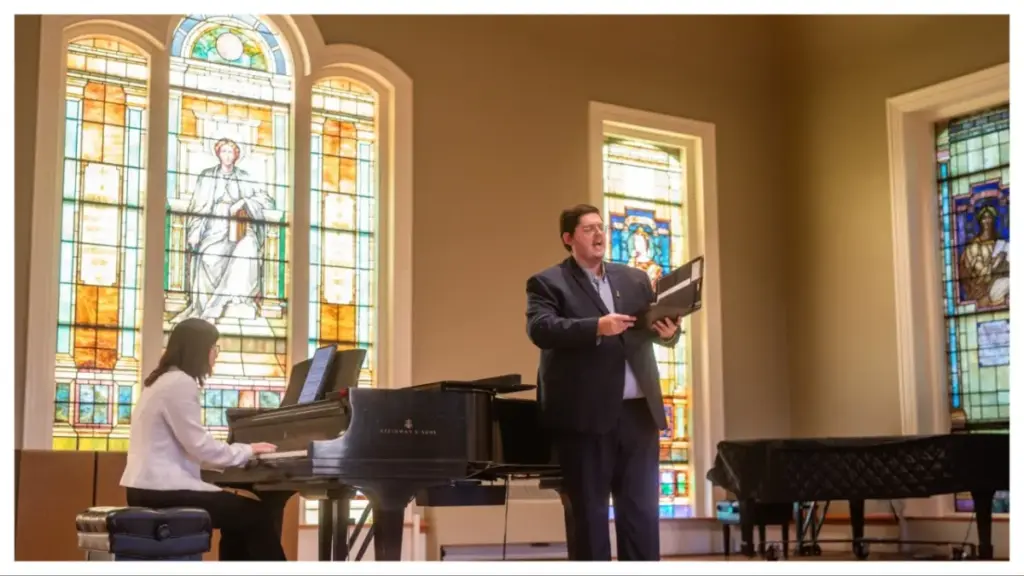
On Saturday, November 21, 2026, Manhattan’s landmark Church of the Holy Apostles will play host to November Nights, the flagship fall concert from the Melodia Women’s Choir of New York City. Conducted by Artistic Director Cynthia Powell and accompanied by pianist Janet Sora Chung, the performance represents a curated exploration of transition, memory, sacred contemplation, and natural wonder. Designed to bridge historical eras and vocal traditions, the program juxtaposes late 19th-century Romanticism with contemporary choral minimalism, traditional folk arrangements, and modern sacred compositions.
For over two decades, Melodia Women’s Choir has occupied a distinct niche within New York City’s vibrant cultural ecosystem. Founded in 2003, the ensemble has maintained an unwavering commitment to expanding the treble voice repertoire, advocating for female composers, and presenting challenging, high-caliber choral works. November Nights continues this tradition, assembling a diverse roster of works by Sergei Rachmaninoff, Morten Lauridsen, Ola Gjeilo, Clara Schumann, Franz Schubert, Roxanna Panufnik, and Daniel E. Gawthrop, among others.
Beyond its artistic merit, the concert serves as a case study in how non-profit performing arts organizations navigate post-pandemic audience engagement, historic space utilization, and gender parity in classical programming. Held in the acoustically rich sanctuary of the Church of the Holy Apostles in Chelsea, November Nights offers both an intimate listening experience for concertgoers and a broader statement on the enduring relevance of community-based, professional-grade choral music in North America.
Detailed Chronology & Programmatic Architecture
The conceptualization and execution of November Nights reflect a multi-stage artistic process spanning months of score selection, structural arrangement, and vocal rehearsal. The program is structured deliberately to guide the audience through shifting emotional landscapes—moving from external depictions of nature to internal spiritual reflection.
+-----------------------------------------------------------------------------------+
|                        PROGRAM ARCHITECTURE: NOVEMBER NIGHTS                      |
+-----------------------------------------------------------------------------------+
|  MOVEMENT I: Celestial & Atmospheric Landscapes                                   |
|  - Ola Gjeilo: "Northern Lights"                                                  |
|  - Morten Lauridsen: "Sure on this Shining Night"                                 |
+-----------------------------------------------------------------------------------+
|  MOVEMENT II: Romantic Heritage & Narrative Lyricism                              |
|  - Sergei Rachmaninoff: "Six Choruses for Women's Voices", Op. 15                 |
|  - Clara Schumann (arr. B. Williams): "Lorelei"                                   |
|  - Franz Schubert (arr. C. Powell): "An die Musik"                                |
+-----------------------------------------------------------------------------------+
|  MOVEMENT III: Memory, Nostalgia & Folk Tradition                                 |
|  - Traditional Irish (arr. E. Rentz): "The Last Rose of Summer"                   |
|  - Robert Lowry / Aaron Copland: "At the River"                                   |
+-----------------------------------------------------------------------------------+
|  MOVEMENT IV: Sacred Contemplation & Transcendence                                |
|  - Roxanna Panufnik: "Ubi Caritas"                                                |
|  - Traditional Sacred (arr. C. Powell): "O Vos Omnes"                             |
|  - Daniel E. Gawthrop: "Sing Me to Heaven"                                        |
+-----------------------------------------------------------------------------------+
Phase 1: Prelude and Season Conceptualization (Early to Mid-2026)
During the initial planning phases in early 2026, Artistic Director Cynthia Powell sought to build a program around the aesthetic and psychological characteristics of late autumn. Unlike spring programs that often celebrate renewal, or winter concerts focused on festive traditions, the late-November thematic framework calls for quietude, interiority, and contrast.
Powell selected works that utilize treble vocal ranges (SSA and SSAA configurations) to evoke textures ranging from luminous atmospheric clusters to dense, chromatic romantic harmonies.
Phase 2: Repertoire Assembly and Structural Breakdown
The evening’s performance is organized into four thematic pillars:
- Atmospheric & Celestial Landscapes: Opening with Scandinavian and American contemporary works, the ensemble establishes an expansive sonic palette. Ola Gjeilo’s Northern Lights uses shimmering, polyphonic cluster chords to simulate the aurora borealis, setting Latin sacred text against modern modal harmonies. This transitions into Morten Lauridsen’s iconic setting of James Agee’s poem, Sure on this Shining Night, which grounds celestial wonder in human solace.
- The Romantic Heritage: The central historical core of the performance is anchored by Sergei Rachmaninoff’s Six Choruses for Women’s Voices, Op. 15. Written early in the composer’s career (1895–1896), these pieces demand exceptional vocal stamina, dynamic nuance, and precise diction. Interdispersed are new adaptations of Lieder, including Franz Schubert’s An die Musik (arranged by Powell) and Clara Schumann’s dramatic ballad Lorelei (arranged by Brandon Williams).
- Nostalgia and Vernacular Traditions: The program shifts toward folk lyricism with Earlene Rentz’s arrangement of the traditional Irish air The Last Rose of Summer, exploring themes of mortality and beauty’s fleeting nature, alongside Aaron Copland’s classic setting of Robert Lowry’s hymn At the River.
- Sacred Transcendence: The concert concludes with works of spiritual reflection. British composer Roxanna Panufnik’s Ubi Caritas brings a contemporary multicultural perspective to sacred texts, paired with Powell’s custom arrangement of O Vos Omnes and Daniel E. Gawthrop’s Sing Me to Heaven—a modern choral staple that meditates on the immortal power of song.
Phase 3: Final Rehearsals and Staging (November 2026)
In the weeks leading up to the November 21 performance, rehearsals focus on balancing the ensemble’s natural resonance with the specific acoustic signature of the Church of the Holy Apostles. Attention is paid to vocal blending, text articulation across English, Latin, Russian, and German repertoire, and the seamlessly integrated piano accompaniment provided by Janet Sora Chung.
Supporting Context & Metrics: Repertoire, Acoustics, and Ensemble Dynamics
To fully understand the scope of November Nights, it is necessary to examine the technical demands of the chosen literature, the structural dynamics of treble choral performance, and the physical characteristics of the performance venue.
Comparative Analysis of Featured Repertoire
| Work Title | Composer / Arranger | Epoch / Style | Key Structural & Technical Characteristics |
|---|---|---|---|
| Northern Lights | Ola Gjeilo | 21st Century Minimalist / Sacred | SSAA split; dynamic control; Latin text (Song of Solomon); rich modal cluster harmonies. |
| Sure on this Shining Night | Morten Lauridsen | Contemporary American Romanticism | Polyphonic lyricism; tight voice leading; setting of James Agee prose; complex piano-vocal integration. |
| Six Choruses, Op. 15 | Sergei Rachmaninoff | Late 19th-Century Russian Romanticism | Complex chromaticism; rapid dynamic shifts; demanding low-alto (alto 2) tessitura and soprano extension. |
| Lorelei | Clara Schumann (arr. B. Williams) | 19th-Century German Romanticism / Modern Arr. | Narrative storytelling; dramatic rubato; dense keyboard figuration mirroring Heine’s poetic text. |
| An die Musik | Franz Schubert (arr. C. Powell) | Early 19th-Century Classical-Romantic | Strophic structure; warm homophonic lines; adaptation of solo Lied into multi-part treble harmony. |
| Ubi Caritas | Roxanna Panufnik | Contemporary British Sacred | Micro-tonal inflections; world-music rhythmic accents; modern interpretation of ancient chant. |
| Sing Me to Heaven | Daniel E. Gawthrop | Late 20th-Century American Choral | Expanding polyphonic climaxes; broad dynamic range; sensitive word-painting on text by Jane Griner. |
Vocal Mechanics of the Treble Choir
Performing works written or adapted for women’s voices presents distinct technical considerations compared to mixed SATB (Soprano, Alto, Tenor, Bass) ensembles:
- Frequency Spectrum & Overtones: Because treble voices operate within a narrower overall frequency range (typically from F3 to C6), achieving clarity requires exceptional control over acoustic formants and vowel unison. In works like Gjeilo’s Northern Lights, small variations in pitch can muddy the intentional dissonance of cluster chords.
- Low-Frequency Resonance: In compositions such as Rachmaninoff’s Opus 15, the Second Alto section must provide the harmonic foundation typically supplied by tenors and basses. This demands a chest-voice depth and dark tonal color rare in standard choral literature.
- Dynamic Range in Arranged Lieder: Arranging solo Lieder like Schubert’s An die Musik or Schumann’s Lorelei for treble chorus requires rebalancing the solo vocal line across three or four harmonic parts without losing the intimate, conversational quality inherent to the original German song tradition.
FREQUENCY & HARMONIC DISTRIBUTION COMPARISON

SATB Ensemble Frequency Spectrum:
[Bass: E2-E4] ------ [Tenor: C3-G4] ------ [Alto: F3-F5] ------ [Soprano: C4-C6]
|==============================================================================| (Wide Spread)

SSAA Ensemble (Melodia) Frequency Spectrum:
                    [Alto 2: F3-D5] -- [Alto 1: A3-F5] -- [Sop 2: C4-A5] -- [Sop 1: E4-C6]
                    |===================================================| (Concentrated Overtones)
Venue Architectural Acoustics: Church of the Holy Apostles
Located at 296 9th Avenue in Manhattan’s Chelsea neighborhood, the Church of the Holy Apostles offers an ideal acoustic setting for choral music. Designed by architect Minard Lafever and completed in 1848, the landmark Episcopal church features an Italianate exterior and a expansive, timber-framed interior.
Following a major fire in 1990, the sanctuary was meticulously restored. Its high, vaulted ceiling and plaster interior walls create a mid-length reverberation time (approximately 2.1 to 2.4 seconds), providing warm acoustic reinforcement for treble voices. This reverberation enhances sustained polyphonic lines—such as those in Lauridsen’s and Gawthrop’s works—while maintaining sufficient clarity for the delicate piano figures performed by Janet Sora Chung.
Official Statements & Conceptual Philosophy
The curatorial ethos behind November Nights centers on creating a space for reflection amidst the rapid pace of contemporary urban life, while maintaining high standards of musical execution.
Artistic Director and Conductor Cynthia Powell highlighted the emotional trajectory of the concert program:
"November Nights is an invitation to slow down, listen deeply, and experience the extraordinary range of emotion that music can express. I wanted to bring together works that reflect the beauty and mystery of this season—from the wonder of the natural world to the intimacy of love and the solace of spiritual reflection. Each piece offers its own unique world of sound."
Powell further emphasized the intentional mix of historical eras and compositional voices:
"In designing this program, it was essential that we balance historical gravity with contemporary innovation. Bringing Rachmaninoff’s lush Russian textures into dialogue with modern masterpieces by Roxanna Panufnik and Ola Gjeilo allows the audience to hear the evolution of treble writing. It demonstrates that the female chorus is not a restricted subset of choral music, but a fully realized, dynamic instrument capable of profound expressive power."
Commenting on the collaborative performance dynamic, Pianist Janet Sora Chung noted:
"The keyboard writing across this repertoire demands a high level of versatility. Accompanying a treble choir in a piece like Clara Schumann’s Lorelei requires an active, narrative partnership with the singers, whereas working through Copland or Lauridsen requires creating an open, resonant foundation for the vocal harmonies to blossom within the church’s natural acoustics."
Future Outlook & Cultural Impact
As Melodia Women’s Choir of NYC enters its 23rd year of continuous operation, November Nights illustrates broader trends within the American performing arts sector regarding repertoire diversification, community sustainability, and the preservation of historic spaces.
+-----------------------------------------------------------------------------------+
|               MELODIA WOMEN'S CHOIR: LONG-TERM CULTURAL STRATEGY                  |
+-----------------------------------------------------------------------------------+
|  1. Repertoire Expansion                                                          |
|     - Commissioning new works by living female composers.                         |
|     - Adapting classic Lieder and orchestral scores for SSA/SSAA ensembles.       |
+-----------------------------------------------------------------------------------+
|  2. Community Engagement & Access                                                 |
|     - Utilizing historic NYC architecture for public arts presentations.           |
|     - Providing accessible ticketing and educational choral outreach.             |
+-----------------------------------------------------------------------------------+
|  3. Institutional Equity                                                          |
|     - Addressing historical gender imbalances in classical conducting/composition.|
|     - Archiving performances to enrich the global treble choral canon.            |
+-----------------------------------------------------------------------------------+
Advancing Gender Parity in Choral Programming
Historically, classical choral literature has been dominated by mixed-voice (SATB) or male-voice compositions written for church choirs and monastic traditions. The work of Melodia Women’s Choir represents a sustained effort to correct this imbalance. By commissioning new works, commissioning custom arrangements of classic pieces (such as Powell’s work on Schubert’s An die Musik), and highlighting overlooked female historical figures like Clara Schumann, Melodia expands the performing arts canon for women’s ensembles worldwide.
Sustaining Performing Arts Ensembles in Urban Centers
Operating a mid-sized performing arts non-profit in New York City presents ongoing economic and logistical challenges. Venues must balance congregational duties, social outreach, and cultural events. The Church of the Holy Apostles, known locally for operating NYC’s largest soup kitchen, represents a model of community-integrated arts usage. Hosting cultural events like November Nights provides essential revenue to maintain historic architectural landmarks while providing local communities access to world-class artistic experiences.
Strategic Trajectory for Upcoming Seasons
Following the conclusion of the November Nights fall concert, Melodia Women’s Choir will transition into its spring 2027 workshop series and commission cycles. The ensemble’s commitment to pairing established masterpieces with world premieres remains the core of its operational philosophy.
As urban audiences increasingly seek live cultural events that offer depth, reflection, and community connection, programs like November Nights demonstrate the sustained relevance of the choral tradition. Through rigorous musicianship, thoughtful programming, and an unwavering commitment to treble vocal art, Melodia Women’s Choir continues to shape the cultural landscape of New York City and beyond.
Event Summary & Reference Information
- Event Title: November Nights – Fall Concert by Melodia Women’s Choir of NYC
- Date & Time: Saturday, November 21, 2026, at 7:30 p.m. EST
- Location: Church of the Holy Apostles, 296 9th Avenue (at 28th Street), New York, NY 10001
- Artistic Leadership: Cynthia Powell (Artistic Director & Conductor); Janet Sora Chung (Pianist)
- Featured Composers & Arrangers: Ola Gjeilo, Morten Lauridsen, Sergei Rachmaninoff, Clara Schumann (arr. Brandon Williams), Franz Schubert (arr. Cynthia Powell), Earlene Rentz, Roxanna Panufnik, Robert Lowry / Aaron Copland, Daniel E. Gawthrop.
- Organizing Entity: Melodia Women’s Choir of NYC (Founded 2003)