
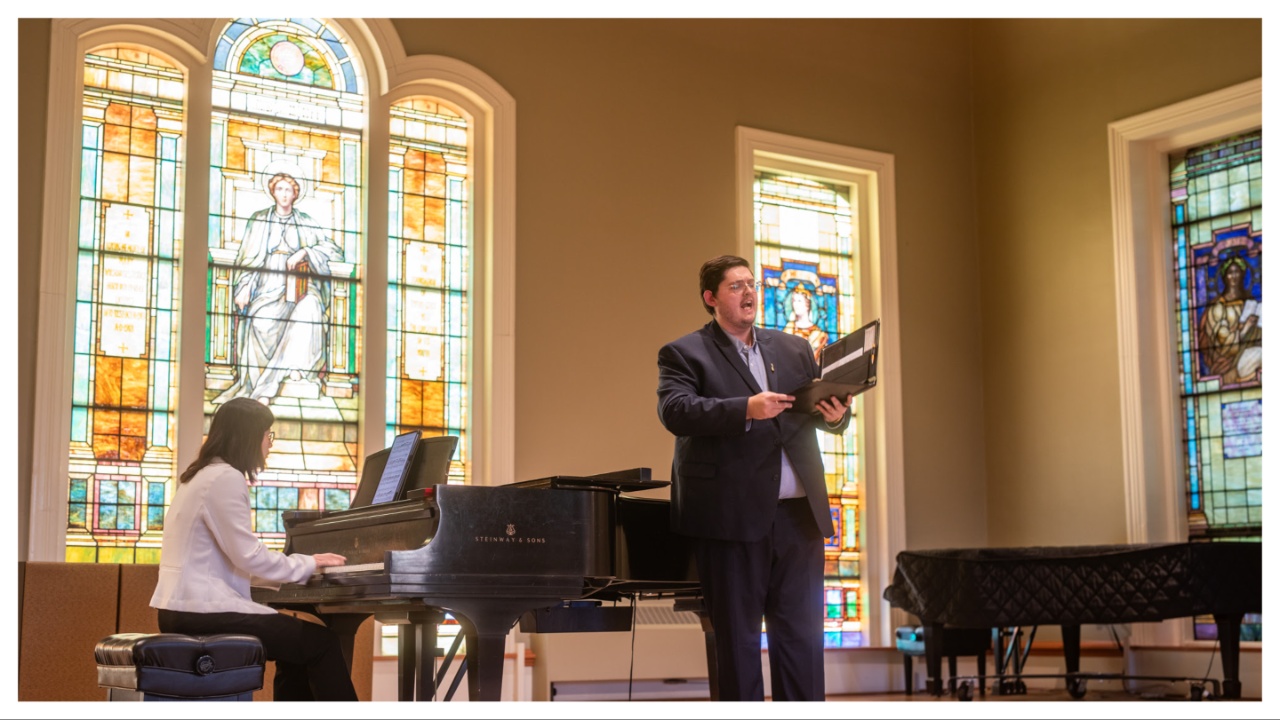
BETHLEHEM, Pa. — In a powerful showcase of vocal agility, historical stylistic adherence, and deeply emotional interpretation, tenor Zachary Fisher has been named the winner of the 13th Biennial Bach Vocal Competition for American Singers. Co-presented by The Bach Choir of Bethlehem and the American Bach Society, the competition is widely recognized as one of the nation’s premier platforms for discovering and launching young, specialized talent dedicated to the rigorous performance practices of the Baroque era.
Fisher’s victory, announced following a fiercely contested final round at Peter Hall in Bethlehem, Pennsylvania, highlights not only his technical mastery of Johann Sebastian Bach’s formidable repertoire but also the surging vitality of historical performance practice among a new generation of American musicians. For Fisher, an established baroque specialist and voice faculty member at the University of Maine, the accolade represents a defining milestone in an already burgeoning career.
This comprehensive report explores the chronology of the final round, the repertoire that secured Fisher’s victory, the esteemed panel of judges who evaluated the performances, insights from leadership regarding the state of classical music, and the broader implications of this prestigious competition for the future of Baroque music in North America.
Executive Overview
The 13th Biennial Bach Vocal Competition concluded on October 24, following months of rigorous preliminary evaluations that culled some of the finest emerging vocal talent from across the United States and Canada. The final round featured a roster of exceptionally skilled young artists whose credentials spanned recent graduates of elite collegiate music conservatories to seasoned professionals already gracing the stages of major international houses, including the Metropolitan Opera.
Zachary Fisher claimed the coveted first-prize package, which includes a $3,000 career development grant designed to support artistic advancement, linguistic study, or specialized coaching. Crucially, the prize also guarantees Fisher a coveted return engagement to Bethlehem as a featured soloist with The Bach Choir of Bethlehem during a future concert season—an opportunity that bridges the gap between competition success and professional mainstream integration.
While Fisher captured the top honor, the judges also recognized the extraordinary depth of talent in the final round by awarding honorable mentions to Opal Clyburn-Miller, Lydia Saylor, and Juliet Papadopoulos.
The competition, jointly administered by two of the country’s most respected early music institutions, continues to serve as an indispensable pipeline for young artists seeking to dedicate their professional lives to the interpretation of sacred and secular masterworks of the 17th and 18th centuries.
Detailed Chronology: The Road to the 13th Biennial Finals
The Preliminary Phase and Intellectual Rigor
The journey toward the October 24 finals began months prior, as applicants submitted audio and video recordings demonstrating their ability to navigate the complex ornamentation, tessitura, and theological depth demanded by J.S. Bach’s vocal canon. The competition is specifically tailored for American singers—broadly defined to include citizens and permanent residents studying or working in North America—who demonstrate a distinct aptitude for historical performance practice.
The applicant pool for the 13th biennial iteration was noted by leadership as one of the most competitive in the event’s history. Candidates were evaluated not merely on vocal beauty, but on textual clarity, diction (particularly ecclesiastical and historical German), rhetorical delivery (Affectus), and stylistic awareness.
The Final Showdown at Peter Hall
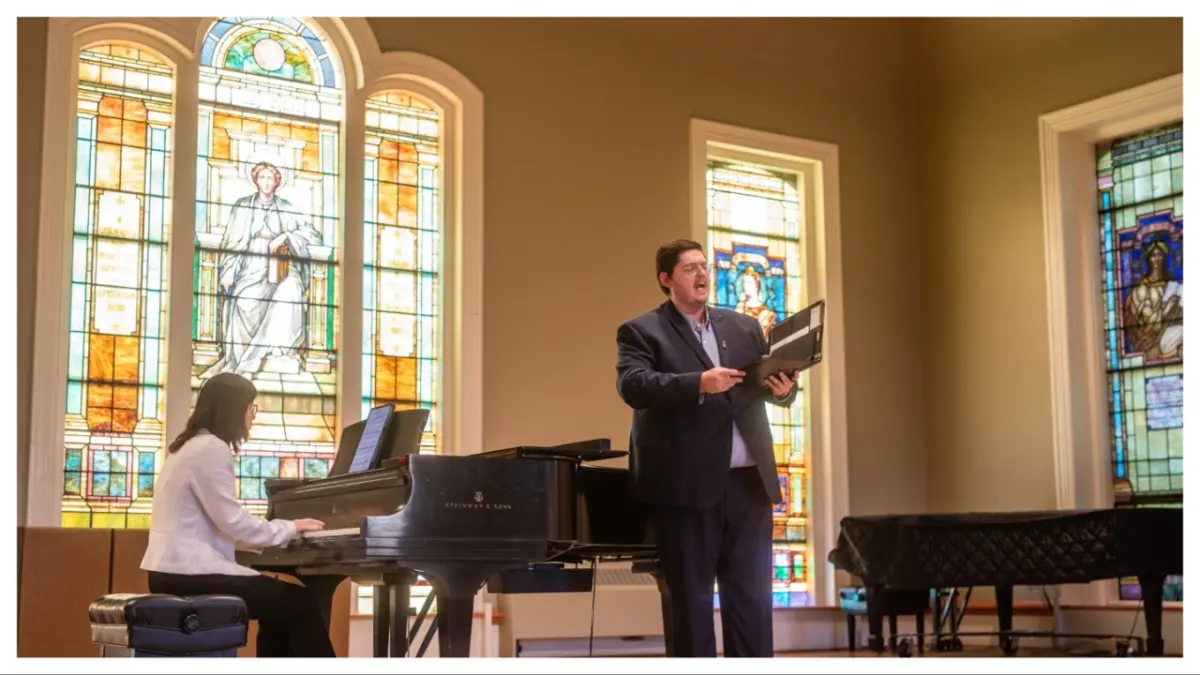
On October 24, Peter Hall in Bethlehem provided an intimate yet acoustically resonant backdrop for the final round. The venue, steeped in regional history and cultural reverence for Pennsylvania’s deep-rooted choral traditions, was filled with patrons, scholars, and arts administrators eager to witness the next generation of Bach interpreters.
Each finalist presented a carefully curated program of arias and concerted movements. Zachary Fisher’s program was designed to test the outer limits of a lyric tenor’s flexibility, breath control, and dramatic range.
- “Sanfte soll mein Todeskummer” from the Easter Oratorio, BWV 249: This lyrical aria demands a serene, flowing legato line and a profound sense of tranquility, contrasting sharply with the dramatic tension often associated with Bach’s sacred works. Fisher’s interpretation was lauded for its floating high notes and seamless integration with the obbligato instrumentation.
- “Es reißet euch ein schrecklich Ende” from Cantata BWV 90: In stark contrast to the serenity of the Easter Oratorio, this dramatic aria requires an urgent, declamatory style characterized by sweeping vocal runs and intense psychological gravity. Fisher masterfully navigated the apocalyptic imagery of the text, displaying dynamic control and visceral dramatic engagement.
The juxtaposition of these two distinct moods—transcendental peace versus dramatic urgency—showcased Fisher’s versatility and solidified his standing among the judging panel.
Supporting Context & Metrics: The Anatomy of the Competition
To fully understand the weight of Zachary Fisher’s achievement, it is necessary to examine the institutional pedigree of the organizations behind the competition and the distinguished panel charged with evaluating the finalists.
The Presenting Institutions
- The Bach Choir of Bethlehem: Founded in 1898, The Bach Choir of Bethlehem is the oldest American choir dedicated continuously to the performance of the music of J.S. Bach. Famous for its historic American premières of the Mass in B Minor and the Christmas Oratorio, the Choir maintains an international reputation for artistic excellence, drawing choristers and audiences from across the globe.
- The American Bach Society: Established in 1972, the American Bach Society supports the study and performance of the music of Johann Sebastian Bach in the United States and Canada. Through scholarly publications, biennial meetings, research grants, and performance competitions, the Society fosters a deeper academic and practical engagement with Bach’s oeuvre.
The Judging Panel
The integrity of the competition rests heavily on its judging panel, which comprised prominent performers, conductors, and scholars deeply embedded in the early music movement:
- Christopher Jackson: Artistic Director and Conductor of The Bach Choir of Bethlehem. Jackson brings a rigorous musicological background and a dynamic podium presence, guiding the artistic vision of one of the world’s premier choral institutions.
- Meg Bragle: A celebrated mezzo-soprano renowned internationally for her interpretations of Bach, Handel, and Mozart. Bragle’s extensive discography and active performance schedule with major orchestras provide her with an exacting ear for vocal technique and stylistic authenticity.
- Jessica Beebe: A versatile soprano praised for her crystalline tone and stylistic fluency in early music repertoire. Beebe has appeared with many of North America’s leading period-instrument ensembles.
- Matthew Dirst: Professor of Music at the University of Houston’s Moores School of Music and Vice President of the American Bach Society. Dirst is a renowned Bach scholar, harpsichordist, and author, bringing deep musicological insight to the evaluation process.
The Honorable Mentions
While Fisher claimed the top prize, the panel acknowledged the extraordinary standard set by the runners-up, awarding honorable mentions to:
- Opal Clyburn-Miller
- Lydia Saylor
- Juliet Papadopoulos
Each of these artists demonstrated remarkable potential, further reinforcing the competition’s reputation as a vital incubator for emerging vocal talent.
Official Statements and Industry Perspectives
The announcement of Zachary Fisher’s victory elicited enthusiastic responses from arts leaders, shedding light on the current landscape of classical music education and performance in North America.
Reflecting on the caliber of the finalists, Artistic Director Christopher Jackson released an official statement emphasizing the health and future of the genre:
"This year’s roster of competitors was exceedingly skilled and represented young artists at a wide variety of points in their careers—from recent graduates of top collegiate programs in the US and Canada to artists already making solo appearances at the MET. The future of Bach in America is in excellent hands, and we continue to be proud to play a supportive role in the lives of young artists who hope to make Bach a meaningful part of their careers."
Jackson’s remarks strike a chord within the broader classical music community, which has continually grappled with the challenges of career sustainability for young performers. By combining financial support ($3,000 career development grant) with tangible performance opportunities (a solo engagement with The Bach Choir of Bethlehem), the competition directly addresses the practical hurdles faced by emerging artists specializing in niche repertoires.
Furthermore, academic leaders like Matthew Dirst have frequently noted that competitions of this caliber elevate the standard of historical performance practice in North American conservatories. As more young singers incorporate historical rhetoric and ornamentation into their foundational training, the boundary between "mainstream" opera and "early music" specialization continues to fluidly evolve.
Winner Profile: Zachary Fisher’s Musical Journey
To appreciate the maturity of Fisher’s prize-winning performance, one must look closely at his professional trajectory. Based in Maine, Fisher has steadily built a reputation as a dedicated baroque specialist while balancing active teaching and performance schedules.
As a member of the voice faculty at the University of Maine, Fisher mentors the next generation of collegiate vocalists, instilling in them the technical foundations required to navigate demanding classical repertoire. His academic responsibilities are matched by an active performance calendar that spans numerous regional and national early music ensembles.
Notable credits in Fisher’s biography include collaborations with:
- Rhode Island Civic Chorale and Orchestra
- Blue Hill Bach
- Arcadia Players
- Holyoke Opera
Most recently, Fisher expanded his national footprint by making his debut with the Spoleto Festival Chorus in Charleston, South Carolina, performing under the rigorous direction of Dr. Amanda Quist. This performance further demonstrated his ability to adapt to high-pressure festival environments and large-scale choral-orchestral collaborations.
Adding the 13th Biennial Bach Vocal Competition title to his resume positions Fisher for an expanded national profile. The combination of academic credibility, rigorous regional performing experience, and the endorsement of The Bach Choir of Bethlehem and the American Bach Society marks him as a tenor to watch on the international early music stage.
Future Outlook: The Role of Competitions in the Early Music Ecosystem
As the classical music industry continues to adapt to post-pandemic economic realities, shifts in audience demographics, and the digital transformation of media consumption, specialized competitions play an increasingly vital role.
Institutions like The Bach Choir of Bethlehem and the American Bach Society do more than simply distribute prizes; they curate artistic lineages. By providing a platform where young singers can perform complex Baroque masterworks before panels of seasoned experts, these organizations ensure that historical performance practice remains dynamic, intellectually rigorous, and emotionally resonant.
For Zachary Fisher, the immediate future holds exciting prospects. The $3,000 career development grant will undoubtedly facilitate further study—perhaps enabling linguistic immersion in Germany or specialized coaching in Baroque ornamentation. More importantly, his upcoming return engagement as a soloist with The Bach Choir of Bethlehem guarantees that audiences will soon hear the maturation of an artist who has already proven himself among the best of his generation.
Ultimately, the 13th Biennial Bach Vocal Competition has reaffirmed a timeless truth: the music of J.S. Bach, written nearly three centuries ago, continues to find passionate, brilliant advocates among America’s finest young singers. Through the artistry of winners like Zachary Fisher, the voice of the Baroque era rings out with undiminished clarity, power, and relevance for the modern world.