
Executive Overview
As school districts across North America prepare for the upcoming academic year, music educators face an enduring, high-stakes challenge: selecting early-autumn repertoire for middle-level choral ensembles (grades 6 through 8) that successfully bridges complex developmental needs with artistic rigors. Addressing this annual pedagogical hurdle, independent music publisher Graphite Publishing has engaged prominent choral conductor and educator Dr. Shekela Wanyama as a guest repertoire curator.
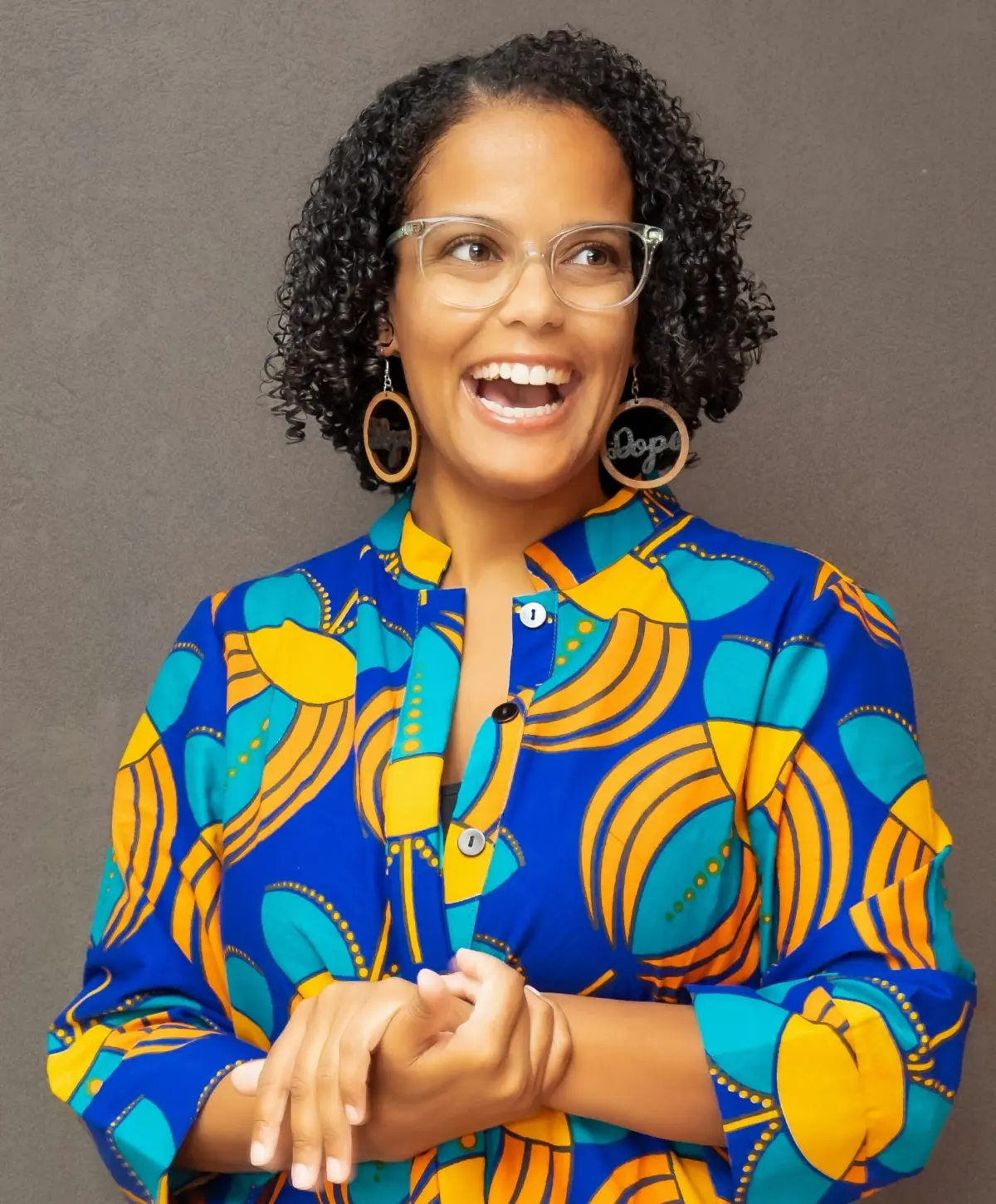
Dr. Wanyama—a recognized authority in adolescent vocal technique who serves on the faculty at The Blake School in Minneapolis and co-directs the Minnesota Chorale’s Youth Choirs—has published an authoritative back-to-school repertoire guide tailored specifically to emerging treble and changing voices. The curated collection draws from Graphite’s catalog of contemporary compositions, targeting the acute physiological, cognitive, and social-emotional transformations characteristic of middle school singers.
By highlighting works from contemporary composers Timothy C. Takach, Shara Nova, and Emily Drum, the initiative offers a structured framework designed to dismantle late-summer curriculum paralysis—frequently termed by educators as the "August Sunday scaries"—while establishing high standards for musical literacy, vocal health, and ensemble engagement from the outset of the school year.
Structural Timeline and Contextual Background
The Seasonal Imperative: Navigating Late-Summer Planning Paralysis
For choral directors, the weeks preceding the fall semester present a unique operational bottleneck. Unlike established adult or collegiate ensembles whose rosters and vocal ranges are predictable, middle-level ensembles feature wildly variable vocal distributions, fluctuating registration limits due to adolescent voice mutation, and disparate levels of prior musical literacy.
The traditional search for suitable repertoire often stalls under these constraints. Directors must secure pieces that are technically accessible within the first four to six weeks of school, yet sufficiently sophisticated to sustain artistic interest over a full semester. Dr. Wanyama notes that this planning paralysis often stems from the dual fears of pedagogical insufficiency and repertoire mismatch—concerns that can be mitigated through systematic, curiosity-driven repertoire evaluation.
       [ late Summer Repertoire Bottleneck ]
                         │
                         ▼
   ┌───────────────────────────────────────────┐
   │ Dynamic Factors in Middle School Ensembles│
   ├───────────────────────────────────────────┤
   │ 1. Adolescent Voice Mutation (Change)     │
   │ 2. Asynchronous Musical Literacy Rates    │
   │ 3. Social-Emotional & Attention Dynamics  │
   └───────────────────────────────────────────┘
                         │
                         ▼
       [ Solution: Flexible Repertoire Architecture ]
Curator Profile: Dr. Shekela Wanyama’s Pedagogical Continuum
Dr. Wanyama’s selection criteria are grounded in a diverse career spanning K–12, collegiate, and community choral leadership. Her background provides a comprehensive view of the continuum of vocal development:
- Secondary Education: Currently directing 6th–8th grade choirs at The Blake School (Minneapolis); previous appointments in the Columbia Heights and Hopkins School Districts (Minnesota) and the Lakeside School (Seattle).
- Youth Leadership: Co-director of the Minnesota Chorale’s Youth Choirs, overseeing pre-professional community youth ensemble training.
- Collegiate and Higher Education: Academic and conducting engagements at Hamline University (St. Paul) and the University of Minnesota–Twin Cities.
- Guest Conducting: Regular guest conductor for state and regional honor choirs and professional symphonic/choral crossovers.
This extensive cross-section of institutional experience informs a curatorial philosophy that rejects the historical bifurcation between "educational music" and "art music," advocating instead for contemporary scores that offer both pedagogical utility and genuine artistic merit.
Analytical Framework: The Mechanics of Middle-Level Voice Building
Addressing Adolescent Vocal Mutation and Range Constraints
The middle school choral classroom operates at the intersection of biological transition and musical skill acquisition. During early adolescence, the larynx undergoes rapid anatomical shifts, resulting in range instability, breathiness, pitch-matching difficulties, and physical discomfort—phenomena observed in both pubertal male voices (cambiata phases) and mutating female voices.
To address these physiological realities, Dr. Wanyama prioritizes compositions featuring:
- Supportive, Independent Accompaniments: Piano or instrumental textures that provide harmonic grounding without overwhelming delicate vocal lines.
- Flexible Voicing Structures: Works adaptable across unison, two-part (SA/TB), three-part treble (SSA), or mixed (SAB) configurations to accommodate fluctuating voice part assignments.
- Narrow Volleys and Stepwise Melodies: Vocal lines built predominantly on stepwise intervals and short scalar patterns, minimizing abrupt wide-interval leaps that trigger vocal cracking or registration breaks.
Social-Emotional Learning (SEL) and Kinesthetic Engagement
Beyond vocal mechanics, middle school singers require pedagogical strategies that channel high physical energy and build psychological safety. Contemporary choral literature increasingly incorporates kinesthetic elements—such as body percussion, rhythm games, and movement—to anchor metric stability and build ensemble cohesion.

| Pedagogical Objective | Mechanism in Curated Literature | Impact on Adolescent Learner |
|---|---|---|
| Rhythmic Internalization | Integrated body percussion & clapping patterns | Moves pulse from intellectual concept to physical reality; stabilizes tempo without relying on rigid conductor gestures. |
| Vocal Production & Timbre | Exploration of pop vocal techniques (e.g., controlled scoops, bright vowels) | Bridges informal vocal habits with formal technique; honors student culture while building acoustic resonance. |
| Sight-Singing Literacy | Diatonic, canon-based scalar melodies | Allows immediate application of solfege and rhythmic notation; facilitates learning both by ear and through score literacy. |
| Social Cohesion (SEL) | Student-centered texts; peer-to-peer interactive games | Fosters dynamic engagement, mitigates performance anxiety, and builds interpersonal trust. |
Repertoire Case Studies: Architectural Breakdown of Selected Works
Dr. Wanyama’s back-to-school selections from the Graphite Publishing catalog demonstrate how contemporary composition can directly solve common middle-level classroom challenges.
1. Timothy C. Takach’s "Spark and Breath"
- Voicing: Three-part canon (Flexible / Any combination of voices)
- Text Source: Original text by Timothy C. Takach
- Pedagogical Focus: Canonic imitation, rhythmic solfege, variable instrumentation, and kinesthetic games
Minnesota-based composer Timothy C. Takach designed "Spark and Breath" around a deceptively simple, highly adaptable canon. Built upon a straightforward diatonic melody, the piece is designed for rapid onboarding during the first weeks of the academic year.
[ Unison Scalar Line ] ──► [ Solfege / Ear Training ] ──► [ 3-Part Canonic Staggering ]
                                                                   │
                                                                   ▼
                                                       [ Body Percussion Layer ]
Musical & Structural Analysis
The composition functions as a modular canvas. The core thematic material can be introduced in unison, serving as a daily vocal warm-up or a practical vehicle for teaching solfege and rhythmic notation. Once the melody is internalized, the director can split the ensemble into a two- or three-part canon, allowing students to experience complex polyphonic harmony without the stress of holding entirely distinct melodic lines.
Takach incorporates explicit instructions for body percussion, including a structured clapping game executable in pairs or small groups while singing. The text—centered on intrinsic motivation, creative sparks, and personal passion—provides an immediate, non-intimidating entry point for guided classroom discussions during back-to-school community-building activities.
2. Shara Nova’s "Spring Hymns"
- Voicing: Treble Choir (SA / Two-part Treble) with Piano
- Movement Structure: Three-piece suite ("How Far Can A Bird Fly?", "Laudamus Sancta Matrem", "A Thief! A Thief!")
- Pedagogical Focus: Treble voice development, textural independence, historical modeling
Shara Nova—widely recognized as the principal architect behind the indie-rock project My Brightest Diamond and a frequent collaborator with Sufjan Stevens, The Decemberists, and A Far Cry—brings a modern aesthetic to treble literature. Modeled directly after Benjamin Britten’s iconic Friday Afternoons (Op. 7), Nova’s "Spring Hymns" delivers a sophisticated three-movement set tailored to young soprano-alto ensembles.
Movement I: "How Far Can A Bird Fly?"
 └─ Starts in pure unison ──► Transitions to 2-part canonical echo.

Movement II: "Laudamus Sancta Matrem"
 └─ Lilting 6/8 meter ───────► Mostly English text despite Latin title; develops compound meter fluency.

Movement III: "A Thief! A Thief!"
 └─ High-energy finale ──────► Dramatic rhythmic drive and artistic flourish.
Musical & Structural Analysis
- "How Far Can A Bird Fly?": Begins in a grounding unison before introducing two-part textures primarily through call-and-response and melodic echoing. This structural design pays homage to Britten’s "The Cuckoo," offering young singers a low-risk introduction to part independence.
- "Laudamus Sancta Matrem": Employs a lilting $6/8$ meter to teach compound metric feel. Despite its Latin title, the work utilizes accessible English text, allowing directors to focus on breath support, phrase shaping, and line continuity.
- "A Thief! A Thief!": Closes the trilogy with high dynamic energy, demanding sharp diction, rhythmic precision, and expressive dramatic commitment.
The suite can be performed in its entirety as a centerpiece for a fall concert or broken apart into standalone pieces for smaller performance settings.
3. Emily Drum’s "Let My Voice Be Heard"
- Voicing: SAB (Soprano, Alto, Baritone) and Piano
- Text Source: Written by Lucia May (Alabama middle school student), adapted by Emily Drum
- Pedagogical Focus: Changing male voices (Baritone range), contemporary vocal production, student agency
Composer Emily Drum, whose background in collegiate a cappella heavily influences her vocal writing, addresses one of the most critical challenges in middle school repertoire: the changing lower voice. Designed specifically for SAB ensembles or emerging high school choirs, "Let My Voice Be Heard" balances singable part-writing with modern vocal techniques.
[ Middle School Student Text (Lucia May) ]
                    │
                    ▼
[ SAB Harmony & Intuitive Piano Support ]
                    │
                    ▼
[ Modern Stylistic Elements: Scoops, Bright Vowels, Percussion ]
Musical & Structural Analysis
The piece’s text originates from Lucia May, an Alabama middle school student whose words were adapted by Drum. This authentic youth perspective yields an inspiring message that resonates with adolescent identity without sliding into superficiality.
Drum’s arrangement leverages intuitive piano lines to support the vocal parts, particularly the baritone line, which is restricted to a comfortable, stable tessitura ideal for mutating voices. The score actively encourages popular music techniques—such as stylistic vocal scoops, brighter forward vowels, and rhythmic body percussion—effectively bridging the gap between classical choral discipline and contemporary vocal idioms.
Official Statements and Curatorial Commentary
Discussing the broader artistic rationale behind the curation initiative, Dr. Shekela Wanyama highlighted the emotional and professional landscape directors navigate each August:

"August is like an interminable series of Sunday scaries. This is the time of year when I am certain I forgot how to teach over the summer, and I am sure I will never find ‘The Perfect Pieces’ for the first few weeks of school with my middle-level singers. Fortunately, I have enough experience now to know that neither of these things is true. I just need to breathe and jump into the repertoire search with curiosity. Once I find those first few pieces, the rest of the planning starts to fall into place."
Reflecting on the unique artistic demands of adolescent musicians, Dr. Wanyama emphasized the necessity of matching physical vocal parameters with high-level intellectual content:
"It is not easy to find repertoire for middle-level voices that matches the singers’ vocal needs while fully engaging their musical and literary minds, social-emotional intelligence, and remarkable imaginations. When I am programming, I look for harmonically and rhythmically supportive accompaniments; independent vocal lines; singable—but not simplistic—melodies; relatable texts rich with imagery, metaphor, form, and wonder; opportunities for student input; and—especially at the beginning of the year—flexibility in voicing."
She concluded:
"Identifying repertoire with these traits in mind helps me remember that I actually DO know how to teach, and there’s a whole world of music out there to explore! Feeling curious, confident, creative, and playful are surefire ways to diminish those August/Sunday scaries."
Future Outlook: The Evolution of Middle-Level Choral Publishing
The collaboration between Dr. Shekela Wanyama and Graphite Publishing reflects a broader paradigm shift within music publishing and music education. Historically, middle school choir music was dominated by rigid, highly formulaic arrangements that often undervalued the intellectual and artistic capacity of young singers.
Graphite Publishing’s guest-curator model underscores several key trends reshaping the field:
- Decentralization of Conventional Voicing: Publishers are increasingly prioritizing modular scores that can be adapted dynamically based on real-time classroom demographics (e.g., transitioning seamless from Unison to 2-Part or SAB based on voice changes).
- Cross-Genre Compositional Voices: Enlisting composers from indie, pop, and classical backgrounds—such as Shara Nova and Emily Drum—has injected modern harmonic palettes, contemporary rhythmic structures, and authentic vocal idioms into school curricula.
- Student-Centered Textual Curation: A shift away from overly simplistic or archaic texts toward themes of identity, agency, environmental stewardship, and youth advocacy, directly supporting institutional Social-Emotional Learning (SEL) goals.
- Kinesthetic Integration: The deliberate incorporation of body percussion, movement, and peer-to-peer games directly into the score, acknowledging that physical movement is crucial for rhythmic internalization and adolescent engagement.
As directors return to their rehearsal rooms, the integration of adaptable, contemporary repertoire offers a proven pathway forward. By aligning vocal pedagogy with the physiological and social realities of the adolescent singer, educators can transform early-autumn planning anxiety into a foundation for a successful academic year.