
Executive Overview
The intersection of artificial intelligence and the commercial music industry has long since crossed the threshold from speculative tech-futurism into the realm of contentious, daily reality. As generative models become increasingly sophisticated—capable of mimicking the nuances of human vocal timbre, harmonic structures, and genre-specific lyrical cadences—musicians, legal scholars, and corporate executives find themselves grappling with profound existential questions. Enter pop powerhouse and daytime talk show host Kelly Clarkson.
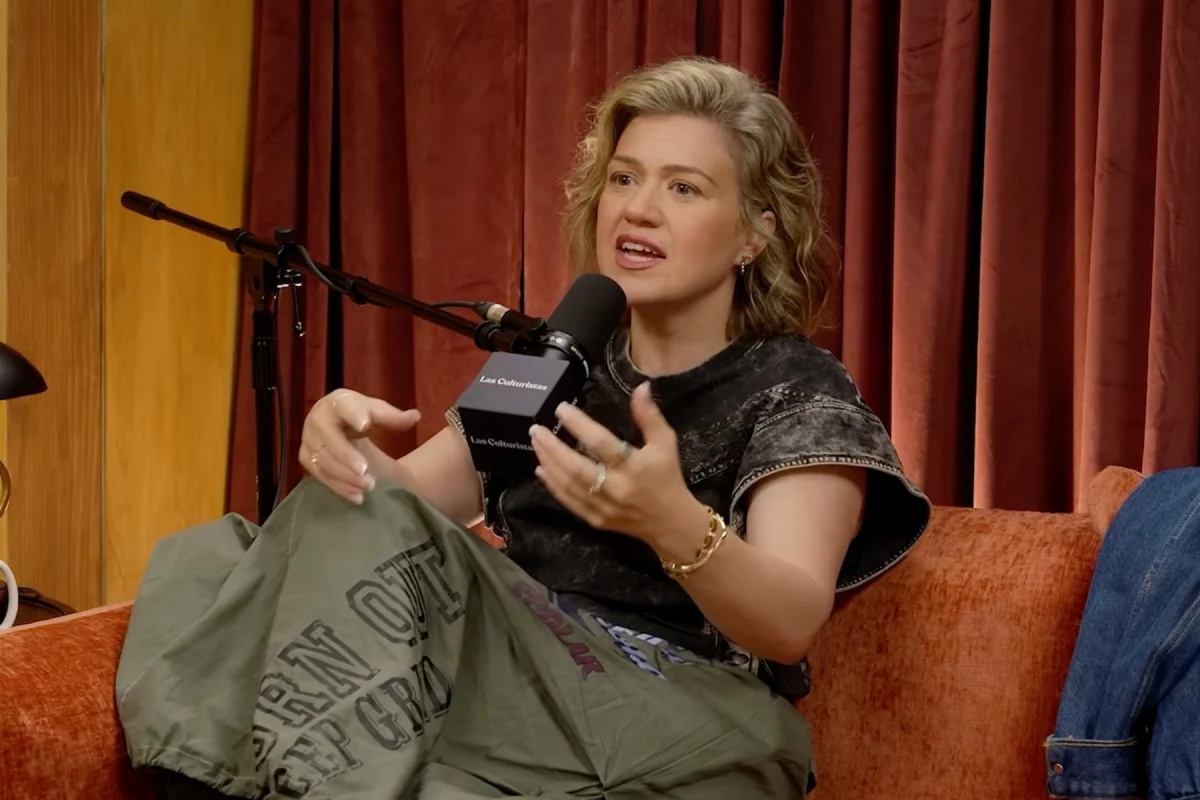
During a recent, wide-ranging appearance on the popular cultural commentary podcast Las Culturistas, hosted by Matt Rogers and Bowen Yang, Clarkson offered a characteristically candid perspective that immediately disrupted the industry’s heavily polarized discourse. While major record labels orchestrate high-stakes copyright lawsuits against AI platforms like Suno and Udio for allegedly training models on unlicensed master recordings, Clarkson charted a decidedly nuanced middle course. Embracing the artistic utility of generative artificial intelligence while fiercely defending the sanctity of human artistry, the Grammy Award-winning artist suggested a radical structural adaptation: the creation of dedicated, separate charts for algorithmically generated music.
Clarkson’s intervention arrives at a critical juncture. The music ecosystem is presently engaged in a high-stakes balancing act. Major trade organizations, data agencies such as Luminate, and industry-defining publications like Billboard are scrambling to establish transparent tracking frameworks, ensuring that audiences can reliably distinguish between flesh-and-blood performers and synthetic audio creations. This in-depth report examines Clarkson’s polarizing comments, contextualizes them within the broader legal and commercial battles defining the modern music business, and evaluates how the industry is restructuring to accommodate—and regulate—the algorithmic frontier.
Detailed Chronology: The Evolution of the AI Music Debate
To fully understand the weight of Kelly Clarkson’s recent commentary, it is necessary to trace the rapid escalation of generative AI within the commercial entertainment sector over the past several years.
Phase 1: The Novelty and Unauthorized Deepfakes (2022–Early 2023)
The modern era of AI-generated music effectively began with open-source experiments and viral novelties. Early milestones included deepfaked vocal models that grafted the voices of Drake, The Weeknd, and Ariana Grande onto entirely original, machine-composed compositions. While internet users marveled at the eerily accurate recreations, major entertainment conglomerates recognized an immediate, existential threat to intellectual property rights. The viral sensation "Heart on My Sleeve"—an AI-generated track mimicking Drake and The Weeknd—sent shockwaves through the industry before being aggressively scrubbed from major streaming platforms following copyright infringement notices from Universal Music Group (UMG).
Phase 2: Commercialization and Legal Retaliation (Mid 2023–2024)
As consumer-facing generative platforms such as Suno, Udio, and Stable Audio emerged from stealth mode, they democratized the music production process. Users could prompt a text-based interface to generate fully realized radio-ready pop, rock, or electronic tracks within seconds.
However, this democratization was built on contentious foundations. In mid-2024, the Recording Industry Association of America (RIAA), acting on behalf of major labels including UMG, Sony Music Entertainment, and Warner Music Group, launched coordinated federal lawsuits against Suno and Udio. The plaintiffs alleged massive, willful copyright infringement, asserting that these AI companies systematically scraped copyrighted catalogs to train their neural networks without compensating human creators.
Phase 3: Institutional Adaptation and Chart Transparency (Late 2024–Present)
Recognizing that generative technology could not simply be litigated out of existence, industry arbiters began establishing protocols to manage its integration. In August 2024, Billboard reaffirmed its institutional commitment to transparency, implementing strict protocols to track and label any artificially generated content that manages to break into mainstream consumption metrics. Simultaneously, Luminate announced technological initiatives designed to identify and tag AI-created sound recordings at the metadata level, protecting the integrity of chart data.
It is precisely within this tense, highly regulated environment that Kelly Clarkson’s remarks on Las Culturistas exploded into the cultural zeitgeist, challenging the industry to reconsider how it views algorithmic participation.
Supporting Context & Metrics: The State of AI in the Audio Ecosystem
The debate over artificial intelligence is not merely philosophical; it is grounded in rapidly shifting consumption patterns, legal battles, and economic realities. To grasp the significance of Clarkson’s call for separate charts, one must examine the metrics defining the current audio marketplace.
The Proliferation of Generative Output
According to recent industry analytics from Luminate, tens of thousands of newly generated audio tracks are uploaded to digital service providers (DSPs) daily. This unprecedented influx threatens to overwhelm traditional discovery algorithms and dilute royalty pools for human artists. The economic anxiety is palpable: independent musicians and major label superstars alike fear a race to the bottom, where platforms flooded with infinite, low-cost synthetic tracks marginalize human-created art.
The Copyright Conundrum
At the heart of the legal battles between record labels and AI developers lies the doctrine of "fair use" versus willful misappropriation. Generative models require massive datasets to learn musical structures, chord progressions, and vocal inflections. Tech companies argue that their training methods mirror how human musicians absorb influences throughout their lives. Conversely, legacy rightsholders maintain that ingesting copyrighted master recordings without authorization constitutes mass piracy on an unprecedented industrial scale.
Consumer Appetite and Psychological Differentiation
Consumer response to AI music remains deeply fractured. While casual listeners often enjoy the novelty of generating personalized soundtracks or hearing mashups of impossible collaborations, deep emotional attachment overwhelmingly remains anchored to human vulnerability. As Clarkson astutely pointed out during her podcast appearance, the modern listener’s appetite is broad, but the desire to connect with genuine human lived experience remains paramount.
Official Statements and Industry Perspectives
Kelly Clarkson’s appearance on Las Culturistas provided a masterclass in articulating the tension between artistic enthusiasm and structural protectionism.
"Controversial? I don’t care: I love AI," Clarkson declared to hosts Matt Rogers and Bowen Yang, leaning into the controversy surrounding her stance. "There are very amazing things with AI that I’m obsessed with. I’m into it artistically, too. I have fun with it."
Acknowledging the pervasive hostility toward the technology within creative circles, Clarkson argued that the prevailing industry narrative is overly simplistic.
"I think it’s welcome to the table — I think it’s really cool what we’re going to create with AI musically," Clarkson explained. "I think it’s a fun field to play in, but I don’t think they should be competing with humans."
The core of her proposition centers on chart governance and economic parity. By suggesting that synthetic creations should occupy a distinct, parallel ecosystem rather than vying directly with human artists on mainstream charts, Clarkson touched upon a logistical puzzle that data analysts and chart compilers are already attempting to solve.
"When you see AI artists competing on a chart with humans, I have an issue," she noted. "I think there should be a separate chart… I think it is interesting, and there are so many amazing scientific things that are happening. I don’t think it’s going anywhere, but you have to be able to differentiate. We can’t lose human. There can be an appetite for both is what I’m saying."
Institutional Responses: Billboard and Luminate
In tandem with public debates among artists, industry gatekeepers are hardening their operational policies. Silvio Pietroluongo, Billboard’s executive vice president of charts and data partnerships, emphasized the necessity of cross-industry collaboration during the publication’s policy rollout regarding algorithmic tracking:
"Ensuring transparency around AI-generated music requires collaboration across the entire industry from artists and labels to DSPs, technology companies and industry organizations," Pietroluongo stated. "We’re encouraged by the development of new identification tools and will continue testing and leveraging solutions across the ecosystem, to ensure our charts continue to accurately and responsibly reflect music consumption."
These sentiments underscore a unified institutional goal: preserving the historical integrity of music charts while acknowledging that technological evolution is an immutable fact of the modern digital economy.
Future Outlook: Where Does the Industry Go From Here?
As the dust settles on the initial wave of lawsuits and cultural debates, the trajectory of artificial intelligence in the music industry points toward a heavily regulated, bifurcated future. Kelly Clarkson’s vision of separate charts may initially sound utopian, but industry architects are already building the technological scaffolding required to make such differentiation possible.
1. Technological Watermarking and Metadata Standards
The immediate future will see the widespread adoption of cryptographic watermarking and standardized metadata protocols. Technologies developed by companies like Luminate, combined with toolsets from major tech firms, will automatically tag audio files at the point of creation. This ensures that streaming services, independent aggregators, and chart compilers can instantly identify the provenance of any given audio file.
2. Legal Precedents and Licensing Frameworks
The ongoing federal lawsuits against platforms like Suno and Udio will likely culminate in landmark legal precedents or forced licensing agreements. Rather than completely banning generative models, the industry will likely establish a legal framework wherein AI developers pay mandatory statutory licensing fees to rightsholders, mirroring how mechanical royalties function for cover songs and radio broadcasts.
3. The Revaluation of Human Authenticity
Paradoxically, as generative AI floods the market with frictionless, algorithmically optimized sound, genuine human imperfection, live instrumentation, and deeply personal storytelling are poised to become hyper-valued luxury commodities. Artists who emphasize their physical presence, raw vocal delivery, and authentic human narratives will find themselves shielded by an audience desperately seeking emotional resonance in an increasingly synthetic world.
Conclusion
Kelly Clarkson’s intervention on Las Culturistas cuts through the hyperbole that frequently paralyzes discussions around music and technology. By refusing to adopt a dogmatic, anti-tech stance while simultaneously drawing a hard line in the sand regarding human economic and artistic sovereignty, she has provided a pragmatic blueprint for the future. As the music industry continues to adapt, institutional leaders, legal frameworks, and artists alike must heed her fundamental warning: embrace innovation, utilize the tools of tomorrow, but above all else, refuse to lose the human element at the heart of musical expression.