
Executive Overview
For educators, conductors, performers, and industry professionals across the global instrumental music community, December marks the most anticipated annual pilgrimage on the professional calendar: The Midwest Clinic. Scheduled for December 16–18, 2026, at the sprawling McCormick Place West facility in Chicago, Illinois, the 80th installment of this historic conference promises an unprecedented gathering of the world’s finest wind and orchestra ensembles, world-class clinicians, and groundbreaking music technology exhibitors.
However, beneath the glittering veneer of premiere performances, inspiring conducting symposiums, and expansive exhibit halls lies an environmental reality that frequently catches first-time attendees—and even seasoned veterans—entirely off guard: the brutal Chicago winter. A pristine itinerary, immaculate concert attire, and a folder full of conference sessions can be instantly derailed by biting sub-zero temperatures, the relentless, bone-chilling gusts off Lake Michigan, and the sheer physical toll of navigating miles of convention center concrete.
Transitioning from a climate-controlled rehearsal room or southern classroom into the hyper-urban, wind-tunnel environment of downtown Chicago requires strategic foresight. Packing for the Midwest Clinic is not merely an exercise in filling a suitcase; it is an exercise in survival, logistics, and professional preparedness. This comprehensive report, drawing on veteran attendee insights, ergonomic considerations, and specialized gear recommendations, serves as the definitive manual for conquering the elements, maintaining physical wellness, protecting performance readiness, and maximizing professional output during the milestone 80th anniversary of the Midwest Clinic.
Detailed Chronology: The Lifecycle of a Midwest Clinic Attendee
To understand what to pack, one must first understand the grueling arc of a typical conference day. A successful strategy accounts for the shifting environments and physical stressors encountered hour by hour.
Phase 1: The Transit and Arrival
The journey begins at home, transitions through TSA checkpoints, and terminates on the icy sidewalks of the Windy City. Attendees must manage bulky winter garments alongside formal concert wear. The primary hazard here is thermal shock—moving rapidly from heated terminals and shuttle buses into the glacial Chicago air. If your transition gear is inadequate, the cold penetrates immediately, constricting muscles, numbing extremities, and setting a miserable tone for the start of the conference. Furthermore, checked baggage handling can be unpredictable; critical performance items left in checked bags can lead to catastrophic pre-concert anxiety.
Phase 2: The Marathon Convention Floor (Daytime Operations)
Once inside McCormick Place West, the climate shifts dramatically. While the exterior demands arctic survival gear, the interior convention center is aggressively heated, packed with thousands of bodies, and characterized by endless expanses of hard concrete floors. Attendees spend ten to twelve hours daily standing, walking, rushing between clinics, networking in crowded lobbies, and evaluating exhibits. The physiological impact of this phase is profound: dehydrated skin, aching arches, lower back fatigue, and minor dietary or beverage mishaps that can ruin professional attire.
Phase 3: Evening Performances and Social Networking
The evening brings formal concerts, alumni receptions, and industry dinners. Here, the professional standard demands "concert black" or formal business attire. Transitioning directly from an all-day exhibition crawl to an evening gala requires quick-fix solutions for minor wardrobe malfunctions—such as a dropped dab of Italian red sauce from a hurried dinner or a coffee spill during a rushed networking session—without access to full laundry facilities.
Supporting Context & Metrics: The Anatomy of Convention Fatigue
Environmental Realities of Chicago in December
Historical meteorological data for Chicago in mid-December reveals average high temperatures hovering near 35°F (1.7°C) and lows plunging well below freezing to around 24°F (-4.4°C). However, these ambient numbers fail to capture the true meteorological antagonist of the Midwest Clinic: wind chill. Because McCormick Place sits adjacent to Lake Michigan, winter winds routinely sweep across the open water, driving perceived temperatures ten to fifteen degrees lower. Humidity levels inside heated indoor venues drop precipitously, accelerating physical dehydration and dermal cracking.
The Physical Toll of McCormick Place
McCormick Place is the largest convention center in North America, boasting over 2.6 million square feet of exhibition space. Walking from the main entrance to the furthest workshop room can easily equate to a mile-long trek.
- Surface Impact: Walking on unyielding concrete for three consecutive days exerts roughly 60 to 100 tons of cumulative pressure on the lower extremities per individual.
- Hydration Deficit: Convention centers utilize commercial HVAC systems that circulate dry, recycled air. Coupled with the physical exertion of fast-paced walking and vocal strain from networking in loud exhibition halls, attendees experience accelerated fluid loss, directly impacting cognitive focus, vocal health, and mucosal membrane integrity—a critical concern for wind and brass players.
Essential Packing Blueprint: Tactical Gear for the 80th Midwest Clinic
To inoculate yourself against the environmental and logistical hazards of the conference, your suitcase must be packed with intentional, multi-functional, and battle-tested items.
1. Layering Systems: Beyond the Basic Coat
A standard winter coat is insufficient for a Chicago convention. The secret to thermal regulation lies in the classic three-layer mountaineering model, adapted for urban professional environments:
- The Base Layer (Thermal Undergarments): Pack moisture-wicking long-sleeve undershirts and thermal leggings. These fit seamlessly beneath professional trousers and dress shirts, trapping body heat without adding bulky silhouettes. It is infinitely easier to shed a thermal layer when entering a warm ballroom than it is to manufacture warmth when the wind whips through the convention center breezeways.
- The Mid-Layer: Sweaters, cardigans, or lightweight fleece pullovers that complement professional attire.
- The Outer Shell: A wind-resistant, waterproof winter coat with a substantial hood.
- Accessories: Insulated gloves (preferably touchscreen-compatible so you can navigate transit apps in the cold), a dense wool scarf, and ear-covering headwear.
- The Pro-Item: Rechargeable electronic hand warmers. A single charge provides hours of continuous heat, transforming a painful outdoor walk between transit stops into a manageable stroll.
2. The Ergonomic Multiplier: Compression Socks
The single most transformative item for a music educator’s suitcase is a high-quality pair of graduated compression socks. While traditionally associated with medical use or long-haul flights, compression socks are a well-kept secret among veteran convention-goers.
- The Science: They apply gentle, consistent pressure to the lower legs, maintaining blood flow and reducing swelling (edema) caused by prolonged standing on concrete floors.
- The Benefit: By preventing blood from pooling in the lower extremities, compression socks dramatically reduce muscle fatigue, lower back strain, and end-of-day exhaustion. Crucially for musicians and directors attending formal events, modern compression socks are available in sleek, solid black variants that blend seamlessly with standard concert black attire.
3. The Performance Emergency Kit
Do not leave your musical readiness to chance or rely on an emergency dash to a local pharmacy minutes before a performance. Construct a compact, dedicated "Performance Emergency Kit" and place it in an outer pocket of your carry-on:
- Instrument Essentials: Multiple boxes of fresh reeds, valve oil, cork grease, spare strings, pencils, and valve guards.
- Wardrobe Backups: Extra dress socks, hosiery, discrete hair ties, bobby pins, and specialized collar stays.
- Format: Keep it compartmentalized in a lightweight pouch; the goal is readiness, not bulk.
4. Dermal Defense: Advanced Hydration Maintenance
The combination of Chicago’s biting outdoor air and the arid indoor climate of McCormick Place wreaks havoc on skin integrity.
- Lip Balm and Intensive Hand Lotion: Standard hotel-provided toiletries are rarely heavy enough to combat industrial-strength winter dryness. Pack heavy-duty, travel-sized barrier creams (containing ingredients like shea butter, dimethicone, or petrolatum) and keep them in your coat pocket or portfolio at all times. Failure to protect knuckles and cuticles can lead to painful cracking within forty-eight hours.
5. The Unorthodox Life-Saver: Concentrated Dish Soap
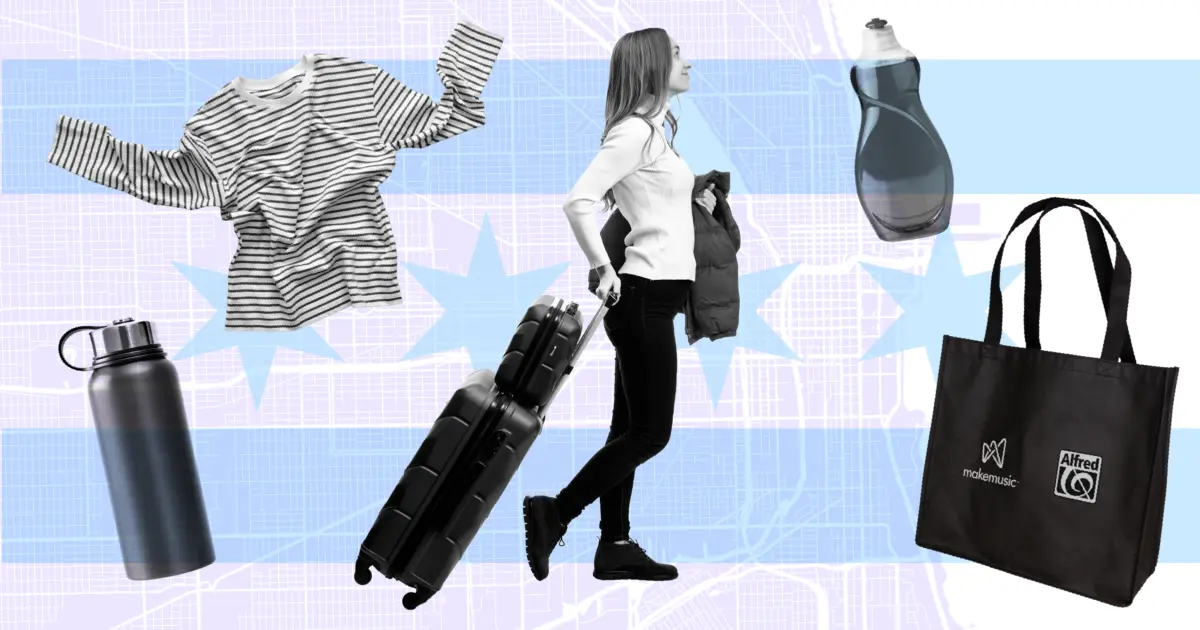
Ask any seasoned travel veteran what unorthodox item they refuse to leave home without, and the universal answer is a small, travel-sized bottle of concentrated dish soap. While it may elicit raised eyebrows from travel companions, its utility is unmatched:
- Reusable Bottle Hygiene: Rinsing out protein shakes, coffee remnants, or sticky electrolyte drinks from reusable water bottles in hotel sinks requires more than just hot water.
- Emergency Stain Removal: The absolute highest probability hazard at any professional convention is food-related accidents—a drop of espresso on a crisp white shirt, a splash of marinara sauce during a rushed networking dinner, or mustard from a convention center lunch. Applying a drop of concentrated dish soap directly to the stain, working it in gently, and applying heat from a hotel hair dryer can lift stubborn oil and protein-based stains in minutes, saving an outfit that was designated for the next morning’s main-stage presentation.
6. Hydration Strategy: The Reusable Water Bottle
Navigating a convention of this scale requires active hydration. While McCormick Place is exceptionally proactive in providing modern, filtered water bottle refilling stations throughout its public concourses, purchasing disposable bottled water at convention center kiosks can quickly become an unnecessary financial drain (with single bottles frequently marked up to exorbitant venue prices). Bring a durable, insulated stainless steel water bottle. It keeps water ice-cold, saves money, and reduces single-use plastic waste across the three-day event.
7. Logistics Management: The Dirty/Clean Bag System
Packing efficiently for a winter trip means maximizing spatial economy. A collapsible canvas tote or specialized laundry bag serves a dual purpose:
- Outbound Journey: Use it to pack dirty or bulky footwear (such as extra dress shoes or winter boots not worn on the plane) inside your main suitcase, protecting your clean garments from shoe soles.
- Inbound Journey: Hang the bag in your hotel bathroom throughout the conference to act as a discrete, centralized hamper. At the conclusion of the event, zip the entire bag full of worn garments back into your luggage, making post-trip unpacking at home as simple as transferring the bag directly into your household washing machine.
8. Space Optimization for Music, Literature, and Souvenirs
The exhibit hall at the Midwest Clinic is a treasure trove of new publications, pedagogical texts, promotional scores, and institutional swag. Finding yourself with a substantially heavier and fuller suitcase on the return journey is an annual tradition.
- Tactical Packing: Leave deliberate empty volume in your primary luggage, utilize vacuum-compression space bags to shrink bulky winter sweaters, or pack a lightweight, foldable duffel bag that can be checked separately on the return flight.
Official Statements and Exhibitor Insights
As the 80th Midwest Clinic approaches, organizers and foundational partners emphasize the importance of preparation and engagement.
Navigating the Exhibit Hall Floor
With hundreds of leading publishers, instrument manufacturers, and educational technology companies converging on McCormick Place West, managing booth visits efficiently is paramount. MakeMusic, a perennial fixture of the exhibition floor, highlights the logistical realities of acquiring physical scores on-site.
"The exhibit hall is designed to inspire," notes a MakeMusic logistical coordinator. "Directors discover phenomenal new repertoire, but carrying heavy octavos and full conductor scores around the convention floor for six hours can exhaust even the strongest attendees. If your suitcase reaches maximum capacity, or if you simply prefer not to lug physical scores through airports, utilize our exhibitor services. Attendees can visit the MakeMusic Booth (Booth 1139) to examine materials firsthand and order music straight to their door via the MakeMusic Shop, ensuring access to exclusive conference discounts and giveaways without adding physical weight to their return luggage."
Conference Registration and Official Resources
Official organizers reiterate that preparation extends beyond physical packing to administrative readiness. Attendees are strongly encouraged to complete their registration early via official channels to secure housing blocks close to McCormick Place and avoid long processing lines on opening morning. Comprehensive schedules, masterclass sign-ups, shuttle bus routes, and interactive exhibit hall maps are continuously updated at the official portal, midwestclinic.org.
Future Outlook: The Evolution of Professional Music Conferences
As the Midwest Clinic marks its momentous 80th anniversary in December 2026, the nature of professional music education conventions continues to evolve. Combining state-of-the-art digital music distribution platforms with time-tested pedagogical traditions, the conference remains the premier nexus for the global band and orchestra community.
By marrying high-level musical inquiry with practical, street-smart logistical planning—embracing thermal layering systems, ergonomic aids like compression socks, targeted performance emergency kits, and smart packing strategies—attendees can insulate themselves from the physical friction of winter travel. Walk into McCormick Place West fully prepared, protect your health and your wardrobe, and immerse yourself fully in three days of world-class artistry, innovation, and professional fellowship.