
Executive Overview
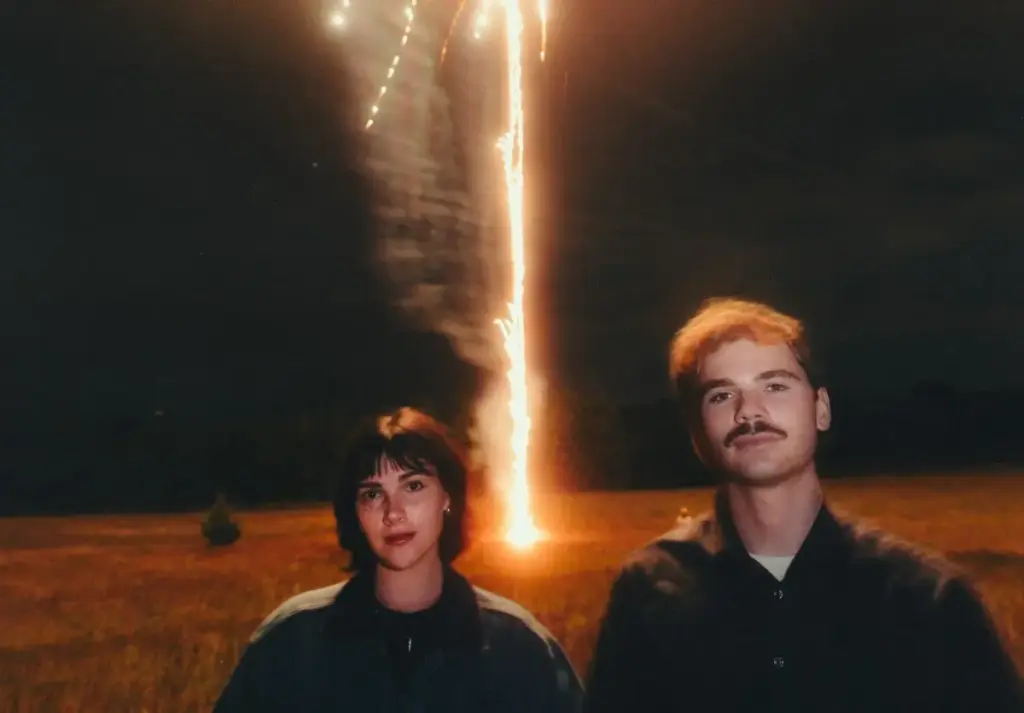
For a band that once seemed perpetually dogged by a cruel cycle of medical emergencies, sudden disasters, and existential roadblocks, the runway to their third full-length album felt suspiciously serene. Slow Pulp—the Chicago-based, Wisconsin-rooted quartet that recently found themselves playing the role of coveted special guests on the nostalgia-heavy, millennial-sobfest anniversary tour pairing The Postal Service and Death Cab for Cutie—have officially entered a new era of creative stability. Yet, as music history frequently proves, creative breakthroughs rarely arise from utter comfort.
If their prior records were forged in the crucible of real-world chaos—including severe health crises that nearly derailed their trajectory—Melodie arrives in the absence of catastrophe. Paradoxically, this newfound calm provoked the band into manufacturing their own internal turbulence. The result is a daring, structurally restless record that hums with the unmistakable confidence of a band coming aggressively into its own.
Melodie, the group’s second release for the indie powerhouse Anti- Records, refuses to stay still. Across its runtime, the album shapeshifts from pastoral indie-folk and glistening ’80s jangle-pop to driving new-wave motors and bruising slowcore. While this stylistic acrobatics course results in occasional pacing friction, it ultimately establishes Slow Pulp not merely as genre tourists, but as master architects of a dynamic, mercurial indie-rock soundscape.
Bolstered by the outside production prowess of Elliott Kozel—who successfully pushed the band to surrender a degree of insular control—Melodie marks a pivotal maturation point. Frontwoman Emily Massey anchors the sprawling sonic experiments with her characteristically candid lyricism and emotive delivery, while guitarist Henry Stoehr, bassist Alex Leeds, and drummer Teddy Mathews operate at the absolute peak of their collective powers. Slow Pulp may still cast frequent, nostalgic glances toward their past, but with Melodie, they are marching definitively into a blindingly bright future.
Detailed Chronology: From Wisconsin Roots to the Major Leagues
To understand the magnitude of Melodie, one must trace the winding, often harrowing journey that brought Slow Pulp to this juncture. The band’s lineage stretches back to their high school days in Wisconsin, where Massey, Stoehr, Leeds, and Mathews first began cutting their teeth in cramped basements and local DIY spaces. Back home, the songwriting process was collaborative, fluid, and deeply intuitive—a tight-knit dynamic forged in the fires of Midwestern winters and youthful ambition.
Upon relocating to Chicago, the band steadily built a dedicated following by refusing to anchor themselves to a singular aesthetic. Their early output and debut releases captured a sizeable audience through a misty, lo-fi reimagining of 2010s dream-pop tropes. It was an inviting, atmospheric introduction, but it barely hinted at the stylistic volatility to come.
When the time came to craft their sophomore effort, Slow Pulp pulled off a critical coup by shifting gears. They discarded the hazy dream-pop textures in favor of a sharp, incisive homage to ’90s alternative rock and Americana-tinged indie. This calculated pivot won over high-brow critics and expanded their fanbase exponentially, proving that their initial success was no fluke.
Yet, the road to these musical triumphs was chronically plagued by dark clouds. While recording and touring their earlier material, the band faced a relentless barrage of adversity. Severe illness, debilitating medical setbacks, and logistical disasters threatened to tear the project apart at the seams. Each record felt like a miraculous survival artifact—a testament to resilience in the face of physiological and circumstantial collapse.
Thus, entering the recording sessions for Melodie, the psychological landscape was entirely foreign. For the first time, the band wasn’t reacting to immediate trauma or fighting off disaster. Instead, they faced a blank canvas and the daunting task of defining what kind of indie rockers they actually wanted to be, once and for all. Rather than resting on the commercial laurels of their ’90s-leaning era, Slow Pulp deliberately tossed out the rulebook. Across Melodie, the band changes key and genre touchstones not once, but three distinct times, opting for a restless artistic evolution over predictable comfort.
Supporting Context & Metrics: The Anatomy of a Sonic Evolution
The sonic architecture of Melodie is a masterclass in controlled unpredictability, defying simple metric classification by constantly shifting its emotional and structural weight.
The album’s opening salvo immediately challenges listener expectations. It begins with back-to-back strolls through the quiet, contemplative expanses of modern indie-folk. At first blush, this understated introduction risks feeling slightly underwhelming—a jarring gear-check for those expecting the immediate crunch of their previous work. However, this restraint is a calculated narrative device. The rosy, wistful nostalgia of tracks like "Yellow and Green" resonates with profound depth only once the listener understands where the tracklist is ultimately headed. The delicate plucking of the banjo underpinning the seemingly mundane meditations of "These Days" acts as a sonic anchor, establishing a baseline of vulnerability before the storms roll in.
As the album progresses, any lingering, superficial associations with the "grungegaze" tag are systematically obliterated by "Better Man." Driven by a brilliant, shimmering burst of ’80s guitar tone and unflinching lyricism regarding personal shortcomings, the track serves as a stylistic demarcation line. Melodie proves vastly superior precisely because it refuses to anchor itself in a single, profitable lane of contemporary indie music.
Much of this structural fluidity can be attributed to an unprecedented production decision: inviting outside producer Elliott Kozel into the inner sanctum. For a band fiercely protective of their home-cooked creative process, yielding control was a gamble. It paid off exponentially. Kozel unlocked a hidden second gear within the ensemble, coaxing career-best performances from the rhythm section.
Consider the momentum of "Red Car," a standout moment that races toward life’s next station like a finely tuned new wave machine. Powered by Teddy Mathews’ relentless, propulsive go-go beat and the supercharged, melodic basslines of Alex Leeds, the track demonstrates an exhilarating command of tempo. While minor critiques might be leveled at the album’s sequencing—specifically the decision to downshift into slowcore during the final stretch, where tracks like "Like Me" occasionally blur into the background before being brilliantly rescued by the distortion-laden emotional heft of "Spill"—the overarching trajectory remains a triumph. The pacing blips are minor structural footnotes on a record that consistently compensates through sheer emotional honesty.
Official Statements & Artistic Perspectives
At the beating heart of Slow Pulp’s operation is frontwoman Emily Massey, whose vocal delivery and lyrical candor transform Melodie from an intellectual exercise into a deeply felt human document. Throughout the promotional cycle for the record, Massey and her bandmates have been remarkably candid about the intentionality behind their artistic choices.
"I won’t forget the past," Massey bares on the album’s devastating, redemptive closing ballad, before adding with characteristic self-awareness: "I don’t think I’d let myself do that." This line encapsulates the thematic weight of Melodie: a record that honors historical trauma and youthful hardship without allowing itself to be permanently defined or paralyzed by it.
If the album has an unequivocal star, it is Massey. She possesses the rare ability to infuse a track with disparate emotional frequencies simultaneously. On the title track, she sells a moment of punkish, defiant rebellion with a perfectly placed, conversational "ugh." On "Up To You"—an almost glacial, slow-burning composition anchored by a melody that refuses to waver—she asserts her emotional boundaries with unwavering authority: "I know I want you to meet me where I am."
Behind the scenes, guitarist Henry Stoehr has similarly stepped back into the spotlight, reclaiming a more prominent role in the core songwriting mechanics. This creative realignment mirrors the foundational days of Slow Pulp back in Wisconsin, restoring a sense of organic, unforced collaboration that had occasionally been strained by the external pressures of their rapid career ascension.
In interviews, the band has consistently emphasized that while their gaze occasionally drifts backward to honor where they came from, they are structurally incapable of standing still. They are intimately aware of their musical lineage—evidenced by subtle nods to classic pop-rock structures and an acknowledged, deep-seated affinity for legacy songwriters like Bruce Hornsby—yet they weaponize this history to push contemporary indie rock into uncharted territories.
Future Outlook: The Road Ahead for Slow Pulp
As Melodie settles into the cultural consciousness, the horizon for Slow Pulp looks remarkably expansive. Having survived the gauntlet of personal crises that threatened their early years, and having successfully navigated the treacherous sophomore slump through sheer adaptability, the band now stands on the precipice of major-tier indie royalty.
Their recent stint supporting iconic acts like The Postal Service and Death Cab for Cutie exposed them to massive, devoted audiences who appreciate literate, emotionally resonant alternative music. Yet, rather than catering exclusively to that demographic’s appetite for comfortable nostalgia, Slow Pulp used the institutional confidence gained from those arena-sized rooms to make a sharper, more challenging record.
The trajectory from lo-fi dream-pop experimenters to ’90s-adjacent revivalists, and finally to the multi-textured, genre-agnostic architects of Melodie, outlines a trajectory of relentless professional growth. They are a band that refuses to stagnate, continuously pushing their own boundaries and inviting outside collaborators into their creative ecosystem without ever losing their distinct identity.
If their current rate of artistic progression is any indicator, the growing pains of sequencing and stylistic pacing will only give way to even greater cohesion on future releases. Pretty soon, a vastly larger population of listeners won’t just be glancing their way—they will be fully tuned in, humming along to the complex, beautiful melodies of a band that has finally found its footing without ever losing its soul. Slow Pulp’s future is not merely promising; it is essential listening.