The Opera Theatre of Saint Louis (OTSL) has officially unveiled its comprehensive casting and creative roster for a highly anticipated, brand-new staging of Giuseppe Verdi’s timeless masterpiece, La Traviata. Scheduled as a cornerstone of the company’s prestigious 2027 Festival Season, this production promises to breathe fresh theatrical and musical life into one of the most frequently performed and deeply beloved operas in the global repertoire.
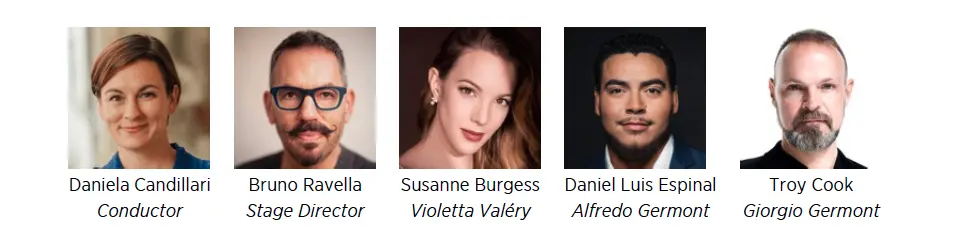
Set to run for a strictly limited engagement of seven performances from May 29 through June 27, 2027, the production showcases a formidable alliance of visionary stage direction, masterful musical leadership, and a stellar trio of principal vocalists. At the podium, OTSL Principal Conductor Daniela Candillari will command the orchestra, driving a sonic landscape that matches the emotional depth of Verdi’s soaring score. Meanwhile, acclaimed stage director Bruno Ravella will helm the visual and dramatic interpretation, bringing a stylish, contemporary lens to a narrative that has captivated audiences since its premiere in 1853.
Headlining the production as the tragic, iconic courtesan Violetta Valéry is celebrated soprano Susanne Burgess, whose anticipated return to the OTSL stage is already generating intense excitement among critics and opera aficionados alike. She will be joined by rising-star tenor Daniel Luis Espinal as her impassioned lover, Alfredo Germont, and seasoned baritone Troy Cook, who will portray the rigid and moralizing father figure, Giorgio Germont.
This announcement arrives as part of OTSL’s ongoing mission to blend time-honored operatic traditions with bold, contemporary storytelling. Under the leadership of Artistic Director Patricia Racette—herself a legendary interpreter of Violetta—the company continues to cement its reputation as an adventurous crucible for world-class opera in the American Midwest. This comprehensive report explores the creative forces shaping the 2027 production, the detailed chronology of the engagement, the historical and artistic context of La Traviata, and what this ambitious staging signals for the future trajectory of the Opera Theatre of Saint Louis.
Detailed Chronology and Production Timeline
The path to the curtain rising on May 29, 2027, represents years of meticulous artistic planning, administrative coordination, and logistical structuring typical of a world-class summer festival like OTSL. Understanding the timeline of this production provides valuable insight into the rigorous standards required to mount a major opera from scratch.
The Planning and Conception Phase (2024–2025)
Long before casting announcements are made public, the artistic leadership of an opera house engages in deep developmental work. For OTSL, the conceptualization of the 2027 La Traviata began quietly behind closed doors. Artistic Director Patricia Racette, drawing upon her decades of international experience inhabiting the role of Violetta on the world’s greatest stages—including the Metropolitan Opera, San Francisco Opera, and the Vienna State Opera—began formulating a vision for the company’s next definitive staging of the work.
Collaborating with director Bruno Ravella, Racette sought a creative partner capable of stripping away nineteenth-century conventions without losing the visceral, emotional core of Francesco Maria Piave’s libretto. Ravella, known for his sleek, psychologically acute stagings across European and American houses, developed a contemporary conceptual framework that emphasizes the timelessness of Violetta’s social isolation, the transactional nature of the Parisian demi-monde, and the crushing weight of bourgeois hypocrisy.
Concurrently, orchestral planning commenced with Principal Conductor Daniela Candillari. Tasked with molding the sonic architecture of the season, Candillari initiated score studies to tailor the musical pacing of the 2027 production to the acoustic signature of the Loretto-Hilton Center stage, ensuring a seamless integration between the pit and the vocalists.
Casting Realization and Rehearsal Scheduling (2025–2026)
Securing top-tier vocal talent years in advance is one of the chief challenges of modern opera administration. OTSL’s triumph in securing Susanne Burgess for the grueling, tour-de-force role of Violetta Valéry was a multi-step process anchored in her triumphant house debut in Donizetti’s Don Pasquale. Recognizing Burgess’s rare combination of pyrotechnic vocal agility, profound dramatic intelligence, and magnetic stage presence, Racette moved swiftly to lock in the soprano for the centerpiece role of the 2027 season.
The casting process continued with the recruitment of tenor Daniel Luis Espinal, whose radiant voice and sensitive stage portrayals have marked him as one of the most promising young tenors of his generation. To anchor the generational conflict at the heart of the drama, veteran baritone Troy Cook was brought aboard to embody Giorgio Germont, bringing decades of vocal authority and nuanced acting to the role of the patriarch whose demands shatter the lovers’ paradise.
The 2027 Festival Season Run
The operational schedule for La Traviata forms a critical anchor within the broader 2027 OTSL Festival Season. Operating under the company’s unique repertory system—where multiple operas are rehearsed and performed in close rotation—the production schedule demands absolute precision from its cast and crew.
May 29, 2027: Opening Night performance, marking the official launch of the production and drawing critics, patrons, and cultural leaders from across the nation.
Early to Mid-June 2027: A tightly paced sequence of mid-run performances, allowing the cast to deepen their characterizations and adapt to the live, shifting chemistry with the festival audiences.
June 27, 2027: Closing Night performance, bringing the 2027 staging to its emotional culmination and concluding OTSL’s summer festival run.
Supporting Context & Metrics: The Artistry and Legacy of La Traviata
To fully appreciate the significance of OTSL’s upcoming 2027 production, one must examine the historical weight of Verdi’s masterwork and the institutional metrics that define the Opera Theatre of Saint Louis as a cultural powerhouse.
The Genesis and Evolution of an Opera Masterpiece
Based on Alexandre Dumas fils’s semi-autobiographical novel and play La Dame aux camélias (The Lady of the Camellias), La Traviata ("The Fallen Woman") premiered at La Fenice in Venice on March 6, 1853. Famously, the opening night was a notorious fiasco—not due to the music, but largely because the contemporary dress staging shocked 19th-century sensibilities, and the tenor cast as Alfredo was visibly unwell, while the robust soprano playing the consumptive Violetta inadvertently drew mockery from the audience.
Verdi, unfazed, revised the score and lived to see the opera become one of the most triumphant rehabilitation stories in musical history. Today, La Traviata stands as one of the most frequently performed operas worldwide, celebrated for its revolutionary psychological realism, its hauntingly lyrical melodies (such as the iconic drinking song "Libiamo ne’ lieti calici" and the heartbreaking aria "Addio del passato"), and its unsparing critique of bourgeois hypocrisy.
The OTSL Institutional Profile
Founded in 1976, the Opera Theatre of Saint Louis has carved out a distinct and highly respected niche in the American cultural landscape. Operating during the late spring and early summer months, OTSL is nationally and internationally renowned for several key institutional pillars:
The English-Language Tradition: True to its founding ethos, OTSL presents all of its mainstage operas in English translation (though notable exceptions or specific artistic choices occasionally arise, the company pioneered accessible opera by breaking down language barriers for regional audiences).
The Emerging Artist Programs: The company serves as a vital incubator for young talent, launching the careers of world-renowned singers such as Christine Brewer, Nathan Gunn, Gerald Finley, and Patricia Racette herself.
The Festival Atmosphere: Set on the campus of Webster University, the Loretto-Hilton Center offers an intimate 896-seat auditorium where every seat is close to the stage, fostering an unusually direct, immersive connection between performers and audience members. No patron is seated more than thirteen rows away from the orchestra pit.
Commitment to New Work: Alongside standard repertoire pillars like La Traviata, OTSL has premiered nearly thirty-0one world and American operas, balancing tradition with bold contemporary curation.
Official Statements and Artistic Vision
The announcement of the 2027 production was accompanied by profound reflections from the company’s leadership, offering a window into the artistic philosophy guiding the upcoming festival season.
Patricia Racette on the Timelessness of the Work
Artistic Director Patricia Racette, whose own definitive interpretations of Violetta remain etched in opera history, spoke passionately about why La Traviata demands a return to the Saint Louis stage:
"I am deeply excited to see ‘La traviata’ back on Opera Theatre’s stage," Racette stated in the official press release. "Verdi created characters who feel astonishingly real, led by a heroine who confronts impossible choices with poise and grace. Bruno Ravella has articulated a stylish, contemporary vision for this new production that reveals just how timeless this opera remains."
Racette’s unique perspective as a former soprano who inhabited the role brings an extraordinary level of empathetic mentorship to the current cast. Her personal understanding of the vocal and emotional toll required to sing Violetta informs her curation of the creative team.
Praising the Return of Susanne Burgess
Racette expressed unbridled enthusiasm for the production’s leading lady, linking Burgess’s past triumph at OTSL directly to her casting as Violetta:
"We also couldn’t be more thrilled to welcome Susanne Burgess back in the tour-de-force role of Violetta," Racette continued. "Her house debut in Don Pasquale was one of the most exciting, electrifying performances I’ve had the privilege to witness at OTSL, and I have absolute confidence that she will be even more powerful in ‘La traviata.’"
The Creative Leadership: Candillari and Ravella
The pairing of Principal Conductor Daniela Candillari and director Bruno Ravella guarantees a cohesive, high-voltage artistic partnership. Candillari, celebrated for her dynamic leadership, precision, and deep theatrical intuition in both standard and contemporary repertoires, will draw out the symphonic richness of Verdi’s orchestrations. From the shimmering, ethereal high strings of the prelude depicting Violetta’s lingering consumption to the brutal, martial brass outbursts that punctuate the party scenes, Candillari’s command of the score will provide the dramatic engine for the production.
Bruno Ravella, meanwhile, brings a reputation for visually striking, emotionally honest stagings. By framing La Traviata through a contemporary lens, Ravella’s direction is expected to interrogate the societal pressures that commodify women, drawing direct parallels between 19th-century Parisian high society and modern-day obsession with celebrity, wealth, and moral judgment.
The Cast: Profiles of Vocal Excellence
Mounting La Traviata successfully stands or falls on the shoulders of its three principal singers. OTSL has assembled a triumvirate of vocalists equipped to handle the staggering technical and emotional demands of Verdi’s score.
Susanne Burgess as Violetta Valéry
The role of Violetta is universally acknowledged as one of the most demanding assignments in the soprano repertoire. Often described as requiring "three voices in one," the role demands the coloratura agility and sparkling high notes of a light lyric soprano in Act I (exemplified by the show-stopping aria "Sempre libera"), the warm, dramatic center and sustained emotional legato of a full lyric soprano in Acts II and III ("Amami, Alfredo"), and the tragic, fragile vulnerability of a dramatic soprano facing imminent death in the final act.
Susanne Burgess enters this monumental role backed by critical acclaim and a proven track record of vocal mastery. Her previous house debut in Don Pasquale established her as a performer of rare charisma and technical precision. As Violetta, Burgess will have the opportunity to showcase her dramatic range, charting the tragic metamorphosis of a cynical courtesan into a woman capable of profound, self-sacrificing love.
Daniel Luis Espinal as Alfredo Germont
Tenor Daniel Luis Espinal steps into the role of the ardent, hot-headed young provincial who falls hopelessly in love with Violetta. Alfredo requires a lyric tenor with a soaring, romantic tone, capable of conveying youthful innocence, intense jealousy, and, ultimately, crushing remorse.
Espinal’s rapidly expanding career has been marked by praise for his honeyed tone, expressive phrasing, and natural stage presence. His chemistry with Burgess will be the emotional axis upon which the central tragedy turns, particularly in their sun-drenched country idyll in Act II and the harrowing public humiliation scene at Flora’s party.
Troy Cook as Giorgio Germont
Baritone Troy Cook completes the principal trio as Alfredo’s stern father, Giorgio Germont. The role of the elder Germont is a masterclass in vocal diplomacy and moral authority. He must first appear as an unyielding antagonist who manipulates Violetta into sacrificing her happiness for the sake of his family’s bourgeois reputation, before softening into a figure of remorse and paternal pity in the opera’s dying moments.
Cook, a celebrated fixture on North American and European stages, brings a rich, resonant baritone and deep theatrical intelligence to the role. His confrontation duet with Violetta in Act II—one of the longest and most dramatically complex scenes in all of nineteenth-century opera—will undoubtedly serve as a dramatic highlight of the 2027 festival.
Future Outlook and Cultural Impact
As the Opera Theatre of Saint Louis looks toward its 2027 Festival Season, the announcement of this bold new La Traviata signals a confident institution poised at the intersection of reverence and innovation.
Expanding the Audience Base
By entrusting a canonical masterpiece to a visionary modern director like Bruno Ravella and casting dynamic, contemporary artists like Susanne Burgess and Daniel Luis Espinal, OTSL is actively working to dismantle the perception of opera as a museum art form. The production is designed not merely to entertain traditional subscribers, but to attract new, younger demographics who seek relevant, emotionally resonant storytelling that speaks to contemporary human experiences of love, illness, social ostracization, and redemption.
Economic and Tourism Impact
Major summer opera festivals serve as vital economic engines for their host regions. The OTSL Festival Season traditionally draws thousands of cultural tourists from across the United States and international destinations to Saint Louis, driving patronage for local hotels, restaurants, and hospitality businesses. A headline-grabbing production of La Traviata featuring a powerhouse cast is expected to generate significant cultural tourism, reinforcing Saint Louis’s status as a premier destination for world-class performing arts.
A Defining Moment for OTSL
Ultimately, the 2027 mounting of La Traviata will be measured by how deeply it moves its audiences and how effectively it reinterprets a familiar score for a modern world. With Patricia Racette’s expert artistic oversight, Daniela Candillari’s musical rigor, Bruno Ravella’s theatrical imagination, and Susanne Burgess’s star power at the helm, the production is positioned to be a landmark artistic achievement—one that will resonate long after the final, heartbreaking chords of Verdi’s masterpiece fade into the Saint Louis summer night.
Tickets and subscription packages for the Opera Theatre of Saint Louis 2027 Festival Season, featuring La Traviata, will be available through the official OTSL box office and website.