
LONDON — In a landmark development for the capital’s cultural infrastructure, Sinfonia Smith Square has been awarded a substantial £200,000 grant from the prestigious Wolfson Foundation. This vital funding injection will directly underwrite Doors Open: Transforming Lives Through Music, the most ambitious and comprehensive redevelopment of the Grade I listed Smith Square Hall since its historic conversion into a premier classical music venue in 1969.
The multi-million-pound capital project aims to achieve a delicate balance between rigorous architectural conservation and modern civic utility. By transforming the underutilized subterranean crypt into a vibrant educational hub, enhancing accessibility for disabled patrons and performers alike, and securing the building’s removal from Historic England’s precarious Heritage at Risk Register, the initiative is poised to redefine the intersection of heritage preservation and community-driven arts programming in the heart of Westminster.
Executive Overview: A Visionary Transformation for Westminster’s Architectural Crown
At its core, the Doors Open project is designed to future-proof one of London’s most acoustically revered and architecturally significant landmarks. Smith Square Hall—originally constructed as St John’s Smith Square in the early 18th century—has long held a revered status among musicians and concertgoers. However, decades of continuous use have taken their toll on the fabric of the Grade I listed structure, necessitating a holistic intervention that addresses both structural decay and modern functional demands.
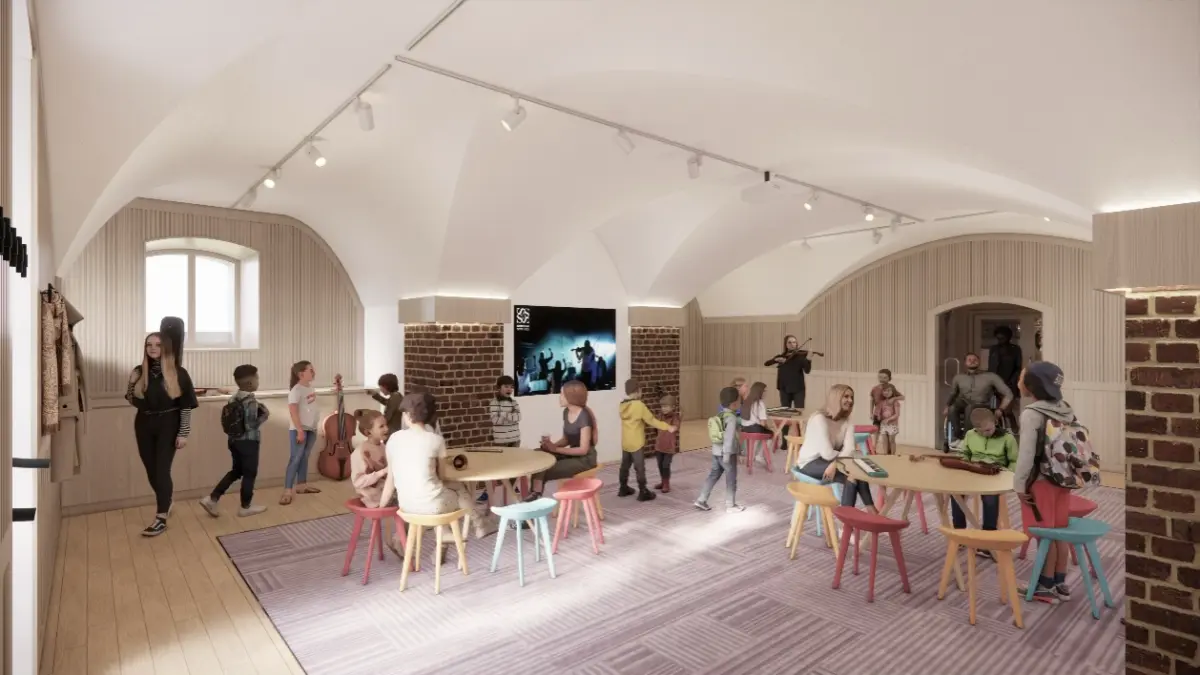
The £200,000 grant from the Wolfson Foundation serves as a critical catalyst for the broader fundraising campaign required to execute the vision. By targeting key areas of the building, the redevelopment will radically expand the venue’s operational capacity. Most notably, the transformation of the crypt will create a purpose-built environment for educational outreach, providing local schools and community groups with a dedicated creative space that was previously impossible within the historic layout.
Furthermore, the project will overhaul the venue’s infrastructure to support the next generation of classical talent. Sinfonia Smith Square—internationally recognized for its pioneering orchestral Fellowship programme—will benefit from vastly improved rehearsal facilities. These enhancements will ensure that the musicians who form the lifeblood of the organization can train in conditions that meet contemporary professional standards.
When the dust settles on construction and the doors reopen to the public, projected for 2029, the transformed Smith Square Hall expects to welcome upwards of 90,000 visitors annually. This renaissance is not merely about restoring stonework and mortar; it is a deliberate strategy to democratize classical music, making a historic monument fully accessible to a diverse, modern audience.
Detailed Chronology: From Baroque Masterpiece to Modern Cultural Hub
To understand the magnitude of the Doors Open project, it is essential to trace the architectural and institutional evolution of Smith Square Hall, a journey spanning nearly three centuries of British history.
[1714–1728] Architectural Construction (Thomas Archer)
       │
       ▼
[1941] Blitz Damage (Severe Destruction during WWII)
       │
       ▼
[1969] Secular Conversion (Reborn as a Concert Hall)
       │
       ▼
[2002] Establishment of the Orchestral Fellowship Programme
       │
       ▼
[2026] Wolfson Foundation £200k Grant Awarded
       │
       ▼
[Late 2027] Projected Commencement of Construction
       │
       ▼
[2029] Anticipated Grand Reopening (90,000+ Annual Visitors)
The Origins: Baroque Splendour and Wartime Devastation
Designed by the visionary Baroque architect Thomas Archer and constructed between 1714 and 1728, St John’s Smith Square was originally built as one of the ambitious "Fifty New Churches" commissioned by an Act of Parliament. Recognized immediately for its striking, monumental exterior—featuring four iconic corner towers often playfully compared to upturned tables—the church stood as a masterpiece of English Baroque architecture.
However, the building’s fortunes changed dramatically during the Second World War. During the Blitz of 1941, an incendiary bomb pierced the roof, gutting the interior and leaving little more than the charred perimeter walls standing. For decades, the shell of the church remained a haunting reminder of wartime destruction, seemingly destined for demolition or permanent dereliction.
The 1969 Renaissance: Birth of a Concert Venue
The salvation of the building arrived in the late 1960s through the tireless efforts of Lady Parker and a dedicated committee of preservationists and music lovers. Recognizing the church’s sublime natural acoustics—sparked by its wooden barrel-vaulted ceiling and spacious stone interior—they spearheaded a meticulous reconstruction.
In 1969, the building reopened not as a house of worship, but as Smith Square Hall, a secular concert venue that quickly cemented its reputation as one of London’s finest spaces for chamber music, choral performances, and orchestral recitals. For over half a century, it has hosted legendary performers, chamber ensembles, and broadcast recordings, serving as an indispensable pillar of the UK’s classical music ecosystem.
The Modern Era: Integrating Heritage and Community
As the decades progressed, the demands placed upon cultural venues shifted dramatically. Audiences rightly began to expect universal accessibility, state-of-the-art facilities, and deep community engagement—areas where a rigidly protected 18th-century building faced significant physical constraints.
The establishment of Sinfonia Smith Square’s orchestral Fellowship programme in 2002 further highlighted the need for upgraded infrastructure. While the Fellowship successfully nurtured hundreds of early-career musicians, the venue lacked the dedicated ancillary spaces required to maximize its educational and training potential.
The announcement of the Wolfson Foundation grant in August 2026 marks the culmination of years of strategic planning, setting the stage for construction to begin in late 2027 and paving the way for a transformative reopening in 2029.
Supporting Context & Metrics: Unpacking the Impact of Doors Open
The Doors Open: Transforming Lives Through Music initiative is underpinned by a robust framework of quantitative targets and architectural interventions. To fully grasp the significance of the Wolfson Foundation’s £200,000 contribution, one must examine the specific metrics and operational shifts the project will deliver.
1. Removing the Stigma: The Heritage at Risk Register
One of the most pressing drivers for the redevelopment is the physical preservation of the building itself. Currently listed on Historic England’s Heritage at Risk Register, Smith Square Hall suffers from latent structural vulnerabilities, weathering of its Portland stone exterior, and outdated internal environmental controls. The comprehensive conservation work funded in part by the Wolfson grant will address these structural deficiencies, ensuring the building is structurally sound and securing its delisting from the "at-risk" inventory.
2. Subterranean Innovation: The Crypt Learning Centre
Historically, the crypt beneath Smith Square Hall has been underutilized, often serving as basic storage or holding areas. The Doors Open project will completely reimagine this subterranean space. By converting the crypt into a dedicated learning and workshop hub, the venue will unlock new capacities for:
- School Outreach Programs: Hosting interactive music workshops for primary and secondary students from surrounding London boroughs.
- Community Engagement: Providing an intimate, accessible venue for grass-roots music-making, adult education, and creative arts therapy sessions.
- Collaborative Residencies: Offering community arts organizations a physical base of operations within central Westminster.
3. Elevating Talent: The Orchestral Fellowship Programme
Since its inception in 2002, the Sinfonia Smith Square Fellowship has been a gold standard for professional orchestral training, supporting over 700 early-career musicians as they transition from conservatoire study to professional employment. The redevelopment will introduce enhanced rehearsal studios and dressing facilities tailored specifically to the needs of the Fellowship. These upgraded spaces will allow resident musicians to rehearse, record, and mentor in an integrated environment that mirrors top-tier international performance standards.
4. Economic and Cultural Footprint
Beyond artistic merit, the project is designed to catalyze economic activity and audience growth. Prior to the planned closure for construction, the venue attracted steady footfall, but the physical barriers of the building limited its reach. Post-2029, with improved accessibility ramps, modernized lifts, and open-plan public concourses, Sinfonia Smith Square projects an influx of over 90,000 visitors annually. This surge will not only enrich the local Westminster economy through increased hospitality and tourism spending but will also cement the Hall’s position as a national cultural asset.
Official Statements and Stakeholder Perspectives
The announcement of the £200,000 Wolfson Foundation grant has elicited widespread praise from leaders across the heritage, philanthropy, and classical music sectors, highlighting the collaborative ethos driving the project forward.
Representatives for the Wolfson Foundation emphasized the charity’s long-standing commitment to funding excellence in education, science, and the arts. In a joint statement regarding the grant allocation, foundation trustees noted:
"The Wolfson Foundation is delighted to support Sinfonia Smith Square in this visionary chapter of its history. Smith Square Hall is an architectural masterpiece with a storied musical legacy. By backing the ‘Doors Open’ project, we are not simply investing in the physical conservation of a Grade I listed building; we are unlocking its potential to serve as an inclusive, dynamic center for community learning and youth development. We look forward to seeing how these transformations enrich the lives of performers and visitors for generations to come."
Leadership at Sinfonia Smith Square echoed this sentiment, expressing deep gratitude for the foundational support that validates the scale of their ambition. Speaking on behalf of the organization’s executive board, a senior spokesperson remarked:
┌─────────────────────────────────────────────────────────┐
│              SINFONIA SMITH SQUARE VISION               │
├─────────────────────────────────────────────────────────┤
│ "This transformative grant from the Wolfson Foundation  │
│  is a monumental vote of confidence in our future.      │
│  'Doors Open' represents our commitment to honoring     │
│  our architectural heritage while boldly expanding our  │
│  civic responsibility. We are building a home where     │
│  world-class performance and grassroots community       │
│  engagement live under the same roof."                  │
└─────────────────────────────────────────────────────────┘
Furthermore, historic preservation advocates and arts policy experts have lauded the project as a masterclass in adaptive reuse. By addressing the dual imperatives of historic conservation and accessibility compliance, the initiative serves as a blueprint for how legacy arts institutions across the United Kingdom can successfully navigate the structural and financial realities of the 21st century.
Future Outlook: The Road to 2029 and Beyond
As Sinfonia Smith Square looks toward the commencement of construction in late 2027, the organization faces a period of rigorous logistical planning. Coordinating a capital project of this scale within the strict parameters of a Grade I listed Westminster landmark requires meticulous engineering, archaeological sensitivity, and continued philanthropic fundraising.
However, the momentum generated by the Wolfson Foundation’s £200,000 grant provides a powerful tailwind. The leadership team remains confident that the wider donor community, corporate partners, and public funding bodies will rally behind the vision of a fully restored, highly accessible, and educationally empowered Smith Square Hall.
When the venue officially reopens its doors in 2029, the transformation will be absolute. No longer hindered by physical decay or spatial limitations, Smith Square Hall will stand as a shining example of cultural resilience. It will continue to echo with the sublime strains of orchestral masterpieces while simultaneously opening its crypt to a new generation of schoolchildren, nurturing young Fellows, and welcoming a broader, more diverse public than ever before in its illustrious history.