
Executive Overview
For thirty years, the sultry sounds of John Kander and Fred Ebb’s jazz-infused score have echoed off the velvet walls of the Ambassador Theatre, anchoring a cultural phenomenon that has fundamentally altered the landscape of modern musical theatre. On November 16 at 7 PM, the Tony Award-winning revival of Chicago will mark its monumental 30th-anniversary milestone with a star-studded gala performance designed to celebrate not only its own historic longevity, but the very lifeblood of the industry that sustains it.
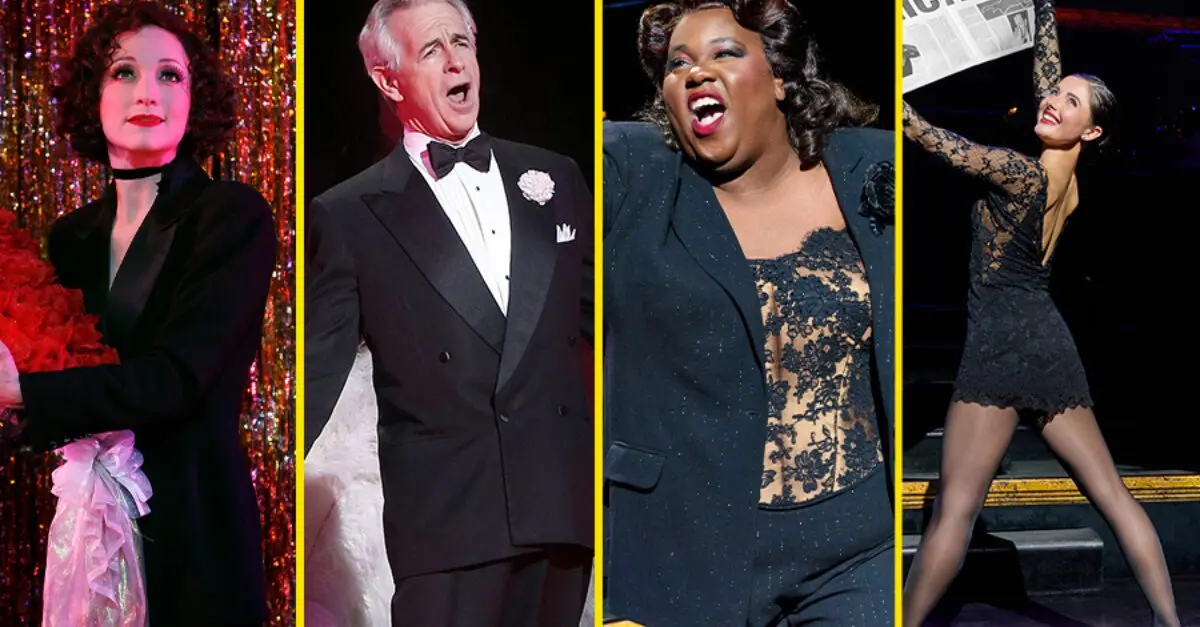
The upcoming gala is far more than a routine victory lap for Broadway’s longest-running active show and longest-running American musical in history. Produced by Barry and Fran Weissler, the special evening serves as a major charitable endeavor, with all proceeds directly benefiting the Entertainment Community Fund’s specialized dance programs. To honor three decades of razzle-dazzle, the celebratory performance will feature the triumphant return of original 1996 Broadway company members Bebe Neuwirth and James Naughton, both of whom captured Tony Awards for their iconic portrayals of Velma Kelly and Billy Flynn. They will be joined by an illustrious roster of past and present franchise luminaries, including Robyn Hurder, Whitney Leavitt, Ariana Madix, Alex Newell, and Reece Weaver, alongside a series of unannounced surprise guests.
Behind the glittering sequins, patent-leather heels, and iconic bowler hats lies a gritty theatrical survivor. What began as a modest three-performance concert presentation under the New York City Center Encores! banner in the spring of 1996 has mutated into an unstoppable global juggernaut. Having played in more than 500 cities across roughly 38 countries to an estimated audience of over 35 million people worldwide, Chicago occupies a rarefied air in theatrical history. It stands as the second-longest-running production in Broadway history, trailing only the shuttered titan The Phantom of the Opera. As the production looks toward its fourth decade, this anniversary celebration offers a poignant moment to examine the alchemy of Fosse choreography, sharp satirical book-writing, and savvy commercial producing that transformed a mid-1970s box office disappointment into an eternal standard of theatrical excellence.
Detailed Chronology: From City Center Experiment to Broadway Immortality
The genesis of Broadway’s modern Chicago can be traced back to a theatrical climate vastly different from today’s risk-averse commercial ecosystem. When the original production—directed and choreographed by the legendary Bob Fosse, with a book by Fosse and Fred Ebb, and music and lyrics by Kander and Ebb—opened at the 46th Street Theatre on June 3, 1975, it was met with mixed critical reception and an uphill commercial battle. Competing directly with Michael Bennett’s zeitgeist-capturing backstage epic A Chorus Line, the cynical, vaudeville-styled satire of murder, media sensationalism, and corrupt jurisprudence ran for a respectable 936 performances before closing on August 27, 1977. While respected within theatre circles, the show was largely viewed as a brilliant artifact of its time, overshadowed by its dark tone and avant-garde aesthetic.
Nearly two decades later, New York City Center took a calculated artistic gamble. In May 1996, the institution’s fledgling Encores! series—which dedicated itself to concert stagings of overlooked or forgotten American musicals—programmed a stripped-down, concert version of Chicago. Helmed by director Walter Bobbie with vital, idiomatic choreography recreation by Ann Reinking (who also starred as Roxie Hart alongside Bebe Neuwirth’s Velma Kelly), the production was mounted with minimal sets and costumes, featuring actors performing with scripts in hand while seated on chairs flanking the onstage orchestra.
The response was immediate and incandescent. Critics and audiences alike recognized that Fosse’s vocabulary and Kander and Ebb’s biting score were not dated, but rather prophetic in an era increasingly dominated by tabloid journalism and televised trials. Seizing momentum with breakneck speed, producers Barry and Fran Weissler transferred the concert staging directly to Broadway’s Richard Rodgers Theatre, where it officially opened on November 14, 1996.
The production’s subsequent nomadic journey through the Broadway district only added to its legendary status. After playing the Richard Rodgers through February 1997, the show executed a seamless transfer to the Shubert Theatre, anchoring there for nearly six years until January 26, 2003. Three days later, on January 29, 2003, Chicago moved into its current, permanent home at the Ambassador Theatre. By settling into the intimate, 1,100-seat confines of the Ambassador, the production found its ideal acoustic and spatial home. The physical intimacy of the house accentuates the Brechtian directness of the staging, placing the audience squarely in the crosshairs of the musical’s cynical gaze.
Supporting Context & Metrics: The Scale of a Global Phenomenon
To fully comprehend the magnitude of Chicago‘s 30th-anniversary milestone, one must examine the staggering metrics that define its commercial and cultural footprint. As of 2024, the revival holds the distinct title of the longest-running American musical in Broadway history, having surpassed historic benchmarks through sheer endurance, adaptive casting strategies, and a fiercely disciplined operating model.
Box Office and Attendance Milestones
- Global Audience: Over 35 million theatregoers have experienced Chicago across its various incarnations.
- Geographic Reach: The production has played in more than 525 cities across 38 countries, including the United States, the United Kingdom, Canada, Australia, Germany, Japan, Brazil, Sweden, Argentina, Mexico, Russia, South Africa, Italy, Denmark, the Netherlands, Spain, France, and South Korea.
- Current Standing: It stands firmly as the second-longest-running show in the history of Broadway, second only to Andrew Lloyd Webber’s The Phantom of the Opera.
The Current Broadway Company
The longevity of the New York production is maintained by a dynamic ensemble combining seasoned veterans with exciting contemporary talent. The current company leading the Ambassador Theatre engagement features:
- Reece Weaver as Roxie Hart
- Lissa deGuzman as Velma Kelly
- Max von Essen as Billy Flynn
- NaTasha Yvette Williams as Matron “Mama” Morton
- Red Concepción as Amos Hart
- J. Workman as Mary Sunshine
The foundational architecture of the show is further upheld by a tireless ensemble: Tia Altinay, Ronnie S. Bowman Jr., Austin Dunn, John Michael Fiumara, Danielle Marie Gonzalez, Chelsea James, Christopher Kelley, James T. Lane, Jenny Laroche, Marty Lawson, Joseph London, Kristen Faith Oei, Denny Paschall, Mariah Reives, Sean Samuels, Samantha Sturm, Jeff Sullivan, and Elizabeth Yanick.
International and Touring Expansion
While the Ambassador Theatre remains the spiritual heart of the franchise, Chicago functions as a perpetual global enterprise.
- International Tours: The English-language international tour continues its extensive route, having recently played in China with upcoming engagements slated for Dubai (UAE), Mumbai (India), and Manila (the Philippines).
- Localized Productions: A dedicated Korean-language production is scheduled to open in Seoul on December 5.
- European Revival: In February 2027, a massive U.K., Ireland, and European tour will relaunch, covering more than 35 stops with confirmed engagements in cultural hubs such as Wimbledon, Liverpool, Manchester, Dublin, Belfast, and Lugano, Switzerland.
Official Statements and Charitable Impact: Giving Back to the Community
While the anniversary gala on November 16 is designed to thrill musical theatre aficionados with nostalgic appearances and world-class performances, its core mission remains deeply philanthropic. All proceeds from the evening will directly benefit the dance programs of the Entertainment Community Fund.
Formerly known as The Actors Fund, the Entertainment Community Fund is a national human services organization dedicated to meeting the complex, often volatile needs of professionals working across the performing arts and entertainment industries. Offering comprehensive support systems focused on health and wellness, career and life transition, and affordable housing, the Fund has acted as an essential safety net since its establishment in 1882.
The decision to channel the 30th-anniversary gala’s proceeds specifically toward dance programs acknowledges the physical toll exacted by the rigorous choreography pioneered by Bob Fosse and adapted by Ann Reinking. Dancers form the vital kinetic engine of Chicago, executing precise, isolated, and physically demanding movements eight times a week over decades of performances. By supporting these artists through healthcare initiatives, injury recovery, and career counseling, the gala ensures that the community sustaining the art form receives protection in return.
In statements regarding the milestone, producers Barry and Fran Weissler have consistently emphasized that the success of Chicago belongs as much to the theatrical community and its devoted audiences as it does to its creators. Their stewardship of the property since the 1996 revival has established a masterclass in theatrical longevity, proving that intelligent marketing, strategic stunt-casting of global celebrities alongside Broadway veterans, and an unwavering commitment to the integrity of the original design can keep a classic fresh across generations.
Future Outlook: The Next Decade and Beyond
As Chicago gazes past its third decade on Broadway, the production faces an enviable and unprecedented horizon. Few works in the dramatic canon have managed to transition from period-specific revivals into timeless institutions capable of indefinite reinvention.
The secret to the show’s future-proofing lies in its structural DNA. Because Bob Fosse’s minimalist staging relies primarily on bodies moving through space against John Lee Beatty’s stark brick wall and John Ken Billington’s dramatic lighting, the production is uniquely liberated from the heavy, capital-intensive mechanical burdens that plague contemporary mega-musicals. There are no falling chandeliers, descending helicopters, or hydraulic stage transformations to maintain; instead, the entire theatrical weight rests squarely on the shoulders of the actors, the musicians seated prominently center stage in their classic bandstand, and the kinetic genius of the choreography.
This structural simplicity allows the production to continually refresh its creative vocabulary through casting. By routinely inviting film stars, television icons, pop musicians, and international stage veterans to step into the shoes of Roxie, Velma, and Billy Flynn, the producers ensure a steady influx of new demographics to the Ambassador Theatre box office. Concurrently, the robust pipeline of international tours—from Seoul to London, and Mumbai to Manila—guarantees that the brand equity of Chicago continues to compound on a planetary scale.
When the house lights dim at the Ambassador Theatre on November 16, 2027—and indeed, for years to come—the muted trumpet blasts of the overture will signify more than just the opening of a murder mystery in Prohibition-era Illinois. They will signal the ongoing triumph of a theatrical philosophy: that sharp satire, immortal melodies, and the uncompromising art of the American dance revival can conquer time itself.