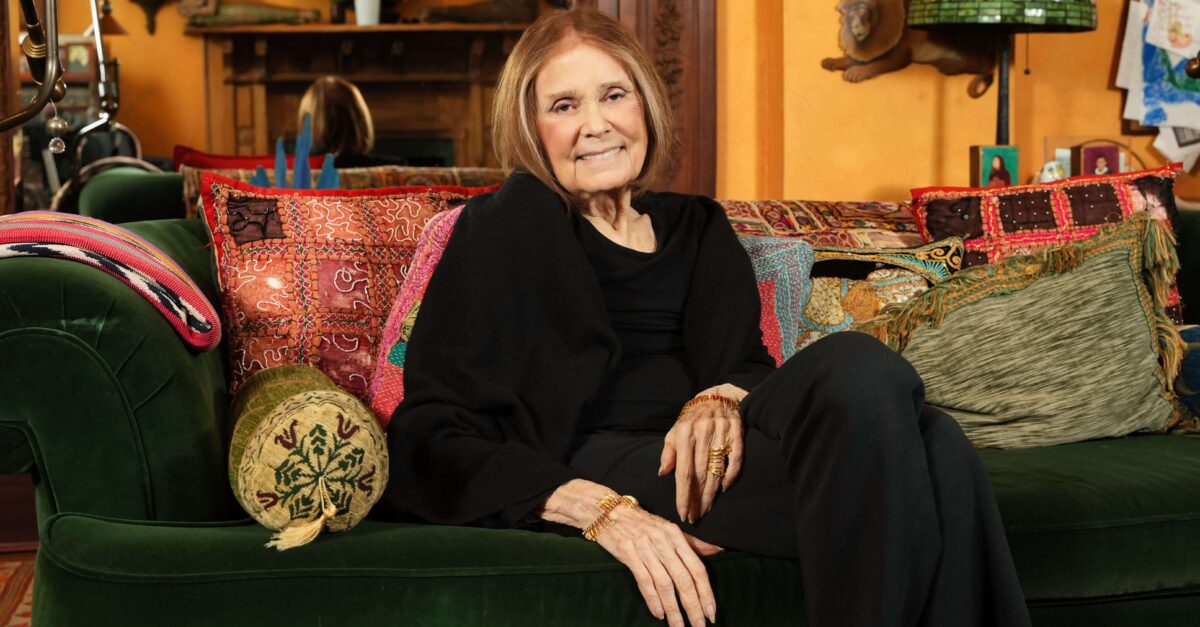
Gloria Steinem, the indomitable feminist icon, trailblazing journalist, and visionary co-founder of Ms. and New York magazines, passed away peacefully on September 3 at the age of 92. Surrounded by loved ones at her New York City home, Steinem’s departure marks the end of a near-century defined by relentless advocacy, intellectual rigor, and an unwavering commitment to global equality. Her official Instagram page announced the news with a fitting tribute: "Gloria’s near-century on earth were years well-lived, and she continued working for equality until the very end."
As one of the most visible and influential architects of the second-wave feminist movement in the United States, Steinem transformed the socio-political landscape of the 1960s and 1970s. Her work raised the collective consciousness of women worldwide, shifting the cultural paradigm regarding gender roles, reproductive freedom, and institutional equity. Recognized internationally for her contributions—including receiving the Presidential Medal of Freedom from President Barack Obama in 2013—Steinem’s life and philosophies transcended the printed page, permeating television, cinema, and live theater.
This retrospective explores her extraordinary life, her profound impact on the American cultural consciousness, and the unique theatrical journey of Gloria: A Life, a bio-play that immortalized her methods and philosophies on the New York stage.
Detailed Chronology: A Life Spent in Pursuit of Equality
Early Life and the Birth of a Journalist
Born in Toledo, Ohio, in 1934, Steinem experienced an itinerant childhood, traveling across the country in a trailer with her parents before settling in Toledo. After graduating from Smith College, she spent time in India on a Chester Bowles Research Fellowship, an experience that deeply shaped her worldview and introduced her to grassroots organizing structures—most notably, the concept of the talking circle.
Returning to the United States in the late 1950s, Steinem embarked on a career in journalism. She quickly made waves with her fearless investigative reporting. Her most infamous early assignment came in 1963 when she went undercover as a Playboy Bunny at the Manhattan Playboy Club. The resulting exposé, A Bunny’s Tale, published in Show magazine, exposed the grueling labor conditions, low pay, and exploitation faced by the women working there. It instantly established Steinem as a formidable journalistic voice capable of dissecting patriarchal power structures from the inside out.
The Second-Wave Feminist Movement and Ms. Magazine
Throughout the late 1960s, Steinem emerged as a leading voice of the burgeoning Women’s Liberation Movement. She co-founded New York magazine in 1968, where she wrote a political column that further cemented her status as a cultural critic.
However, her most enduring publishing legacy arrived in 1972 with the launch of Ms. magazine. As the first mainstream feminist magazine founded, owned, and operated by women, Ms. provided a radical platform for discussions on domestic violence, abortion rights, workplace discrimination, and systemic sexism. Under her guidance, the magazine became a cornerstone of second-wave feminism, offering millions of women a shared language and a collective identity.
Global Activism and Later Years
Steinem’s activism was never confined to domestic borders. She co-founded the Women’s Action Alliance, the National Women’s Political Caucus, and the Women’s Media Center. She traveled extensively, documenting women’s rights struggles globally—experiences that heavily informed her best-selling 2015 memoir, My Life on the Road. Right up until her final days, Steinem remained an active voice in progressive politics, mentoring generations of activists and refusing to rest on the laurels of her historic achievements.
Supporting Context & Metrics: Cultural Adaptation and the Stage
Steinem’s cultural footprint was so profound that her life and writings became frequent subjects of dramatic adaptation across film, television, and theater. Her ability to articulate complex sociological dynamics in deeply personal terms made her an appealing subject for biographical storytelling.
Translating Steinem to Screen and Stage
Over the decades, several acclaimed actors portrayed Steinem in various biographical projects:
Kirstie Alley played her in the 1985 television film A Bunny’s Tale, bringing her undercover Playboy exposé to life for a mainstream television audience.
Rose Byrne portrayed Steinem in the star-studded FX historical drama miniseries Mrs. America (2020), which chronicled the political battle over the Equal Rights Amendment (ERA).
Alicia Vikander and Julianne Moore shared the role of Steinem in the 2020 biographical feature film The Glorias, adapted directly from her memoir My Life on the Road.
The Genesis of Gloria: A Life
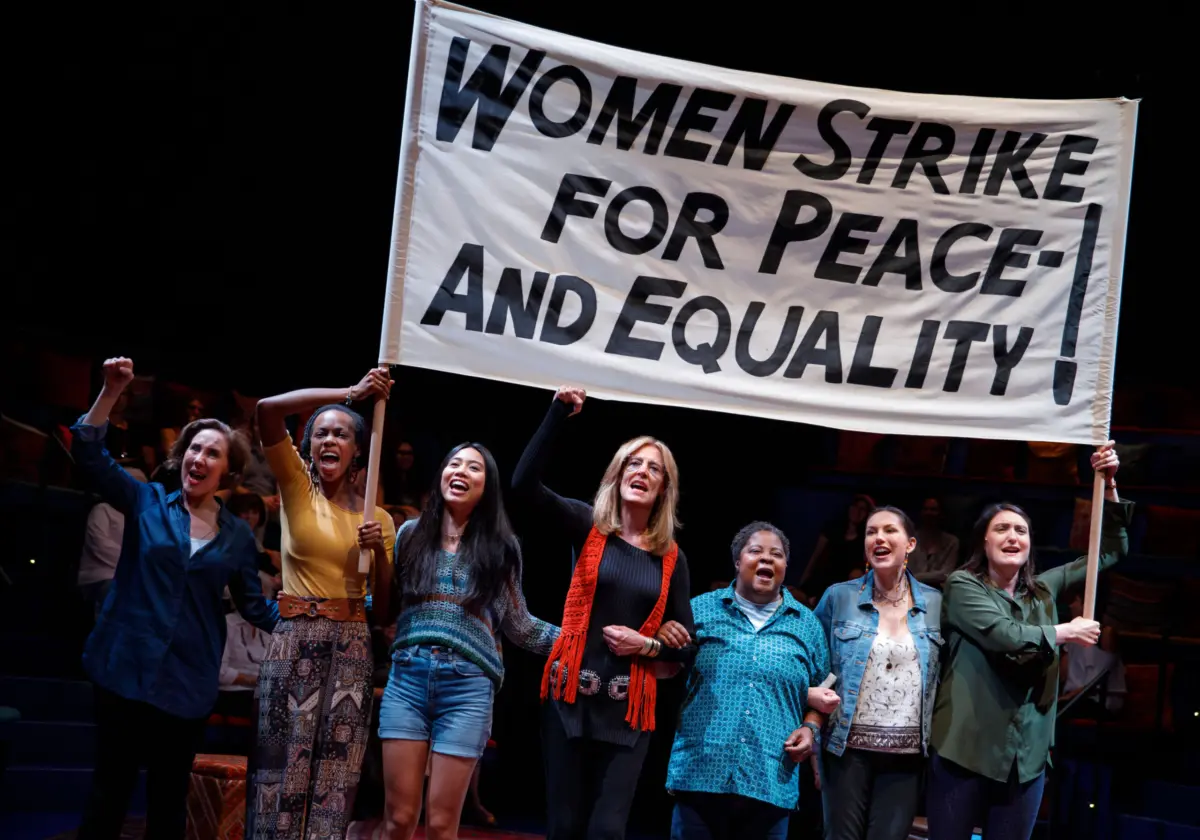
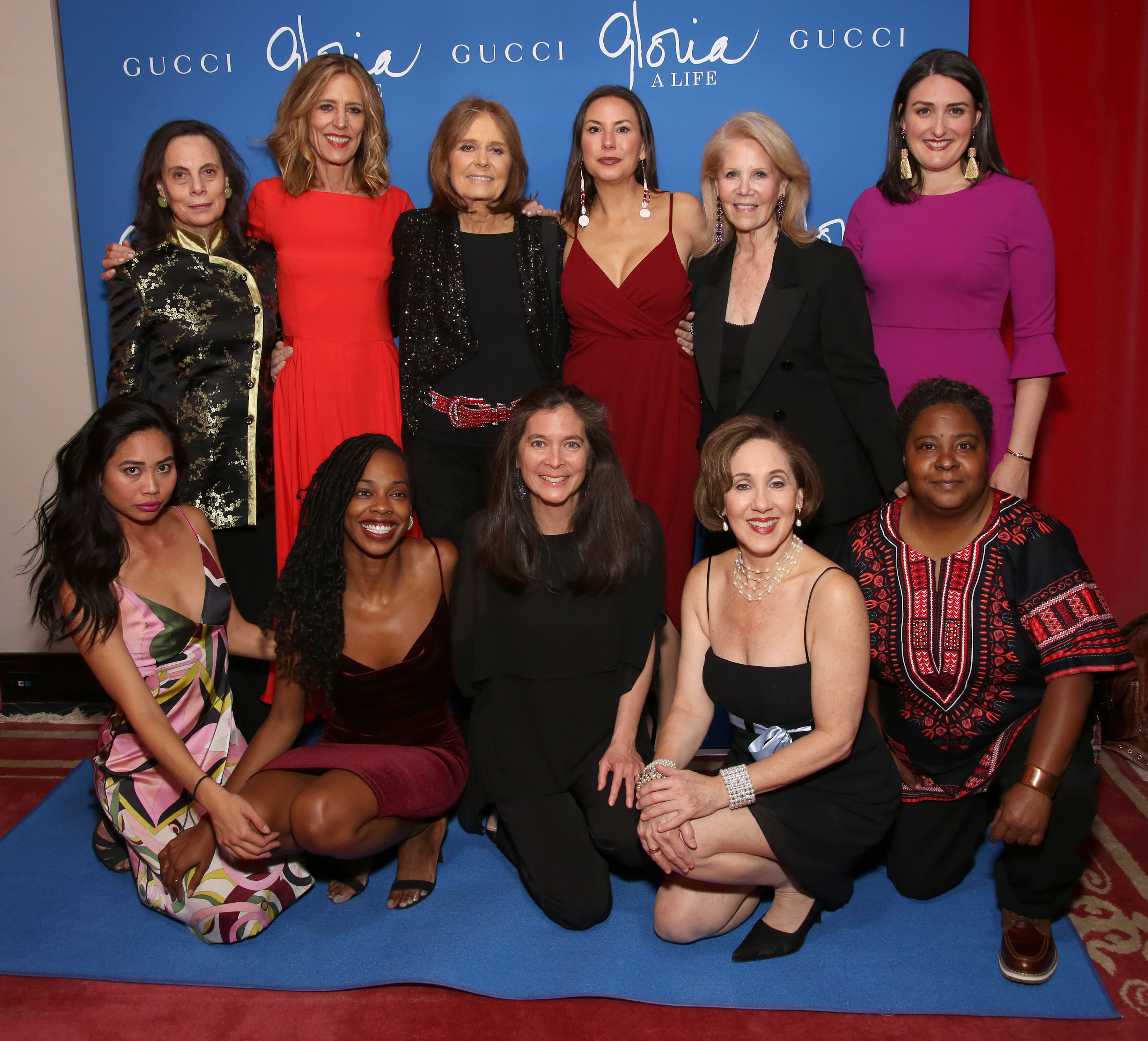
While film and television offered linear narratives of her activism, the theatrical realm provided a space for direct communal engagement. The bio-play Gloria: A Life opened at the Daryl Roth Theatre in New York City in 2018, directed by Diane Paulus and written by Emily Mann, featuring an all-female cast and creative team.
The origin of the production was surprisingly organic. As Steinem recalled in the foreword to the published edition of the play, the concept was first pitched to her by actor and activist Kathy Najimy, who suggested Steinem turn her life into a one-woman show and star in it herself. Initially, Steinem balked at the idea. Despite decades of public advocacy, she confessed she had never conquered her stage fright, noting that the idea of performing live every night "seemed about as likely as a one-person trip to Mars."
After a workshop in which Steinem briefly stepped onto the stage, her respect for actors soared, but her confidence in performing plummeted. It was Tony-winning producer Daryl Roth who suggested shifting the format into an ensemble-driven bio-play, casting Christine Lahti in the title role. With that adjustment, the production found its true theatrical heartbeat.
Official Statements and Tributes
The passing of Gloria Steinem drew widespread tributes from political leaders, cultural figures, and collaborators who worked alongside her. Among the most poignant reflections came from producer Daryl Roth, who shared her personal memories of Steinem exclusively for this retrospective:
"Gloria was a woman I had admired from afar for most of my adult life. In the last 20 years, I was blessed that she became a colleague, a collaborator, and most importantly, a beloved friend.
I was approached over 10 years ago with the idea of bringing Gloria’s storied and impactful history to the stage. Gloria: A Life was created in collaboration with Gloria herself, the director Diane Paulus, the playwright Emily Mann, and an all women cast and design team. We used my theatre on Union Square to have the flexibility to create the space in the round, because Gloria was rightly insistent that we bring to life her famous ‘Talking Circles’ as Act 2 of the show, in which the audience was invited to carry the themes of the play into a conversation of their own. We had a special guest most performances, and on the truly magical nights, Gloria led the conversations herself.
The stories people were brave enough to share were as inspirational and transformative as the play itself, and many of our guests were activists who were carrying out Gloria’s lessons and missions in the wider community. But for all of us, it was seeing the expanse of generations the play resonated with, especially the students and young people who attended. The play reminded us how far we have come, but how far we still have to go.
Gloria has taught us all so much, most importantly: to speak up, be open to an exchange of ideas, and be willing to have the conversations that lead to change. She inspires and challenges us to be activists, each in our own way."
Future Outlook: The Enduring Ripple Effect
While the physical presence of Gloria Steinem is gone, the institutional and cultural infrastructure she helped build remains exceptionally robust. The organizations she founded—such as the Women’s Media Center and Ms. magazine—continue to amplify marginalized voices and challenge institutional inequalities in media and politics.
Furthermore, the unique structural legacy of her "Talking Circles"—which found a permanent home in the second act of Gloria: A Life—demonstrates the viability of non-hierarchical, empathetic communication in modern political and social organizing. By insisting that theater break the fourth wall and invite audiences into a shared dialogue governed by the principles of "lead with love, low ego, high impact, move at the speed of trust," Steinem left behind a blueprint for community building that transcends the stage.
As new generations of activists pick up the mantle in an increasingly complex socio-political landscape, Steinem’s life work stands as a testament to the power of resilient journalism, collective storytelling, and unyielding hope. Like the proverbial pebble tossed into a pond, Gloria Steinem’s ripples will continue to transform lives for generations to come.