
Executive Overview
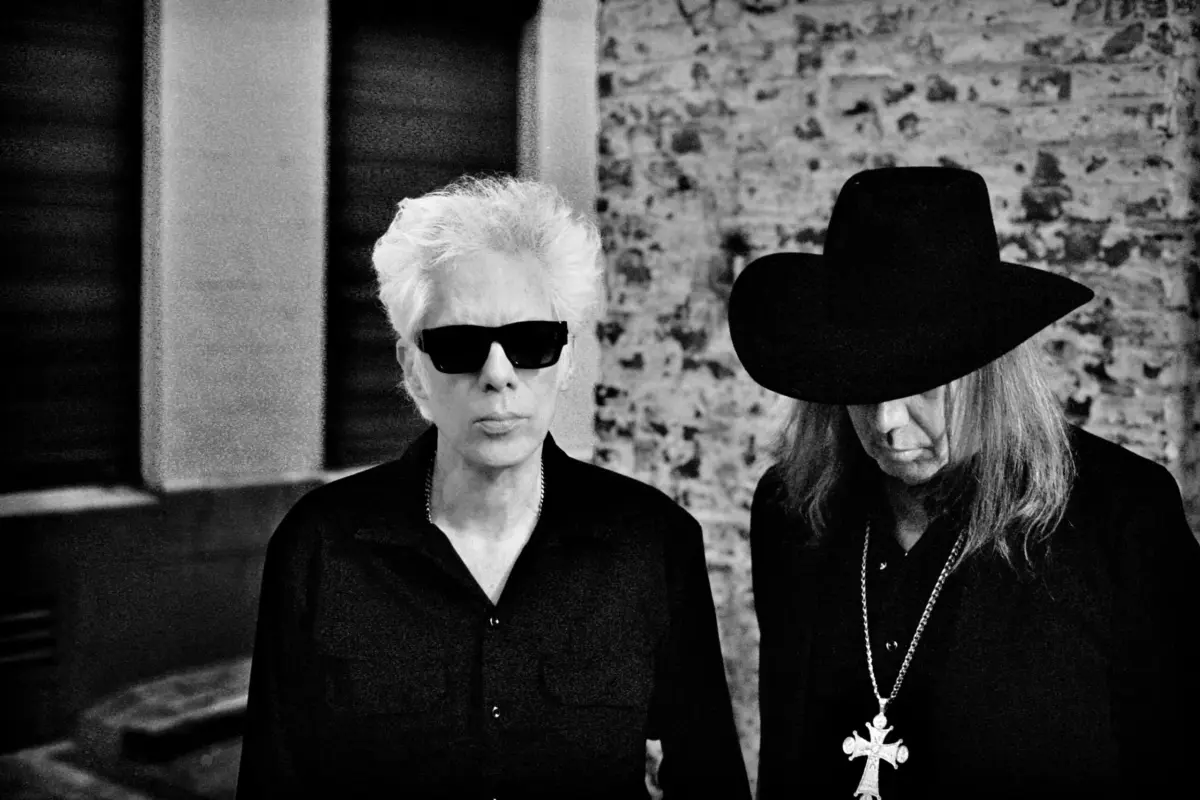
In the contemporary landscape of avant-garde composition, few collaborations possess the haunting, cinematic gravity shared by Dutch lute master Jozef Van Wissem and American auteur-musician Jim Jarmusch. Their enduring creative partnership—forged in the shadowed margins where Elizabethan folk traditions collide with modern minimalist drone—has yielded some of the most striking cross-pollinations of film and acoustic music in the 21st century. At the center of this sonic universe sits "Only Lovers Left Alive," an instrumental composition originally penned by Van Wissem in 2012.
Now, more than a decade after its initial inception, the piece has been thoroughly reimagined. The newly unveiled recording breathes a richer, more rounded acoustic and electric resonance into the original lute-driven framework. This release closely follows the momentum generated by Van Wissem’s previous single, "Never Like You Said," which notably featured the distinctive, conversational vocals of acclaimed singer-songwriter Courtney Barnett. Yet, where "Never Like You Said" showcased a lyric-driven, contemporary indie-folk sensibility, the updated iteration of "Only Lovers Left Alive" marks a decisive return to the pure, atmospheric instrumentalism that defines the core of Van Wissem and Jarmusch’s collaborative identity.
This expansive journalistic feature delves deep into the provenance of the composition, tracing its arc from a spontaneous, cannabis-induced late-night recording session in a now-demolished Belgian squat to its triumphant, meditative re-recording in an Italian studio alongside Jim Jarmusch. By examining the structural evolution of the track, the philosophical weight of its creation, and the broader context of Van Wissem’s recent discography—including his collaborations with Courtney Barnett—we explore how time, architecture, and memory continue to shape the haunting soundscapes of two of modern music’s most uncompromising sonic architects.
Detailed Chronology: From the Ghosts of Ghent to the Drones of Bologna
To fully appreciate the weight of the new recording, one must trace the winding historical trajectory that birthed "Only Lovers Left Alive." The genesis of the piece is steeped in a specific romanticism—one of impermanence, serendipity, and the raw, unpolished energy of transient existence.
2012: The Dilapidated House in Ghent
In the foundational year of 2012, Jozef Van Wissem was locked in a relentless cycle of international touring. Caught in the exhausting crosscurrents of transit, hotels, and stage lights, the lute player found himself temporarily grounded in Ghent, Belgium, between solo dates. Seeking a localized sanctuary of productivity, Van Wissem and a cohort of associates rented a room within a sprawling, dilapidated friend’s house—a bohemian relic marked by peeling wallpaper, warped floorboards, and an inherent architectural vulnerability.
Within this decaying structural shell, the musicians hastily installed a rudimentary mobile recording studio. It was an environment dictated by urgency rather than pristine acoustic engineering. As Van Wissem recalls, the psychological weight of relentless travel required a release. To calm his nervous system after weeks on the road, he smoked cannabis—a rare indulgence for a composer whose creative processes are typically executed in states of absolute sobriety.
Under the influence of this altered state, the initial architectural sketch of the song emerged. In the dead of night, Van Wissem picked up his lute, captured the primary melodic thread in a single, uninhibited take, and immediately retired to sleep.
The Morning After and the Final Smoke
The following morning brought both clarity and completion. Upon waking, Van Wissem returned to the recording console and penned the second, descending part of the composition, weaving it seamlessly into the nocturnal framework of the previous night’s lute motif.
In a twist of biographical irony that reads like a cinematic metaphor, this spontaneous creative burst would be the final time Van Wissem consumed cannabis before composing music. The song, born from a threshold state between exhaustion and altered consciousness, captured a unique temporal lightning in a bottle. Tragically—or perhaps fittingly, given the ghostly aura of the music—the house in Ghent where the track was conceived was eventually slated for demolition, reducing the physical birthplace of "Only Lovers Left Alive" to rubble and dust. The composition outlived its architecture.
2023–2024: The European Tour and the Bologna Sessions
Fast-forward more than a decade to late 2023. Van Wissem and Jim Jarmusch made a concerted decision to take their collaborative methodology back on the road, mapping out an extensive touring and recording itinerary across Europe. The synergy between the two artists had matured over years of shared cinematic scoring (most notably on Jarmusch’s 2013 vampire romance film Only Lovers Left Alive, which lent its title to Van Wissem’s earlier work) and experimental studio improvisations.
The culmination of this European leg brought the duo to a recording studio situated on a narrow, atmospheric street in Bologna, Italy. At the direct conclusion of their formal studio sessions, Van Wissem and Jarmusch engaged in an intense, unscripted sonic exploration. Playing two long-form electric drone pieces in a state of deep, telepathic flow, they captured material that would ultimately be christened "Mouth Of The Wolf"—a direct, literal translation of the street name where the Bologna studio was located.
It was out of this intense, avant-garde sonic immersion that the new version of "Only Lovers Left Alive" was born. Having purged their systems of heavy, expansive drone improvisations, the duo turned their attention backward to the 2012 Ghent lute theme. Here, Jim Jarmusch stepped in, laying down an intricate, resonant acoustic guitar counterpoint that dances around Van Wissem’s core lute melody. This new arrangement introduces a profound sense of timelessness, deepening the harmonic texture and transforming a skeletal historical sketch into a fully realized, breathing monument of modern composition.
Supporting Context & Metrics: The Evolution of Van Wissem’s Sonic Palette
To contextualize the release of the updated "Only Lovers Left Alive," one must examine the broader arc of Jozef Van Wissem’s recent artistic output, which demonstrates an increasing fluidity between historical instrumentation and contemporary indie counterculture.
The Courtney Barnett Connection: "Never Like You Said"
Prior to unveiling the revamped OLLA recording, Van Wissem made waves across the independent music community with the release of the single "Never Like You Said." The track represented a fascinating stylistic departure—or rather, an expansion—of his traditional instrumental framework by incorporating the evocative, narrative-driven vocals of Courtney Barnett.
| Metric / Parameter | "Never Like You Said" | "Only Lovers Left Alive" (2024 Version) |
|---|---|---|
| Primary Instrumentation | Lute, Electric Guitar, Vocal Delivery | Lute, Acoustic Guitar (Counterpoint) |
| Vocal Presence | Full Lead Vocals (Courtney Barnett) | 100% Instrumental |
| Compositional Era | Contemporary / Recent Sessions | 2012 Original, 2024 Re-recording |
| Thematic Driver | Narrative lyricism, conversational indie-folk | Atmospheric drone, historical minimalism, cinematic melancholy |
| Collaborator | Courtney Barnett | Jim Jarmusch |
The inclusion of Barnett on "Never Like You Said" proved that Van Wissem’s austere, centuries-old lute styling could gracefully accommodate the wry, modern cadence of contemporary alternative rock. It established a bridge between the avant-garde classical world and the broader indie consciousness. However, with the subsequent release of the new "Only Lovers Left Alive," Van Wissem pivots immediately back into the interior, wordless world that cemented his reputation among cinephiles and drone aficionados alike.
The Lute as a Modern Instrument
A critical metric in understanding Van Wissem’s cultural footprint is his tireless crusade to rescue the lute from the dusty confines of historical preservation societies and thrust it into the vanguard of contemporary music. The lute—an instrument burdened by centuries of Renaissance association—is treated by Van Wissem not as a museum piece, but as a living, breathing conduit for modern minimalism.
Through his ongoing partnership with Jim Jarmusch, the lute has been recontextualized. Amplified, effected, and layered against Jarmusch’s shadowy electric and acoustic guitar drones, the instrument sheds its delicate, courtly pretensions. It becomes an engine of dark ambient tension. The new recording of "Only Lovers Left Alive" acts as a masterclass in this philosophy: the plucked strings retain their ancient, woody timbre, but they are buttressed by a modern recording fidelity that captures every micro-vibration, every intake of breath, and every resonance of the studio space.
Official Statements & Artistic Insights
The creative philosophy underpinning the new recording is best understood through the direct reflections of Jozef Van Wissem himself. In recent statements detailing the archival and psychological excavation required to produce the track, the composer offered profound insights into the nature of memory, place, and sound.
Reflecting on the volatile circumstances of the song’s birth in 2012, Van Wissem notes:
"In 2012 I wrote ‘Only Lovers Left Alive’ between solo tours in Ghent, Belgium. We had rented a room in a dilapidated friend’s house and installed a studio. That night I smoked some weed to calm down from travel. I recorded the melody on the lute and went to sleep. After I woke up I wrote the second descending part. It was the last time I smoked pot before composing. The house was later demolished."
This quote encapsulates the fragility of the creative act. The physical anchor of the song—the rented room in the dilapidated Ghent house—no longer exists on any contemporary map. It has been erased by urban renewal and the relentless march of time. Yet, the melody survived, preserved first in digital and analog recordings, and now resurrected through the cross-continental dialogue between Van Wissem and Jarmusch.
Elaborating on the recent European sessions that directly birthed the updated arrangement, Van Wissem details the symbiotic relationship between his work with Jarmusch and the evolution of the track:
"Last year we decided to tour and record in Europe. At the end of our studio session in Bologna, Jim and I played two long-form electric drone pieces. These would become ‘Mouth Of The Wolf’, named after the street of the studio. After this intense sonic session, we recorded a new OLLA version. Jim adds timeless counterpoint to the lute melody on acoustic guitar."
Jarmusch’s contribution is not merely supplementary; it is structural. By applying acoustic counterpoint to Van Wissem’s primary motif, Jarmusch creates a dialogue between two distinct yet harmonically aligned minds. The resulting sound is neither strictly traditional nor overtly modern; it exists in a suspended animation, echoing the timeless, undead protagonists of the vampire film from which the piece draws its thematic resonance.
Future Outlook: The Horizon of Dark Acoustic Minimalism
As the newly enriched version of "Only Lovers Left Alive" enters the public consciousness, it signals more than just a nostalgic look backward at a 2012 composition. It points directly toward the future trajectory of Van Wissem and Jarmusch’s collaborative partnership.
Expanding the Sonic Universe
The seamless transition from the blistering, long-form electric drones of "Mouth Of The Wolf" in Bologna to the delicate, acoustic interplay of the new OLLA recording proves that the duo’s creative bandwidth is expanding rather than contracting. Critics and fans alike are left to speculate on whether these European recording sessions will manifest as a comprehensive, full-length studio album compiling both the heavy drone explorations and these refined acoustic retrospectives.
Furthermore, the stylistic bridge built by Van Wissem’s collaboration with Courtney Barnett on "Never Like You Said" opens up tantalizing questions about future vocal integrations. Will Van Wissem continue to invite contemporary lyricists into his medieval-minimalist ecosystem, or will he retreat deeper into the pure, instrumental mysticism that defines his core catalog?
The Legacy of Cinematic Soundcapes
The enduring cultural footprint of the phrase "Only Lovers Left Alive" is inextricably linked to the nocturnal, romantic nihilism of Jarmusch’s 2013 cinematic masterpiece starring Tilda Swinton and Tom Hiddleston. By continually returning to and reshaping the musical themes associated with this universe, Van Wissem and Jarmusch are constructing an ongoing mythology.
In an era defined by hyper-compressed digital saturation, rapid-fire content consumption, and sonic ephemera, the deliberate, patient artistry of Van Wissem and Jarmusch stands as a radical counter-statement. The new rendition of "Only Lovers Left Alive" reminds listeners that music can be architectural—built in forgotten rooms, buried in the rubble of demolished houses, and resurrected years later through the enduring power of human collaboration.
As Van Wissem continues to tour globally, wielding his lute like a weapon against the superficialities of the modern music industry, and as Jarmusch continues to filter his encyclopedic love of art and cinema into musical drone, the legacy of these sessions in Ghent, Bologna, and beyond will continue to reverberate. The house in Ghent may be gone, the smoke of 2012 may have long since cleared, but the notes played upon those wooden strings remain—haunting, immortal, and fully alive.