
Executive Overview
For over three hundred years, four exquisite musical compositions written for the opulent, highly regulated courts of Versailles remained completely unresearched, unrecorded, and unperformed. Composed by Élisabeth Jacquet de La Guerre—one of the most celebrated yet historically overlooked female musical minds of the French Baroque—these four distinct airs were commissioned for courtly educational games designed for the young great-grandson of King Louis XIV.
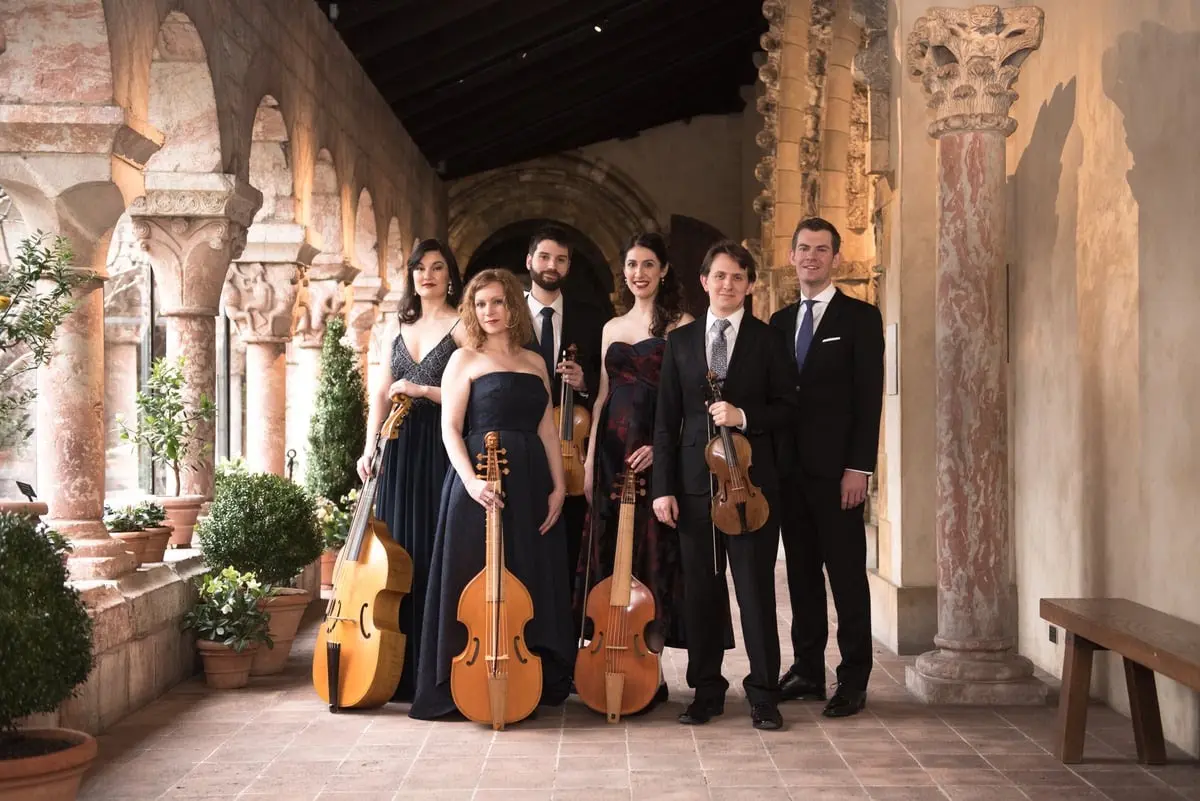
Now, thanks to the meticulous archival detective work of musicologist and violist Elizabeth Weinfield, these long-forgotten works are finally stepping out of the shadows. On November 19, the renowned early music ensemble Sonnambula will deliver the modern world premiere of these pieces at St. Paul’s Chapel on the campus of Columbia University in New York City.
The recovery of these works is anchored by the Morgan Library & Museum’s 2022 acquisition of a rare 1712 treatise titled Les Amusemens de Monseigneur le Duc de Bretagne. Weinfield, who serves as the artistic director of Sonnambula and teaches musicology at The Juilliard School, was the first scholar to closely inspect and evaluate the manuscript following its acquisition. Recognizing the profound historical and artistic value of the anonymous or misattributed vocal works within its pages, Weinfield spearheaded the effort to bring them back to life.
This cultural milestone extends far beyond a single concert evening. Accompanied by a high-level academic panel discussion at Columbia University’s Maison Française on November 18, the event serves as both a performance and an intellectual reckoning. By confronting and dismantling centuries-old, male-dominated narratives that have structurally sidelined female composers in early music history, Sonnambula’s upcoming performance promises to reshape our understanding of the cultural machinery operating inside the court of the Sun King.
Detailed Chronology: From the Halls of Versailles to Modern New York
To fully appreciate the weight of the upcoming November 19 premiere, one must trace a trajectory spanning more than three centuries of European history, archival transit, and modern musicological perseverance.
1712: The Creation and Curation of Les Amusemens
During the twilight years of King Louis XIV’s legendary reign, the court at Versailles remained an ecosystem heavily dependent on elaborate social rituals, political maneuvering, and carefully tailored educational paradigms. For the young royal heirs—specifically the great-grandson of the King, the Duc de Bretagne—learning was deeply intertwined with refined artistic entertainment.
It was within this hyper-specific environment that Les Amusemens de Monseigneur le Duc de Bretagne was published in 1712. Designed to accompany courtly educational games, the treatise contained musical scores meant to stimulate the intellect and tastes of the young nobility. Among its pages lay four distinct vocal airs composed by Élisabeth Jacquet de La Guerre, a musical titan of her era who enjoyed the personal patronage of Louis XIV himself. However, following the tumult of subsequent centuries, shifting political regimes, and the eventual dismantling of the Ancien Régime, the specific performance history of these airs evaporated. For 300 years, they sat silently on paper, never translated into modern performance editions, never recorded in a studio, and never brought to a live audience.
2022: The Morgan Library & Museum Acquisition
The catalyst for the modern resurrection of these pieces occurred in 2022, when New York’s prestigious Morgan Library & Museum successfully acquired the rare 1712 edition of Les Amusemens de Monseigneur le Duc de Bretagne. Known globally for housing some of the world’s most treasured literary and musical manuscripts, the Morgan quickly integrated the treatise into its expansive holdings of music manuscripts and printed music.
However, acquiring a historical artifact is only the first step in a long chain of academic curation. The volume required deep inspection by a specialist capable of contextualizing its contents within the broader ecosystem of French Baroque composition. Enter Elizabeth Weinfield.
The Archival Discovery and Transcription Process
Upon learning of the Morgan’s acquisition, Elizabeth Weinfield—an established authority on early music and the artistic director of the period-instrument ensemble Sonnambula—initiated a close examination of the treatise. Cross-referencing stylistic nuances, historical performance practices, and known exemplars of Jacquet de La Guerre’s compositional voice, Weinfield identified the four airs as the masterwork of the pioneering female composer.
Translating 18th-century French notation into clean, playable modern scores was a formidable scholarly task. Baroque performance practice demands a rigorous understanding of ornamentation, rhythm, and textual declamation. Weinfield’s translation bridge allowed the latent notes on the fragile 1712 pages to become actionable music once more, setting the stage for Sonnambula’s rehearsal room.
November 18–19, 2023: The Academic and Performance Milestones
The culmination of Weinfield’s research will unfold over two days in mid-November at Columbia University.
- November 18, 6:00 PM: An interdisciplinary panel discussion will take place at Columbia’s Maison Française. Bringing together Weinfield, Robinson McClellan (Curator of Music Manuscripts and Printed Music at the Morgan Library), and esteemed scholars Susan Boynton, Anne Higonnet, and Rebecca Cypess, the panel will explore the cultural politics of Versailles, the mechanics of female patronage and authorship, and the musicological significance of the newly discovered airs.
- November 19, 6:00 PM: The modern world premiere will be performed at St. Paul’s Chapel. Sonnambula, led by Weinfield on the viola da gamba, will be joined by acclaimed mezzo-soprano Chloe Holgate. The program places Jacquet de La Guerre’s recovered works in direct conversation with masterworks by her contemporaries—including Marin Marais, François Couperin, and Michel Richard Delalande—alongside a contemporary world premiere by composer Stephen Anthony Weinfield.
Supporting Context & Metrics: The Architectural Framework of Baroque Recovery
To understand why this discovery is making waves across the international classical music community, one must examine the broader cultural and historical metrics governing early music research, gender representation in classical canons, and the structural value of specialized period-instrument ensembles like Sonnambula.
The Erasure of Élisabeth Jacquet de La Guerre
Élisabeth Jacquet de La Guerre (1665–1729) was not a minor footnote in music history; during her lifetime, she was a household name across France. Born into a prominent family of musicians and instrument makers, she was a child prodigy on the harpsichord. At a remarkably young age, she caught the attention of King Louis XIV, who took a personal interest in her education and career, granting her lodgings in the Louvre.
Her output was strikingly diverse and ambitious. She composed Céphale et Procris (1694), making her the first woman in France to write and stage an opéra-ballet. She also published books of cantatas, harpsichord pieces, and trio sonatas that blended the expressive contour of Italian musical style with the refined ornamentation of the French Baroque.
Yet, despite her immense contemporary fame and undeniable genius, Jacquet de La Guerre fell victim to the systemic archival neglect that plagued female artists for centuries. While male contemporaries like Jean-Baptiste Lully and François Couperin were continuously studied, edited, and canonized by 19th- and 20th-century musicologists, many works by women composers languished in archives, uncatalogued or misattributed. The rediscovery of these four airs is a direct pushback against this historic imbalance.
The Role of Period Ensembles: Sonnambula
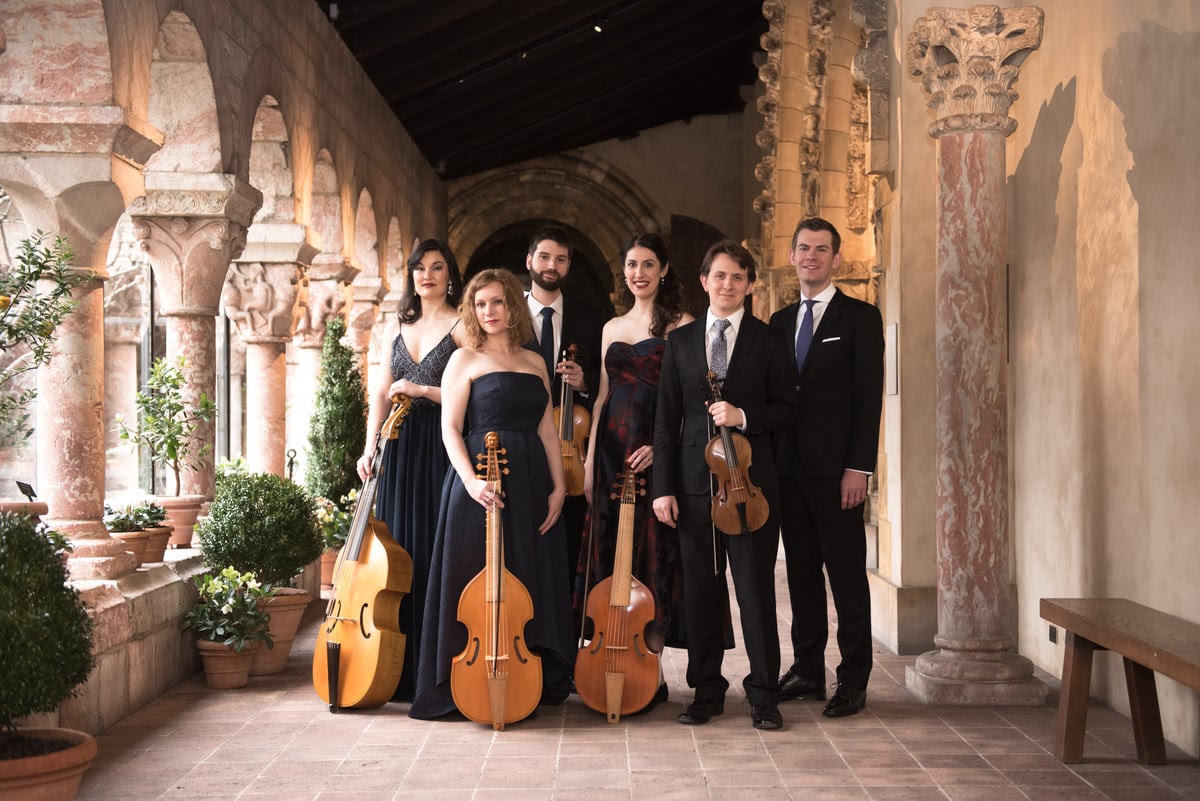
Resurrecting music from the early 18th century requires a specialized skill set that modern symphony orchestras, built for 19th- and 20th-century repertoire, rarely possess. Enter Sonnambula, a New York-based early music ensemble celebrated for its dynamic, historically informed performances.
Playing on period instruments—such as the viola da gamba, baroque violins, theorbo, and harpsichord—Sonnambula approaches historical scores not as static museum pieces, but as living, breathing artistic expressions. Under Weinfield’s direction, the ensemble has carved out a distinct niche for unearthing rare and neglected repertoires, bridging the gap between deep archival scholarship and vibrant, visceral concert performance.
Comparative Program Metrics
The November 19 concert program is meticulously curated to contextualize Jacquet de La Guerre’s rediscovered voice within the wider sonic landscape of the Sun King’s court:
| Composer | Era / Context | Contribution to Program |
|---|---|---|
| Élisabeth Jacquet de La Guerre | French Baroque (1665–1729) | Modern World Premiere of four newly transcribed airs from the 1712 treatise. |
| Marin Marais | French Baroque (1656–1728) | Master of the viola da gamba, representing the core instrumental style of the French court. |
| François Couperin | French Baroque (1668–1733) | Renowned court composer, known for expressive keyboard and chamber works. |
| Michel Richard Delalande | French Baroque (1657–1926) | Prolific composer of sacred and secular court music for Louis XIV. |
| Stephen Anthony Weinfield | Contemporary | World Premiere of a newly commissioned work, creating a bridge between 18th-century aesthetics and modern composition. |
Official Statements & Scholarly Perspectives
The cultural weight of the upcoming event has drawn statements from key figures leading the charge in archival recovery and performance execution.
Elizabeth Weinfield, artistic director of Sonnambula and Juilliard musicology professor, emphasized the broader ideological implications of the discovery in an official press release:
"Élisabeth Jacquet de La Guerre is a fascinating woman—a composer of the highest caliber, she was also navigating the highly competitive, constantly shifting boundaries of the Versailles court, and did so while garnering respect," Weinfield noted.
"Discoveries like this shift the cultural needle and disrupt masculine narratives that have dominated early music history for far too long, and we are so excited to be bringing her music to life for modern audiences."
This sentiment is echoed by institutional partners such as the Morgan Library & Museum. Robinson McClellan, Curator of Music Manuscripts and Printed Music at the Morgan, underscored the vital synergy between institutional acquisitions and active musicological research:
"The presence of these rare 1712 treatises within our collection provides an invaluable window into the pedagogical and social structures of the royal French court. Seeing these pages transform from historical artifacts into sounding art through the scholarship of Dr. Weinfield and the artistry of Sonnambula is precisely the mission our library hopes to inspire."
Furthermore, the inclusion of a multidisciplinary academic panel highlights the commitment of Columbia University to contextualizing these artistic breakthroughs. Scholars such as Susan Boynton, Anne Higonnet, and Rebecca Cypess will unpack how gender, political patronage, and education intersected in early modern France, ensuring that the performance is backed by rigorous historical critique.
Future Outlook: Re-writing the Baroque Canon
The modern premiere of Élisabeth Jacquet de La Guerre’s four lost airs at St. Paul’s Chapel is much more than a localized concert event; it represents a turning point in how cultural institutions approach the early music canon.
For generations, the standard narrative of Western classical music has been filtered through a lens that systematically excluded female authorship. When works by composers like Jacquet de La Guerre are left unperformed, unrecorded, and unedited, the public perception of the historical musical landscape becomes artificially distorted, suggesting that women played little to no role in the creation of high art during the Baroque era.
By bringing these four Versailles airs out of the Morgan Library and onto the concert stage, Elizabeth Weinfield and Sonnambula are actively correcting this historical record. The ripple effects of this discovery are expected to be substantial:
- Academic Re-evaluation: Musicology departments worldwide will likely re-examine treatises and misattributed collections housed in global libraries, looking for other hidden works by female composers of the 17th and 18th centuries.
- Recording and Distribution: As these scores are integrated into modern performance editions, future studio recordings will undoubtedly follow, allowing these long-silent pieces to enter the permanent global audio archive.
- Curricular Integration: Educational institutions, ranging from conservatories like Juilliard to university music history courses, now have fresh, verified primary source material to teach students about courtly patronage and gender dynamics in the Ancien Régime.
As the lights dim at St. Paul’s Chapel on November 19 and mezzo-soprano Chloe Holgate sounds the first notes of Jacquet de La Guerre’s forgotten masterpieces, listeners will experience a rare convergence of history and living art. Three hundred years of silence will break, proving that the vibrant creative spirit of Versailles cannot be permanently erased by time—so long as dedicated scholars and performers remain willing to turn the page.