

Executive Overview
In the modern music classroom, few pedagogical hurdles are as persistent or consequential as sight-reading proficiency. Educators universally agree that strong sight-reading skills are the bedrock of lifelong musicianship. Students who excel at reading notation independently learn repertoire at an accelerated pace, navigate rehearsals with optimal efficiency, and enter festival performance evaluations with poise rather than anxiety. More importantly, independent reading literacy guarantees that students continue to engage with music long after graduation—whether performing in community wind ensembles, participating in sacred choir programs, or improvising in casual garage bands.
Despite its undisputed importance, sight-reading instruction has historically been plagued by a logistical bottleneck: the finite nature of printed materials. Traditional method books, while structured and reliable, contain a limited number of exercises. Once a student plays through a specific page a few times, true sight-reading ceases. Instead of processing unfamiliar visual symbols in real-time, the student relies on muscle memory and auditory recall, defeating the core objective of the exercise. To combat this, educators have traditionally spent countless unpaid hours drafting custom exercises, scouring disparate pedagogical anthologies, or painstakingly copying notation onto whiteboards.
Addressing this industry-wide pain point head-on, MakeMusic has officially launched its groundbreaking Correlated Sight Reading Generators. Integrated directly into the MakeMusic Cloud platform via the Sight Reading Studio ecosystem, these dynamic templates align lesson-by-lesson with leading instructional method books. By fusing automated algorithmic generation with established pedagogical sequencing, MakeMusic’s latest innovation delivers an infinite supply of leveled, fresh sight-reading exercises at the click of a button. This release marks a paradigm shift in music education technology, designed to reclaim lost preparation hours for instructors while dramatically elevating student literacy outcomes across diverse learning environments.
Detailed Chronology: The Evolution of Digital Sight-Reading Support
To fully appreciate the significance of MakeMusic’s latest development, it is necessary to examine the evolutionary trajectory of digital music education tools over the past two decades.
Phase One: The Rise of Static Digital Notation
In the early 2000s, music software primarily served as a digital replacement for manuscript paper and engraving tools. Educators transitioned from hand-written scores to computer-generated notation programs. While this improved the legibility of instructional materials, it did not fundamentally alter the workflow of creating sight-reading assignments. Teachers still had to manually input note values, time signatures, and rhythmic patterns measure by measure. Digital files were static; once a worksheet was printed or distributed digitally, its lifespan was just as limited as a page in a physical method book.
Phase Two: The Advent of Dynamic Practice Environments
As cloud computing matured, platforms like MakeMusic Cloud (formerly SmartMusic) revolutionized home practice by introducing interactive assessment and accompaniment playback. Students could finally practice their concert band or orchestra literature at home with real-time feedback on pitch and rhythm accuracy. However, while performance assessment for assigned repertoire leaped forward, targeted sight-reading practice remained largely compartmentalized. Instructors still faced a frustrating dichotomy: comprehensive interactive tools for prepared music, but fragmented or labor-intensive solutions for sight-reading development.
Phase Three: Automated Generation and Pedagogical Alignment
Recognizing the demand for scalable, on-demand literacy tools, developers introduced early iterations of algorithmic sight-reading generators. These systems allowed teachers to set parameters such as key signatures, rhythmic complexity, and note ranges to generate random exercises.
While powerful, these early tools possessed a critical pedagogical flaw: disconnect. An automatically generated exercise rarely matched the exact pedagogical sequence of the specific method book an ensemble was utilizing in class. If a band director was teaching dotted quarter notes in Lesson 14 of their primary curriculum, a generic sight-reading generator might inadvertently pull syncopated rhythms from Lesson 20, overwhelming the students or introducing concepts out of order.
Phase Four: The Breakthrough of Correlated Generators
The release of MakeMusic’s correlated sight-reading templates represents the culmination of this technological evolution. By bridging the gap between automated generation and established instructional frameworks, MakeMusic has solved the contextual alignment problem. The system honors the pacing of premier method books, ensuring that every dynamically generated exercise reinforces precisely what the student is learning in class that week—no more, no less.
Supporting Context & Metrics: The Crisis of Prep Time and Literacy Gaps
The introduction of the Correlated Sight Reading Generators arrives against a backdrop of mounting administrative pressure on modern educators. Comprehensive industry surveys consistently highlight that music teachers spend an average of 8 to 12 hours per week on non-instructional tasks, including curriculum planning, repertoire selection, and worksheet creation.
The Administrative Burden
Within this framework, generating leveled sight-reading materials accounts for a disproportionate amount of prep time. Because students quickly memorize static exercises, instructors must constantly source fresh content. For teachers managing multiple concert bands, jazz ensembles, and beginning string classes, keeping up with this demand is a logistical nightmare.
- The Sourcing Dilemma: Teachers often browse dozens of websites, anthologies, and public domain archives trying to find an exercise that matches a specific developmental milestone (e.g., introducing the natural minor scale or compound meter).
- The Formatting Bottleneck: Once found, materials must often be scanned, cropped, transposed, or reformatted to fit the specific instrumentation of the ensemble.
- The Cost Factor: Purchasing supplementary sight-reading workbooks for every student strains already tight departmental budgets.
By automating this entire pipeline, MakeMusic’s correlated templates directly target the root cause of teacher burnout: repetitive, administrative busywork.
The Cognitive Science of Sight-Reading
From a cognitive perspective, the necessity of infinite fresh material is supported by decades of educational research. Sight-reading is fundamentally a pattern-recognition and predictive task. When a musician reads unfamiliar notation, their brain engages in rapid chunking—grouping individual notes into familiar musical gestures, intervals, and rhythmic motives.
If a student has seen an exercise before, cognitive chunking is bypassed in favor of rote memory. The brain stops decoding visual symbols and simply recalls motor patterns. True literacy development stalls. By guaranteeing an inexhaustible stream of novel exercises that adhere strictly to known parameters, the new generators keep the student’s brain actively engaged in decoding, thereby accelerating neurological pathways associated with musical fluency.
Official Statements and Platform Mechanics
The mechanics behind the new feature are designed for maximum intuitive efficiency, ensuring that both tech-savvy educators and those hesitant about classroom technology can integrate the tools immediately.
How the System Operates
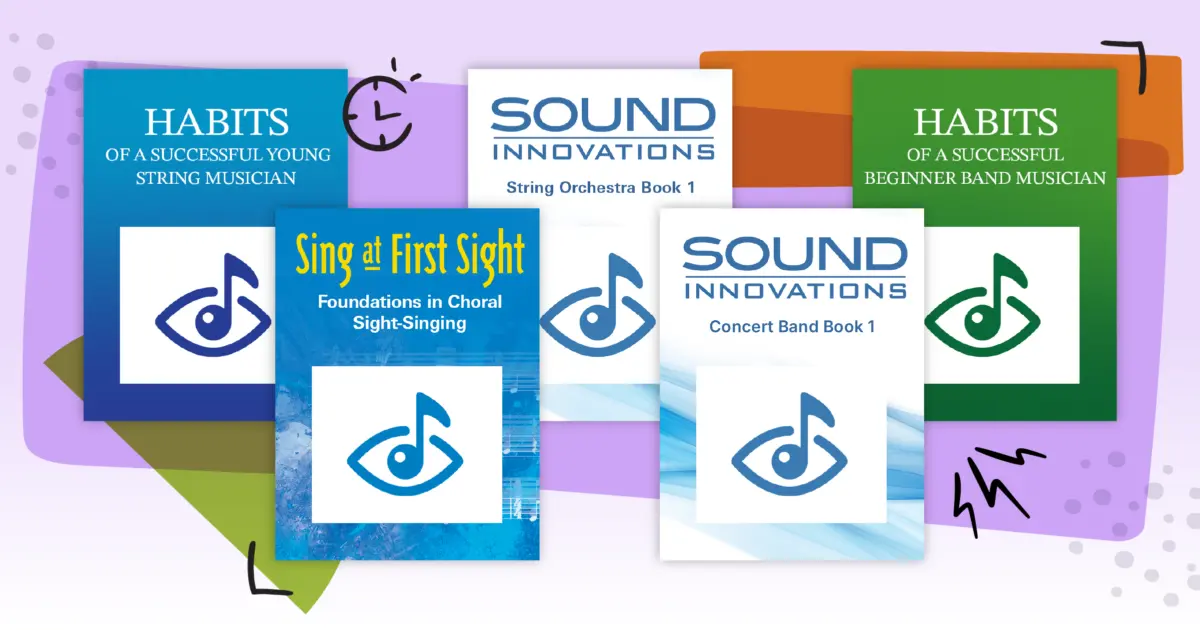
Housed within the robust architecture of Sight Reading Studio inside MakeMusic Cloud, the correlated templates are meticulously mapped to three of the most widely adopted instructional method books in music education.
When an educator logs into the platform, the workflow is streamlined into three steps:
- Select the Method: The teacher navigates to the pre-built template library and selects the exact method book currently in use by their curriculum.
- Select the Lesson: The instructor navigates directly to the specific lesson or page number currently being covered in class.
- Generate on Demand: With a single click, the platform generates a brand-new, perfectly leveled exercise that incorporates only the notes, rhythms, and musical symbols introduced up to that specific point in the book.
If the teacher clicks the generate button a second time, an entirely new exercise embodying the exact same pedagogical constraints appears instantly. This eliminates preparation time entirely. There is no need to write notation by hand, hunt down leveled material from third-party sources, or worry about introducing premature technical challenges.
Pedagogical Integrity
Industry experts have praised the system for maintaining strict adherence to pedagogical sequencing. In an official overview of the feature, MakeMusic underscored its commitment to supporting teachers rather than dictating curriculum.
"Strong sight readers learn music faster, rehearse more efficiently, and walk into the festival sight reading room with confidence instead of dread," platform documentation notes. "The catch is that reading only improves with steady practice on music students haven’t seen before. Method books can only hold so many exercises, and after a few passes through a page, students stop reading the notes and start remembering them. Our new correlated templates solve that problem by turning the methods you already teach into an unlimited supply of fresh material."
Practical Application: Inside the Classroom and at Home
The versatility of the Correlated Sight Reading Generators allows for seamless deployment across a variety of educational settings, transforming how teachers approach daily instruction and how students engage with independent practice.
Classroom Implementation Strategies
In a collective ensemble setting—such as a middle school band or high school string orchestra—time is the ultimate commodity. Directors are under immense pressure to prepare concert repertoire for seasonal performances, leaving precious few minutes for foundational skill-building. The new templates integrate effortlessly into daily routines:
- The Five-Minute Warm-Up: Directors can project a freshly generated sight-reading exercise directly onto the smartboard at the start of rehearsal. Because the exercise corresponds to the current week’s lesson, it serves as an immediate diagnostic tool, revealing whether the ensemble has truly grasped a new rhythm or key signature before moving on to concert literature.
- Differentiated Instruction: Within any given classroom, students exhibit a wide spectrum of reading abilities. Teachers can utilize the platform to generate exercises tailored to different developmental tiers, ensuring that advanced students remain challenged while struggling readers build confidence without feeling overwhelmed.
- Ensemble-Wide Focus: Because the software instantly generates new variations, the entire class can sight-read a fresh example every single day of the week without ever repeating a piece.
At-Home Practice Protocols
Music education does not stop when the school bell rings. However, assigning sight-reading for homework has historically been ineffective because students quickly exhaust the printed exercises in their books and lack the ability to self-verify their accuracy.
- Accountability and Independence: By accessing MakeMusic Cloud from home, students can generate their own leveled practice exercises that mirror what they learned in class that day.
- Immediate Auditory Feedback: Utilizing the platform’s assessment capabilities, students can play their generated sight-reading assignment into their device’s microphone, receiving instant visual feedback on pitch and rhythmic accuracy. This empowers students to self-correct and practice independently without requiring direct teacher supervision.
- Building Lifelong Confidence: Regular, low-stakes exposure to unfamiliar notation dismantles the psychological barrier of "sight-reading anxiety." When students realize they can successfully decode unfamiliar music day after day, their self-efficacy skyrockets.
Future Outlook: The Next Frontier in Music Literacy Technology
The rollout of MakeMusic’s Correlated Sight Reading Generators represents a major milestone, but industry analysts view it as just the beginning of a broader technological transformation in music pedagogy. As artificial intelligence, machine learning, and adaptive software continue to mature, the future of music education points toward hyper-personalized, data-driven instruction.
Predictive Skill Mapping
Future iterations of sight-reading generators are expected to incorporate adaptive learning algorithms. Rather than relying solely on a linear method book progression, future systems could dynamically analyze an individual student’s error patterns during home practice sessions. If a student consistently struggles with specific interval jumps (such as descending minor thirds) or syncopated rhythmic subdivisions (such as quarter-note/eighth-note combinations), the generator could automatically curate customized micro-exercises targeting those exact weaknesses.
Expanding Method Book Ecosystems
As adoption rates climb, MakeMusic plans to expand its library of correlated templates to encompass a broader array of instructional methods. This expansion will likely include specialized jazz methods, advanced collegiate-level sight-singing anthologies for vocal ensembles, and regional curricula widely utilized in international markets. By broadening the scope of supported texts, the platform aims to become the universal standard for sight-reading development across all genres and age groups.
Reclaiming Teacher Energy for Artistry
Ultimately, the broader impact of tools like the Correlated Sight Reading Generators extends far beyond software metrics and administrative time-savers. By lifting the crushing weight of manual prep work, technology gives educators back their most valuable asset: creative energy.
When teachers are liberated from the tedious mechanics of copying notes onto whiteboards and hunting for leveled worksheets, they can redirect their focus toward what matters most—inspiring students, interpreting musical expression, and fostering a deep, enduring passion for the art form. In an era where arts education continually fights for resources and instructional time, innovations that maximize efficiency while elevating pedagogical quality are not just welcome conveniences; they are essential for the survival and thriving of music programs worldwide.
Instructors eager to transform their literacy instruction can log in to MakeMusic Cloud today to explore the new correlated templates, locate their curriculum’s specific method book, and provide their students with a truly infinite world of fresh music to explore.















