

Executive Overview
For generations of music educators, the pursuit of developing fluent sight readers has been a double-edged sword. On one hand, strong sight-reading skills are universally recognized as the bedrock of lifelong musicianship. Students who can effortlessly decode unfamiliar notation learn new repertoire exponentially faster, rehearse with greater efficiency, and step into competitive festival rooms with composure rather than anxiety. More importantly, independent music literacy is the critical threshold that ensures students continue to make music long after they graduate—whether they are joining community wind ensembles, singing in church choirs, or jamming in a garage band with friends.
On the other hand, the practical mechanics of teaching sight reading have long been hampered by a persistent bottleneck: the severe shortage of fresh, appropriately leveled practice material. Traditional method books contain a finite number of exercises. Once a student plays or sings through a page a few times, the cognitive demand shifts from active reading to rote memorization. Educators are then forced into a time-consuming cycle of hunting for supplementary materials, composing original exercises by hand, or spending precious planning periods copying notation onto whiteboards.
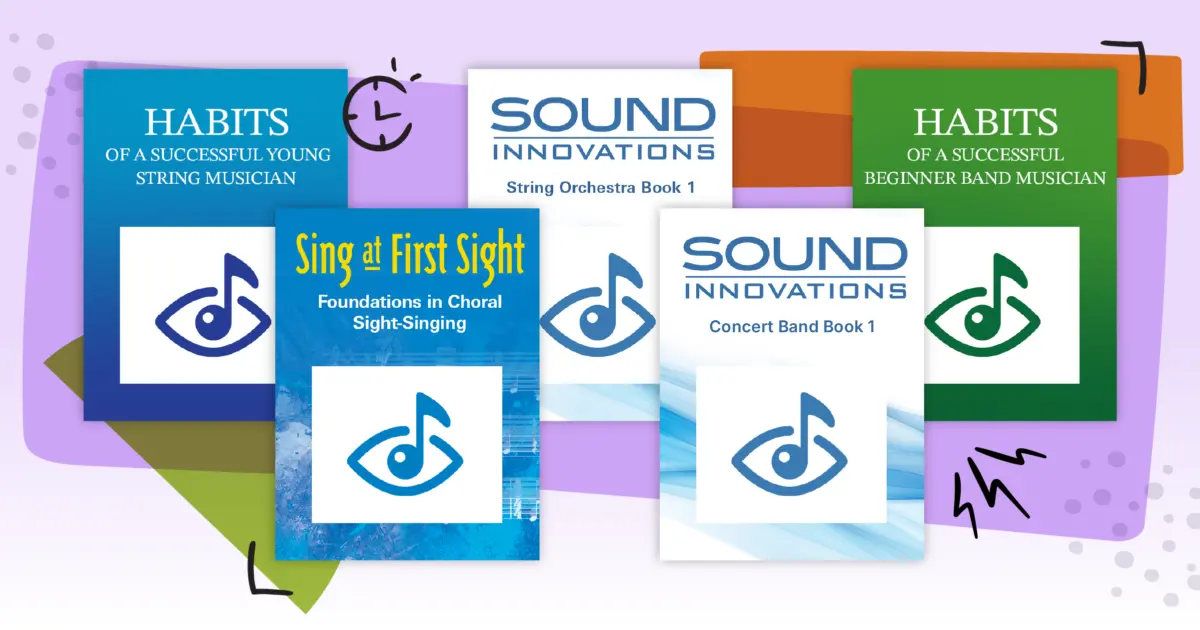
To solve this systemic challenge, MakeMusic has officially launched its new line of Correlated Sight Reading Generators within the MakeMusic Cloud ecosystem. Designed to integrate seamlessly with widely used pedagogical method books, these pre-built Sight Reading Studio templates generate an infinite supply of fresh, lesson-aligned practice material on demand. By bridging the gap between established curricula and dynamic digital generation, MakeMusic aims to reclaim hours of instructional prep time for educators while fundamentally transforming how students build musical literacy, both inside the classroom and during independent practice at home.
Detailed Chronology: The Evolution of Digital Music Literacy
To understand the significance of the new Correlated Sight Reading Generators, it is necessary to examine the broader timeline of how music technology has evolved to support classroom instruction.
Phase 1: The Analog Era and Static Curricula
For decades, music educators relied entirely on physical print media. Method books established logical, sequential pedagogical pathways—introducing notes, rhythms, and key signatures in a controlled progression. However, these static books suffered from an immutable limitation: physical page constraints. Once a student mastered or memorized the handful of exercises designated for a specific lesson, the material lost its utility as an authentic sight-reading tool. Teachers frequently supplemented these books with photocopies from older anthologies, handwritten whiteboard drills, or expensive secondary sight-reading workbooks, creating administrative and financial friction.
Phase 2: The Rise of Digital Notation and Software
As music notation software and early digital learning management systems emerged in the late 1990s and 2000s, educators gained the ability to draft custom exercises on computers. While this improved the quality of printed handouts, it did not significantly reduce the time investment required from teachers. Crafting pedagogically sound, leveled sight-reading examples required deep software fluency and hours of manual data entry, note by note, rhythm by rhythm.
Phase 3: Algorithmic Generation and the Birth of Sight Reading Studio
Recognizing the need for automated practice tools, platforms like MakeMusic introduced algorithmic sight-reading generation. These tools allowed teachers to set specific parameters—such as time signatures, key signatures, and rhythmic complexity—to produce automated exercises. While powerful, these early generative tools often operated in a vacuum. They generated great material, but aligning that material precisely with the day-to-day progression of a teacher’s chosen method book still required manual curation and parameter adjustment by the educator.
Phase 4: The Integration of Correlated Templates
The current release of MakeMusic’s Correlated Sight Reading Generators represents the culmination of this technological evolution. By mapping generative algorithms directly to the structural syllabus of trusted, mainstream method books, MakeMusic has eliminated the friction between core instruction and supplemental practice. Teachers no longer need to translate lesson objectives into software parameters; they simply match the digital template to the page number of their current curriculum, unlocking a continuous stream of authentic, pedagogically synchronized practice material with a single click.
Supporting Context & Metrics: The Crisis of Prep Time and the Science of Sight Reading
The introduction of automated, correlated generation addresses two critical metrics in modern music education: instructional burnout driven by administrative prep time, and the cognitive science of reading acquisition.
The Administrative Burden on Educators
Recent surveys across K-12 arts education indicate that music teachers spend an average of 4 to 7 hours per week on non-instructional tasks, with lesson planning, repertoire curation, and worksheet preparation taking up the lion’s share of after-hours work. For ensemble directors managing multiple concert bands, choirs, or orchestras, the task of sourcing leveled sight-reading materials for varying ability tiers is particularly daunting.
When teachers are forced to spend their evenings writing notation or hunting for obscure supplemental packets, their capacity for creative instructional design diminishes. By automating the generation of lesson-aligned exercises, the new templates directly target this administrative drag, redirecting educator energy back toward live coaching, ensemble balance, and individualized student mentorship.
Cognitive Load and the Danger of Rote Memory
From a cognitive perspective, sight reading is defined as the ability to read and perform music notation at first sight, without prior practice. True sight reading engages visual processing, cognitive decoding, motor execution, and auditory feedback simultaneously.
When a student plays the same exercise three or four times, neuro-pathways shift away from visual processing toward procedural memory. The student is no longer reading the intervals and rhythmic values; they are recalling a physical pattern or aural memory. Consequently, the primary objective of sight reading—developing instantaneous literacy—is compromised.
MakeMusic’s correlated generators defeat rote memorization by leveraging algorithmic variability. Because the system generates a brand-new, structurally identical exercise every time the button is clicked, students are perpetually confronted with unfamiliar note combinations that reinforce the exact competencies of their current lesson without the safety net of memory.
Pedagogical Applications: Inside the Classroom and Beyond
The true power of the Correlated Sight Reading Generators lies in their versatility across different learning environments. Whether deployed in a bustling middle school band room or during an evening practice session in a student’s bedroom, the templates adapt to foster continuous literacy growth.
1. Synchronized Classroom Instruction
In a group setting, pacing is everything. When introducing a new concept—such as a dotted quarter-eight note rhythm or a shift to a new hand position—educators traditionally move straight from the method book explanation to a single practiced example.
With the new templates integrated into MakeMusic Cloud:
- Instant Group Drills: Teachers can project a fresh, lesson-aligned sight-reading exercise onto a smartboard or screen instantly.
- Formative Assessment: Educators can gauge whole-class comprehension in real time. If the class struggles with the first generated example, the teacher can click to generate a second, structurally equivalent exercise for immediate reinforcement before moving on.
- Differentiation: Instructors can quickly generate tiered versions of exercises to challenge advanced learners while supporting developing students within the exact same curricular framework.
2. Independent Practice at Home
Music literacy cannot be mastered solely within the confines of weekly rehearsals; it requires consistent, independent repetition. However, students practicing at home rarely have access to leveled sight-reading materials outside of their assigned concert pieces or method books.
The MakeMusic Cloud platform changes the dynamic of home practice:
- Guided Autonomy: Students can access the correlated templates independently at home, ensuring that their practice aligns precisely with what was covered in school that day.
- Immediate Feedback Loops: When paired with MakeMusic Cloud’s assessment tools, students receive immediate visual feedback on pitch and rhythm accuracy as they sight-read generated exercises.
- Building Confidence: By engaging with limitless, low-stakes practice material, students shed the fear of the unknown, transforming sight reading from a dreaded chore into an engaging, gamified challenge.
Future Outlook: The Next Horizon in Digital Music Education
As educational technology continues to mature, the release of MakeMusic’s Correlated Sight Reading Generators signals a broader shift toward hyper-personalized, curriculum-connected learning environments. The days of static, one-size-fits-all print media are rapidly giving way to dynamic ecosystems where published curricula and generative software operate in total synergy.
Industry analysts predict several key developments in the wake of this release:
- Expanded Curricular Partnerships: As adoption grows, MakeMusic is expected to expand its library of correlated templates to encompass an even wider array of instrumental, vocal, and string method books used globally.
- Data-Driven Diagnostics: Future iterations of generative tools will likely leverage learning analytics to automatically adapt the difficulty of generated sight-reading exercises based on an individual student’s historical performance data, creating a truly personalized literacy path.
- Enhanced Collaborative Workflows: Educators will increasingly share custom template configurations within professional learning communities, creating a collaborative ecosystem of localized pedagogical resources.
Ultimately, the goal of music education remains unchanged: to empower students with the tools they need to express themselves through art and to sustain their engagement with music throughout their lives. By removing the mechanical barriers of prep work and the cognitive traps of rote memorization, MakeMusic’s Correlated Sight Reading Generators represent a major leap forward in equipping the next generation of musicians with fluency, independence, and confidence.















