
By the Education & Technology Desk
Published October 2026
Executive Overview
For generations of music educators, sight-reading instruction has existed in a state of pedagogical tension. On one hand, instructors universally recognize that strong sight-reading skills are the bedrock of lifelong musicianship. Students who decode notation fluidly learn repertoire faster, navigate rehearsals with minimized friction, and enter festival performance rooms with composure rather than panic. More fundamentally, independent music literacy is the primary bridge that allows students to continue making music long after formal classroom instruction ends—whether in community concert bands, sacred choir lofts, or informal weekend jam sessions.
On the other hand, teaching sight-reading effectively has long been crippled by an intractable logistical bottleneck: the scarcity of fresh, level-appropriate material.
Traditional method books contain a finite number of exercises. Once a student plays through a page two or three times, the cognitive demand shifts from reading notes to memorizing patterns. The pedagogical value of that exercise plummets. To counteract this, conscientious music teachers have historically spent countless unpaid hours hunting down supplementary worksheets, hand-copying notation onto chalkboards, or attempting to compose original, pedagogically sound exercises tailored to specific lesson sequences.
Enter MakeMusic’s Correlated Sight Reading Generators, a groundbreaking digital solution designed to eliminate teacher prep fatigue while providing an infinite, dynamically generated stream of tailored sight-reading material. Powered by MakeMusic Cloud’s Sight Reading Studio (SRS), these pre-built templates align lesson-by-lesson with widely trusted method books. By bridging the gap between core curriculum and limitless practice generation, MakeMusic is poised to redefine how instrumental and vocal literacy is taught in the modern classroom.
Detailed Chronology: The Evolution of Digital Sight-Reading
To understand the significance of the correlated sight-reading templates, it is necessary to examine the technological trajectory that led to their development within the broader context of music education technology.
Phase 1: The Analogue Era and the Photocopy Struggle
For decades, music education relied entirely on physical print. Teachers maintained personal filing cabinets stuffed with dog-eared anthologies, photocopied snippets from out-of-print method books, and hand-scrawled rhythm flashcards. While effective in isolated classrooms with abundant resources, this approach suffered from severe scaling issues. Equity gaps widened between well-funded districts with robust sheet music budgets and under-resourced schools where teachers lacked access to comprehensive libraries.
Phase 2: The Advent of Digital Notation and Static Software
As computer-assisted music notation software matured in the late 1990s and 2000s, educators gained the ability to draft custom exercises on desktop applications. However, this process remained time-intensive. Teachers still had to act as software engravers, manually inputting pitches, rhythms, dynamics, and articulation markings one note at a time. Digital PDFs replaced paper folders, but the fundamental constraint remained: every unique exercise required manual human labor to create.
Phase 3: Algorithmic Generation and the Birth of Sight Reading Studio
The introduction of algorithmic generation tools represented a massive leap forward. Platforms like MakeMusic’s Sight Reading Studio allowed educators to generate customized sight-reading exercises by setting specific parameters—such as time signatures, key signatures, rhythm complexity, and note ranges.
While revolutionary, these early algorithmic tools operated in a vacuum. They were powerful, generalized engines, but they lacked direct correlation to specific curricula. An educator using a popular band or choir method book still had to manually cross-reference their current lesson plan with the SRS parameter settings, attempting to reverse-engineer an exercise that matched the exact subset of notes and rhythms their students had just learned.
Phase 4: The Correlated Revolution (Current Era)
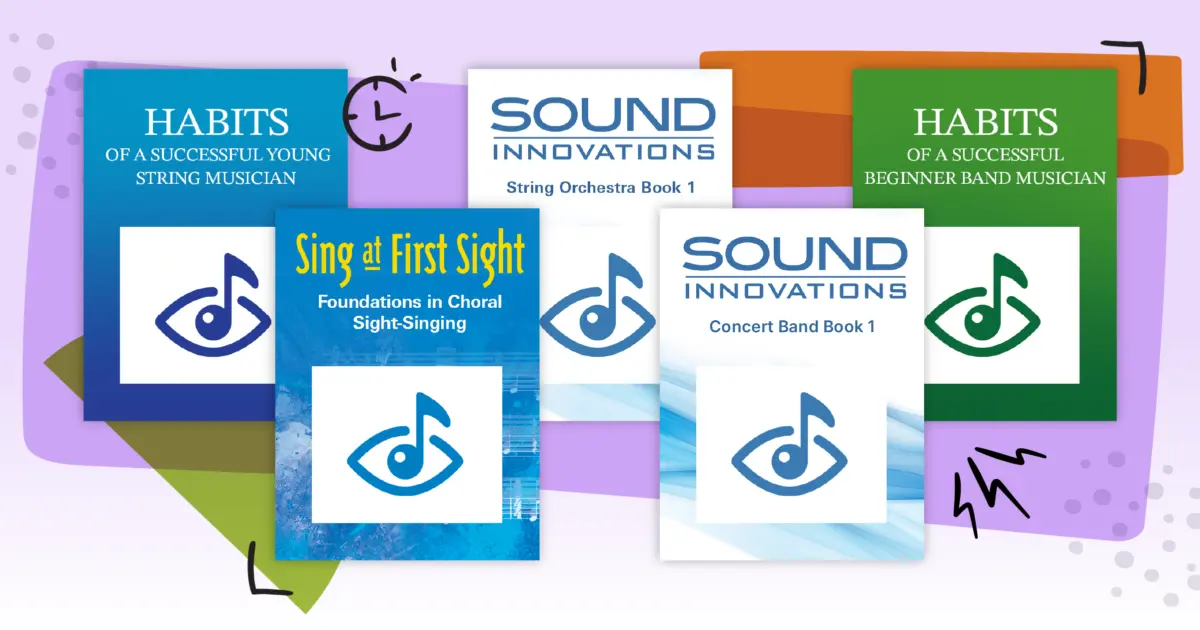
MakeMusic’s new correlated sight-reading templates represent the culmination of this technological evolution. By integrating algorithmic generation directly with the pedagogical sequencing of trusted method books, the software bridges the gap between general practice generation and targeted curriculum support. Teachers no longer need to translate lesson concepts into software parameters; they simply select their method book, click on the current lesson, and instantly access an infinite stream of contextually accurate material.
Supporting Context & Metrics: The Crisis of Music Literacy and Teacher Burnout
The release of these correlated generators arrives at a critical juncture for arts education. Recent educational research highlights two converging crises in contemporary music classrooms: diminishing instructional preparation time and stagnant sight-reading literacy rates.
The Administrative Burden on Educators
According to recent surveys compiled by music education advocacy groups, secondary ensemble directors work an average of 52 to 58 hours per week, with non-instructional administrative and preparation tasks accounting for nearly 40% of that time. Sourcing leveled sight-reading material consistently ranks among the top weekly stressors for instrumental and vocal instructors.
When teachers spend Sunday afternoons drafting rhythm worksheets or hunting for eighth-note variation exercises, their creative and emotional capital is drained. This administrative fatigue directly contributes to the high burnout and retention rates currently impacting arts educators nationwide. By automating the creation of leveled, curriculum-aligned material, MakeMusic’s templates target this exact pain point, reclaiming precious hours for direct student engagement.
The Cognitive Science of Sight-Reading
From a cognitive perspective, the human brain learns to read notation through pattern recognition and decoding efficiency. Neuroscientific studies on musical sight-reading demonstrate that expert readers process visual graphic symbols and translate them into motor commands via peripheral visual spans far wider than those of novices.
However, this neurological development requires novelty. When a student plays a familiar exercise from a method book, the brain relies on auditory memory and kinesthetic habit rather than visual decoding. True literacy development stalls.
By providing an infinite pool of unique exercises that strictly adhere to the structural boundaries of a given lesson, the correlated generators ensure that students are forced to continually engage their active decoding faculties. Every time a student clicks "generate," they encounter a genuinely novel problem set that reinforces recent learning without introducing premature cognitive load.
Operational Mechanics: How Correlated Sight Reading Generators Work
The mechanics of the system are designed around maximum efficiency and zero friction for the instructor.
Seamless Integration with Trusted Curricula
The core innovation lies in the alignment mapping. MakeMusic’s curriculum development team has analyzed leading instrumental and vocal method books, breaking down their pedagogical progression lesson by lesson. These alignment maps are embedded directly into the pre-built Sight Reading Studio templates within the MakeMusic Cloud library.
When an educator logs into the platform, they navigate to the searchable template database. Instead of configuring abstract parameters like "scalar movement within a pentachord in 4/4 time using eighth notes," the teacher simply identifies their curriculum, locates the specific chapter or page they are currently teaching, and selects the corresponding template.
The Power of the "Infinite Refresh"
Once a template is selected, the instructor or student clicks Generate. The underlying algorithm instantly synthesizes a brand-new, completely unique exercise that strictly obeys the parameters of that specific lesson—utilizing only the notes, rhythms, and technical constraints introduced up to that point in the book.
If the teacher wants the class to practice the concept further, they click generate again, producing a fresh variation instantly.
- No Writing Notation: The software handles all engraving, layout, and formatting.
- No Leveled Material Hunting: The difficulty curve is mathematically and pedagogically controlled.
- No Setup Friction: The entire workflow takes less than five seconds.
Application in the Classroom and at Home
The versatility of the correlated sight-reading templates transforms both synchronous ensemble rehearsals and asynchronous home practice environments.
In the Classroom: Group Pacing and Ensemble Readiness
- Ensemble Warm-Ups: Directors can project a newly generated exercise onto a smartboard or screen at the start of rehearsal. The entire band, orchestra, or choir can sight-read a 30-second phrase that specifically reinforces the chromatic fingerings or syncopated rhythms found in the core repertoire piece they are about to rehearse.
- Differentiated Instruction: In mixed-ability classrooms, teachers can deploy different template levels to different sections or individual students, ensuring that advanced learners remain challenged while struggling students build foundational confidence.
- Festival and Adjudication Prep: By regularly exposing students to zero-stakes, dynamically generated examples, ensemble directors strip away the anxiety associated with festival sight-reading rooms. Students learn to trust their instantaneous decoding skills.
At Home: Asynchronous Accountability and Mastery
- Targeted Practice Assignments: Educators can assign specific correlated templates as homework through MakeMusic Cloud’s assignment tracking system.
- Self-Directed Skill Building: Students practicing independently at home cannot cheat by memorizing the page. If they need extra repetitions of a challenging rhythm introduced in Lesson 14, they can generate three or four unique variations to drill the concept until it becomes second nature.
- Immediate Feedback Loops: When integrated with MakeMusic’s assessment tools, students receive immediate visual feedback on their pitch and rhythm accuracy, fostering autonomous learning habits outside of school hours.
Future Outlook: The Next Frontier in Music Literacy Technology
As educational technology continues to evolve, the integration of curriculum-correlated generation tools points toward an increasingly personalized, data-driven future for music pedagogy.
Industry analysts predict several key advancements in the near horizon:
- Adaptive AI-Driven Branching: Future iterations of sight-reading generators may incorporate real-time adaptive algorithms. If a student consistently struggles with dotted-eighth-sixteenth note combinations within a generated exercise, the system could automatically adjust subsequent generations to provide targeted remedial micro-lessons.
- Expanded Curriculum Partnerships: MakeMusic plans to broaden its library of alignment templates, incorporating an even wider array of regional, international, and specialized method books for strings, winds, percussion, and voice.
- Comprehensive Longitudinal Tracking: Educators will soon gain access to macro-level data dashboards that track individual and ensemble-wide sight-reading literacy growth over multi-year periods, offering unprecedented empirical insight into student development.
By removing the logistical barriers that have historically marginalized sight-reading instruction, MakeMusic’s correlated generators empower educators to focus on what matters most: inspiring musical expression, building technical mastery, and fostering a lifelong passion for independent music-making.
Getting Started
Educators ready to reclaim their prep time and invigorate their students’ literacy skills can begin immediately.
- Log In: Access the platform by visiting MakeMusic Cloud.
- Explore: Navigate to the searchable database of correlated sight reading templates.
- Implement: Locate your method book, jump directly to your current lesson, and provide your students with an infinite world of fresh music to read today.