
LONDON — In a milestone development for the capital’s classical music landscape, Sinfonia Smith Square has announced a crucial £200,000 capital grant from the prestigious Wolfson Foundation. The substantial funding will directly underwrite Doors Open: Transforming Lives Through Music, an ambitious and long-overdue overhaul of the orchestra’s Grade I listed home in the heart of Westminster.
Heralded as the most comprehensive redevelopment of Smith Square Hall since its historic reconsecration as a dedicated concert hall in 1969, the project aims to harmonize architectural preservation with modern civic utility. By addressing critical maintenance needs, improving accessibility, and transforming underutilized spaces, the initiative seeks to safeguard a magnificent piece of British heritage while dramatically expanding its capacity to nurture the next generation of musical talent and serve the wider community.
Executive Overview
The transformation of Smith Square Hall represents a vital intersection of heritage conservation, musical excellence, and community outreach. For decades, the majestic Baroque-style building—originally known as St John’s Smith Square—has stood as an acoustic jewel in Westminster. However, the realities of maintaining a Grade I listed structure of this vintage have taken their toll, culminating in the building’s inclusion on Historic England’s Heritage at Risk Register.
The £200,000 grant from the Wolfson Foundation serves as a vital financial catalyst for Doors Open, providing immediate momentum to a capital campaign designed to reverse years of architectural degradation. Beyond arresting physical decay, the project is structured around a visionary re-imagining of the building’s internal spaces.
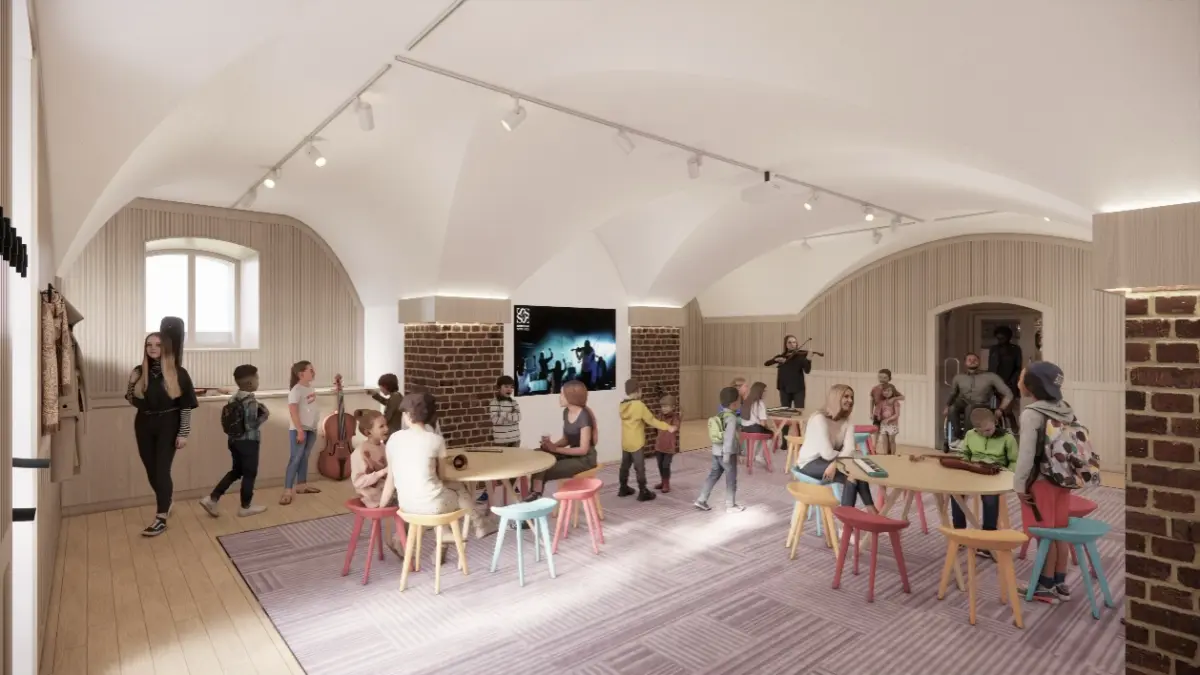
At the heart of the proposal is the conversion of the historic crypt into a state-of-the-art educational and community hub. This localized transformation will allow Sinfonia Smith Square to scale up its engagement programs, offering dedicated spaces for local schools, participatory community music-making, and creative workshops. Furthermore, the redevelopment addresses the severe infrastructural constraints faced by the orchestra’s renowned Fellowship program, delivering upgraded, modern rehearsal spaces that befit a training ground for world-class orchestral musicians.
When construction concludes and the hall reopens its doors—tentatively scheduled for 2029—Sinfonia Smith Square projects an influx of more than 90,000 visitors annually. This surge in footfall will be driven by a diversified program that seamlessly blends world-class orchestral performances with robust educational initiatives and community-driven arts projects, cementing the Hall’s status as a dynamic cultural anchor in central London.
Detailed Chronology
Understanding the weight and significance of the Doors Open project requires a clear view of the timeline—tracing the history of the building, the evolution of the orchestra, and the phased rollout of the upcoming restoration works.
A Rich Heritage: From Baroque Masterpiece to Concert Hall
- 1713–1728: Designed by the visionary architect Thomas Archer, St John’s Smith Square is constructed as one of the finest examples of English Baroque architecture. Its distinctive four corner towers give it a monumental, sculptural presence in Westminster.
- 1741: The building suffers a devastating fire, which gutting the interior and necessitating extensive rebuilding works.
- 1941: During the Blitz of World War II, the church is severely damaged by incendiary bombs, leaving it a hollowed-out shell open to the elements for decades.
- 1960s: A dedicated rescue and restoration campaign spearheaded by Lady Parker and architect Marshall Sisson rescues the building from demolition.
- 1969: Following meticulous acoustic and structural rehabilitation, the former church is triumphantly reopened as a world-class concert hall, praised for its warm, resonant acoustic profile.
The Modern Era and the Genesis of Doors Open
- 2002: The orchestra’s esteemed Fellowship program is established. Over the ensuing two decades, it grows into a premier training ground for early-career musicians, supporting more than 700 young artists.
- Early 2020s: Facing mounting structural wear, outdated backstage facilities, and restrictive public access points, the venue’s leadership recognizes the urgent need for a holistic capital intervention. The Doors Open project is conceived to address these mounting challenges comprehensively.
- August 2026: The announcement of the £200,000 Wolfson Foundation grant provides a major financial milestone, validating the architectural vision and public benefit of the impending redevelopment.
- Late 2027 (Projected): Heavy construction and structural remediation works are scheduled to commence on site, necessitating a temporary closure of the primary concert spaces.
- 2029 (Projected): Smith Square Hall is slated to officially reopen to the public, removed from the Heritage at Risk Register and operating with an expanded, modernized footprint.
Supporting Context & Metrics
The transformation of Smith Square Hall is not merely an aesthetic or preservation-focused exercise; it is an economic and social investment rooted in rigorous planning and impressive operational metrics.
Financial and Architectural Scope
- £200,000: The capital award secured from the Wolfson Foundation, earmarked specifically for foundational restoration works and facility improvements.
- Grade I Listing: The highest statutory designation afforded to buildings of exceptional architectural or historic interest in the United Kingdom, necessitating specialized, heritage-sensitive construction methodologies.
- Heritage at Risk Register: Maintained by Historic England, this register catalogs historic sites whose futures are threatened by neglect, decay, or inappropriate development. A primary objective of the Doors Open project is the permanent removal of Smith Square Hall from this list.
Community Impact and Educational Reach
- 700+: The number of early-career musicians who have successfully navigated Sinfonia Smith Square’s prestigious orchestral Fellowship program since its inception in 2002. The modernized rehearsal facilities funded by the redevelopment will ensure this legacy of mentorship continues to expand.
- 90,000+: The projected annual visitor count following the 2029 reopening. This represents a substantial increase in public engagement, driven by extended operating hours, a more welcoming physical footprint, and a diversified calendar of events.
- The Crypt Transformation: By repurposing the atmospheric undercroft of the building into dedicated educational facilities, the project solves a chronic shortage of creative learning spaces in the City of Westminster, offering schools and vulnerable community groups direct access to professional-grade musical mentorship.
Official Statements
The announcement of the grant has drawn high praise from arts leaders, preservationists, and philanthropic figures alike, all of whom underscore the transformative potential of the project for London’s cultural ecosystem.
Speaking on behalf of Sinfonia Smith Square, executive leadership emphasized the partnership with the Wolfson Foundation as a vital validation of the orchestra’s dual mission of artistic excellence and social responsibility:
"The generous support of the Wolfson Foundation marks a defining moment in the history of our home. Smith Square Hall has long been a sanctuary for classical music lovers, but the changing needs of our performers, our students, and our local community demand that the building evolves. With ‘Doors Open,’ we are not only preserving a breathtaking masterpiece of English Baroque architecture; we are actively unlocking its potential to change lives through music. This grant brings us a significant step closer to a fully revitalized Westminster landmark that belongs to everyone."
The Wolfson Foundation, known for its rigorous evaluation processes and long-standing commitment to funding excellence in science, health, education, and heritage, highlighted the project’s ability to combine historic preservation with tangible community enrichment:
"We are delighted to support Sinfonia Smith Square in this ambitious redevelopment of Smith Square Hall. The Wolfson Foundation has a long history of investing in projects that enhance our national heritage while creating meaningful opportunities for public engagement and education. The ‘Doors Open’ initiative brilliantly bridges the gap between preserving a Grade I listed architectural treasure and creating vibrant, accessible spaces for schools, community groups, and the next generation of musical talent. We look forward to seeing the profound impact this transformation will have on London’s cultural landscape."
Historic England representatives have also offered quiet encouragement to the planning consortium, noting that the comprehensive engineering and conservation strategies embedded within the Doors Open proposal provide a robust framework for resolving the structural vulnerabilities that landed the hall on the Heritage at Risk Register.
Future Outlook
As the classical music sector navigates an increasingly complex financial and social landscape, institutions must prove their enduring relevance to survive and thrive. Sinfonia Smith Square’s proactive approach with the Doors Open project serves as an inspiring blueprint for how historic arts venues can reinvent themselves for the 21st century.
By the time the scaffolding is dismantled and the doors swing open to the public in 2029, Smith Square Hall will no longer be viewed merely as a static museum piece or a single-use concert auditorium. Instead, it will function as an interconnected cultural ecosystem: a pristine architectural marvel where world-class orchestral concerts, intensive professional fellowships, and grassroots community workshops exist in harmonious synergy.
The £200,000 contribution from the Wolfson Foundation is a vital down payment on that future. As fundraising efforts continue to bridge the remaining financial gaps ahead of the late 2027 construction kickoff, the classical music community watches with bated breath. The promise of Doors Open is clear: to ensure that the magnificent arches of Thomas Archer’s Westminster masterpiece will continue to resound with music, education, and community vitality for generations to come.