
Executive Overview
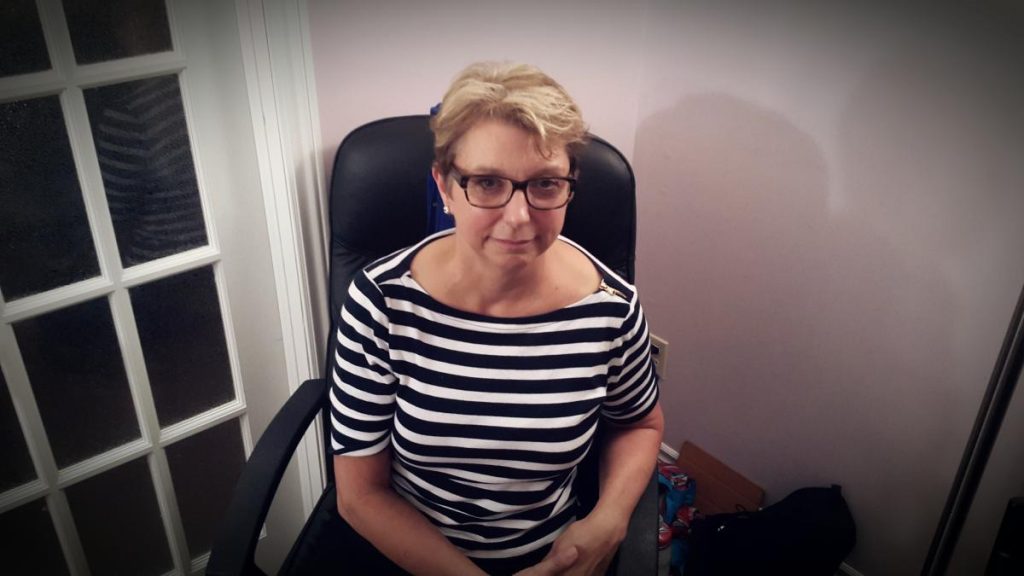
In the realm of vocal rehabilitation, few cases illustrate the intersection of tenacity, specialized science, and raw human determination quite as vividly as that of Mary Ellen Stoll. A resident of Brockville, Ontario, and a retired manager for the Government of Ontario, Stoll spent decades carrying the invisible scars of a youthful medical procedure that fundamentally altered her ability to communicate. Diagnosed with a vocal cord nodule at the tender age of 22, she underwent surgery that removed the physical lesion but left her speaking voice permanently compromised, strained, and stripped of its natural resonance.
For most people, accepting a compromised voice after decades of adaptation becomes a quiet, lifelong compromise. However, retirement from a high-stress governmental career unlocked a long-dormant ambition: a deep-seated, seemingly "impossible" desire to learn how to sing and, ultimately, to join a local community choir. What began as a hesitant inquiry to a local choral director transformed into an extraordinary multi-year journey of vocal restoration.
By seeking out advanced non-surgical voice repair methodologies—specifically utilizing the specialized techniques of the Vocal Science™ method—Stoll undertook a rigorous, cross-province pilgrimage. Driving hours through punishing Ontario winters, she committed herself to a holistic paradigm of speech and singing mechanics. Today, Stoll not only speaks with crisp clarity and acoustic projection, but she is also an active, competing member of a regional choir. This feature-length investigative report examines her remarkable transformation, analyzing the anatomical challenges of vocal nodules, the mechanics of holistic voice repair, and the psychological triumphs of reclaiming one’s artistic voice later in life.
Detailed Chronology: From Clinical Trauma to Choral Triumph
The Genesis of a Vocal Injury (1980s)
The narrative of Mary Ellen’s vocal journey begins more than four decades ago. At 22 years old, she experienced the distressing onset of vocal fatigue, breathiness, and progressive hoarseness—symptoms that eventually led to a clinical diagnosis of a vocal cord nodule. In an era when surgical interventions for benign vocal pathologies were often treated as blunt-instrument solutions, Stoll was steered toward a surgical excision.
While the operation successfully removed the physical nodule from her vocal fold, it failed to restore her vocal function. Surgical intervention on the delicate, multi-layered mucosa of the vocal cords frequently carries risks of scarring or structural stiffness if not accompanied by rigorous post-operative rehabilitation. For Stoll, the operation left her with a speaking voice that was permanently altered, strained, and lacking the natural acoustic support required for effortless projection. For forty years, she navigated professional and social spheres carrying this vocal handicap, assuming that the damage was irreversible.
The Catalyst of Retirement (2016)
Fast forward to the spring of 2016. At the age of 62, Stoll officially retired from a demanding, high-stress managerial role with the Government of Ontario. Retirement, for many, marks a period of decline or stagnation; for Stoll, it represented a blank canvas. Freed from the daily pressures of her career, she confronted the secret ambition she had harbored for decades: she wanted to sing.
With typical proactive energy, Stoll approached the director of a local barbershop-style choir in Brockville to inquire about membership. The director, possessing a trained ear, listened to her speak and immediately identified a profound underlying issue. He informed her bluntly that before she could even dream of blending her voice with a four-part harmony chorus, she would have to rehabilitate her damaged speaking voice. Her vocal production lacked the necessary structural integrity, support, and projection to sustain choral singing without causing further injury.
The Cross-Province Pilgrimage and the Vocal Science™ Intervention
Undeterred by the director’s assessment, Stoll turned to the internet in search of specialized help. Her research led her to a renowned voice repair studio known for handling complex, seemingly hopeless cases. Shortly after her initial phone consultation, Stoll embarked on what would become a transformative routine: driving over four hours each way from Brockville to the studio, enduring seasonal shifts and harsh winter storms across Ontario highways.
Upon entering the studio, the rehabilitation protocol commenced immediately. The methodology bypassed conventional, isolated vocal coaching, focusing instead on a holistic restructuring of Stoll’s entire vocal mechanism. As is standard practice for this advanced modality, the work did not begin with scales or songs; it began with the foundational instrument of human communication: the speaking voice.
Using specialized speech exercises coupled with targeted body movements, the regimen focused on establishing:
- Proper Physical Support: Engaging the core musculature and diaphragmatic control to alleviate pressure on the laryngeal area.
- Optimal Structural Alignment: Correcting posture and neck tension to allow the vocal tract to act as an unhindered acoustic amplifier.
- Precise Placement: Shifting vocal resonance away from the throat and into optimal facial masks to maximize acoustic efficiency.
- Enhanced Projection: Projecting sound waves effortlessly, ensuring that words were articulated with crisp clarity and distinct pronunciation.
These components form the bedrock of a wholesome, integrated mechanism designed to allow the human voice to operate at its absolute peak capacity—entirely free of pain, friction, or anatomical strain.
The Breakthrough and Choral Integration
The intensive training required extraordinary dedication, energy, and resilience from both client and practitioner. However, the yields of this labor were transformative. Stoll’s speaking voice transitioned from strained and compromised to crystal clear, resonant, and effortlessly projected.
Armed with her newly restored speaking voice, Stoll returned to the Brockville choir director for a re-evaluation. The transformation was so profound and immediate that the director took strict notice. Acknowledging the dramatic change in her vocal quality, he gave her the green light to continue her developmental work with the assurance that chorus membership was now within reach.
Continuing their rigorous multi-season partnership, Stoll and her vocal coach pressed onward. Through blistering summer heat and treacherous winter blizzards—driving upwards of five hours round-trip through snow and ice—Stoll maintained an unwavering commitment to her craft. This smart, uncompromising work ethic ultimately paid off in monumental fashion. Stoll successfully auditioned for the choir, securing her place among its ranks. Since then, she has remained an active, thriving member of the ensemble, participating in regional competitions, public performances, and community showcases.
Supporting Context & Metrics: The Anatomy of Vocal Repair
To truly appreciate the magnitude of Mary Ellen Stoll’s achievement, one must examine the physiological realities of vocal cord trauma and the specific scientific principles behind advanced voice mechanics.
Understanding Vocal Cord Nodules
Vocal cord nodules are benign, callus-like growths that develop on the middle portion of the vocal folds as a result of continuous, high-impact mechanical trauma. When individuals speak or sing with improper technique—often characterized by excessive muscular tension, lack of breath support, and glottal fry—the vocal folds slam together repeatedly during phonation. Over time, this friction causes localized swelling that hardens into fibrous nodules.
While surgery can excise the physical mass, it does not correct the underlying behavioral mechanics that caused the nodule in the first place. Consequently, many patients who undergo surgery without comprehensive functional retraining continue to misuse their voices, leading to persistent hoarseness, chronic fatigue, and secondary scarring. Stoll’s post-operative struggles for four decades were a classic textbook manifestation of this systemic gap in traditional otolaryngology and speech therapy protocols.
The Holistic Paradigm vs. Conventional Approaches
Traditional speech therapy often focuses narrowly on isolated laryngeal exercises or basic articulation. In contrast, advanced holistic systems—such as the Vocal Science™ methodology—view the voice as a holistic output of the entire human body.
As noted in historical media coverage, including a profile published by the Toronto Star newspaper titled "Not As Easy As It Sounds" (1999), true voice repair and vocal coaching demand an exhaustive, multi-disciplinary approach. The methodology relies on the premise that the voice cannot be fixed in isolation from the body. By integrating kinetic body movements, postural adjustments, and respiratory mechanics, the technique forces the anatomical structures to work by design rather than by default.
Key metrics of success in this specialized framework include:
- Acoustic Clarity: Eradication of breathiness, raspiness, and vocal fry in favor of harmonic richness.
- Endurance: The ability to speak or sing for extended periods without experiencing laryngeal fatigue, pain, or hoarseness.
- Dynamic Range: Expanding both the upper and lower limits of pitch and volume without destabilizing the vocal placement.
- Psychological Resilience: Overcoming decades of performance anxiety and bodily distrust born from chronic vocal injury.
Official Perspectives and Reflections
The journey from a clinical patient with a compromised vocal cord to a confident choral singer offers profound insights into the resilience of the human spirit and the efficacy of applied vocal science.
Reflecting on the milestone, Stoll’s vocal mentor and guide shared deep admiration for her unwavering commitment:
"This story is about one of my very dear clients, and now friend, Mary Ellen Stoll of Brockville, Ontario… Once the ‘impossible dream’ came true, it gave my dear client and friend health of voice (not to mention health in general). It also gave her the knowledge of a completely new application of the speaking and singing voice while using the voice by design—concurrently complying with all of the components of the Vocal Science™ method and technique!"
For Stoll, the transition from retirement to active choral performance represents far more than a recreational hobby; it is a profound reclamation of identity. For forty years, her vocal expression had been dictated by the lingering trauma of a 22-year-old medical intervention. By mastering the mechanics of her instrument later in life, she shattered her own self-imposed limitations, proving that chronological age and historical medical trauma are not insurmountable barriers to artistic expression.
The choral director in Brockville, who initially acted as a gatekeeper requiring fundamental vocal rehabilitation, ultimately served as an instrumental catalyst in validating Stoll’s progress. By demanding a high standard of functional speech before allowing her entry into the chorus, he ensured that Stoll would enter the musical space not as a liability, but as a fully capable, contributing vocal artist.
Future Outlook: Inspiring a New Paradigm in Vocal Longevity
Mary Ellen Stoll’s successful journey from vocal cord trauma to choral performance holds significant implications for the broader fields of vocal pedagogy, speech-language pathology, and geriatric wellness.
Redefining Vocal Aging and Rehabilitation
Society frequently associates aging with a natural, inevitable decline in vocal quality—often referred to in gerontology as presbylophonia, characterized by a thin, shaky, or weak speaking voice caused by muscular atrophy and vocal fold thinning. Stoll’s case aggressively challenges this fatalistic narrative. By demonstrating that a voice compromised for over forty years can be comprehensively rehabilitated in one’s sixties, her story serves as a beacon of hope for aging populations who assume vocal degradation is permanent.
The Future of Cross-Discipline Voice Training
Stoll’s success underscores the urgent necessity for closer collaboration between medical professionals (otolaryngologists and ENT surgeons) and advanced vocal mechanics specialists. Too often, surgical interventions end the moment the scalpel leaves the operating room, leaving patients to navigate the complex functional aftermath entirely on their own. Integrating holistic, scientifically grounded methodologies like the Vocal Science™ technique into post-surgical recovery protocols could dramatically improve long-term outcomes for thousands of patients suffering from vocal cord nodules, polyps, and scarring.
A Message for the Aspiring and the Hesitant
As Stoll enters her mid-sixties—celebrating her 64th birthday surrounded by the accomplishments of her artistic endeavors—her trajectory stands as an enduring testament to the power of disciplined effort, expert guidance, and unyielding personal resolve.
To those individuals sitting on the sidelines of their own ambitions—whether recovering from physical injuries, navigating mid-life transitions, or harboring secret artistic dreams—Stoll’s journey delivers an unequivocal message: the "impossible dream" is entirely achievable when approached with science, structure, and uncompromising dedication.
Way to go, Mary Ellen! Keep on singing, girl!
Wishing you the best of voice and the best of health now, in the New Year… and ALWAYS!