
Executive Overview
For millennia, the foundational narratives of antiquity have lived primarily within the ink of sacred texts, the stained-glass windows of cathedrals, and the vivid imaginations of generations of believers. Few accounts possess the cinematic gravity and enduring moral resonance of the Babylonian exile, particularly the iconic trials of Daniel and his companions. Yet, bringing these accounts to the silver screen presents a unique set of creative and technical challenges. Audiences arrive at the theater with pre-established mental imagery, deeply rooted expectations, and a comprehensive familiarity with the plot twists.
Enter Daniel and the Fiery Furnace, the ambitious new theatrical release from EKKL Entertainment. Directed by the visionary filmmaking duo Matthew and Daniel Kooman, the film boldly enters the competitive landscape of biblical cinema. Rejecting the standard cardboard cutouts often associated with religious historical dramas, the production team set out to construct a fully realized, emotionally resonant ancient world. Shot on location in India, the film anchors its narrative strength in the stellar lead performances of Mena Massoud (Aladdin) as Daniel and Elijah Alexander (The Chosen) as the complex, mercurial King Nebuchadnezzar.
Beyond its visual and dramatic merits, the project boasts an extraordinary intersection of cinematic art and Contemporary Christian Music (CCM) culture. Featuring an original score by Tyler Michael Smith, executive production oversight by music icon Michael W. Smith, and a surprising, high-energy credit track by Trevor McNevan of Thousand Foot Krutch and TobyMac, the film bridges the gap between historical epic and modern spiritual reflection. With a palpable sense of passion surrounding its recent red-carpet premiere in Franklin, Tennessee, Daniel and the Fiery Furnace invites audiences to step out of their Sunday-school preconceptions and experience a timeless struggle of faith, identity, and political intrigue in a foreign empire.
Detailed Chronology
To fully appreciate the scope of EKKL Entertainment’s latest cinematic undertaking, one must trace the developmental trajectory from its foundational scriptwriting phases through its international principal photography to its recent red-carpet debut.
Pre-Production and Conceptualization
The genesis of Daniel and the Fiery Furnace required a delicate balancing act. Scriptwriters had to navigate the complex geopolitical landscape of the ancient Near East as recorded in the opening chapters of the biblical book of Daniel. The narrative required an establishment of the Babylonian exile—a catastrophic historical event that stripped a generation of young Judahite nobility of their homeland, their language, and their cultural identity.
Directors Matthew and Daniel Kooman recognized early on that focusing solely on the literal pyrotechnics of the fiery furnace would trivialize the deeper human drama. Consequently, the narrative chronology was carefully structured to emphasize the protracted psychological and political crucible that Daniel, Shadrach, Meshach, and Abednego endured while serving within the inner courts of Nebuchadnezzar’s empire.
Principal Photography in India
Moving away from traditional Hollywood backlots, the production team selected diverse and visually striking locations across India for principal photography. This choice provided the film with an organic, tactile aesthetic that distinguishes it from sterile, CGI-heavy historical releases. The sweeping vistas, ornate architecture, and atmospheric textures of the chosen locations helped ground the Babylonian empire in a tangible reality.
Despite operating under financial constraints typical of independent biblical epics rather than mega-budget Hollywood blockbusters, the creative team leveraged practical design and stylistic choices. Rather than aiming for absolute, photorealistic accuracy—an impossible standard given the scarcity of surviving structural evidence from ancient Babylon—the filmmakers embraced a slightly heightened, almost painterly visual style. This artistic choice mirrors the way generations have visualized these accounts through illustrated texts and oral traditions, creating an immersive, dreamlike space that invites the viewer’s imagination to complete the picture.
The Franklin Premiere and Red-Carpet Highlights
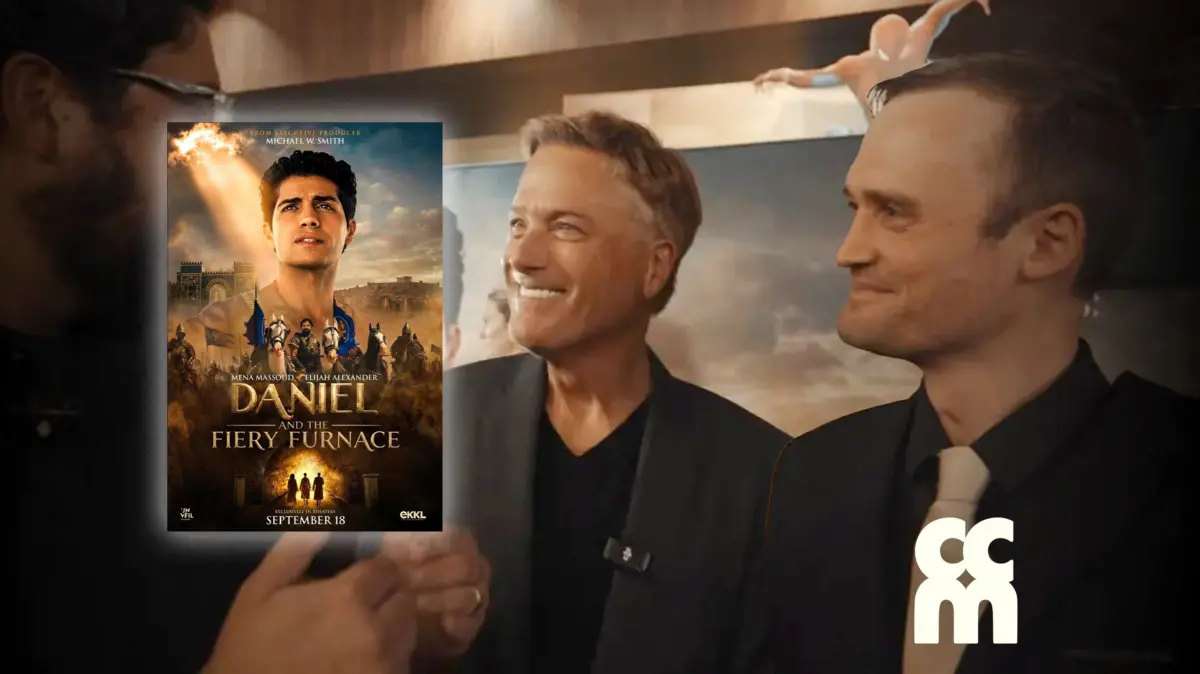
The promotional arc culminated this week with a high-profile premiere event in Franklin, Tennessee. The red carpet played host to a convergence of cinematic talent and CCM royalty. Attendees caught up with industry favorites including Michael W. Smith, Aaron Shust, Trevor McNevan, and Tommee Profitt, alongside key members of the cast and creative team.
Unlike standard press junkets designed purely to move commercial product, the atmosphere at the Franklin screening was characterized by a rare, palpable sense of personal investment. Cast, crew, musicians, and their families gathered not just to celebrate a finished film, but to bear witness to a shared artistic and spiritual endeavor that had consumed years of collaborative labor.
Supporting Context & Metrics
Evaluating the commercial and cultural viability of Daniel and the Fiery Furnace requires examining the broader landscape of modern biblical filmmaking, the economics of independent faith-based cinema, and the unique structural choices made by the directors.
Navigating the Title and Narrative Scope
For biblical purists, the film’s title—Daniel and the Fiery Furnace—initially prompts a degree of skepticism. Scriptural literacy dictates that Daniel himself is not among the trio cast into the blazing furnace; that specific trial belongs strictly to his companions, Hananiah, Mishael, and Azariah (better known by their Babylonian names: Shadrach, Meshach, and Abednego).
However, the film justifies its title by expanding its thematic aperture. Rather than serving as a narrow, isolated vignette, the cinematic narrative adapts the first three chapters of Daniel as a cohesive whole. It establishes Daniel’s foundational rise within the Babylonian administrative structure, his integration into the royal court alongside his peers, and the cumulative political tensions that ultimately culminate in the fiery test. In this structural context, the furnace serves as the ultimate, defining crucible for the entire community of displaced young men, cementing Daniel’s overarching worldview and administrative survival within a hostile superpower.
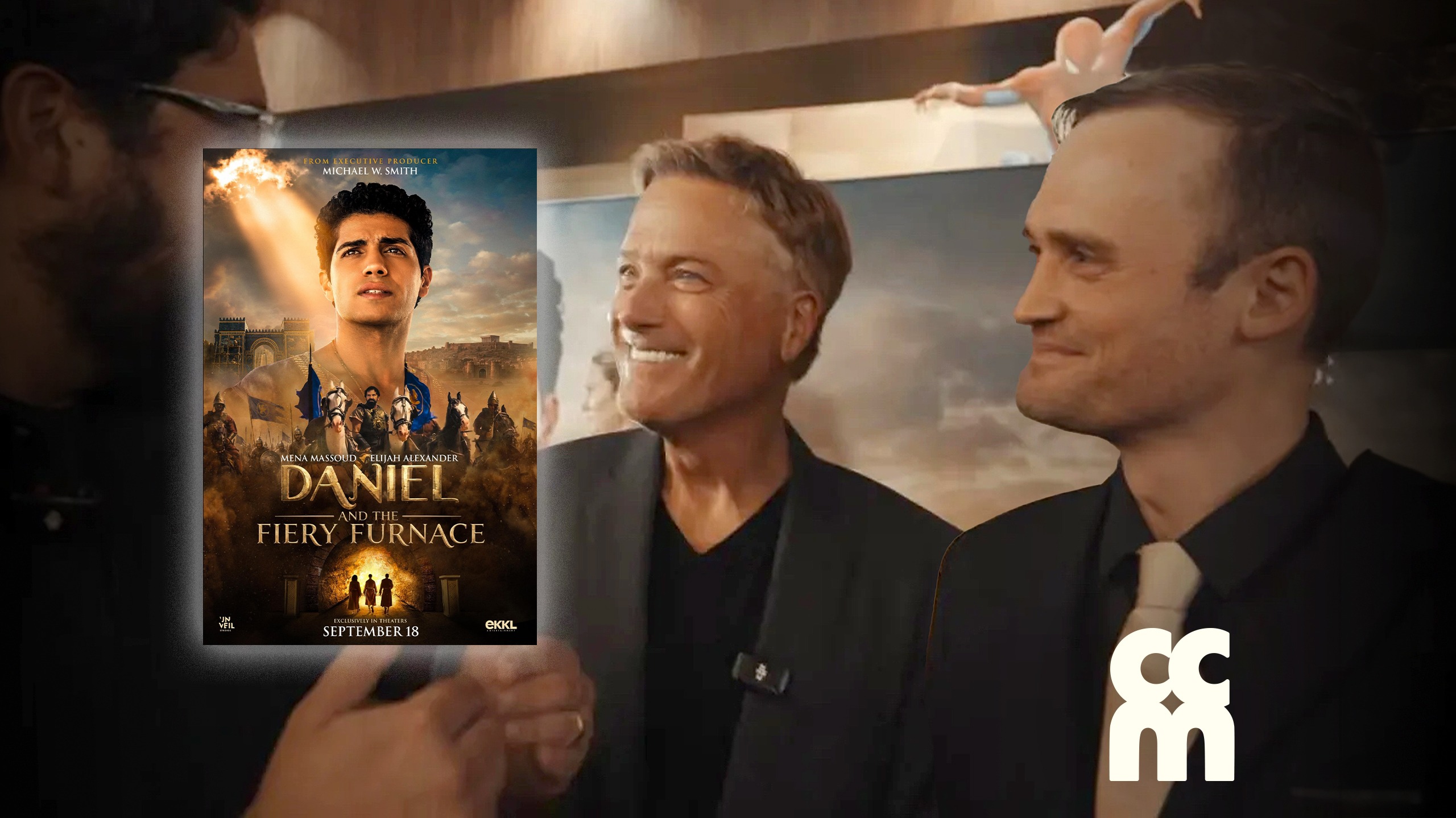
Character Dynamics: Massoud and Alexander
The engine that drives the film past the typical pitfalls of the genre is the dynamic interplay between its two principal actors:
- Mena Massoud as Daniel: Bringing global recognition from his starring role in Disney’s 2019 live-action Aladdin, Massoud infuses Daniel with quiet emotional strength and intellectual gravity. Rather than portraying him as an untouchable icon of virtue, Massoud grounds Daniel as a vulnerable young exile attempting to maintain his moral compass while navigating treacherous political waters.
- Elijah Alexander as King Nebuchadnezzar: Known to streaming audiences for his role as the Roman investigator Atticus Aemilius in The Chosen, Alexander delivers a career-defining, award-worthy performance. Eschewing the one-dimensional, cartoonish villainy often assigned to biblical antagonists, Alexander paints Nebuchadnezzar as a complex monarch burdened by a deeply fragile ego, immense power, and paralyzing insecurity.
The chemistry between Massoud and Alexander anchors the film. Their scenes together—marked by mutual intrigue, sudden shifts in trust, and imperial frustration—elevate the material far above standard Sunday-school didacticism.
Linguistic Authenticity and Production Metrics
To further separate the project from homogenized Hollywood fare, the filmmakers intentionally incorporated linguistic diversity. While the primary dialogue is delivered in accessible English, the soundscape frequently weaves in authentic ancient languages, most notably Hebrew during moments of personal and communal prayer. This creative choice serves as a constant reminder to the audience that these characters were not modern individuals reciting lines, but displaced foreigners holding desperately to their ancestral heritage.
Financially, independent faith-based cinema operates on a distinct metric compared to the $200 million tentpoles dominating modern multiplexes. While Daniel and the Fiery Furnace occasionally reveals the financial constraints of its production design and visual effects, these very limitations are frequently transformed into artistic assets. The slightly stylized, painterly aesthetic prevents the film from falling into the uncanny valley of hyper-polished CGI, preserving the sense of wonder associated with ancient texts.
Official Statements
The collaborative spirit behind Daniel and the Fiery Furnace was heavily underscored during promotional interviews and red-carpet discussions involving the creative leadership, musical architects, and principal cast members.
The Musical Bridge: Michael W. Smith and Tyler Michael Smith
One of the most compelling behind-the-scenes narratives involves the multi-generational musical collaboration that shaped the film’s sonic landscape. Executive producer Michael W. Smith recounted how his involvement with the project developed organically through his son, composer Tyler Michael Smith.
"I first encountered the project simply by watching my son work tirelessly on the musical score in his studio," Michael W. Smith noted during press interactions. "As I listened to the thematic development and saw how closely the music was mirroring the emotional weight of the narrative on screen, I knew immediately that this project possessed a rare, undeniable special quality."
This familial and creative bridge extended all the way to the closing credits, where contemporary Christian rock veterans Trevor McNevan (Thousand Foot Krutch) and TobyMac deliver a startling musical juxtaposition with the track "Walk Thru Fire." Written by McNevan and produced alongside Micah Kuiper, the song injects modern rock energy into the closing moments of an ancient period piece.
Reflecting on the bold choice to cap a biblical epic with high-energy Christian rock, insiders noted that the track successfully collapsed the temporal distance between ancient Babylon and the modern viewer. Rather than feeling out of place, the song reinforces the film’s core thesis: the historical details of the furnace are secondary to the timeless mandate of remaining faithful when facing modern trials.
Future Outlook
As Daniel and the Fiery Furnace begins its theatrical run, its performance at the box office will serve as an important bellwether for the future of independent, high-craft biblical cinema. The film demonstrates that audiences—particularly those seeking faith-based content—are increasingly hungry for sophisticated storytelling that respects their intelligence, embraces complex character psychology, and rejects simplistic moralizing in favor of authentic human struggle.
Industry Implications
The success of EKKL Entertainment’s release points toward several positive trends for future independent productions:
- Elevated Acting Talent: The willingness of globally recognized actors like Mena Massoud and acclaimed television veterans like Elijah Alexander to take on nuanced faith-based roles signals a shifting paradigm in casting quality within the genre.
- Creative Risk-Taking: Embracing international on-location shooting, stylistic visual designs, and bold musical choices like the McNevan/TobyMac credit track proves that independent studios can carve out a distinct artistic identity without relying on blockbuster budgets.
- Cross-Generational Collaboration: The seamless integration of veteran CCM leadership (Michael W. Smith) with younger compositional talent (Tyler Michael Smith) and modern rock artists establishes a blueprint for multi-platform media synergy.
Ultimately, Daniel and the Fiery Furnace succeeds because it does not attempt to reinvent the enduring power of ancient narratives. Instead, it provides modern viewers with a renewed opportunity to sit in the quiet darkness of a cinema and bear witness to a foundational human test. As Shadrach, Meshach, and Abednego finally step toward the blazing heat of Nebuchadnezzar’s furnace, the audience’s advance knowledge of the narrative outcome diminishes none of the dramatic weight. The film is currently playing in theaters nationwide, inviting new and returning audiences alike to walk through the fire.