
Executive Overview
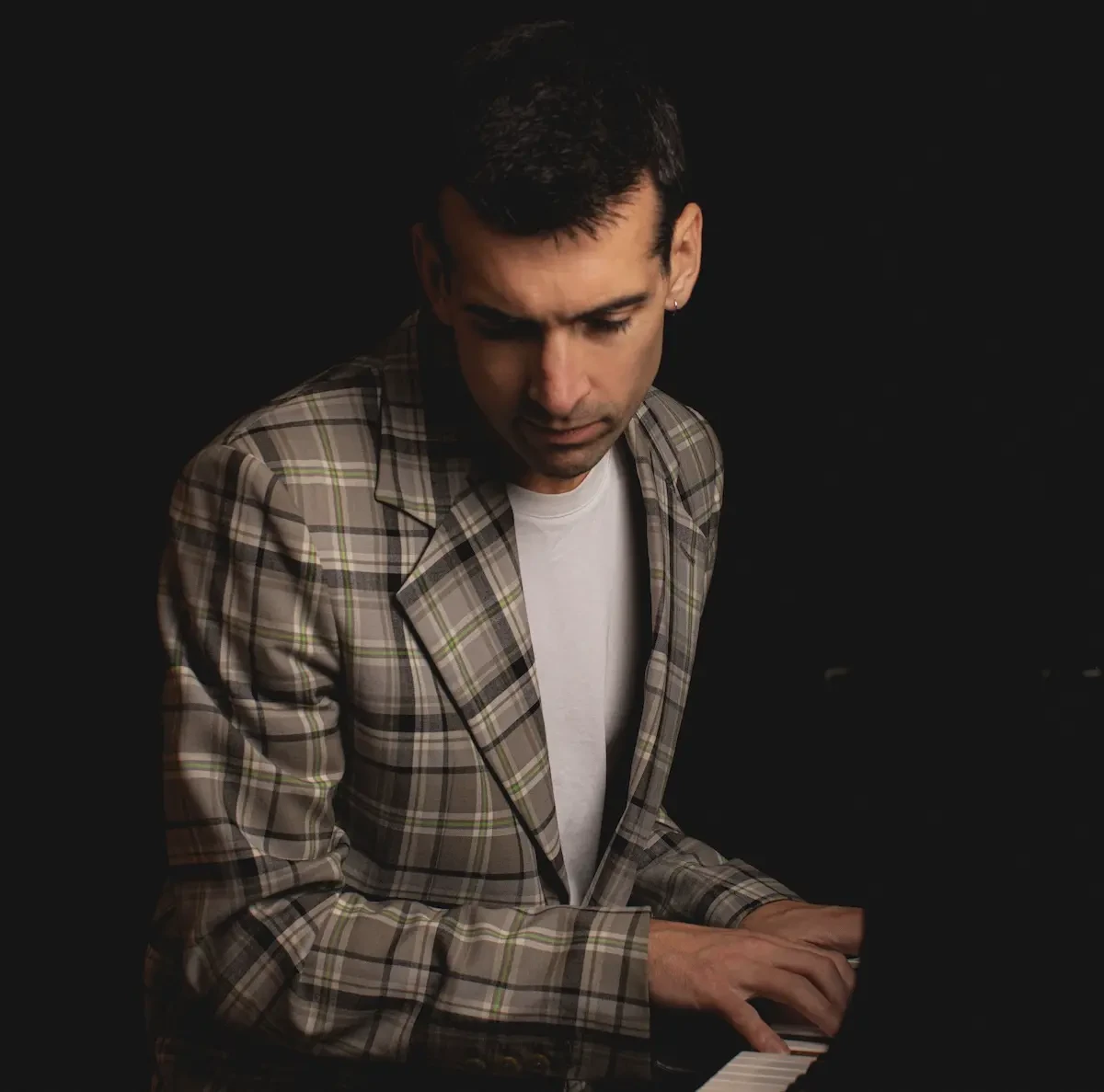
For over a decade, Manchester-born pianist Jamie Safir has been one of the most reliable and sought-after musical assets on the British and international touring circuits. Renowned primarily for his dexterity, sensitivity, and stylistic versatility, Safir has spent the last twelve years lending his talents to an elite tier of vocalists and pop icons, including Annie Lennox, Veronica Swift, Will Young, and Kylie Minogue. Yet, beneath the veneer of high-profile pop collaborations and sideman duties, a singular creative ambition has quietly brewed.
With the release of his debut album as a primary leader, Momentism (released via Chill Tone Records, catalog CT0009), Safir has officially stepped out from behind the vocalists’ spotlights and into the exacting glare of front-and-center bandleadership. Recorded in London on February 16, 2026, the project captures a defining moment in the pianist’s career, blending the rigorous disciplines of classical training with the exploratory liberties of modern acoustic jazz.
Supported by a stellar rhythm section featuring bassist Conor Chaplin and drummer Luke Tomlinson—alongside the distinguished tenor saxophone contributions of jazz veteran Iain Ballamy across five of the album’s eleven tracks—Momentism is an uncompromising artistic statement. It showcases Safir not merely as a master interpreter of others’ songs, but as a formidable composer and ensemble curator. This comprehensive review and investigative report explores the anatomy of Momentism, tracing its compositional architecture, evaluating its performances, contextualizing Safir’s transition from sideman to bandleader, and examining the critical reception of a project that boldly challenges the boundaries of contemporary British jazz.
Detailed Chronology: An Track-by-Track Examination of Momentism
Clocking in at just over 51 minutes (51:09), Momentism is a tightly constructed, conceptually cohesive suite of music. Nearly all compositions are penned exclusively by Safir, with a solitary co-writing credit shared with vocalist Emma Smith. The album’s trajectory traces an emotional and stylistic arc, moving fluidly from classically informed introspection to modern blues, abstract swing, and melancholy balladry.
The Opening Statements
The album commences with its title track, "Momentism," for which Safir deploys melodic solo piano framing devices that immediately establish a distinctly classical sensibility. The piece serves as a thematic threshold, welcoming the listener into Safir’s inner musical world before the full rhythm section coalesces.
It is swiftly followed by "Boulevardier," a markedly more buoyant and chirpy affair that introduces Iain Ballamy on tenor saxophone. Ballamy’s entrance injects a conversational, freewheeling energy into the soundscape, bouncing off Safir’s nimble chordal comping and Chaplin’s buoyant basslines. However, this levity is quickly contrasted by the plaintive, haunting mood of "Zacharius," where Ballamy pulls the tonal palette into darker, more contemplative territory, stretching notes out with a lyrical vulnerability.
The Mid-Album Exploration
As the album progresses into its middle tier, Safir’s compositional risks yield mixed textures. "Hirsute Pursuit" (misspelled on the original tracklisting notes as Hirsuit Pursuit) offers a more angular, less conventionally melodic canvas. Here, Safir’s piano motif leans heavily into a repetitive, ostinato-driven pulse that demands focused listening.
Things pivot gracefully on "Amethyst," the album’s sole co-written track, crafted alongside vocalist Emma Smith. On this cut, the ensemble evokes the refined, swinging elegance of Magnus Hjorth’s pianism from his tenure in Snorre Kirk’s various outfits. Crucially, drummer Luke Tomlinson matches this aesthetic, adopting the same tasteful, understated, and historically resonant brushwork and cymbal placement that Kirk champions.
The thematic depth deepens with "Duke Balington," an affectionate and clever play on the name of jazz royalty Duke Ellington. On this slow-paced blues, Ballamy takes the steering wheel, leading the charge through a delightfully convoluted, winding melody line that honors the past while subverting traditional blues expectations. This historical reverence continues seamlessly into "Black Star Sapphire," subtitled (For Strayhorn). The piece is an astonishingly accurate stylistic tribute; it sounds precisely like an unrecorded, lost gem that Billy Strayhorn might have penned during his legendary tenure with the Ellington orchestra.
The Closing Arc
The intensity momentarily spikes with "Clocker," where Safir and Ballamy accelerate the tempo, driving the trio and saxophonist into a fiery dialogue. This high-energy excursion is punctuated by an intricate, highly melodic bass interlude executed brilliantly by Conor Chaplin, showcasing his technical facility and harmonic awareness.
As Momentism enters its final third, the emotional climate cools considerably, occasionally running the risk of atmospheric fatigue. "The World In The Evening" relies once again on a slow-paced, repetitive piano figure that mirrors the introspective weight of earlier movements. It is followed by the similarly moody "Mad Sad Bad," on which Ballamy delivers a languid, effortlessly relaxed tenor solo that floats above the heavy harmonic undertow.
Safir brings the album to a close with a brief, deeply wistful solo piano vignette entitled "Esprit D’Escalier"—the French idiom for thinking of the perfect reply too late. The piece acts as a quiet, lingering exhale, its notes slowly fading into silence and leaving the listener suspended in a state of unresolved contemplation.
Supporting Context & Metrics: From Pop Stages to Jazz Vaults
To truly understand the weight of Momentism, one must examine the career trajectory of its creator. Jamie Safir’s professional identity has long been defined by dualities: the rigorous, insular demands of acoustic jazz versus the high-pressure, broad-appeal ecosystem of commercial pop music.
The Sideman Dilemma
For twelve years, Mancunian-born Safir has maintained a rigorous schedule backing some of the most recognizable voices in global entertainment. Touring and recording with artists like Annie Lennox, Kylie Minogue, Will Young, and Veronica Swift requires a very specific set of psychological and musical skills. A top-tier pop sideman must possess chameleon-like adaptability, flawless timing, deep harmonic knowledge to support vocalists navigating complex arrangements, and an ego-free dedication to serving the song rather than personal display.
Yet, spending over a decade in the shadows of superstars often creates a pent-up reservoir of original musical ideas. When sidemen finally step out to record their debut leader projects, the resulting music frequently acts as a pressure-release valve. For Safir, Momentism is precisely that: an unmasked exploration of his own voice, untethered from Top 40 expectations, radio-edit constraints, or the vocal focal points of pop divas.
Production and Instrumentation Metrics
- Recording Date: February 16, 2026
- Recording Location: London, United Kingdom
- Label: Chill Tone Records (Catalog: CT0009)
- Total Track Count: 11 original compositions
- Total Running Time: 51 minutes, 09 seconds
- Personnel Configuration:
- Jamie Safir (Piano)
- Conor Chaplin (Double Bass)
- Luke Tomlinson (Drums)
- Iain Ballamy (Tenor Saxophone – featured on 5 tracks)
The chemistry between Safir, Chaplin, and Tomlinson is the linchpin holding Momentism together. Recorded live in the studio on a single day in February 2026, the performances retain an organic, breathing quality that polished studio pop albums rarely capture. Chaplin’s double bass work provides a warm, woody anchor, while Tomlinson’s drumming walks the delicate tightrope between modern rhythmic complexity and traditional jazz swing. Ballamy’s addition on nearly half the tracks adds an elder-statesman gravity, his saxophone tone bridging the gap between Safir’s classical precision and the rhythm section’s straight-ahead jazz grounding.
Official Statements and Critical Reception
The arrival of Momentism has sent positive ripples through the British jazz community, drawing praise for its uncompromising artistic vision, even as critics grapple with its intense emotional gravity.
In promotional statements surrounding the release, Safir noted that the album represents a literal and figurative "journey inward." Speaking on his transition to bandleader, Safir remarked:
"When you spend years supporting singers and servicing pop arrangements, you learn how to listen in a profound way. But eventually, the music you hear inside your own head demands to be let out without a middleman. With Momentism, I wanted to capture fleeting emotional states—hence the title—and translate them into acoustic spaces shared with musicians I trust entirely."
Jazz critics and industry insiders have been quick to praise the album’s technical execution and compositional maturity. Reviewers have highlighted the striking homage paid to jazz royalty on tracks like Black Star Sapphire, noting that Safir’s ability to channel the spectral elegance of Billy Strayhorn without descending into pastiche is evidence of a deeply studied musical intellect.
However, critical discourse has also engaged with the album’s overall emotional weight. While Momentism is undeniably emotive and heartfelt, its heavy reliance on introspective, minor-key, and slow-paced movements has prompted healthy debate regarding its sequencing. As noted in contemporary critical evaluations:
"This is emotive, heartfelt music, but it is an album that demands stamina from its audience. The prevailing melancholia is striking, though one cannot help but feel that the strategic insertion of two or three more upbeat, high-energy numbers—in the vein of ‘Clocker’—would have successfully aerated the tracklist, lightening the overall atmosphere and preventing emotional fatigue by the time ‘Esprit D’Escalier’ brings the curtain down."
Despite these structural critiques, the consensus remains overwhelmingly favorable. Momentism is viewed not as a tentative first step, but as a confident, fully realized debut that establishes Safir as a creative force to be reckoned with in contemporary British jazz.
Future Outlook: What Momentism Means for Jamie Safir’s Career
The release of Momentism marks a watershed moment that will inevitably redefine Jamie Safir’s professional identity. Having proven his chops on the grandest pop stages of the world, he has now staked an equally legitimate claim in the intellectually rigorous landscape of contemporary acoustic jazz.
Expanding the Leader Persona
Looking ahead, the primary challenge and opportunity for Safir will be balancing his lucrative, high-profile sideman engagements with the development of his own touring ensemble. Translating the intricate interplay of Momentism to live club and festival stages will require nurturing the working relationship between himself, Chaplin, Tomlinson, and guest collaborators like Ballamy.
Industry observers predict that Momentism will open doors to dedicated jazz festival bookings across the UK and continental Europe. Furthermore, the critical acclaim garnered by his compositional voice suggests that future sophomore and junior outings as a leader will be eagerly anticipated by jazz aficionados and tastemakers alike.
A Blueprint for Modern British Jazz
Safir’s debut offers a fascinating blueprint for modern British jazz: one that refuses to discard classical discipline or melodic accessibility, yet remains unafraid of introspection, rhythmic repetition, and stylistic homage. By looking backward to the traditions of Ellington and Strayhorn while keeping both feet planted firmly in the contemporary London jazz scene, Safir has crafted a work of lasting resonance.
As Momentism continues to find its audience on streaming platforms, vinyl, and CD via Chill Tone Records, it serves as a reminder that the most compelling musical stories often emerge when talented artists finally decide to tell their own tales. Jamie Safir may have spent the last twelve years accompanying others, but with Momentism, he has firmly established that he is more than ready to lead the charge.