
Executive Overview
The opening weeks of any academic year in music education represent a paradox of high enthusiasm and immense logistical friction. For choral directors and general music educators, the early autumn calendar is a whirlwind of learning hundreds of new names, untangling overlapping rehearsal schedules, deciphering fragmented skill levels, and attempting to establish a cohesive culture before concert repertoire even enters the picture. Amid this beautiful chaos, time remains the ultimate scarce commodity.
Enter the digital ecosystem: modern educational technology designed to alleviate administrative burdens and provide actionable diagnostic data from day one. Among these tools, MakeMusic Cloud has emerged as a vital infrastructure asset for music classrooms. By shifting foundational tasks—such as roster onboarding, baseline vocal assessment, sight-reading integration, and guided practice modeling—into an intuitive digital workspace, educators can bypass weeks of administrative drag.
This report investigates how MakeMusic Cloud is transforming the critical first three weeks of the school year. Through an analysis of platform capabilities, pedagogical strategies, and time-saving workflows, we examine how music teachers are leveraging digital tools to foster equitable participation, capture objective vocal data, and build lifelong practice habits from the very first bell.
Detailed Chronology: The First Three Weeks Roadmap
To maximize instructional time and minimize early-semester burnout, successful music educators are adopting a structured, phased approach to deploying MakeMusic Cloud. Rather than treating the platform as an afterthought or a late-term testing apparatus, innovative programs integrate the software immediately.
Phase 1: Onboarding and Logistics (Day One to Week One)
The primary objective of the opening week is friction reduction. Technical hurdles can derail momentum faster than any pedagogical challenge.
- Immediate Access Protocol: Educators are utilizing MakeMusic Cloud’s single sign-on (SSO) capabilities or bulk CSV roster uploads to ensure that every student has active credentials during the very first class meeting. By dedicating five minutes of class time to a collective "everyone open the app and sign in" exercise rather than assigning it as homework, teachers eliminate the traditional week-long chase for lost passwords and inactive accounts.
- Establishing Low-Stakes Routines: To combat platform anxiety, initial assignments are strictly ungraded "practice reps." This framework normalizes logging in, navigating the interface, and submitting recordings without the psychological pressure of a formal evaluation.
Phase 2: Diagnostic Baselines and Skill Mapping (Week Two)
With technical barriers cleared, the second week focuses on data collection—a traditionally elusive metric in large ensemble settings.
- Uncovering Hidden Voices: In a choir of eighty students, confident voices easily mask hesitant ones. By assigning a short, eight-to-sixteen-bar melody, educators utilize MakeMusic Cloud’s real-time pitch and rhythm assessment engine. The platform provides color-coded visual feedback (green for accurate pitches, alongside indicators for sharp, flat, or mistimed notes), granting the director an immediate, objective snapshot of each singer’s baseline abilities.
- Targeted Intervention: Armed with precise data on who needs foundational support and who requires advanced challenges, directors can strategically group sections, design targeted warm-ups, and measure authentic growth by the time winter concerts arrive.
Phase 3: Habit Formation and Autonomy (Week Three)
By the third week, the mechanics of the digital classroom should feel second nature, paving the way for advanced skill cultivation and student ownership.
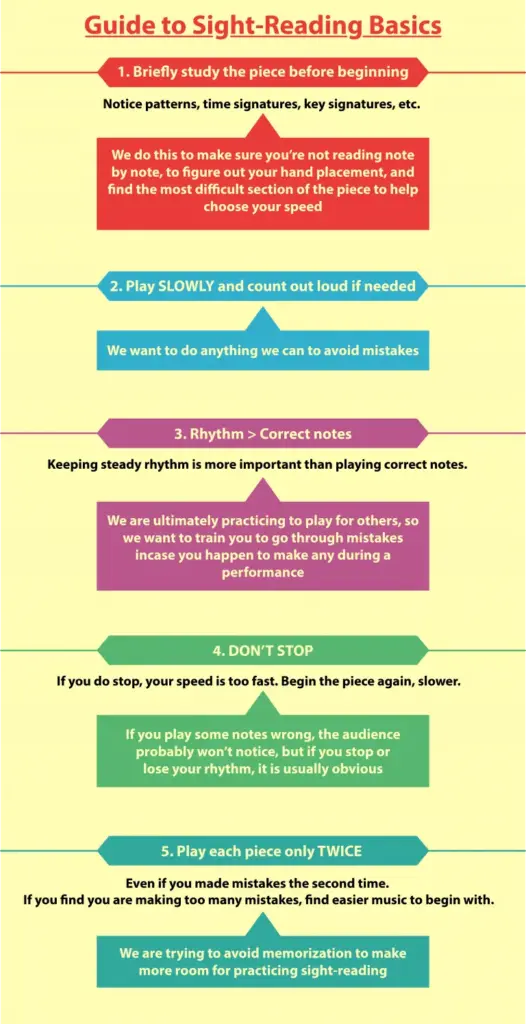
- Launching Systematic Sight-Reading: Utilizing the newly integrated templates from Andy Beck’s Sing at First Sight series within Sight Reading Studio, educators introduce consistent, sequential sight-singing exercises. Because every student receives a unique prompt and instant visual feedback, home practice transitions from passive repetition to active, self-correcting learning.
- Cultivating Repertoire Buy-In: To cement engagement, week three often concludes with exploratory sessions in the extensive MakeMusic Catalog. Allowing students to browse thousands of interactive titles—ranging from classical choral literature and pop arrangements to film scores and video game soundtracks—instills a sense of agency that sustains motivation throughout the academic year.
Supporting Context & Metrics: The Mechanics of Digital Music Pedagogy
The integration of cloud-based music platforms addresses long-standing structural inefficiencies in music education. Historically, formative assessment in large ensembles suffered from the "bottleneck of the human ear." A single teacher attempting to evaluate seventy individual vocalists weekly faces an impossible mathematical reality: even a two-minute check-in per student requires more than two hours of uninterrupted one-on-one time—time that is rarely available during compressed rehearsal schedules.
Data-Driven Choral Direction
MakeMusic Cloud automates the initial phase of auditory screening. While artificial intelligence and pitch-detection algorithms do not replace the nuanced artistic ear of a seasoned conductor, they provide an invaluable triage system.
- Objective Pitch Tracking: The platform’s real-time visual feedback mechanism quantifies intonation tendencies. Educators can instantly identify systemic tendencies within a section—such as a soprano section consistently drifting flat on ascending intervals—allowing for targeted sectional rehearsal design.
- Asynchronous Accountability: Audio and video assignment capabilities shift individual testing outside of rehearsal hours. Shy or hesitant singers, who frequently disappear within the acoustic shelter of a large ensemble, are compelled to engage directly with the material. Their individual submissions are recorded, automatically assessed, and seamlessly synced with Learning Management Systems (LMS) like Google Classroom.
The Pedagogy of Modeling
A critical finding in music education research is that students frequently fail to practice effectively not out of laziness, but out of ignorance regarding how to practice.
By projecting MakeMusic Cloud onto a smartboard or classroom screen during the first three weeks, directors demystify the practice room. Educators can demonstrate essential metacognitive strategies in real time:
- Tempo Manipulation: Slowing down complex rhythmic passages to build muscle memory before returning to performance speed.
- Looping: Isolating a stubborn two-measure phrase for repetitive drilling.
- Aural scaffolding: Utilizing the built-in reference pitch and arpeggio tools before attempting unassisted sight-reading.
When students observe these digital interventions modeled live by their instructors, they internalize the problem-solving workflow, translating directly into higher-quality independent practice sessions at home.
Official Statements and Industry Insights
Educational technologists and veteran music educators alike emphasize that the success of any ed-tech platform hinges on its ability to support—rather than subvert—human-to-human musical connection.
Dr. Elena Vance, Professor of Music Education at the State Conservatory, notes the paradigm shift occurring in modern rehearsal spaces:
"For decades, music technology was viewed with skepticism by traditionalists who feared it would mechanize an inherently human art form. What we are witnessing with tools like MakeMusic Cloud is the exact opposite. By offloading the mechanical friction of roster management, attendance tracking, and initial pitch-matching diagnostics, technology gives conductors their most precious asset back: time. Time to focus on artistry, phrasing, emotional delivery, and community building."
Furthermore, curriculum developers point to the psychological importance of early success cycles. According to field reports from choral directors utilizing integrated methods like the Sing at First Sight templates:
"When students experience immediate, clear feedback that separates pitch accuracy from rhythmic precision, the anxiety surrounding music literacy evaporates. They stop seeing sight-reading as an arbitrary pop quiz and start viewing it as a puzzle they have the tools to solve."
Industry analysts project that the adoption of hybrid, cloud-enabled music software will continue to accelerate as school districts prioritize equitable access and data-driven instruction. Platforms that bridge the gap between physical ensemble rehearsals and individual digital accountability are rapidly becoming the industry standard.
Future Outlook: The Horizon of Music Instruction
As we look beyond the initial three-week window toward the remainder of the academic year and into future pedagogical horizons, the implications of cloud-integrated music classrooms are profound.
The Evolution of Personalized Learning
The traditional "one-size-fits-all" rehearsal model is increasingly giving way to differentiated instruction. In the near future, platforms like MakeMusic Cloud will likely expand their adaptive learning algorithms, automatically curating remedial sight-reading exercises for struggling students while concurrently pushing advanced repertoire to gifted pupils within the same registered class. This hyper-personalization ensures that no student falls behind and no high-achieving learner stagnates.
Seamless Home-School Connectivity
The traditional boundary separating the school band or choir room from the student’s living room is dissolving. As asynchronous video assignments and gamified practice incentives become standard operating procedure, parents gain clearer insight into their child’s musical development, and educators maintain uninterrupted oversight of home practice routines. This continuous feedback loop cultivates greater retention rates across multi-year music programs.
Cultivating Lifelong Musical Engagement
Ultimately, the primary metric of success for any music program is not merely how well a choir performs at the spring festival, but whether its members continue to make music long after graduation. By introducing students to vast, genre-diverse digital catalogs early in their academic journey—allowing them to explore everything from Renaissance motets to contemporary film scores—music educators are planting the seeds of lifelong musical curiosity.
Conclusion
The first three weeks of the school year will always remain a crucible of high energy and demanding logistics. However, by strategically weaponizing digital infrastructure tools like MakeMusic Cloud—securing day-one logins, establishing objective vocal baselines, modeling effective practice habits, and honoring student agency through diverse repertoire exploration—educators can master the chaos. The investment made in those initial weeks yields exponential dividends, transforming a roomful of hesitant strangers into a confident, cohesive, and deeply engaged musical community ready to harmonize for the rest of the year.