
Executive Overview
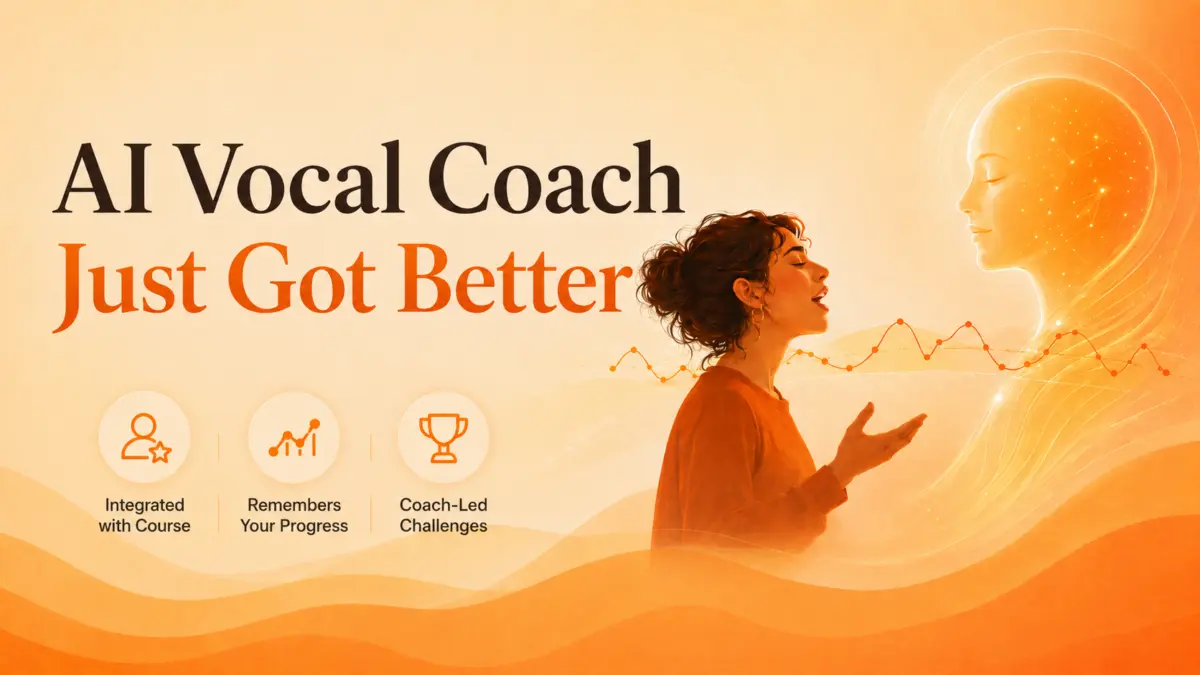
The intersection of artificial intelligence and music education has long been dominated by reactive software—applications that can detect pitch deviations in real time but lack the holistic, pedagogical intuition of a human instructor. The digital music-tech landscape is undergoing a profound paradigm shift, spearheaded by the latest release from Singing Carrots. The platform has officially unveiled a massive overhaul of its flagship AI Vocal Coach, a release the development team characterizes not as a minor iterative patch, but as a generational leap from version 1.0 to 2.0.
This major update transforms the application from a specialized utility tool into a comprehensive, adaptive learning ecosystem. By deeply integrating the platform’s structured "Zero to Singing Hero" beginner curriculum, engineering an advanced practice-memory architecture, introducing real-time breath-control diagnostics, and deploying balanced gamification mechanics, Singing Carrots is positioning itself at the vanguard of the automated music-tech sector. This investigative analysis explores the technical architecture, pedagogical philosophy, and market implications of this landmark update.
Detailed Chronology: The Evolution of the AI Vocal Coach
To understand the significance of the 2.0 update, one must examine the historical trajectory of the Singing Carrots platform. Initially launched as an interactive suite of web-based tools designed to analyze vocal range, pitch accuracy, and song difficulty, the platform successfully built a dedicated user base of aspiring vocalists. However, early iterations of the system operated under a fragmented architecture.
[Legacy Architecture (1.0)]
+------------------------+      +------------------------+
|  Zero to Hero Course   |      |    AI Coaching Tool    |
| (Isolated Video/Theory)|      |  (Isolated Practice)   |
+------------------------+      +------------------------+

                               VS.

[Modern Integrated Architecture (2.0)]
+--------------------------------------------------------+
|               Singing Carrots Ecosystem                |
|                                                        |
|  +---------------------+      +---------------------+  |
|  |  Zero to Hero Path  | <--> |  AI Coaching Engine |  |
|  | (Dynamic Warm-ups)  |      |  (Smarter Memory)   |  |
|  +---------------------+      +---------------------+  |
|                                 /                     |
|              v                  v                      |
|         +----------------------------+                 |
|         | Integrated Practice Session|                 |
|         +----------------------------+                 |
+--------------------------------------------------------+
The Era of Fragmentation (Pre-Update)
In the legacy version of the platform, the educational curriculum and the practical training environment existed in silos:
- Users seeking structured theory utilized the static "Zero to Singing Hero" course.
- Users seeking vocal workouts utilized the AI Coaching interface.
- This segregation forced students to manually bridge the gap between cognitive understanding (learning how the voice works) and physical execution (practicing the exercises).
The Synthesis Phase (The 2.0 Update)
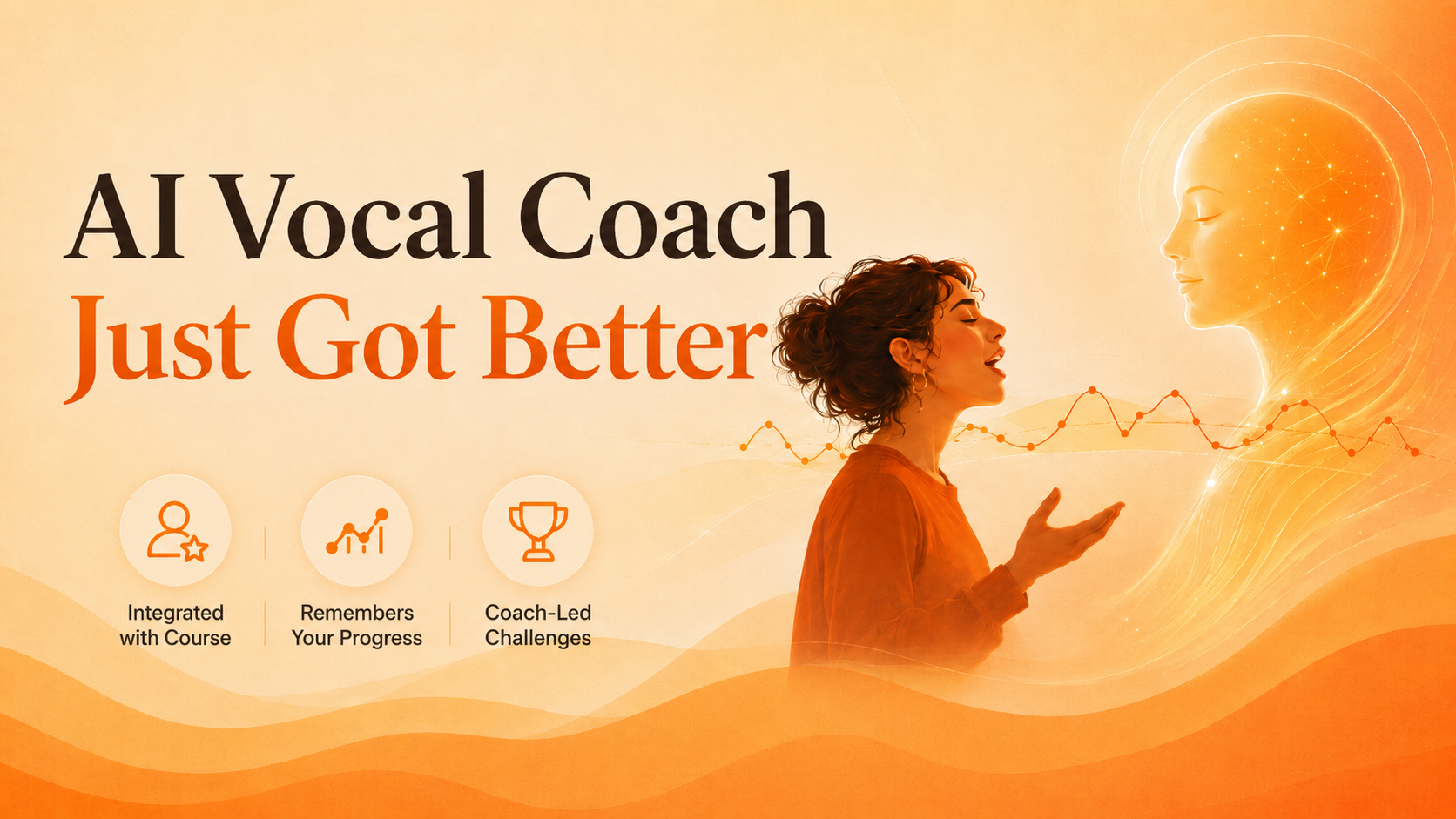
The newly deployed update completely dismantles these silos. The four-week beginner course now lives natively within the AI Coach’s interactive loop. Under this unified framework, the transition from theory to practice is seamless:
- Contextual Video Delivery: Before a student begins a vocal session, the system automatically pulls the daily warm-up video associated with their course progress.
- Just-in-Time Pedagogical Interventions: As the user sings, the AI monitor tracks performance anomalies. If a user struggles with a specific interval or physiological technique, the coach dynamically injects relevant theoretical breakdowns and exercise videos into the live session.
- Unified Progress Tracking: The computational boundaries between "coursework" and "coaching" have been erased. Completing an interactive coaching session automatically updates the user’s overall curriculum progression, streamlining the user experience and reducing cognitive friction.
Supporting Context & Pedagogical Metrics
To evaluate the efficacy of the Singing Carrots 2.0 update, it is essential to examine the underlying educational theories and technological mechanisms driving these new features.
1. Spaced Repetition and Practice Memory Architecture
The core limitation of early music-practice software was its lack of temporal context; every session was treated as a clean slate. Singing Carrots 2.0 addresses this with an advanced "Practice Memory" database.
                  [User Performance Data Captured]
                                 │
                                 ▼
                 [Analyze Frequency & Historical Scores]
                                 │
            ┌────────────────────┴────────────────────┐
            ▼                                         ▼
   [Pattern Mastered?]                       [Pattern Struggling?]
            │                                         │
            ▼                                         ▼
[Deprioritize / Remove Drill]               [Retain / Recalibrate Pace]
            │                                         │
            ▼                                         ▼
  (Saves Vocal Stamina)                    (Targeted Intervention)
The system continuously tracks:
- Historical Performance Scores: Evaluating pitch accuracy, tone stability, and dynamic control over time.
- Exercise Frequency: Monitoring how often a user has attempted a specific vocal pattern.
- Dynamic Mastery Thresholds: Once a singer demonstrates consistent proficiency in a specific vocal drill (e.g., major triad arpeggios), the AI intelligently deprioritizes that drill. This prevents "vocal fatigue" and maximizes practice efficiency by focusing on the user’s unique areas of weakness.
Furthermore, the system features a difficulty-contextualization engine. In vocal pedagogy, not all exercises with identical pitch intervals are created equal; vowel shapes, consonantal transitions, and tempo variations drastically alter the physical difficulty of a phrase. The 2.0 coach uses aggregated, anonymized global user data to understand which patterns are universally difficult. If a user scores an 80% on an exceptionally complex vocal run, the AI recognizes this as a high-tier achievement rather than a mediocre attempt, providing accurate, encouraging feedback that aligns with professional coaching standards.
2. The Physiology of Vocal Stability: Breath-Control Diagnostics
One of the most notable technical achievements of the 2.0 update is the introduction of dedicated breath-control and note-steadiness training. In vocal science, subglottic pressure regulation and diaphragmatic support are the foundational pillars of healthy phonation.
The new "Sustain-Hold" diagnostic engine requires users to maintain a single, uninterrupted pitch for durations ranging from five to thirty seconds. During this exercise, the AI coach analyzes the input audio feed across several key metrics:
| Diagnostic Metric | Physical Indicator | Pedagogical Target |
|---|---|---|
| Pitch Drift (Hz) | Intonation consistency | Eliminating microtonal sagging or sharping over time. |
| Amplitude Variance (dB) | Breath support control | Preventing unwanted volume fluctuations or sudden drop-offs. |
| Spectral Noise Ratio | Vocal fold closure efficiency | Detecting breathiness or excessive tension in the vocal tract. |
By gamifying these diagnostics with "carrot rewards" and visual progression bars, Singing Carrots successfully translates complex, abstract physiological sensations—such as appoggio and breath management—into concrete, quantifiable data points that students can easily track and improve.
3. Gamification vs. Deliberate Practice
The inclusion of "Coach-Led Challenges" and weekly leaderboards introduces a calculated layer of gamification to the platform. According to educational psychology, gamification can significantly boost engagement, but it carries the risk of encouraging superficial progress over deep learning.
To mitigate this, Singing Carrots has engineered its competitive elements as optional, supplementary interventions. The core training program remains rooted in deliberate practice—focused, repetitive training designed to fix specific technical errors. The Pitch Training challenges act as high-intensity tests of a singer’s real-time ear-to-voice coordination. By containing these challenges within the coaching session, the platform ensures that competitive play serves the pedagogical goals of the lesson, rather than distracting from them.
The Competitive Landscape: An Industry Comparison
To contextualize the market impact of the Singing Carrots 2.0 update, we can compare its capabilities against the broader AI vocal coaching industry, as highlighted in market analyses like the Top 7 AI Vocal Coaches.
| Feature / Capability | Legacy Apps (Industry Standard) | Singing Carrots AI Coach 2.0 |
|---|---|---|
| Pitch Detection | Real-time visual feedback | Real-time feedback with adaptive difficulty adjustment |
| Curriculum Integration | Manual selection of separate lessons | Seamless integration of the "Zero to Hero" 4-week course |
| Historical Memory | None (session resets upon close) | Retains goals, constraints, and past performance metrics |
| Physiological Tracking | Pitch and timing only | Advanced sustain-hold and amplitude variance analysis |
| Gamification | Points-based star ratings | Live leaderboards, targeted challenges, and rewards |
| Cross-Device Sync | Limited or manual cloud saving | Seamless multi-device session continuity and progress sync |
Official Statements and Pedagogical Vision
In statements detailing the release, the development team behind Singing Carrots emphasized that the 2.0 update was designed to solve the psychological hurdles of self-directed online learning.
"A common pain point for self-taught singers is the overwhelming paradox of choice," notes the product development team. "When a student opens an app and is confronted with hundreds of isolated exercises, they experience decision paralysis. They don’t know what to practice, in what order, or how to address their mistakes. Our goal with version 2.0 was to build an algorithm that acts less like an interactive sheet-music player and more like an attentive, memory-capable personal mentor."
The team also highlighted the technical challenges of bringing this vision to life, particularly in optimizing audio processing:
"Building a highly responsive, multi-device vocal coach required significant optimization of our audio-processing pipelines. We had to ensure that real-time pitch detection, amplitude tracking, and cognitive feedback loops operate with minimal latency across everything from low-end smartphones to high-performance desktop browsers. The result is a unified, reliable experience that adapts to the singer’s lifestyle, allowing them to practice wherever and whenever they want."
Future Outlook: The Horizon of AI-Driven Music Education
The release of Singing Carrots 2.0 signals a wider shift in the EdTech and MusicTech sectors. As machine learning models become more sophisticated, the role of software in creative arts education is transforming from passive utility to active partnership.
                      [Stage 1: Reactive Tools]
                   - Basic Pitch Detection (Hz)
                   - Static Lesson Lists
                               │
                               ▼
                      [Stage 2: Adaptive Tutors] <--- (Singing Carrots 2.0)
                   - Integrated Curriculums
                   - Practice Memory & Contextual Learning
                   - Multi-Metric Diagnostics (Breath/Steadiness)
                               │
                               ▼
                     [Stage 3: Generative Partners]
                   - Real-Time Dynamic Accompaniment
                   - Neural Timbre & Stylistic Analysis
                   - Immersive VR Performance Arenas
Looking ahead, the integration of advanced vocal analytics opens several exciting developmental pathways:
- Timbral and Resonance Analysis: Future iterations of AI coaches will likely move beyond pitch and volume to analyze the harmonic spectrum of the voice. This will allow the software to provide feedback on vocal resonance, vowel modification, and registration transitions (e.g., head voice vs. chest voice).
- Generative Accompaniment: We may soon see AI accompaniment tracks that dynamically alter their tempo, key, and intensity in real time to match the emotional delivery and breathing patterns of the singer.
- Immersive Performance Simulation: Integrating adaptive AI coaches with virtual reality (VR) could allow students to practice managing stage fright by performing in front of simulated, responsive audiences.
With its 2.0 update, Singing Carrots has laid the groundwork for this future. By proving that an automated system can successfully integrate curriculum, memory, physiology, and play, the platform has set a new benchmark for what aspiring vocalists can expect from digital music education.