
Executive Overview
For the better part of a decade, the Massachusetts independent music circuit has served as a crucible for rugged, DIY perseverance. Operating within the damp basements, overcrowded college DIY spaces, and sweltering, off-permit venues of the Greater Boston area, local acts have long wrestled with the tension between regional adoration and wider cultural penetration. Enter Gollylagging—a resilient, fiercely collaborative four-piece ensemble that has quietly anchored itself as a mainstay of the Northeast underground. With the release of their latest single, "Red Fish," the band has not merely dropped another track; they have delivered a stylistic watershed moment that bridges the gap between raw, sweat-drenched nostalgia and modern production adventurism.
"Red Fish" operates as a masterclass in escapism. From its opening bars, the track evokes a vivid alternate reality: a world where the beloved local underground band you spent your formative weekends watching actually captured the elusive, chart-scaling hit they spent years chasing. It is a song that instantly conjures images of chaotic, over-capacity album release shows—smuggled Raspberry Rubinoff in water bottles, girls dancing atop wobbly wooden tables, breathless mosh pits, and crowdsurfers unceremoniously spilling across the stage. More importantly, it captures the fleeting, lightning-in-a-bottle sensation of witnessing a peer from your college lecture hall transform, over the course of a single three-minute performance, into an indie rock icon.
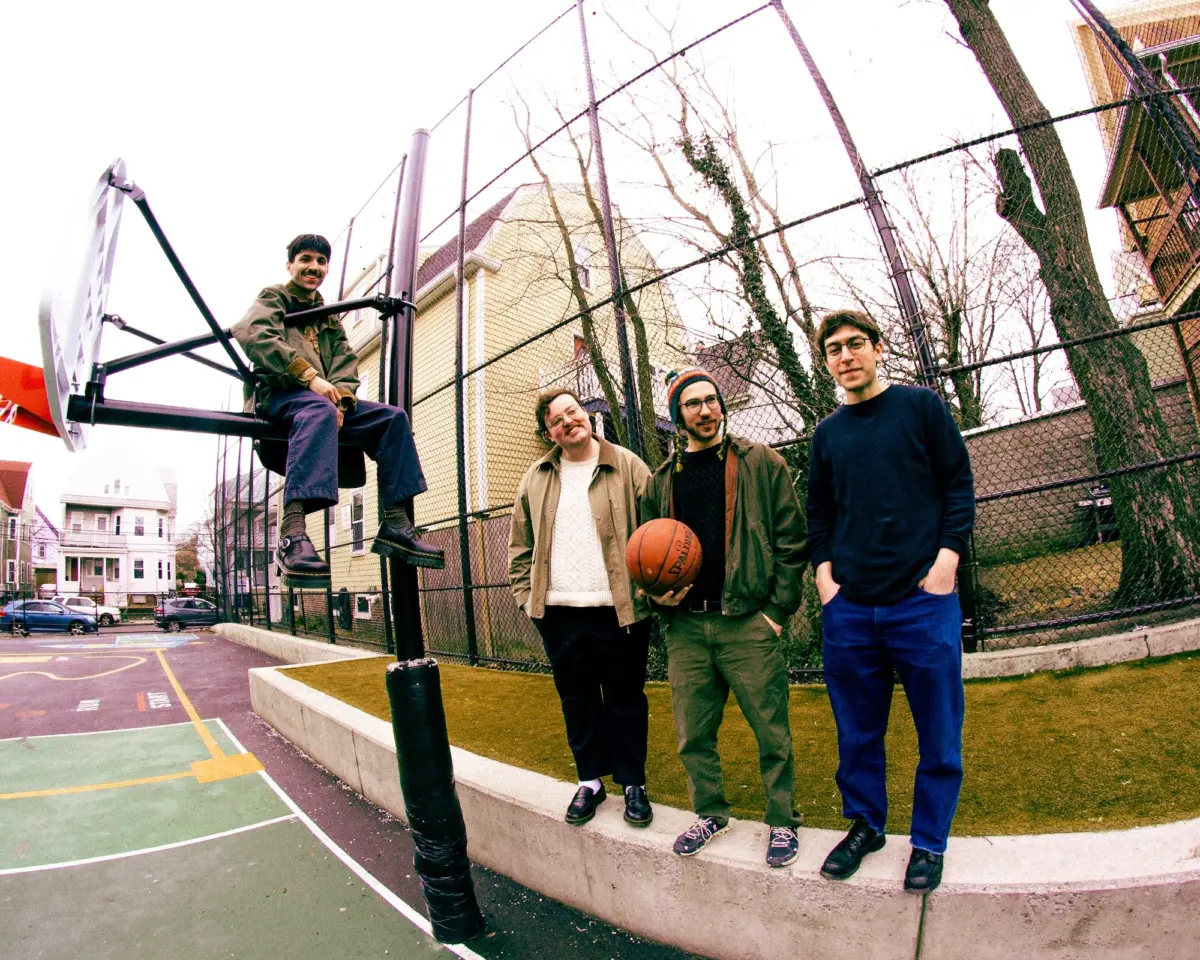
Behind this transcendent single is a lineup finely tuned by years of collective experience: guitarist and frontman Jake Regulbuto, guitarist and vocalist Jules Skiffington, drummer Andrew Garas, and bassist Joey Lorant. Together, these four musicians have weaponized their disparate creative impulses, fusing the head-nodding, bluesy folk-acoustic sensibilities of Providence-born acts like Deer Tick with fuzzed-out walls of electric guitars, unconventional programmed percussion, and a genre-agnostic production ethos.
The result is a composition that feels simultaneously anchored in timeless indie-rock traditions and sharply attuned to the hyper-fragmented, internet-native listening habits of the 2020s. As "Red Fish" steadily commands the attention of tastemakers and underground circuits alike, it stands as undeniable proof that Gollylagging is no longer just a regional secret—they are a band on the precipice of broader cultural resonance.
Detailed Chronology: The Evolution of Gollylagging
To understand the sonic architecture of "Red Fish," one must trace the trajectory of Gollylagging’s nearly ten-year tenure within the Massachusetts underground music scene. Emerging from the fleeting, high-energy DIY ecosystem of the 2010s, the band built its foundation the hard way: through endless regional touring, van breakdowns, equipment swaps, and a relentless commitment to live performance.
During their early years, Gollylagging functioned very much within the traditional confines of regional indie rock and alternative guitar music. They honed their chops playing to rooms filled with sweaty, devoted locals who valued volume and emotional authenticity above pristine production values. However, as the 2020s ushered in a radical democratization of recording technology and a cultural melting pot of genre fluidity, the band recognized the necessity of artistic evolution. They didn’t abandon their live-band foundation; instead, they chose to expand their palette, integrating digital manipulation with organic instrumentation.
The genesis of "Red Fish" began in the writing room, driven by a playful, highly experimental ethos that prioritized creative risk over safe commercial formulas. According to guitarist Jules Skiffington, the track’s unique rhythmic identity was born from a spontaneous, late-night production session.
"Jake wanted a drum machine on ‘Red Fish,’" Skiffington recalls, detailing the collaborative tension that drives the band forward. "So I was like fluttering the hi-hats and shit in Logic, you know, like Back From The Dead 2 style, just like cutting them up and the big unnatural patterns and stuff. And I was like, ‘Do you want me to go this crazy?’ And Jake was like, ‘Yeah, I think I want you to keep that.’"
This willingness to let spontaneous, cross-genre ideas dictate the song’s structural core is what separates "Red Fish" from standard indie-rock fare. The track moves effortlessly through distinct emotional and sonic chapters. It opens with an acoustic, blues-inflected guitar intro that immediately pays silent homage to the storytelling traditions of Providence luminaries like Deer Tick. Yet, before the listener can settle into familiar folk territory, the mix is aggressively upended by fuzzed-out electric guitars—a sonic disruption that shatters expectations and signals that Gollylagging is operating on an entirely different plane.
As the song progresses, the rhythm section—anchored by bassist Joey Lorant and drummer Andrew Garas—takes control. Their ability to lock into a languid, hypnotic groove ensures that even as the song introduces avant-garde production tricks and abrupt stylistic shifts, the verses flow seamlessly into the chorus. The resulting dynamic is that of a tightrope walker executing a seemingly impossible feat: balancing raw, analog energy with calculated, digital precision without ever losing their footing.
Supporting Context & Metrics: The Intersection of Sonic Eras
The cultural footprint of "Red Fish" is largely defined by its creators’ wildly eclectic palette of influences. While many contemporary indie bands draw strictly from a linear lineage of 1990s slacker rock or 2000s garage-rock revivalism, Gollylagging operates across a remarkably wide spectrum. The band members cite touchstones spanning the melancholic dream-pop of Mojave 3 and the distortion-heavy grandeur of Dinosaur Jr., alongside the gritty, bass-heavy rap aesthetics of Chief Keef and the internet-underground experimentalism of xaviersobased.
This breadth of inspiration allows the band to synthesize seemingly contradictory elements into a cohesive whole. In the modern music landscape, where genre boundaries have largely dissolved for younger listeners, a track like "Red Fish" acts as a cultural bridge. It appeals equally to the traditionalist who yearns for the warm crunch of a tube amplifier and the digital-native consumer whose daily listening habits ricochet from underground hip-hop to lo-fi bedroom pop.
Industry observers and underground music critics have begun to take notice of this unique positioning. In the current ecosystem, where viral moments often eclipse long-term artistic development, Gollylagging represents a refreshing counter-narrative: a band that has earned its stripes through a decade of grassroots gigging, only to weaponize modern production techniques at the exact moment their songwriting reached peak maturity.
The song’s emotional resonance—particularly its ability to evoke a potent, bittersweet nostalgia—positions it as prime cultural currency. As one music insider noted, "Red Fish" possesses the rare kind of magnetic songwriting quality that begs to be name-checked in an obscure, late-night social media post by a major cultural phenom—evoking the spirit of iconic musician dispatches like Tyler, The Creator’s legendary, minimalist tweet: "Heart Cooks Brain By Modest Mouse. Goodnight." It is a track engineered not for algorithmic background streaming, but for deep, obsessive personal connection.
Official Statements & Production Insights
Behind the effortless exterior of "Red Fish" lies a meticulous, highly intentional studio process. While the band’s live shows are defined by unbridled chaos and organic rock-and-roll electricity, their approach to recording has evolved into a sophisticated exercise in sonic world-building.
When questioned about the track’s distinctive rhythmic character—specifically the integration of synthesized and programmed percussion—drummer Andrew Garas offered insight into the band’s philosophy of blending the artificial with the organic.
"It was cool to just kind of experiment a little more with how you can make percussion sound," Garas explained. "Whether it’s real or programmed, or just a mix of both."
This philosophy permeated every corner of the tracking and mixing sessions. Skiffington and Garas utilized a variety of subtle production tricks—from micro-editing hi-hat patterns to layering organic drum takes with heavily processed digital samples—yet every technical decision was strictly subordinated to the emotional needs of the song.
This discipline is what keeps "Red Fish" from collapsing under the weight of its own cleverness. Despite the frantic digital stutter of the hi-hats and the sudden intrusions of fuzzed-out walls of guitar noise, the core melody remains entirely uncompromised. The vocals sit in a languid, unhurried space within the mix, allowing the listener to absorb the narrative weight of the track. When the chorus arrives, the vocal delivery and chord progressions burrow deep into the listener’s consciousness, occupying that specific cerebral sector responsible for liquid nostalgia.
Furthermore, the band’s collaborative dynamic ensures that no single member’s ego dictates the final product. Regulbuto’s frontman sensibilities provide a thematic anchor, while Skiffington’s avant-garde production ideas inject modern unpredictability. Meanwhile, the rhythm section of Lorant and Garas serves as the stabilizing force, translating wild creative impulses into infectious, body-moving grooves.
Future Outlook: Cementing a Foothold in the Underground
As the dust settles on the release of "Red Fish," Gollylagging finds themselves at a pivotal crossroads in their career. The single has successfully transitioned from an eagerly anticipated local release into a broader talking point across regional underground circuits, expanding their listener base far beyond the familiar confines of Greater Boston college venues and basement clubs.
The implications of this release extend well beyond a single streaming bump. For a band that has spent nearly ten years grinding through the trenches of the New England music scene, "Red Fish" serves as validation of their long-term artistic patience. They did not rush to chase fleeting algorithmic trends; instead, they allowed their songwriting to mature organically while continuously sharpening their technical fluency.
Looking ahead, the band faces the enviable challenge of following up a watershed track that has effectively raised the bar for their entire catalog. With a proven ability to balance the raw energy of their live performances with the meticulous architecture of modern studio production, Gollylagging is uniquely positioned to capitalize on this momentum.
As they eye upcoming regional tours and additional studio releases, the question is no longer whether Gollylagging can command a crowded room of sweaty, devoted fans—they proved they could do that years ago. The true test will be watching how far this singular blend of indie-rock nostalgia and digital-age experimentation can carry them into the broader national consciousness. If "Red Fish" is any indication, the band is more than ready to make the leap.