
Executive Overview
For decades, the intersection of vocal science, artistic expression, and medical research has been championed by a singular, preeminent global institution: The Voice Foundation. Behind its sprawling international symposiums, groundbreaking peer-reviewed journals, and a tightly knit network of clinicians, educators, and performers lies a powerful engine of governance and administrative vision.
In a special investigative issue of The Voice newsletter, guest-edited and framed through the modern cultural lens of "Then & Now" social media reflections, Dr. Kimberly Steinhauer—President of Estill Voice International—turns the investigative lens inward. Rather than examining vocal fold pathologies, acoustic metrics, or pedagogical mechanics, this unique inquiry targets the human element. It seeks to uncover the foundational motivations, early professional ambitions, and enduring devotions of the leaders who steer The Voice Foundation.
Inspired by the profound institutional retrospective delivered during the 2023 Symposium’s G. Paul Moore Lecture by Margaret Baroody, M.M., Dr. Steinhauer spearheaded a targeted probing survey entitled "Ten Questions for our Leaders." The survey captures intimate reflections from the organization’s executive core: Executive Director Ian DeNolfo, Advisory Board Chairman Dr. Michael Johns III, and Chairman of the Board Dr. Robert T. Sataloff.
This comprehensive report synthesizes those reflections, tracing the evolution of these leaders from their formative early aspirations to their current positions at the vanguard of vocal health and science. It examines how individual intersections of music, medicine, and pedagogy coalesce into institutional leadership, providing a detailed chronology of dedication, an exploration of the metrics of voice science advancement, and an authoritative outlook on the future of vocal stewardship.
Detailed Chronology: From Formative Sparks to Institutional Stewardship
To understand the current operational and scientific authority of The Voice Foundation, one must examine the personal timelines of its leadership cohort. The trajectory from a curious student of the arts or sciences to a pillar of international vocal governance is rarely a straight line; rather, it is an evolutionary convergence of passion, mentorship, and relentless inquiry.
The Intersection of Art, Science, and Pedagogy: Dr. Kimberly Steinhauer’s Journey
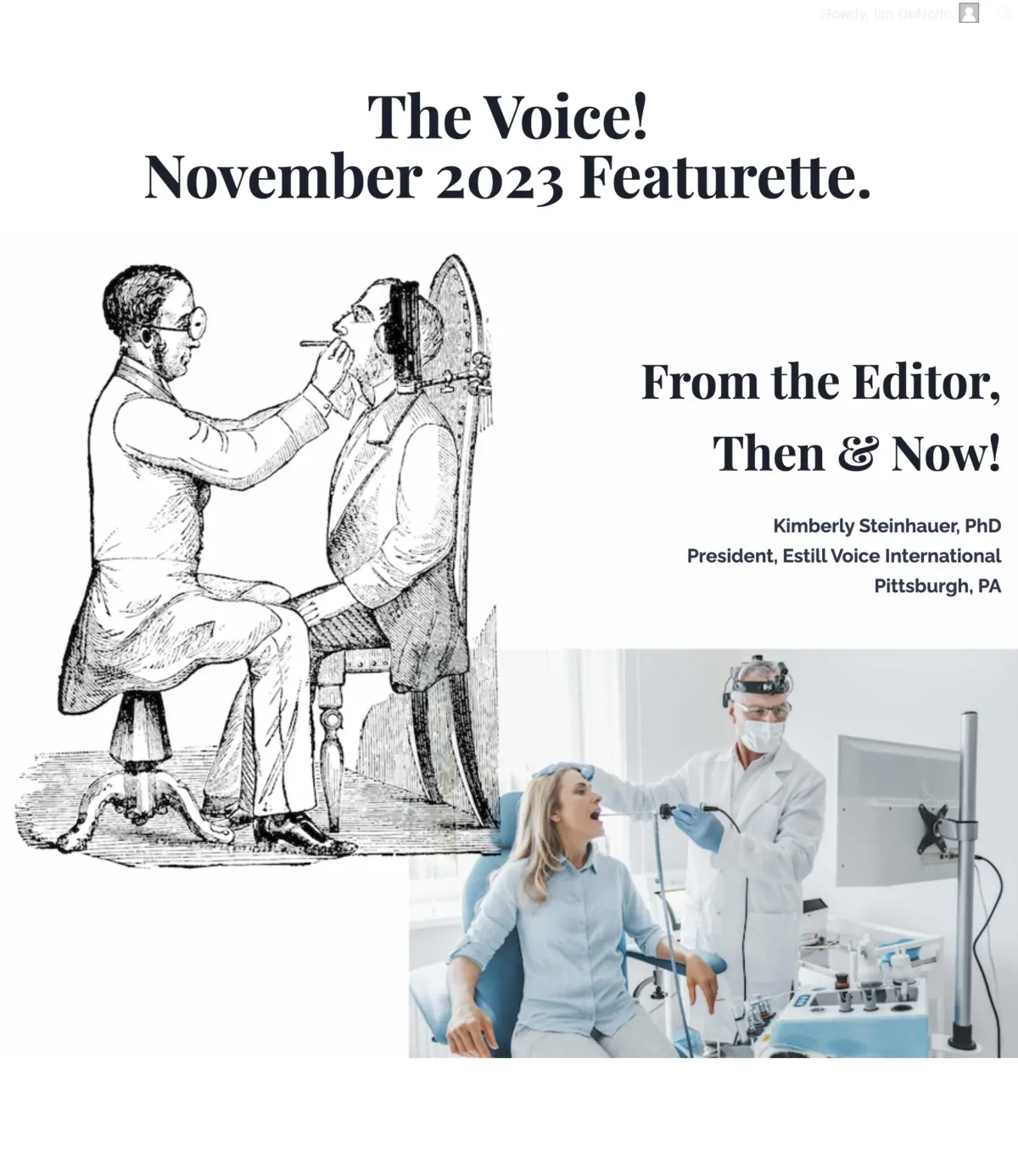
Dr. Kimberly Steinhauer’s personal journey mirrors the multi-disciplinary ethos of the Foundation itself. Reflecting on the popular social media "Then & Now" meme format, Steinhauer contrasts her early aspirations with her present-day reality in Pittsburgh, Pennsylvania.
- Then: As an undergraduate and graduate student, Steinhauer stood at a fascinating crossroads. Driven by an innate curiosity, she sought a professional path that would honor three distinct passions simultaneously: a deep emotional love for music, an analytical fascination with science, and a natural joy found in teaching. In an era when vocal pedagogy and voice science were often treated as separate silos—one empirical and artistic, the other clinical and physiological—Steinhauer pursued a comprehensive academic and career trajectory designed to bridge them.
- Now: Decades later, that multidisciplinary bet has paid off. Steinhauer remains active and devoted to the vocal arts across the triple-threat triad of singer, researcher, and educator. As the President of Estill Voice International, she continues to decode the mechanics of voice production. Furthermore, her ongoing editorial work with The Voice foundation newsletter demonstrates a continuous loop of giving back to the community that nurtured her intellectual growth. With characteristic self-deprecation, she notes in her editorial preface that her current "now" photo humorously captures a bit of the "then," symbolizing an enduring youthful zeal for the subject.
The Catalyst of 2023: The Margaret Baroody G. Paul Moore Lecture
The architectural framework for this deep dive into leadership was forged during the 2023 Annual Symposium of The Voice Foundation. Central to this intellectual spark was the G. Paul Moore Lecture, delivered by the distinguished Margaret Baroody, M.M.
Baroody’s address was not merely a retrospective of vocal pedagogy; it was an eloquent exploration of institutional knowledge. She systematically unpacked how organizations like The Voice Foundation survive and thrive through generational shifts, relying on the oral and structural histories maintained by their stalwarts.
Baroody’s lecture acted as a catalyst for Dr. Steinhauer, prompting a critical question: What is the psychological and motivational DNA of the individuals who step up to lead this complex ecosystem?
This question birthed the "Ten Questions for our Leaders" survey. By distributing these targeted inquiries to the uppermost tiers of Foundation governance, Steinhauer sought to strip away the formal titles and institutional facades, revealing the raw human motivations driving the organization forward.
Supporting Context & Metrics: The Ecosystem of Voice Leadership
To appreciate the weight of the leadership responses harvested by Dr. Steinhauer, one must evaluate the vast ecosystem they manage. The Voice Foundation is not a static archival society; it is a dynamic, multidisciplinary nexus connecting otolaryngologists, speech-language pathologists, voice scientists, singing teachers, performers, and industry professionals from around the globe.
The Pillars of Modern Governance
The leadership core highlighted in the investigative issue represents a delicate and necessary balance of administrative execution, clinical expertise, and strategic vision:

- Administrative & Operational Drive (Ian DeNolfo, Executive Director): The day-to-day survival and expansion of a global scientific foundation require rigorous logistical management. DeNolfo’s inclusion in the "Then & Now" retrospective highlights the unsung operational framework that transforms academic research and clinical breakthroughs into accessible public symposia, grants, and publications.
- Advisory Strategy & Clinical Direction (Dr. Michael Johns III, Advisory Board Chairman): Guiding the advisory apparatus requires a comprehensive view of where the medical and artistic communities intersect. Dr. Johns represents the clinical forward-guard, ensuring that the Foundation’s strategic advisory initiatives keep pace with rapid advancements in laryngeal surgery, phonosurgery, and vocal therapeutics.
- Foundational Legacy & Governance (Dr. Robert T. Sataloff, Chairman of the Board): As a towering figure in laryngology and voice care, Dr. Sataloff’s stewardship represents the continuity of the Foundation’s historical mission. His leadership bridges the pioneering era of voice science established by figures like Dr. Wilbur J. Gould with the modern, high-tech landscape of the twenty-first century.
The Quantitative and Qualitative Impact of Leadership
While the survey focused on qualitative internal motivations—such as early dreams, moments of professional epiphany, and personal artistic drivers—the quantitative output of these leaders’ collective stewardship is staggering:
- Annual Symposiums: Over four decades of continuous convening, drawing thousands of international delegates to Philadelphia and virtual platforms.
- Publications: Sustaining premier peer-reviewed literature, most notably the Journal of Voice, alongside operational newsletters like The Voice, which reaches a global readership.
- Interdisciplinary Cross-Pollination: Breaking down historical barriers between classical voice teachers, contemporary commercial music (CCM) pedagogues, and medical professionals. The leadership’s shared vision has fostered an environment where a laryngologist and a heavy metal vocal coach can share a panel discussion with equal footing.
Official Statements & Survey Insights: Peering Behind the Curtain
The core of Dr. Steinhauer’s investigative issue rests on the candid responses elicited from Executive Director Ian DeNolfo, Advisory Board Chairman Dr. Michael Johns III, and Board Chairman Dr. Robert T. Sataloff. While each leader occupies a distinct vantage point within the organizational hierarchy, their responses collectively illuminate a shared cultural ethos characterized by humility, collaborative spirit, and an obsessive, lifelong fascination with the human voice.
A Culture of Collective Humility
A striking thematic thread running through all three leadership responses is a steadfast refusal to accept isolated credit. In their respective reflections on Then & Now, each leader independently pivoted away from self-aggrandizement to spotlight the vast, invisible army working behind the scenes.
Dr. Sataloff, whose name is virtually synonymous with modern voice care, consistently points to the collective ecosystem of researchers, clinicians, and students who form the bedrock of the Foundation. Similarly, Dr. Johns and Ian DeNolfo emphasized that the public-facing achievements of the Foundation—ranging from its world-renowned symposiums to its educational outreach—are the direct result of a syncretic team effort.
This humility serves as an essential leadership metric. In specialized scientific and artistic fields where egos can easily fracture interdisciplinary cooperation, The Voice Foundation’s leadership models a servant-first philosophy. They view themselves not as rulers of an institution, but as temporary custodians of a vital human resource.
The Evolution of Personal Purpose
The survey responses also mapped the psychological evolution of these leaders from their early days in the field to their current seats of authority:
- Then: Driven by personal artistic curiosities—whether it was decoding the acoustic properties of a sustained high note, witnessing the miraculous recovery of a damaged vocal fold in a clinical setting, or simply discovering the sheer joy of musical expression.
- Now: Transformed into systemic thinkers. Their current motivations center on legacy preservation, mentorship of the next generation of voice scientists, and ensuring that the institutional knowledge celebrated in Margaret Baroody’s G. Paul Moore Lecture is actively passed down rather than lost to time.
Dr. Steinhauer’s clever framing of these responses reminds readers that the most sophisticated scientific organizations are ultimately driven by deeply human stories. The desire to understand the voice is, at its core, the desire to understand human communication, identity, and art.
Future Outlook: Sustaining the Momentum of Voice Science
As The Voice Foundation looks toward the horizon, the insights gleaned from Dr. Steinhauer’s investigative issue provide a robust roadmap for the future. The convergence of "Then & Now" is not merely an exercise in nostalgic reflection; it is a strategic tool for institutional continuity.
Challenges and Opportunities in the Digital Age
The landscape of voice production and vocal health is shifting faster than at any point in human history. The rise of artificial intelligence in voice synthesis, the exponential growth of remote telehealth and digital voice therapy, and the global ubiquity of Contemporary Commercial Music (CCM) pedagogy present both unprecedented challenges and extraordinary opportunities.
- Technological Integration: Future leadership must navigate the ethical and clinical implications of AI-generated voices, vocal deepfakes, and advanced digital laryngeal imaging. The foundational principles established by Dr. Sataloff and the advisory board will serve as an ethical compass for these technological disruptions.
- Global Democratization of Education: Through the groundwork laid by leaders like Ian DeNolfo and Dr. Steinhauer, future educational initiatives will likely leverage digital platforms to bring advanced voice science education to regions of the world previously isolated from major academic medical centers.
- Intergenerational Mentorship: Inspired by the historical consciousness awakened by Margaret Baroody’s G. Paul Moore Lecture, the Foundation is actively building formal pathways to onboard young researchers, clinicians, and educators. Ensuring that the institutional memory is transferred seamlessly to the "Next Gen" of voice leaders remains a top strategic priority.
Conclusion: The Enduring Resonance of The Voice
Dr. Kimberly Steinhauer’s special investigative issue of The Voice does more than simply profile the administrative and advisory heads of a major scientific foundation. It provides a masterclass in organizational self-awareness.
By asking its leaders to hold up a mirror to their past aspirations and measure them against their current realities, the Foundation reinforces its own core mission: to study, protect, and celebrate the human voice in all its infinite complexity.
As the "Then & Now" narratives demonstrate, the journey from a curious student captivated by the magic of sound to a seasoned leader safeguarding global vocal health is paved with persistent inquiry, unyielding passion, and profound collaborative humility. Under the steady guidance of its current leadership core, The Voice Foundation remains uniquely positioned to ensure that the human voice—in speech, song, and science—will continue to resonate with clarity, health, and beauty for generations to come.