
Executive Overview
In an era dominated by algorithmic homogenization, manufactured virality, and the hyper-cautious curation of modern pop stardom, a rare breed of disruptor occasionally breaches the mainstream. For the New York-based art-rock outfit Geese, the ascent has been accompanied by a paradoxical blend of internet-era cynicism and undeniable, sweat-soaked musicianship. Dismissed by online detractors as "nepo babies" whose "fans are all bots," the Brooklyn quartet has largely ignored the digital white noise, instead keeping their heads down, booking grueling international tours, and systematically selling out venues across the globe.
Yet, even within a band as dynamically kinetic and structurally adventurous as Geese—whose math-infused, cerebral art-rock on Getting Killed turned heads at indie music’s top table—the gravitational pull remains anchored entirely to one man. That man is Cameron Winter, the magnetic, borderline hypnotic 24-year-old frontman whose presence elevates the band from a buzzy critical darling into a generational force. Winter’s innovation and intrinsic intrigue stem almost solely from his quivering baritone—a vocal instrument capable of emulating the wavy vibrato of an accordion or a harmonium—combined with a penchant for abstract, literary songwriting and a wicked, deadpan sense of humor.
Logic dictates that the less diluted Winter’s presence is on a record, the more profound his impact should be. If he is the transformative core of Geese, true brilliance must naturally emerge when he stands entirely on his own. That hypothesis was emphatically proven by his sublime 2024 solo debut, Heavy Metal, a chamber-folk opus that continues to age like a vintage Bordeaux.
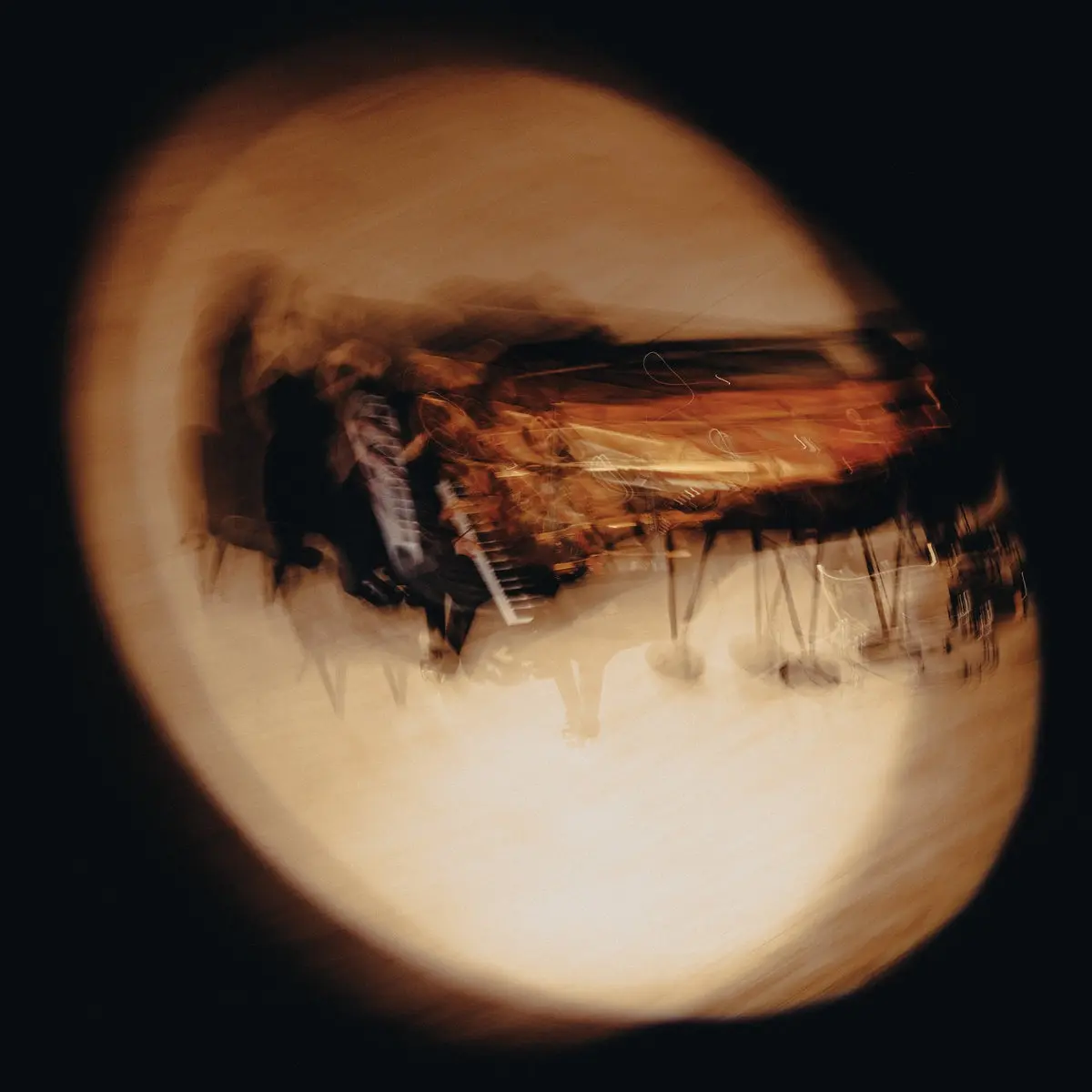
Now, Winter returns with his second major solo statement: Live at Carnegie Hall, a live double album recorded last December capturing the young auteur accompanied solely by his voice and a Steinway grand piano. Released alongside a striking, grainy 16mm companion film directed by cinematic heavyweights Paul Thomas Anderson and Benny Safdie, the project is nothing short of a cultural milestone. As Winter becomes one of the youngest solo artists ever to headline the main auditorium of the legendary New York venue, Live at Carnegie Hall proves that "Wintermania" is not merely an internet-fueled flash in the pan, but a historically significant arrival.
Detailed Chronology: From Brooklyn Basements to the Stern Auditorium
To understand the magnitude of Winter’s performance at Carnegie Hall, one must trace the dizzying trajectory of his career thus far. Emerging from the underground Brooklyn DIY scene, Geese captured the attention of tastemakers with a precocious blend of post-punk aggression and progressive rock complexity. However, the transition from local secret to international touring act was accelerated by Winter’s distinctive artistic identity.
By the time the band released Getting Killed, the music industry was forced to reckon with a frontman who possessed the vocal acrobatics of classic 1970s troubadours coupled with the alienated irony of contemporary internet youth. But Winter’s creative appetite could not be entirely contained within the parameters of a four-piece rock band.
In 2024, Winter stepped outside the band dynamic to release Heavy Metal. The record surprised critics and fans alike, trading driving guitars for intimate, acoustic arrangements, lush chamber-folk instrumentation, and deeply confessional lyricism. It established Winter not merely as a compelling rock vocalist, but as a serious composer operating in a timeless lineage of American singer-songwriters.
The momentum generated by Heavy Metal bypassed the traditional, drawn-out album cycles that govern the modern music industry. Fueled by an impatient, fervent fan base, Winter’s career accelerated into hyper-drive, culminating in a booking that most legacy acts spend decades chasing: a headline slot at Carnegie Hall.
Recorded live in December, the concert stripped away all safety nets. Armed with only a microphone, a piano, and an innate understanding of dramatic tension, Winter stepped onto the stage of the Stern Auditorium / Perelman Stage. Captured on 16mm film by Paul Thomas Anderson and Benny Safdie, the performance was engineered from its inception to feel like an epochal cultural event—a rare instance where the hype surrounding a young artist was not only met, but decisively surpassed.
Supporting Context & Metrics: The Anatomy of a Modern Auteur
The commercial and critical reception of Live at Carnegie Hall highlights a fascinating shift in how contemporary audiences consume prestige indie music. In an ecosystem where metrics are often artificially inflated by streaming farms and algorithmic playlisting, Geese and Cameron Winter occupy a strange dichotomy: relentlessly mocked by digital trolls as algorithmic anomalies, yet commanding fiercely loyal, organic, sold-out crowds across North America and Europe.
The Voice and the Instrument
At the center of Winter’s appeal is a rare vocal and compositional versatility:
- Vocal Range & Texture: A quivering baritone capable of shifting instantaneously into soaring falsettos and deep, emotive chest resonances.
- Instrumental Dynamics: His piano playing on Live at Carnegie Hall evokes the volcanic, emotionally unrestrained performance style of Laura Nyro, utilizing rubato pacing—speeding up and slowing down dynamically to mirror the emotional contours of the lyrics.
- Literary Ambiguity: Winter’s lyrics constantly dance on the razor’s edge between devastating sincerity and postmodern irony.
Consider lines from his repertoire, such as the refrain from "$0": "I’m not kidding this time / God is actually real." Similarly, on the unreleased-turned-live-staple "Emperor XI in Shades," he croons with disarming deadpan delivery: "I don’t like what they did to Jesus / But I sure like Saturday morning."
These juxtaposition-heavy couplets have long invited debate: Is Winter entirely serious, or is he winking at the audience through a veil of irony? Stripped of studio production and sitting alone at a Steinway grand piano, however, those questions dissolve. Under the intense, unsparing spotlight of Carnegie Hall, every word hits with the emotional weight of a golden gospel. Irony is systematically discarded in favor of absolute, gut-wrenching vulnerability.
The Visual Component
The accompanying 16mm film project, spearheaded by visionary directors Paul Thomas Anderson and Benny Safdie, provides a crucial textural layer to the release. Shot on grainy, tactile celluloid rather than pristine digital video, the film deliberately evokes a bygone era of cinematic concert docs (recalling the intimacy of D.A. Pennebaker or Martin Scorsese’s concert films). This aesthetic choice reinforces the overarching thesis of the project: Winter is an artist operating outside of contemporary temporal constraints, channeling the ghosts of classic songwriting titans while remaining distinctly, uncomfortably modern.
Official Statements & Critical Reception
The rollout of Live at Carnegie Hall has generated widespread critical acclaim, positioning Winter as a singular voice among his millennial and Gen-Z peers. Industry observers and cultural critics have been quick to note the rarity of an artist achieving this level of institutional recognition at just 24 years of age.
While formal press statements from Winter himself have remained characteristically sparse—relying instead on the uncompromising volume of his output—insiders close to the production have emphasized the deliberate nature of the Carnegie Hall performance.
"There was no interest in playing it safe or relying on standard promotional machinery," noted a source close to the production camp. "Cameron operates on the hypothesis that if the music—the live arrangements, the compositional integrity, the sheer performance value—is uncompromisingly good, it will soar entirely autonomously. The setting was meant to match the ambition of the songs."
Early reviews from major cultural publications have echoed this sentiment, praising the way stripped-back renditions of tracks like "Love Takes Miles" and the tempestuous noir of "Drinking Age" manage to pull an entire auditorium into Winter’s psychological underworld. Critics have particularly lauded the seamless integration of new material, such as "It All Fell in the River" and "If You Turn Back Now," which function as tilted power ballads emphasizing raw, acoustic potency over stadium-sized bombast.
Furthermore, cultural commentators have highlighted the cultural significance of Winter being granted the Carnegie Hall stage at such an early juncture in his career. In an era where the music industry has largely abandoned the practice of bestowing old-world reverence upon young musicians, Winter’s ascent serves as a striking anomaly—a testament to a generational appetite for genuine, auteur-driven performance art.
Future Outlook: Where Does the Goose Fly Next?
As Live at Carnegie Hall cements its place as one of the defining musical documents of the year, the immediate question facing Cameron Winter and Geese is one of trajectory. Having conquered both the sweaty underground rock clubs of Brooklyn and the hallowed, neoclassical halls of midtown Manhattan, the ceiling for Winter’s creative output has effectively vanished.
The success of his solo excursions—spanning the chamber-folk masterclass of Heavy Metal to this monumental piano-and-voice document—proves that Winter is not merely the frontman of a promising rock band, but a multifaceted composer capable of traversing diverse sonic landscapes. Yet, this multifaceted identity presents an intriguing logistical puzzle for the near future.
Will Winter continue to balance the raucous, collaborative energy of Geese with his increasingly lauded solo endeavors? Or does Live at Carnegie Hall signal a permanent broadening of his artistic scope, paving the way for a career that mirrors the eclectic trajectories of icons like Tom Waits, Nick Cave, or Fiona Apple?
Whatever path he chooses, the old rules of the music industry—the arcane traditions of the rigid two-year album cycle, the forced build-up of manufactured hype, and the cynicism of internet tastemakers—have proven entirely powerless against the sheer gravity of his talent. "Wintermania" is officially self-sustaining. On the blinding evidence presented at Carnegie Hall, the skeptics can log off: Cameron Winter is not only for real, but he is just getting started.