
Executive Overview
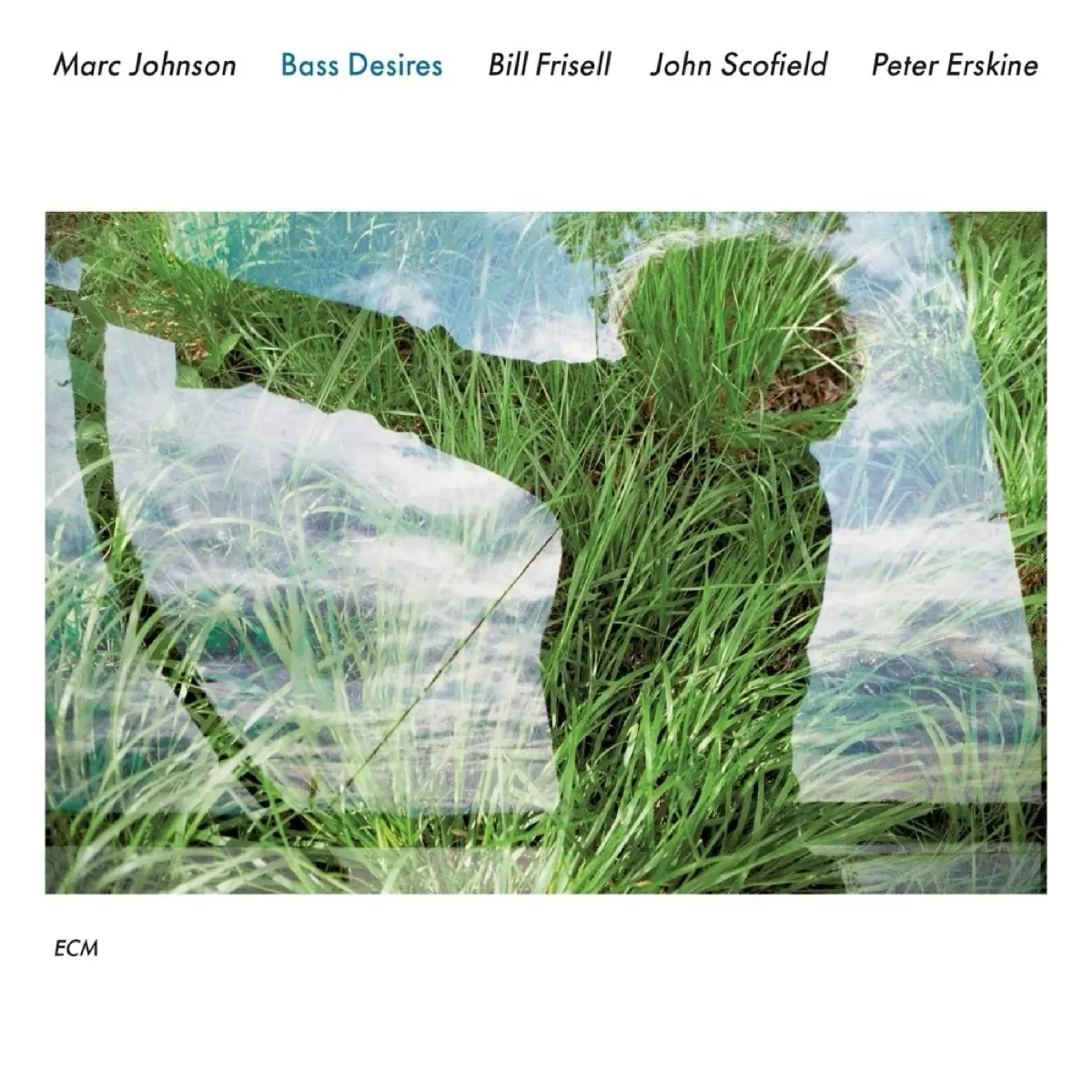
Forty years ago, jazz criticism was forced to recalibrate its vocabulary to account for a quiet revolution unfolding under the aegis of Manfred Eicher’s notoriously discerning Munich-based imprint, ECM Records. In August 1986, jazz writer Mark Gilbert penned a review for Jazz Journal that captured a singular moment of transition within contemporary improvised music. At the heart of this transition was Bass Desires, the self-titled debut album of a cooperative super-group nominally led by bassist Marc Johnson. Recorded in May 1985 at the legendary Power Station in New York City and released under ECM catalog number 1299, the album remains a masterclass in genre-fluidity, balancing the rustic idioms of swing, blues, reggae, country and western, and folk with the pristine, spacious acoustic aesthetic that became the sonic signature of the ECM label.
To understand the magnitude of Bass Desires upon its release is to understand the artistic exhaustion of the commercial jazz-fusion movement of the late 1970s and early 1980s. While mainstream fusion had largely devolved into an exercise in high-octane pyrotechnics, electric slap-bass gymnastics, and overdriven synthesizer timbres, Johnson’s ensemble charted an alternative course. By marshaling the staggering collective intellect of guitarists Bill Frisell and John Scofield alongside master percussionist Peter Erskine, Johnson bypassed the bombast of commercial fusion. Instead, he forged a cerebral yet deeply visceral synthesis of America’s vernacular musical traditions.
The resulting album was not merely a collection of tunes, but a carefully curated sonic landscape where jazz improvisation met ambient textures, avant-garde guitar soundscapes, and deep-groove rhythmic sensibilities. This article provides a comprehensive retrospective examination of Bass Desires, tracing its historical origins in the Manhattan underground, analyzing its stylistic architecture through the lens of Gilbert’s foundational critique, evaluating its enduring metrics within the ECM catalog, and assessing its lasting legacy on modern improvised music.
Detailed Chronology: From Midtown Manhattan to the Power Station
Genesis in the Underground: The Pre-Frisell Era (1983)
The story of Bass Desires begins far away from the polished acoustic confines of a recording studio. Its origins trace back to the twilight months of 1983, in a small, unassuming restaurant in midtown Manhattan. It was here that Marc Johnson—best known at the time for his foundational, two-year tenure anchoring the legendary final trio of pianist Bill Evans—decided to step out from the shadows of sideman status and assemble a working laboratory for his own compositional ideas.
In its earliest incarnation, the ensemble featured Johnson on double bass, Peter Erskine on drums, and a dual-guitar front line consisting of John Scofield and John Abercrombie. This initial configuration possessed a razor-sharp, bebop-infused edge. Scofield, already renowned for his distinctively bent notes, blues-drenched phrasing, and intellectual harmonic approach, paired dynamically with Abercrombie’s lyrical, cerebral sensibilities.
However, the chemistry of the band underwent a seismic shift around Christmas 1983 when John Abercrombie departed, making room for guitarist Bill Frisell. This single personnel change proved to be the catalyst that transformed a promising contemporary jazz quartet into a pioneering avant-garde ensemble. Frisell brought to the table a radically different sonic palette—one characterized by swelling volume pedals, cascading loops, orchestral guitar synthesizers, and an impressionistic approach to harmony that owed as much to Aaron Copland and Jimi Hendrix as it did to Wes Montgomery.
The Contrast of Titans: Frisell and Scofield
The dialogue between Bill Frisell and John Scofield on Bass Desires remains one of the most compelling guitar partnerships in the history of modern jazz. Rather than stepping on each other’s toes, the two guitarists established a profound counterpoint based on stylistic polarity.
Scofield’s playing on the record is abrasive, direct, and sonically rooted in traditional jazz-blues vocabulary. His lines are punchy, rhythmically assertive, and cut through the mix with a focused, midrange bite. Frisell, conversely, operates in an expansive, symphonic dimension. His use of guitar synthesizers and ambient delay pedals creates an atmospheric halo that cushions the rhythm section and blurs the lines between rhythm and lead playing.
As Mark Gilbert astutely observed in his 1986 review, this substitution made absolute structural sense. Frisell’s swelling symphonic washes provided a stark, yet complementary, counter-balance to Scofield’s linear, bebop-inflected aggression. This interplay allowed the ensemble to pivot effortlessly between burning straight-ahead swing and ethereal, ambient textures within the span of a single measure.
The Rhythm Section: Johnson and Erskine
Anchoring the frontline innovators was a rhythm section boasting world-class credentials. Marc Johnson’s time with Bill Evans instilled in him a telepathic sense of harmonic movement, lyrical bass-line construction, and an impeccable, unshakeable time-feel. Yet, on Bass Desires, Johnson proved that his musical purview extended well beyond acoustic piano trio modernism. Whether driving a high-tempo modal excursion or laying down a hypnotic, sonorous ostinato, Johnson directed the band with a light touch, refusing to commandeer excessive solo space.
Behind the drum kit sat Peter Erskine, an alumnus of the Weather Report powerhouse whose precision, dynamic control, and polyrhythmic fluidity required no introduction. Erskine possessed the rare ability to bridge the gap between acoustic jazz swing and complex, shifting metric grooves. His interaction with Johnson formed an elastic, highly responsive foundation that allowed Scofield and Frisell the absolute freedom to stretch, deconstruct, and reinvent the thematic material.
The May 1985 Sessions at Power Station
Armed with a repertoire that defied categorization, the quartet entered New York City’s legendary Power Station in May 1985. Known for its warm, natural acoustics and ability to capture large-ensemble dynamics with pristine clarity, the studio served as the ideal physical environment for a band that relied as much on negative space and sonic ambiance as it did on sheer technical execution.
Manfred Eicher, the visionary producer and founder of ECM Records, oversaw the sessions. Eicher’s production philosophy—often summarized by the famous dictum "solitude is fine, but music is the art of togetherness" and a preference for natural room reverb over artificial compression—complemented the acoustic-electric hybrid nature of Bass Desires. The resulting master tapes were mixed and mastered to preserve the delicate dynamic interplay between Johnson’s woody double bass, Erskine’s crystalline cymbals, and the contrasting guitar tones of Scofield and Frisell, culminating in the 1986 release of ECM 1299.
Supporting Context & Metrics: Deconstructing the Repertoire
To fully appreciate the structural genius of Bass Desires, one must examine the diverse stylistic DNA of its tracklist. The album is a microcosm of late-20th-century vernacular music, thoughtfully filtered through an ECM lens that strips away commercial excess, sentimentality, and predictability.
A Typology of Idioms on Bass Desires
| Track Title | Primary Idiom / Influence | Structural & Sonic Characteristics |
|---|---|---|
| Samurai Hee-Haw | Ethnic Themes / Country Hybrid | Blends angular, modal jazz lines with tongue-in-cheek country-folk tropes; serves as a high-energy album opener. |
| Resolution | Post-Bop / Jazz Standard | A direct nod to John Coltrane’s A Love Supreme; features a brief, apposite bass intro modeled after Jimmy Garrison. |
| Black Is The Color Of My True Love’s Hair | Traditional Folk / Modal Jazz | Highlighted by sonorous, Eberhard Weber-esque bass ostinati; showcases deep atmospheric tension. |
| Bass Desires | Contemporary Jazz / Fusion | The title track; showcases the intricate interplay between Scofield’s sharp lines and Frisell’s orchestral guitar textures. |
| A Wishing Doll | Ballad / Lyricism | Emphasizes melodic space, warm chordal swells from Frisell, and Johnson’s tender, singing bass lines. |
| Mojo Highway | Blues / Reggae Fusion | Integrates the off-beat pulse of Jamaican reggae with the greasy, microtonal inflections of the American blues. |
| Thanks Again | Country & Western / Americana | Features pastoral, rustic harmonic voicings that foreshadow the modern Americana-jazz movement by decades. |
The ECM Aesthetic and Stylistic Refinement
The brilliance of Bass Desires lies in its ability to reconcile seemingly incompatible musical worlds. In the hands of a lesser producer or ensemble, an album featuring reggae grooves, country shuffles, traditional folk ballads, and avant-garde jazz would sound like a disjointed stylistic exercise. However, ECM’s curatorial ethos demanded structural unity.
The label’s signature sound—characterized by spatial depth, acoustic transparency, and emotional restraint—acted as a unifying solvent. Even when the band tackled the laid-back, syncopated rhythm of Mojo Highway or leaned into the rustic folk-country idioms of Thanks Again and Samurai Hee-Haw, the execution remained rigorously disciplined. There was no pandering to radio formats, no gratuitous synth solos, and no overproduction. Every note served the overarching architectural design of the composition.
Official Statements and Critical Reception
When Bass Desires hit the market in the summer of 1986, it was greeted by forward-thinking jazz critics as a breath of fresh air. Mark Gilbert’s August 1986 review for Jazz Journal remains one of the most astute contemporary assessments of the project, highlighting how the band subverted traditional leadership roles and genre boundaries:
"It’s not obvious from the music that the band is directed from the bass stool, though the sonorous ostinati which pervade the traditional Black Is The Color do remind a great deal of the playing of Eberhard Weber on his Chorus album. Johnson never takes more than his fair share of solo space, if that, and his intro to Coltrane’s Resolution is brief and apposite, following more or less the precedent set by Jimmy Garrison."
Gilbert further contextualized the album’s stylistic breadth, noting its unique position within the contemporary landscape:
"In effect what we get is a mixed bag of swing, blues, reggae, folk, country and western, and ethnic themes, with solos much in the style we might expect from this crew. It’s fusion all right, but in its broadest sense, suitably stripped of excess and refined to match the requirements of this sensitive German contemporary music label."
Retrospective appraisals from musicians and historians have only burnished the album’s reputation. Speaking years later about the collaborative spirit of the sessions, members of the ensemble noted that the project was designed to capture a fleeting, lightning-in-a-bottle chemistry that could not be replicated in a heavily sequenced or pre-programmed studio environment. Manfred Eicher himself frequently pointed to Bass Desires as a prime example of how American jazz vernacular could be successfully translated into the European art-music ecosystem without losing its grit, soul, or rhythmic vitality.
Future Outlook: The Enduring Legacy of Bass Desires at 40
As we mark forty years since Mark Gilbert first chronicled the emergence of Marc Johnson’s Bass Desires in the pages of Jazz Journal, the album’s historical significance has grown exponentially. In retrospect, Bass Desires was not merely a snapshot of a brilliant 1985 studio session; it was a prophetic blueprint for the direction of twenty-first-century improvised music.
Long before the terms "genre-fluid," "post-genre," or "Americana-jazz" became standard currency in music journalism, Johnson, Frisell, Scofield, and Erskine were already dismantling the invisible walls separating jazz, folk, rock, and world music. The stylistic DNA of Bass Desires can be heard directly in the modern catalogs of labels like Nonesuch, ECM, and Act, where artists routinely blend chamber-jazz transparency with roots music, ambient electronics, and global rhythms.
Furthermore, the specific pairing of Bill Frisell and John Scofield established a foundational template for modern guitar orchestration in jazz. Their symbiotic interplay demonstrated that textural contrast and harmonic divergence are far more powerful compositional tools than sonic uniformity or competitive shredding.
Forty years after its initial pressing on ECM 1299, Bass Desires retains its uncanny ability to sound both timeless and radically modern. It stands as a monument to what happens when supreme technical virtuosity is subordinated to taste, space, and emotional honesty—proving that the most adventurous musical journeys often begin when artists dare to transcend the confines of genre altogether.